
Biomechanics for sports injury prevention and recovery
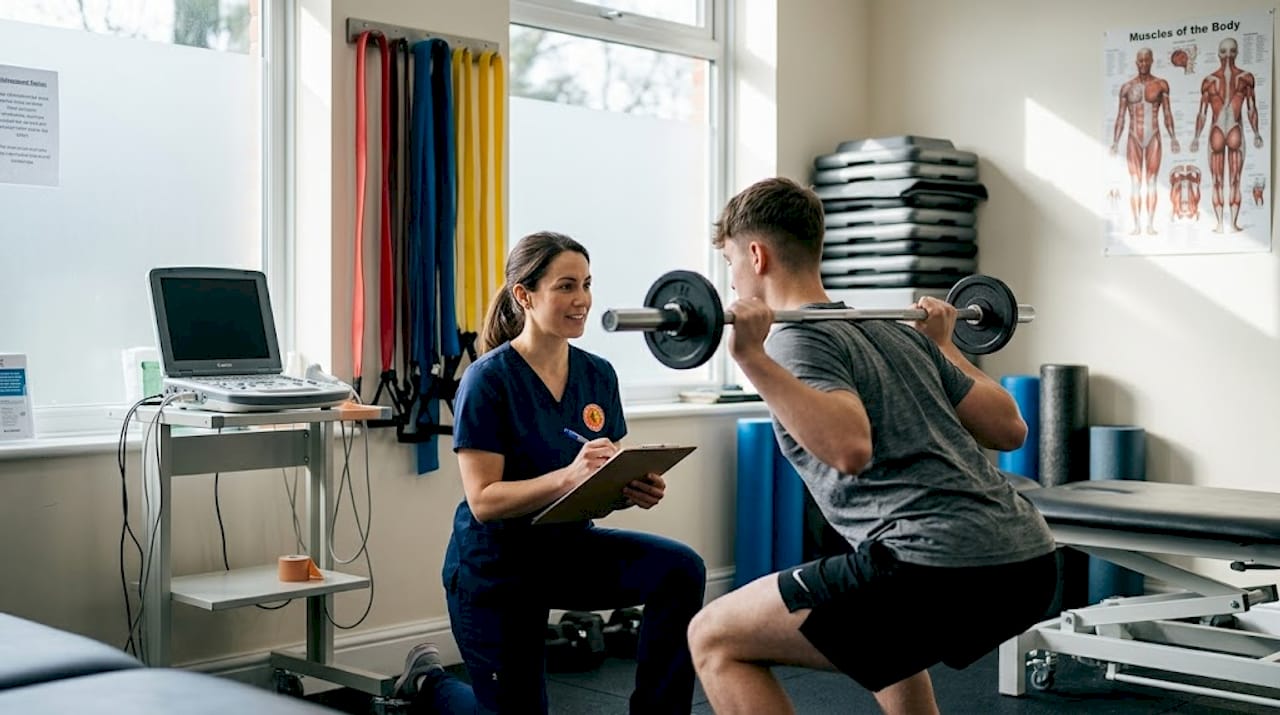
TL;DR:
Small movement errors can significantly increase injury risk without noticeable symptoms.
Biomechanical assessments detect hidden risk factors using advanced technology to prevent injuries early.
Personalized injury prevention programs are more effective than generic ones for long-term safety and performance.
Small, invisible movement errors can raise your injury risk by orders of magnitude, even if you train harder and feel fitter than ever. Biomechanics analyses movement and the forces acting on your body to turn injury prevention from educated guesswork into measurable precision. For athletes and active individuals across Bedfordshire and Buckinghamshire, this discipline offers something genuinely powerful: the ability to spot problems before they become setbacks. In this article, you will learn what biomechanics is, how clinics use it to uncover hidden risk factors, what technologies are involved, and how you can apply the findings to stay healthy and perform at your best.
Table of Contents
What is biomechanics and why does it matter in sports injury?
How biomechanics identifies risk factors for sports injuries
Technologies and methods: Tools that shape modern biomechanics
Turning biomechanical insights into practical injury prevention
Our perspective: Why biomechanics is powerful, but not a silver bullet
Key Takeaways
Point | Details |
Biomechanics identifies invisible risks | Small movement errors and asymmetries can be detected early with biomechanical analysis. |
Technology drives effective prevention | Modern tools like 3D motion capture and wearables enable precise injury risk assessment and safer training adjustments. |
Personalised plans outperform one-size-fits-all | Custom programmes based on your biomechanical data are more effective for both prevention and recovery. |
Expert support bridges the gap | Working with local specialists ensures biomechanical insights are applied effectively for lasting injury prevention. |
What is biomechanics and why does it matter in sports injury?
Biomechanics is the scientific study of human movement and the physical forces acting upon the body during activity. It covers everything from how your foot contacts the ground during a run to how your shoulder rotates when you throw. Most athletes think of injury in terms of bad luck or overtraining, but the reality is usually more mechanical than that.
Tiny alignment errors, repeated thousands of times across a training season, accumulate stress on specific tissues. A knee that drifts inward during landing, a pelvis that drops on one side during a sprint, or a shoulder that rounds forward during a press: none of these feel dangerous in the moment. Over time, they load structures unevenly until something gives way.
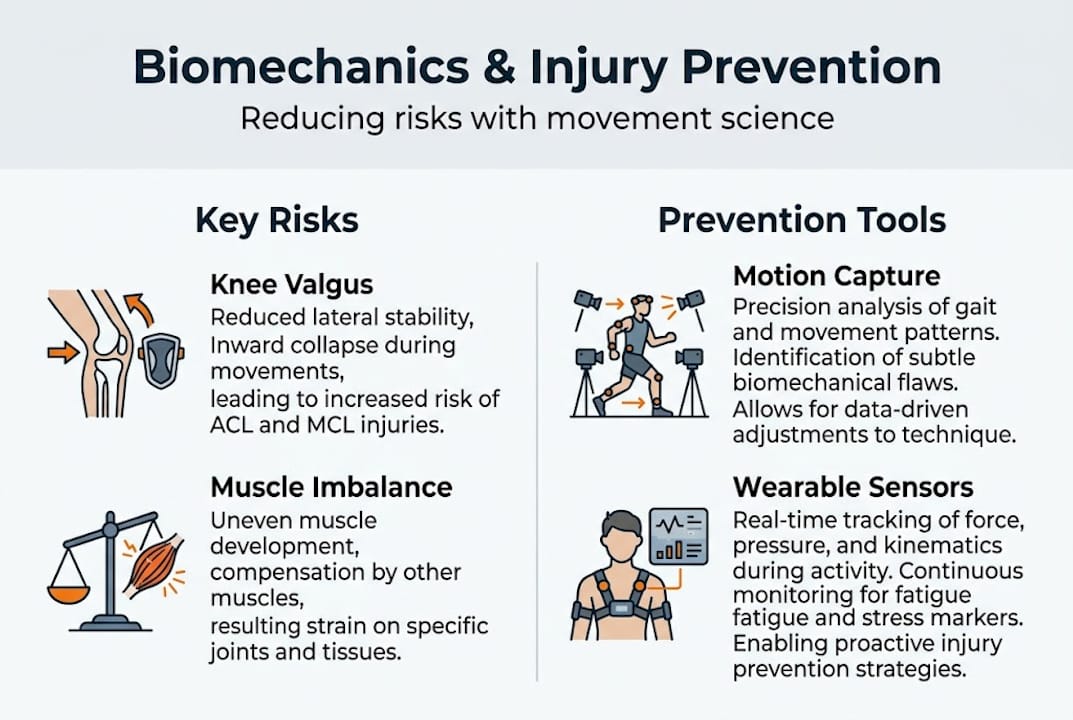
Biomechanics analyses movement patterns, joint alignment, and repetitive forces to pinpoint exactly where those risks are building. Instead of waiting for pain to appear, biomechanical assessment allows your therapist or physiotherapist to intervene early, adjusting technique, load, or muscle balance before the injury occurs.
This proactive approach stands in sharp contrast to the traditional model, where athletes seek help only after something hurts. Reactive treatment is valuable, but it always costs you time, performance, and sometimes long-term structural integrity.
Biomechanics makes targeted intervention possible because every body is different. Two runners with identical training loads may carry entirely different injury risks based on their movement patterns. A thorough sports injury prevention guide will always account for these individual differences, and that is where biomechanics earns its place as the foundation of modern prevention.
Common injury mechanisms biomechanics can identify:
Knee valgus (inward collapse) during jumping or landing
Excessive hip adduction during single-leg activities
Overstriding in runners, increasing ground reaction forces
Asymmetrical trunk rotation in throwing or racquet sports
Lumbar hyperextension under fatigue in overhead athletes
Understanding the importance of injury prevention means recognising that most sports injuries are not accidents. They are the predictable end point of uncorrected mechanical patterns. Biomechanics gives you a map of those patterns before the destination is injury.
How biomechanics identifies risk factors for sports injuries
Knowing that biomechanics matters is one thing. Understanding how clinicians actually use it to find your specific risk factors is where this knowledge becomes practical.
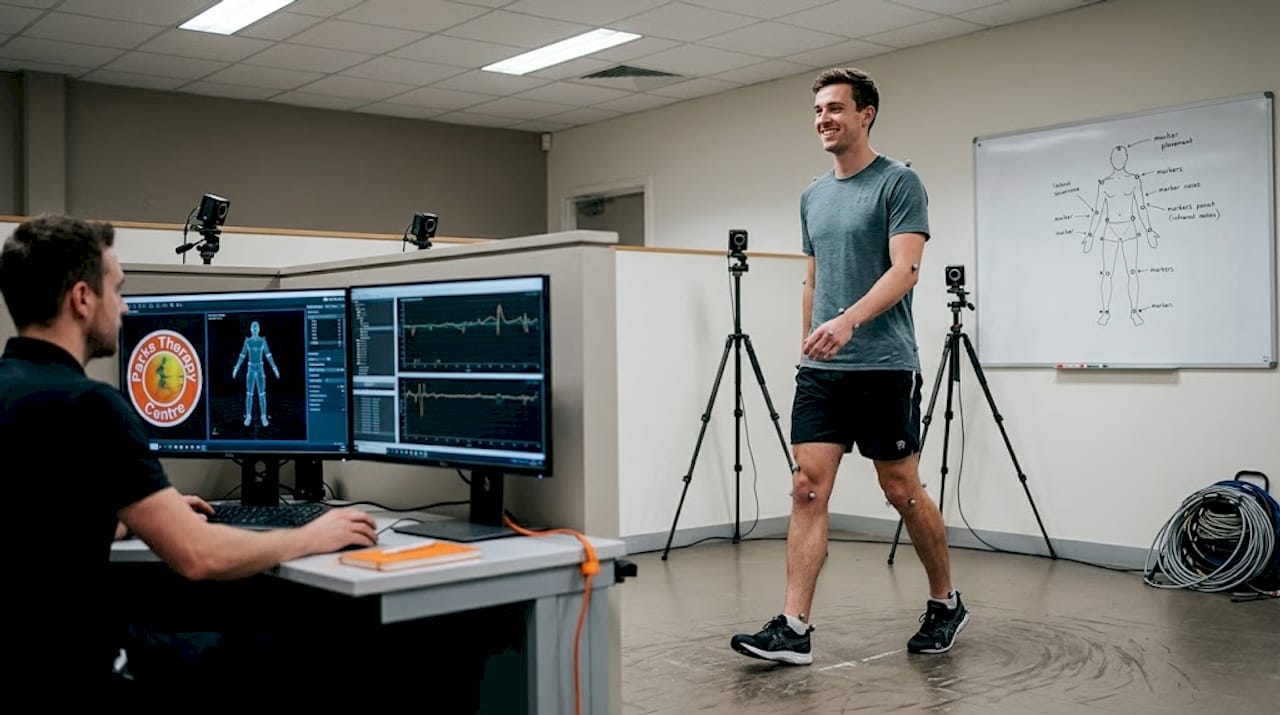
Modern biomechanical screening draws on a range of assessment tools, each contributing a different layer of information. Motion capture, force plates, EMG, and wearables help reduce injury rates in sports by translating what the eye cannot see into data your therapist can act on.
Risk factors are not always obvious. Improper joint alignment and asymmetrical loading increase injury risk in ways that only become apparent when you measure them systematically. That is why screening before an injury, rather than after, is so valuable.
Here is how a structured biomechanical screening typically works in a clinical setting:
Movement screening: The clinician observes your squat, single-leg stance, or sport-specific movement to flag gross asymmetries.
Gait or running analysis: Video or sensor-based tools capture your movement cycle and identify overstriding, hip drop, or foot strike patterns.
Force measurement: Force plates record how load is distributed between your left and right sides during jumping or landing tasks.
Muscle activation mapping: Electromyography (EMG) shows which muscles fire, when, and in what sequence, revealing compensation patterns that create overload elsewhere.
Wearable data review: If you train with empirical injury risk monitoring devices, data from those sessions provides real-world context for in-clinic findings.
Local clinics across Bedfordshire and Buckinghamshire increasingly offer these services, meaning you do not need to travel to a sports science laboratory to access quality screening. A thorough step-by-step prevention guide can help you understand what to expect from this process.
Common biomechanical risk factors identified through screening include knee valgus during landing, reduced single-leg stability, and running asymmetries that cause one limb to absorb far more force than the other. Identifying the types of sports injuries most associated with these patterns helps clinicians prioritise where to focus corrective work.
Pro Tip: Request a single-leg squat assessment at your next physiotherapy appointment. It is one of the most revealing and cost-effective tests for identifying hip, knee, and ankle control deficits that often precede injury.
Technologies and methods: Tools that shape modern biomechanics
The tools available for biomechanical assessment have advanced considerably. Understanding what each one does helps you ask the right questions when you visit a local clinic.
Technology | What it measures | Key benefit |
3D motion capture | Joint angles and segment movement in three dimensions | Highly accurate, full-body analysis |
Force plates | Ground reaction forces and load asymmetry | Identifies left-right imbalance during landing |
EMG (electromyography) | Muscle activation timing and amplitude | Reveals compensation and inhibition patterns |
IMUs (inertial measurement units) | Acceleration, rotation, and movement in the field | Wearable and practical for sport-specific tasks |
AI and machine learning | Predictive modelling across large datasets | Anticipates risk before symptoms appear |
Each technology answers a slightly different question. Motion capture tells you how you move. Force plates tell you how much load your joints absorb. EMG tells you which muscles are doing the work and which are not. This layered picture is far more useful than any single measure in isolation.
The most exciting development in recent years is the integration of wearable sensors with machine learning. A hybrid IMU-sEMG model achieves high accuracy in classifying injury risk, bringing laboratory-grade insight into your training environment. Understanding the language clinicians use around these tools is easier when you review sports therapy terminology before your appointment.
Emerging technologies such as digital twins, virtual models of your body built from your own movement data, are beginning to allow clinicians to simulate how you would respond to different training loads. While these are not yet standard in every local clinic, they represent the direction the field is heading.
Pro Tip: When booking a biomechanical assessment, ask whether the clinic uses wearable sports sensors or force plates alongside visual screening. Combined methods give you a richer, more actionable picture of your movement.
Turning biomechanical insights into practical injury prevention
Data is only useful when it drives action. Here is how athletes in Bedfordshire and Buckinghamshire can translate biomechanical findings into real-world injury prevention.
The most common starting point is gait or landing analysis. A clinician identifies a specific pattern, such as excessive knee valgus, and designs a targeted exercise programme to correct it. This might include single-leg strengthening, neuromuscular control drills, and cues for technique correction during sport-specific movement.
Prevention programmes cut ACL risk by up to 70% in controlled settings, which is a remarkable figure. The key is consistency and personalisation.
What a well-designed biomechanics-informed prevention plan includes:
Baseline screening to establish your current movement profile
Symmetry benchmarks, aiming for less than 10% side-to-side difference in strength and load absorption
Progressive loading protocols that account for fatigue and training phase
Clear return-to-play milestones, such as achieving over 90% quadriceps strength symmetry after a knee injury
Regular reassessment to track progress and update the plan
Approach | Personalised programme | Generic programme |
Accounts for individual movement patterns | Yes | No |
Adjusts to training phase and fatigue | Yes | Rarely |
Long-term injury reduction | Higher | Moderate |
Requires clinical input | Yes | No |
Best suited for | Athletes with specific risk factors | General fitness populations |
Personalised versus generic programmes consistently show that tailored approaches produce better outcomes for athletes with identified biomechanical risk factors. If you have already experienced a knee problem, understanding what causes knee injuries and following knee injury prevention tips alongside your programme can significantly accelerate your recovery.
Our perspective: Why biomechanics is powerful, but not a silver bullet
We work with athletes across Bedfordshire and Buckinghamshire at every level, from weekend runners to competitive club players, and our honest view is this: biomechanics is one of the most valuable tools in sports healthcare, but it is not infallible.
The evidence is clear that structured biomechanical screening and targeted programmes reduce injury rates. What the research also shows is that one-size-fits-all approaches fail due to individual variability, high costs, and the difficulty of translating lab findings to real sporting environments. A perfect squat in the clinic does not guarantee safe movement at the end of a hard match when fatigue sets in.
True prevention requires ongoing expert support, not just a single screening session. Environmental factors, psychological stress, sleep quality, and sudden changes in training load all influence injury risk in ways that no biomechanical model fully captures yet. Our approach, built on effective management of injuries, is to treat biomechanical data as a vital starting point, not a complete answer. Use it to ask better questions about your movement, work with a qualified clinician to interpret the findings, and build a prevention strategy that follows you through your season, not just into a single appointment.
Take the next step towards injury-free performance
Understanding biomechanics is the first step. Acting on it is what keeps you training. At Park’s Therapy Centre, our experienced team across Bedfordshire and Buckinghamshire provides biomechanical screening and personalised injury prevention support rooted in over three decades of clinical experience.
Whether you are recovering from a setback or trying to get ahead of one, our sports physiotherapy for recovery services give you access to the assessment, expertise, and hands-on care you need to move well and perform without compromise. Book your assessment today and take control of your injury risk with the support of a team that understands both the science and the sport.
Frequently asked questions
What biomechanical factors most often cause sports injuries?
Improper alignment and repetitive forces increase injury risk, alongside muscle imbalances, asymmetrical loading, and poor movement patterns that place excessive stress on specific joints and tissues.
How can biomechanical analysis help me prevent future injuries?
It identifies harmful movement patterns before an injury occurs, allowing for targeted interventions and safer training adjustments. Biomechanical screenings prevent injuries through early detection of the mechanical errors most likely to cause harm.
Are wearables and technology-based assessments reliable?
Modern wearables combined with traditional techniques offer strong reliability. A hybrid IMU-sEMG model achieves high accuracy in injury-risk classification when used correctly as part of a broader clinical assessment.
Should I choose a personalised injury prevention programme?
Yes. Personalised programmes outperform generic ones for injury prevention because they account for your body’s unique risks and adapt as your training evolves, delivering superior long-term results.
Recommended