
Elbow Bursitis Treatment: What Works and When to See a Physio
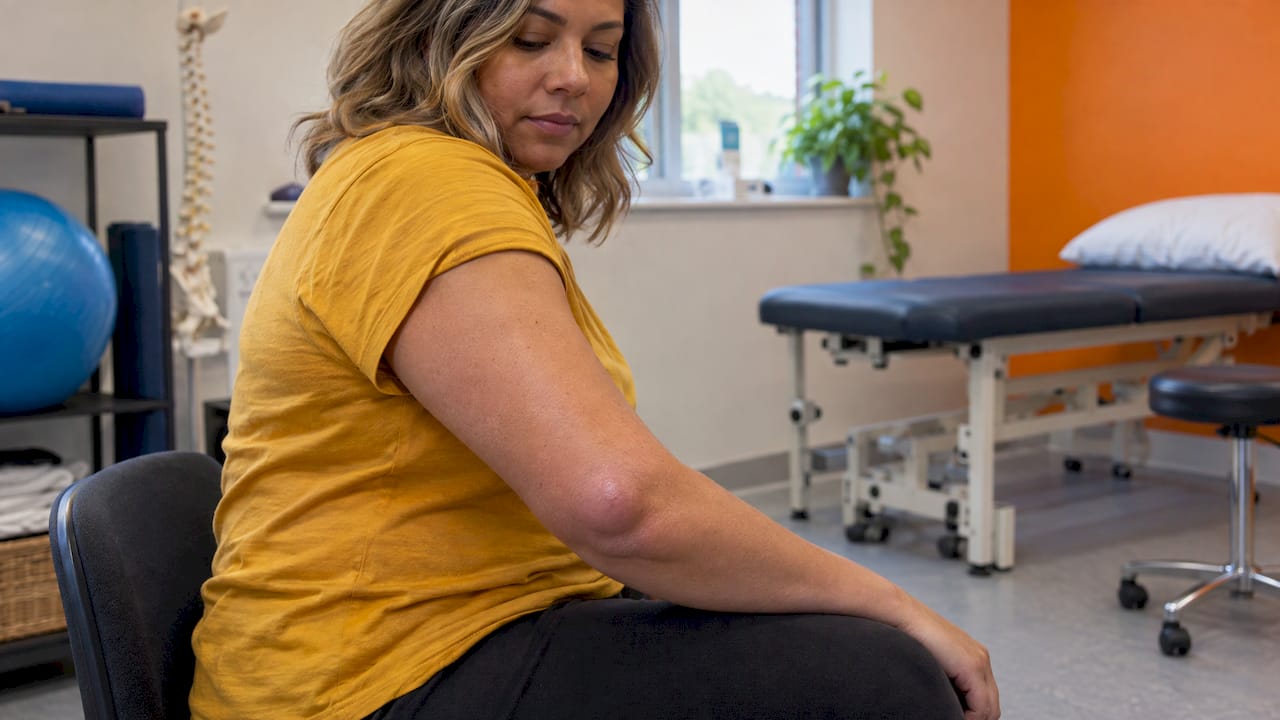
Most elbow bursitis settles with simple, consistent care: protect the elbow from pressure, compress and rest it, and manage pain sensibly. The harder part is knowing which swelling is routine and which needs a GP the same day. Once infection is ruled out, a physiotherapist can find what is irritating the bursa and help you restore full movement and strength. At Parks Therapy Centre, a physiotherapy assessment costs £76, and our clinics across Bedfordshire and Buckinghamshire are open to private and insured patients.
TL;DR
Elbow (olecranon) bursitis is inflammation of the fluid-filled sac behind the elbow. The NHS says it can usually be treated at home and should go away in a few weeks.
Rest the elbow, avoid leaning on it, use a wrapped ice pack, and take simple painkillers if needed.
Heat, spreading redness, a graze over the swelling or a fever can mean infection. See a GP promptly, or attend A&E if you feel unwell.
Physiotherapy helps when swelling lingers, the elbow stiffens or weakens, or the cause is a repeated habit or activity.
Table of Contents
What elbow bursitis is
A bursa is a small fluid-filled sac that cushions a joint and reduces friction. Patient.info explains that in olecranon bursitis the sac at the back of the elbow becomes inflamed, swollen and sometimes painful. The most common type is not infected, and the swelling can be skin-coloured or slightly pink and often only mildly sore.
The usual causes are a knock, prolonged leaning on the elbow, or repeated overuse. NHS Lothian’s guideline describes a soft, moveable swelling over the point of the elbow. The joint itself should move without pain, except at full bend, when the swollen sac is squeezed. That detail helps separate bursitis from a problem inside the joint.
Is it infected? Check this first
This is the most important decision in elbow bursitis treatment. Infected (septic) bursitis needs antibiotics, and home care alone is not enough.
Patient.info lists these signs of infection:
pain, redness and tenderness behind the elbow
redness and swelling spreading away from the elbow
a high temperature
a graze or wound over the swelling, where bacteria may have got in
NHS Lothian’s guideline treats broken skin, signs of infection or any suspicion of a septic joint as a red flag to be managed as an emergency. NHS Dorset advises urgent GP advice for heat, significant swelling, redness or worsening tenderness. If you have a fever or feel unwell, go to A&E: a regional NHS pathway (BSOL elbow pain pathway) says this can indicate sepsis.
Physiotherapy is for the non-infected type. If any of the signs above apply, see a GP or urgent care first.
How to treat elbow bursitis at home
For a non-infected bursa, the first-line approach is conservative. Patient.info’s clinician guidance says this is preferred because it is safe and there is no convincing evidence that more invasive treatment works better.
Stop the pressure. The NHS advises resting and avoiding activities that put pressure on the joint. Think of leaning on a desk, resting an elbow on a car door or armrest, and kneeling-style weight through the arm.
Compress gently. NHS Dorset lists compression bandaging. A tubular elasticated bandage works if it is comfortable. It should never be tight enough to cause tingling or colour change in the hand.
Use ice carefully. The NHS suggests a wrapped ice pack for around 10 minutes at a time, every few hours. NHS Dorset allows up to 20 minutes, up to three times a day, with a damp cloth between ice and skin. Stop if you get excessive pain, numbness or tingling.
Cushion at night. The NHS suggests extra cushions around the joint while you sleep, so you do not lie on it.
Protect it afterwards. An elbow pad can help if your work or sport involves knocks or leaning.
Pain relief options
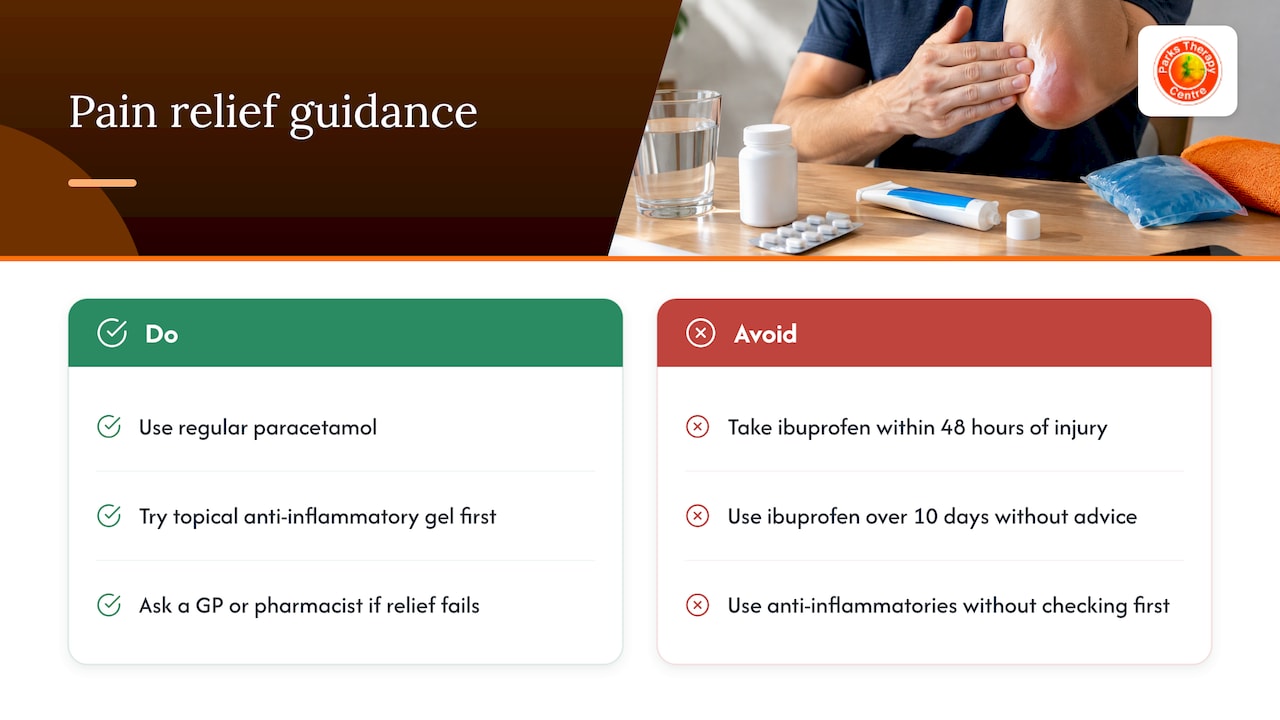
NHS Dorset advises regular paracetamol, and topical anti-inflammatory gels in the first instance. It also says not to take ibuprofen for 48 hours after an initial injury, as it may slow healing. Patient.info notes that topical NSAID gels such as ibuprofen or diclofenac are particularly effective for minor injuries.
Speak to your GP or pharmacist if simple pain relief does not help, or if you need ibuprofen for more than 10 days. Check with them first if you have asthma, stomach problems, kidney disease or take blood thinners, as anti-inflammatories are not suitable for everyone.
How long does it take to improve?
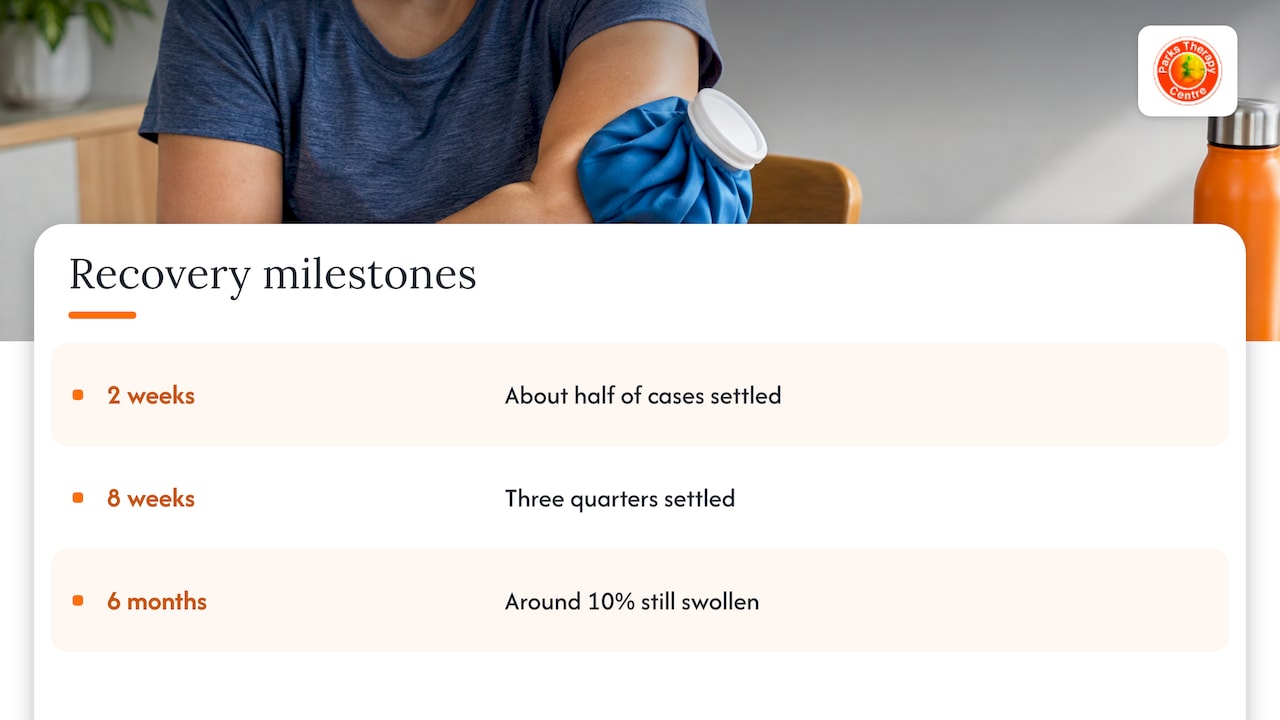
NHS Lothian reports that about half of non-septic cases settle within 2 weeks and three quarters within 8 weeks. Around 10% may still have some swelling at 6 months. A swelling that lingers is common and not usually dangerous, but it is a good reason to have it assessed.
See a GP if symptoms have not improved or are worsening after 1 to 2 weeks of self-treatment, if you cannot move the joint, or if you have very severe, sharp or shooting pain (NHS).
When a GP may offer more
If home care is not enough, a doctor may suggest other treatments, according to the NHS bursitis page:
Antibiotics, usually for at least 7 days, when the bursa is infected.
Aspiration, drawing fluid off with a needle, which can also test for infection or gout.
A steroid injection, to reduce swelling. It is not used when the bursa is infected.
Surgery, rarely, to drain or remove the bursa when it is severe or keeps returning.
The BSOL pathway says surgical removal can be considered if the bursa keeps getting infected or is large enough to be knocked regularly and limit function. It gives recovery as 4 to 6 weeks and says 20 to 25% of people have a recurrence. The same pathway asks clinicians to consider gout as an associated condition. If there is no clear mechanical trigger, doctors should also consider infection.
Where physiotherapy fits
Physiotherapy matters most when the swelling has settled but the elbow does not feel right, or when the same cause keeps bringing it back. NHS Highland’s pathway places olecranon bursitis alongside ice, compression and anti-inflammatories, with restoring range of motion, strength and function as the rehabilitation goals, and refers to MSK physiotherapy if there is no improvement.
A physiotherapy assessment covers:
confirming that the picture fits bursitis, and flagging anything that needs a GP
identifying what loads the elbow: a desk set-up, a driving position, a sport, a trade
checking movement and strength in the elbow, shoulder and wrist
a plan for graded return to activity
Elbow pain can also come from tendons rather than the bursa. If that is the cause, our guides to physiotherapy for lateral epicondylitis and the benefits of physiotherapy for elbow injuries explain what recovery involves. If you play racket sports, our tennis elbow prevention tips cover loading habits too. Bursitis in the knee follows similar principles, set out in our knee bursitis guide.
What to avoid
Leaning on the elbow, or wearing a bandage so tight it affects the hand.
Placing ice directly on the skin.
Taking ibuprofen in the first 48 hours after an injury.
Squeezing, lancing or draining the swelling yourself, especially if there is a graze nearby.
Ignoring heat, redness or a fever.
Our approach
Elbow bursitis is a problem where the first job is sorting the routine from the urgent. We start with a careful assessment, and if an elbow looks infected we direct you to medical care before anything else. For the common, non-infected type, we look beyond the swelling to why it appeared. A repeated leaning posture, a sport or a work task is usually the cause, and treating the swelling without changing that invites a return. Parks Therapy Centre has been treating musculoskeletal problems since 1986. Our multidisciplinary team works across Bedfordshire and Buckinghamshire, and we can refer for diagnostic imaging quickly when a scan would help. Ivan
Book an elbow assessment
If your elbow swelling is not settling, or you want to stop it returning, a physiotherapy assessment at Parks Therapy Centre costs £76, and follow-up treatment sessions are £67 each. A double-length assessment is £102 and a double treatment £77. If a scan would help, an image assessment is £76 and a referral letter £10. We accept all major health insurance plans. See our prices or book online through our website.

FAQ
What is the fastest way to heal elbow bursitis?
There is no shortcut, but consistent protection helps most. Stop leaning on the elbow, use compression and a wrapped ice pack, and take simple pain relief if needed. Many cases settle within weeks, and about half within 2 weeks.
Can elbow bursitis go away on its own?
Often yes. The NHS says it should go away in a few weeks with home treatment. If it has not improved after 1 to 2 weeks, or it is getting worse, see a GP.
What can be mistaken for elbow bursitis?
Infection of the bursa, gout, a problem inside the elbow joint or a tendon injury can look similar. Pain with movement through the whole range, severe pain or a hot, spreading redness points away from simple bursitis and needs medical assessment.
Does physiotherapy help elbow bursitis?
Yes, once infection is ruled out. Physiotherapy addresses what loaded the elbow, restores movement and strength, and guides your return to work or sport. You can book a physiotherapy assessment with us directly.
Sources
Recommended