
Arrive Prepared for First UK Physiotherapy Appointment (30–75 min)

Your first physiotherapy appointment is a full clinical assessment, not just a chat. It combines a detailed conversation about your symptoms with hands-on physical tests, and it almost always ends with a personalised plan, some initial advice, and exercises to start straight away. Most patients leave knowing exactly what is wrong and what to do next.
TL;DR:
Most physiotherapy assessments last 30 to 75 minutes and combine detailed history-taking with physical tests to identify the source of pain or injury.
Patients should arrive prepared with medication lists, referral letters, scan results, and clothing that allows easy access to the affected area to save time.
Red flags such as bladder control issues, neurological symptoms, fever with severe pain, weight loss, or severe trauma require urgent medical attention and should not wait for physiotherapy.
The initial session often includes targeted exercises and advice, with follow-up reviews recommended after about three appointments to track progress.
Booking is straightforward through online channels, costing around £76 for an assessment, with most clinics offering accessibility options and considering individual needs.
Table of Contents
What happens during your first physiotherapy appointment?
The session opens with conversation, not treatment. Your physiotherapist will ask about the timeline of your symptoms: when the pain or injury started, whether it has changed, and what triggers or eases it. They will also want to understand how the problem affects your daily life, sleep, work and exercise, because that context shapes your goals and, in turn, the plan.
From there, the appointment moves into a physical assessment. This is where the diagnostic work happens, and it typically includes:
Observation of how you move, stand and walk
Range of motion testing on the affected joint and often the joints above and below it
Strength testing using resistance or specific movements
Palpation, pressing on muscles or joints to locate the source of pain
Special tests that may briefly reproduce your symptoms to help pinpoint the cause
If a test recreates your pain, that is deliberate. Physiotherapists explain what they are checking for before they do it, and it is a normal part of narrowing down a diagnosis. Once the assessment is complete, your physiotherapist explains what they have found in plain language, including any uncertainty. If the picture is not clear, they may suggest imaging or a referral rather than guessing.
Many first appointments include some treatment on the spot: manual therapy, soft tissue massage, simple corrective exercises, or taping to support a joint. Whether that happens depends entirely on what the assessment reveals.
How should you prepare for your first physio visit?
Turning up prepared saves time in the room for the assessment itself, not paperwork. Before you go:
Write a short list of current medications, including doses, and bring any referral letters or scan and X-ray results you already have.
Wear or bring clothing that lets the physiotherapist see the affected area. Shorts work well for knee, hip or ankle issues; a vest top or loose t-shirt is better for shoulder, neck or back problems.
Arrive 5 to 10 minutes early to complete any registration paperwork, and bring your insurance details or a payment method if you are paying privately.
Ask about privacy options if you are concerned about undressing for the assessment. Most clinics offer a gown or towel, and you are welcome to bring someone with you as a chaperone or note-taker.
None of this needs to be elaborate. A phone photo of your medication box and a five-minute rummage for that old scan letter is usually enough.
How long does a first physiotherapy appointment take?
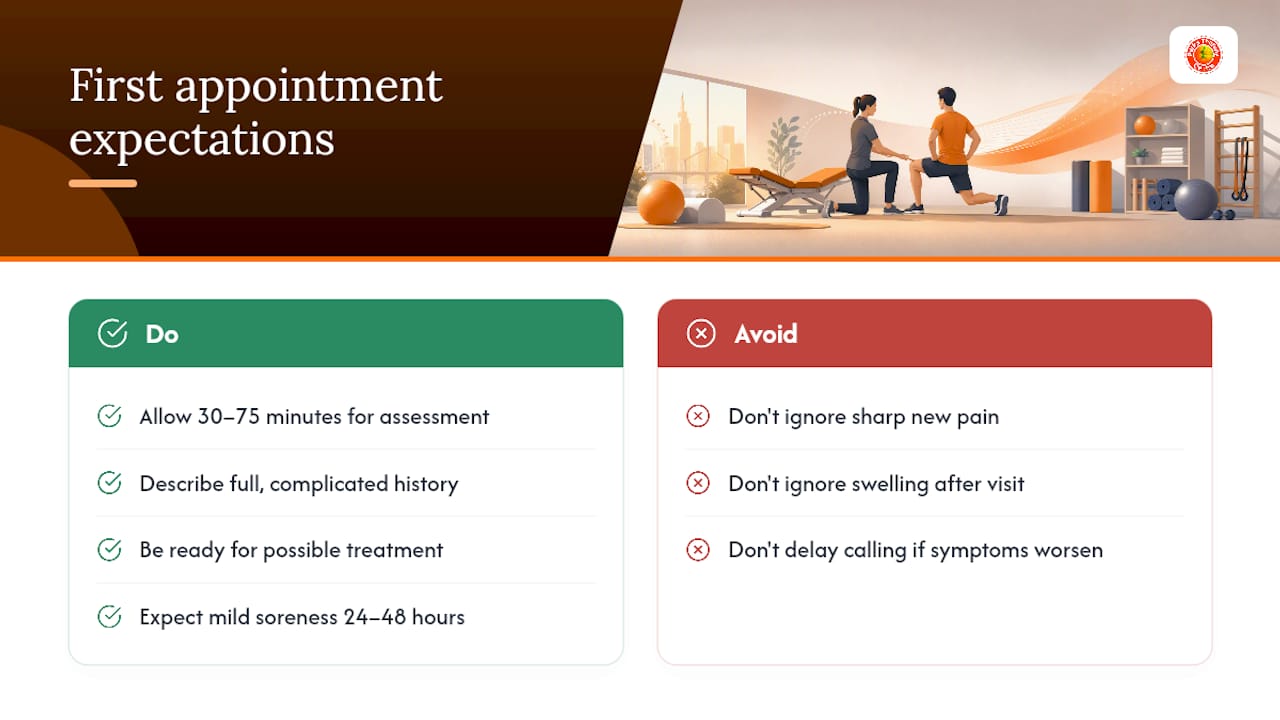
Expect your initial assessment to run between 30 and 75 minutes. Where you land in that range depends on how complicated your history is and how many body regions need checking. A straightforward ankle sprain assessed a week after it happened is a quicker appointment than chronic lower back pain with symptoms radiating into a leg.
Treatment on the first visit is common but not guaranteed. Some patients get manual therapy or exercise instruction there and then; others need the physiotherapist to gather more information, or wait for imaging results, before starting hands-on work.
It is also normal to feel some soreness for 24 to 48 hours afterwards. Physical tests and any initial exercise can stir up tissue that has not been moved that way in a while. Mild aching is expected; sharp new pain, swelling, or symptoms that are clearly worse than before you went are not, and are worth a call to the clinic.
Consent, safety checks and red flags physiotherapists watch for
Nothing hands-on happens without your agreement first. Before any physical test or treatment, your physiotherapist explains what they are about to do and why, and checks that you are happy to proceed. You can pause or stop at any point, and a registered physiotherapist, regulated by the HCPC, is trained to work within professional standards that protect you throughout.
Part of that duty is screening for red flags that fall outside routine musculoskeletal care. These include:
New problems with bladder or bowel control
Progressive numbness, weakness or loss of coordination
Fever combined with severe or worsening pain
Unexplained weight loss alongside your symptoms
Trauma severe enough to need emergency assessment
Pro Tip: If any of these apply to you before your appointment, do not wait for it. Contact your GP or NHS 111 the same day, since these signs need medical attention faster than a physiotherapy slot can usually be arranged.
If a clinician spots a red flag during assessment, they escalate rather than treat. That usually means a referral to your GP, an imaging request, or, in urgent cases, advice to attend A&E directly.
What happens after your appointment: exercises and follow-up
Most patients leave with a short, focused home programme rather than a long list of instructions to remember. A typical take-home plan includes two to six targeted exercises, some practical advice on adjusting activity in the short term, and an explanation of why the plan looks the way it does. Clinicians often lean on resources modelled on the Chartered Society of Physiotherapy’s rehabilitation guidance to keep programmes realistic and safe to follow unsupervised.
Your physiotherapist will usually give you a sense of how often to expect follow-up sessions, and most suggest reviewing progress after around three appointments if things have not started to shift. Speak up early if you are not improving. Adjustments to a plan work far better made at session three than session eight.
To stick with the plan:
Keep exercises short enough to do daily without excuses, five to ten minutes is often enough
Log pain levels or repetitions somewhere simple, even a notes app
Use clinic-provided exercise sheets or videos rather than relying on memory
A patient-centred approach to your first visit
The first appointment is built around you as a partner in your own recovery, not a passive recipient of instructions. Multidisciplinary teams often draw on the right expertise from the outset. Many patients notice early improvements in movement or confidence within the first few sessions once a clear plan is in place. If you have questions about paperwork, accessibility, or anything else before you arrive, our reception team is happy to help.
— Ivan
Booking your initial assessment at the Parks Therapy Centre
Getting started is straightforward. Parkstherapycentre offers online booking for initial assessments, and we accept most major private health insurance plans alongside private payment, so there is no need to navigate that on the phone before you have even had your first session.

A Physiotherapy Assessment is priced at £76, with follow-up Physiotherapy Treatment sessions at £67. Before you book, keep your checklist handy: medication list, any referral letters or scan results, and clothing that exposes the area we need to assess. Completing the online forms in advance speeds up your arrival on the day, so there is less paperwork and more time for the assessment itself. If you have specific access needs or clinical questions before booking, call or email our team directly. We would rather answer them now than have you arrive unsure.
This article is general information, not a substitute for advice from a qualified doctor. Consult a qualified healthcare professional about your own circumstances before acting on anything here.
Sources
FAQ
What happens at your first physiotherapy appointment?
Your physiotherapist takes a detailed history of your symptoms, carries out a physical assessment covering movement, strength and range of motion, and explains what they find. Most appointments end with a personalised treatment plan and some exercises or advice to start immediately.
How long is a first contact physio appointment?
Initial assessments typically last between 30 and 75 minutes, depending on how complex your history is and how many areas need checking. A straightforward recent injury usually takes less time than a long-standing or widespread problem.
What are the red flags in a physiotherapy assessment?
Clinicians screen for signs that need urgent medical care rather than routine treatment, including new bladder or bowel problems, progressive neurological loss, fever with worsening pain, unexplained weight loss, or significant trauma. If any of these apply, contact your GP or NHS 111 rather than waiting for a physiotherapy appointment.
What should I wear to my first physiotherapy appointment?
Wear or bring clothing that exposes the area being assessed, shorts for hip, knee or ankle issues, or a vest top or loose t-shirt for shoulder, neck and back problems. Clinics normally offer a gown or towel if you would prefer more privacy during the assessment.
Recommended