
Fix Your Walk in 6–8 Weeks, UK Physio Led Gait Retraining Exercises
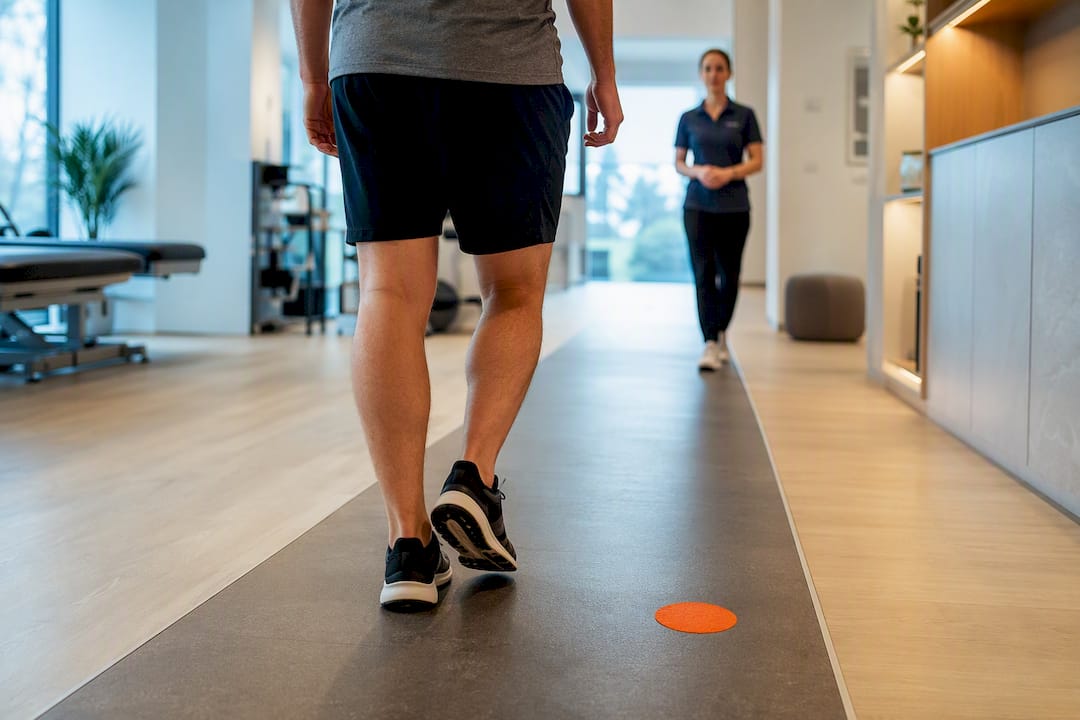
Start with three moves: standing balance work, high-knee marching, and heel-toe (tandem) walking, practised little and often with simple feedback like a mirror or a metronome. These target the motor-learning changes that make a new walking pattern stick, not just the muscles behind it. Most people need consistent practice over several weeks rather than one big effort. If you notice dizziness, sudden weakness, or any new neurological symptom, stop and book an assessment at a physiotherapy centre before continuing.
TL;DR:
Consistent practice over several weeks is essential for gait retraining, focusing on control and timing rather than sheer effort or strength.
Starting with simple balance exercises and marching helps rebuild control, but adding functional drills like obstacle negotiation enhances real-world walking skills.
Feedback tools like mirrors, videos, and metronomes speed up progress by reinforcing correct patterns, but reliance on them should gradually decrease.
Proper clinical assessment is crucial before beginning, especially for those with neurological or balance issues, to identify specific deviations and safety concerns.
Gradual, structured progression from static balance to complex, task-specific drills yields the best long-term improvements in gait stability and confidence.
Table of Contents
What are the best gait retraining exercises to start with?
Gait retraining works because walking is a skill, not just a strength test. You are teaching your nervous system a pattern it has to relearn, which is why the exercises below focus on control, timing, and feedback rather than raw effort. Work through them roughly in order, since each one builds a component the next one needs.
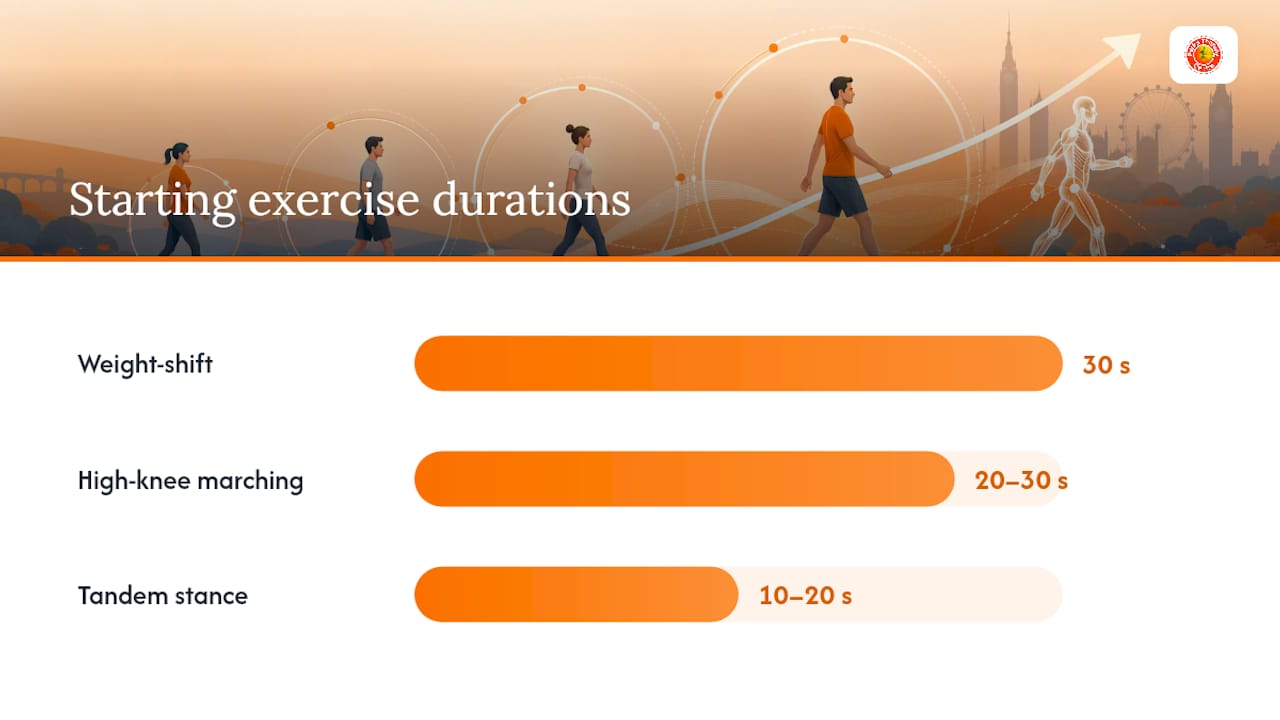
Weight-shift and tandem stance. Stand with feet hip-width apart, hands near a worktop for safety, and shift your weight slowly from one foot to the other for 30 seconds. Once that feels stable, move into tandem stance: one foot directly in front of the other, heel to toe, holding for 10 to 20 seconds per side. This rebuilds the lateral control that most gait problems quietly erode.
Single-leg stance. Balance on one leg for as long as you can manage, starting with a light fingertip touch on a chair if needed. Aim for three attempts per side. Progress by closing your eyes briefly or turning your head, which forces your balance system to work without visual cues.
High-knee marching. March in place, lifting each knee to hip height, for 20 to 30 seconds. This drill directly targets hip flexor timing and the swing-phase control that often collapses after injury or stroke, when the leg tends to drag or catch on the floor.
Forward, back, and lateral stepping. Step forward and return, then backward and return, then sideways in each direction, for 8 to 10 repetitions per pattern. This trains the multidirectional control that everyday walking actually demands, since real pavements rarely offer a straight, flat path.
Heel-toe walking. Walk a straight line placing the heel of one foot directly in front of the toes of the other. Ten steps forward, turn, ten steps back. This is one of the most effective single drills for correcting a widened or unsteady base of walking.
Heel raises and controlled lowering. Rise onto your toes, hold briefly, then lower slowly over a count of three or four. Fifteen repetitions builds the calf strength and ankle control that push-off during walking depends on, and the slow lowering phase teaches the control most people skip.
Once those feel manageable, add functional drills that mimic real walking demands:
Target stepping with cones or markers placed at varying distances to practise adjusting stride length on the move.
Narrow-path walking, using tape on the floor or a line of cushions, to sharpen precision under a real constraint.
Dual-task walking, such as carrying a full cup of water or counting backwards while walking, which forces your gait pattern to hold up under distraction, exactly as task-oriented motor learning exercise research recommends for older adults.
Obstacle negotiation, stepping over a rolled towel or low object, to rehearse the foot clearance many falls are caused by them.
For anyone with significant weakness, partial-support versions matter. Hold a stable rail or worktop throughout, reduce the range of motion (a smaller step, a shorter hold), and drop single-leg work until double-leg balance is solid. Frail older adults often do better starting with seated marching and supported weight shifts before attempting any free-standing version, a progression echoed in NHS balance and gait guidance. Stroke survivors typically need higher repetition at a lower intensity, since recovery of walking pattern relies on frequent, task-specific practice to encourage the nervous system to rebuild the pathway rather than one demanding session.
Watch for two common compensations. The first is knee stiffening, where the knee locks rather than bending naturally through swing, usually a sign of underlying weakness or fear of falling. The cue: “soft knee” on every step. The second is reduced arm swing, often seen after stroke or in older adults who have become cautious walkers. The cue: exaggerate arm swing slightly during marching drills to reintroduce it without forcing an unnatural pattern.
Pro Tip: Practise heel-toe walking near a wall for the first week, using it only as a light safety net rather than a genuine support. Reaching for support undermines the very balance control you are trying to build.
If any exercise here relates to a broader balance concern, balance exercises for older adults covers a fuller supervised programme worth reviewing alongside this list.
How to practise so the changes actually stick
Doing an exercise once rarely changes how you walk. What changes it is structured repetition, spaced correctly, with the right mix of predictability and challenge.
A sensible home routine looks like 10 to 15 minutes daily, covering two or three of the drills above, paired with periodic supervised sessions. That mirrors the pattern seen in feedback-based retraining research, where systematic review evidence points to around 8 to 10 supervised sessions across 4 to 8 weeks producing measurable gains in walking function.
Motor-learning science also has a clear rule about how to structure the repetitions themselves. Early on, use blocked practice, repeating one drill several times before switching, so the nervous system establishes the basic pattern. As it gets more reliable, shift to random practice, mixing drills in unpredictable order. This “contextual interference” makes practice feel harder in the moment, but it produces gait changes that transfer better to real-world walking, according to motor-learning reviews on gait rehabilitation. Task specificity matters too: practising the actual movement you struggle with (say, turning corners) teaches your body more than generic leg-strengthening ever will.
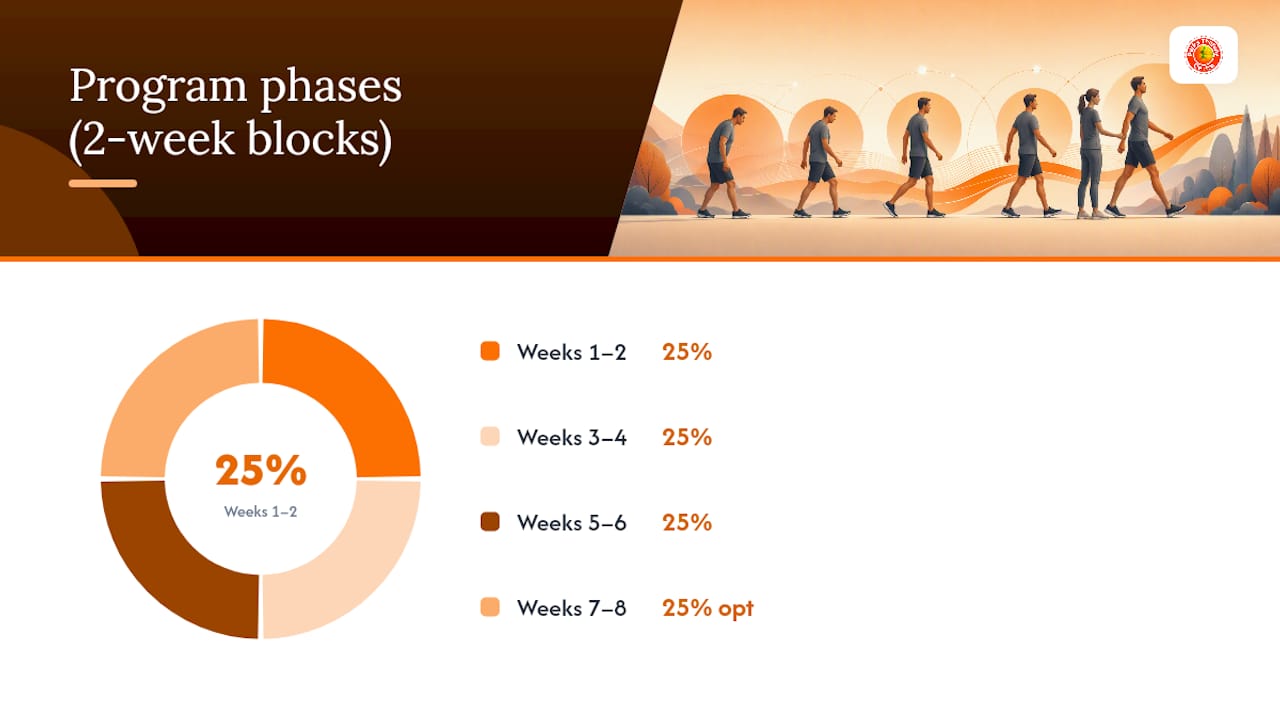
A simple 6 to 8 week ladder:
Weeks 1 to 2: Master static balance and marching with support nearby; focus purely on form.
Weeks 3 to 4: Add heel-toe walking and stepping patterns; reduce support; introduce blocked repetition of two drills per session.
Weeks 5 to 6: Mix drills randomly; add dual-task and obstacle work; begin timing yourself over a set distance.
Weeks 7 to 8 (if needed): Practise in varied environments, such as outdoors or on uneven ground, to consolidate the gains.
To keep goals realistic, check off this short list before each phase: can you do the current drill without losing balance three times in a row; can you hold the pattern for the full set without a support touch; and has walking speed or confidence noticeably improved over the past week. If any answer is no, stay at that stage longer rather than pushing forward.
Should you use feedback tools or keep it simple?
You do not need equipment to retrain your gait, but feedback speeds things up because it tells your brain, in real time, whether the new pattern is correct.
Mirror practice: stand sideways to a full-length mirror during marching or stepping drills to check posture and stride symmetry.
Smartphone video: film yourself walking and compare week to week, which reveals compensations you cannot feel yourself.
Metronome apps: set a beat slightly faster than your current cadence to nudge step rate up gradually, a technique commonly used with injured runners targeting a 5 to 10% step-rate increase over several weeks.
Wearable sensors (IMUs): clinic-grade inertial sensors have shown short-term gains in gait speed and stride length in pilot studies with older inpatients, though the evidence is early and benefits are strongest during the feedback itself.
The principle behind all of these is faded feedback: start with frequent cues, whether visual, auditory, or a physiotherapist’s hands-on correction, then deliberately withdraw them as the pattern becomes automatic. Skipping this step is a common mistake, since permanent reliance on a mirror or a metronome beat means the pattern never truly becomes your own. For many everyday walking problems, a mirror and a consistent home routine are genuinely enough. Save wearables and treadmill visualisation for cases that plateau on simple methods.
What should a physiotherapist check before you start?
Not every walking problem is safe to self-manage. Stop and seek urgent care for new fainting, chest pain, or any sudden neurological loss, such as facial drooping, slurred speech, or one-sided weakness.
For everyday safety, keep your practice area clear of rugs and clutter, wear supportive flat shoes rather than socks or worn slippers, and always have a stable surface within reach during early sessions.
A proper clinical assessment, such as the one described in how a physiotherapy assessment works, typically covers observed gait analysis (watching you walk to spot deviations), balance testing, strength and joint range checks, and functional measures like timed walking distance. This picks up the specific deviation driving your problem, whether that’s reduced hip extension, poor foot clearance, or asymmetric weight-bearing, rather than guessing from generic exercises. Anyone recovering from a fall, surgery, or a neurological event should have this assessment before building an independent programme.
Pro Tip: Bring a short video of your own walking to your first appointment. It gives your physiotherapist a real-world sample, not just a clinic-corridor snapshot, which often reveals different compensations.
What patients actually experience during gait retraining
Progress in gait retraining rarely looks dramatic week to week. It looks like slightly longer single-leg holds, one fewer stumble on the narrow-path drill, a little more arm swing without being told to add it. Patients who stick with short daily practice tend to outperform those who do one long session weekly, because the nervous system responds to frequency more than intensity.
The pattern that compounds fastest is graded challenge: master the static version, then add movement, then add distraction. Skip a stage and confidence usually collapses under the harder version. Take the stages in order and the improvement tends to hold.
— Ivan
Book a supervised gait retraining assessment
Home practice takes you a long way, but a trained eye catches compensations you cannot see or feel yourself, and adjusts your programme as you progress rather than leaving you guessing at week four. Gait retraining typically starts with a full assessment: observed walking analysis, balance and strength testing, and a plan built around your specific deviation rather than a generic exercise sheet.
Supervised sessions then apply the same motor-learning principles covered here, faded feedback, structured progression, task-specific drills, but with real-time correction and equipment such as visual feedback tools where appropriate. Whether you’re recovering from a stroke, rebuilding confidence after a fall, or correcting a running gait that keeps causing pain, the team can tailor the pace to your situation. If you’d like a personalised plan rather than a one-size programme. Visit Parks Therapy Centre to check availability and book your assessment.
This article is general information, not a substitute for advice from a qualified doctor. Consult a qualified healthcare professional about your own circumstances before acting on anything here.
Sources
FAQ
How do you retrain your gait?
Retraining your gait combines specific exercises, such as balance work, marching, and heel-toe walking, with structured practice and feedback that fades over time. Consistency across several weeks matters more than the intensity of any single session.
What are some good exercises for improving my gait?
Weight-shift and tandem stance, single-leg balance, high-knee marching, heel-toe walking, and controlled heel raises form a solid starting set. Functional drills like obstacle stepping and dual-task walking add real-world challenge once the basics feel stable.
What are some good gait exercises for seniors?
Seated or supported marching, weight shifts near a stable surface, and slow heel-toe walking with a rail nearby suit older adults well, particularly those managing frailty or a fear of falling. Progress gradually to unsupported versions only once balance feels reliable.
What are some types of gait exercises?
Gait exercises generally fall into balance drills (single-leg stance, tandem stance), strength and control drills (heel raises, marching), and functional or task-specific drills (obstacle negotiation, dual-task walking, narrow-path practice). A well-structured programme usually blends all three types.
Recommended