
Groin injury prevention tips for athletes: proven strategies
TL;DR:
Preventing groin injuries requires regular screening and targeted strengthening exercises.
The adductor squeeze test accurately assesses injury risk and guides prevention strategies.
Consistent, structured training like the Copenhagen exercise significantly reduces injury occurrence.
Groin injuries have a frustrating habit of striking at the worst possible moment, pulling footballers off the pitch mid-season, forcing runners to rest just as their fitness peaks, and leaving hockey players watching from the sidelines. The trouble is, most athletes in Bedfordshire and Buckinghamshire know they should be doing something to prevent these injuries, but the sheer volume of conflicting advice makes it difficult to know where to start. This guide cuts through the noise and focuses on what the evidence actually supports, giving you a clear, practical framework to reduce your risk of groin strains, adductor tears, and related pain before they sideline your performance.
Table of Contents
Key Takeaways
Point | Details |
Screen for early risk | Regular adductor squeeze tests identify problems before symptoms appear. |
Train adductor strength | Focus on proven exercises like Copenhagen Adduction for measurable protection. |
Use multifaceted routines | Combining strength, flexibility, and coordination training reduces groin injury rates most. |
Monitor and adapt | Adjust your prevention approach based on progress checks and risk screening. |
Adherence is crucial | Consistent exercise and screening deliver better results than any single tip or routine. |
Why groin injuries happen and who’s at risk
To understand how to prevent injury, it helps to recognise why groin injuries occur and who should be most cautious. The groin region is under enormous mechanical demand during sport, especially in activities involving rapid changes of direction, explosive acceleration, and overstretching. When the hip adductors (the muscles on the inner thigh responsible for pulling your legs together) are fatigued, loaded unexpectedly, or simply too weak to cope with the demand placed on them, a strain or tear is the common result.
Understanding the basics of sports injury prevention starts with identifying who carries the most risk. High-risk groups include:
Footballers and rugby players, who face rapid lateral loading throughout a match
Ice and field hockey players, whose skating and running mechanics load the adductors intensely
Runners increasing training volume, particularly those adding speed or hill work without a gradual build
Active adults returning after a break, whose muscles have deconditioned but whose enthusiasm hasn’t
A history of previous groin injury is also a major warning sign. Once you have strained the adductors, you are significantly more likely to experience a recurrence, particularly if you return to sport before full strength is restored. Poor warm-up habits, limited hip flexibility, and strength imbalances between the left and right side all add to the risk picture.
The most important single predictor? Adductor muscle strength. Research shows that low hip adductor strength is moderately associated with future groin pain, with a standardised mean difference of SMD=0.5, meaning athletes with weaker adductors are meaningfully more likely to sustain injury. This is not just about being strong in the gym; it is about having the specific strength to control your hip under dynamic, unpredictable sport conditions.
“Injury prevention begins with knowing your risk. If you have had a groin injury before, or you play a sport that demands rapid direction changes, treating your adductors as a priority is not optional.”
The step-by-step injury prevention process always starts with honest self-assessment. Ask yourself: do you feel tightness in the inner thigh after training? Do you notice any weakness when you squeeze your legs together against resistance? These cues matter.
Screening and monitoring: stay ahead of groin injuries
Knowing who’s most at risk, let’s look at how routine screening and early detection improve prevention. Screening sounds clinical, but in practice it means performing a simple, structured test to identify weakness or vulnerability before pain develops. The most widely validated tool for groin injury screening is the adductor squeeze test.
Here is how to perform it:
Lie on your back with your hips at 45° of flexion (knees bent, feet flat on a surface)
Place a blood pressure cuff or a squeezable object between your knees at the widest point
Squeeze your knees together as hard as possible and hold for three seconds
Record the reading in mmHg (millimetres of mercury, a standard pressure measurement)
Research confirms that squeeze test benchmarks at 45° hip flexion are particularly informative: a reading above 225 mmHg indicates lower injury risk, while scores below this threshold increase your injury risk by approximately 2.5 times. This is a meaningful finding that should inform every pre-season check-up for footballers, rugby players, and other high-risk athletes across Bedfordshire and Buckinghamshire.
Squeeze test score (mmHg) | Risk level | Recommended action |
Above 225 | Lower risk | Maintain routine prevention programme |
175 to 224 | Moderate risk | Add targeted adductor strengthening |
Below 175 | Higher risk | Seek professional assessment promptly |
The test is also clinically useful. Its sensitivity of 78% and specificity of 85% mean it reliably identifies athletes who are genuinely at elevated risk, without too many false alarms. For context, preseason screening and monitoring reduce overall injury incidence by 15 to 20%, making it one of the simplest, highest-return prevention investments available.
Sports medicine teams increasingly combine squeeze testing with imaging. Using ultrasound for injury screening allows clinicians to assess soft tissue health directly, identifying subtle changes in adductor muscle structure before they become symptomatic. Not everyone needs imaging, but for athletes with recurring groin issues, it provides an extra layer of insight that clinical testing alone cannot.
For athletes focused on detecting injury risks early, a quarterly squeeze test during the season and a full pre-season screen is a sensible minimum. Track your scores over time. A sudden drop in squeeze strength, even without pain, is worth investigating before it becomes a problem.
Pro Tip: Add your adductor squeeze test to every pre-season medical or fitness check-up, and repeat it mid-season if your training load increases significantly. A five-minute test could save months of recovery.
The science-backed exercises for groin injury prevention
With screening in place, these exercises are your most effective line of defence. Not all exercises are created equal when it comes to groin injury prevention. The research is quite clear about which protocols deliver the most reliable results, and it is worth knowing the difference so you can train smarter rather than simply harder.
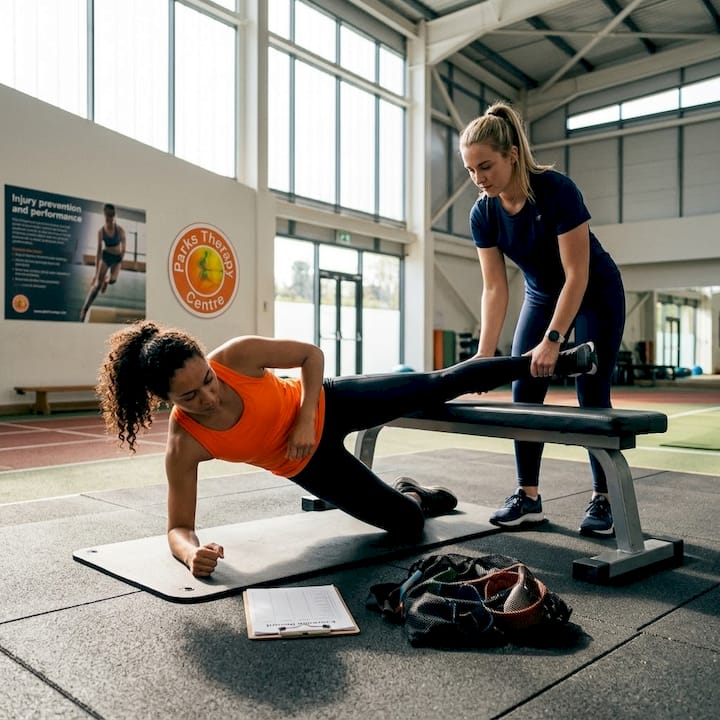
The Copenhagen Adduction Exercise (CAE) is currently the gold standard. To perform it, you need a partner or a stable elevated surface. Lie on your side, with your top leg supported at mid-shin height by your partner or a bench. Lower your bottom leg slowly toward the floor, then raise it back up using your inner thigh muscles. The exercise requires significant adductor strength and recruits the hip stabilisers in a way that replicates sport demands closely. Evidence confirms that the Copenhagen exercise reduces risk of groin problems by between 41% and 65%, making it one of the most effective preventive exercises in all of sports medicine.
The Holmich protocol is a structured, multi-week programme that combines adductor strengthening, coordination work, and progressive resistance loading. It is particularly useful for athletes who have a history of groin injury. Studies show the Holmich protocol improves adductor strength by 18 to 21% and restores functional movement patterns. It takes longer than the CAE to complete each session, but the comprehensive nature of the programme means it addresses multiple risk factors simultaneously.
The third important insight is about programme design itself. Multi-component prevention programmes that combine strength work, coordination drills, and multi-joint training outperform isolated single-exercise approaches for pain reduction, strength gains, and overall performance improvement by approximately 20%. This means that doing only the Copenhagen exercise, as good as it is, will not give you the full protection that a properly structured programme provides.
Protocol | Equipment needed | Primary benefit | Strength improvement | Best for |
Copenhagen Adduction Exercise | Partner or bench | Injury risk reduction | Up to 65% fewer injuries | All athletes |
Holmich protocol | Resistance bands, mat | Strength and function | 18 to 21% strength gain | Post-injury and high-risk |
Multi-joint prevention programme | Gym access | Overall performance | 20% combined improvement | Serious and elite athletes |
The best multi-joint prevention routines share one important quality: they are progressive. Starting too hard and failing to build gradually is a common mistake that leads to soreness, frustration, and ultimately abandonment.
Pro Tip: Only around 46% of athletes adhere to the Copenhagen Adduction Exercise long term. The exercise itself is not the barrier. Habit formation is. Pair your CAE with a lower-body session you already do consistently to reduce the friction of adding it to your routine.
Understanding the importance of injury prevention means recognising that no exercise works if it is not done regularly. The research supports these protocols strongly, but only when applied consistently over weeks and months, not days.
Building your prevention routine: expert tips
Now that you know the best exercises, here is how to make them stick in your routine. The gap between knowing and doing is where most groin injury prevention efforts fall apart. Here is how to close that gap with a structured weekly approach.
A practical weekly prevention routine looks like this:
Warm-up: Five to ten minutes of dynamic hip mobility before every session. Walking lunges, leg swings, and lateral band walks all prepare the adductors for loading.
Adductor strength sessions: Two to three times per week, perform three sets of eight to twelve Copenhagen Adduction Exercise repetitions per side, or follow your Holmich protocol programme.
Progressive loading: Increase difficulty every two to three weeks, either by adding repetitions, using a lower starting position, or slowing the lowering phase.
Deload weeks: Every four to six weeks, reduce volume by around 30% to allow tissue adaptation without overload.
Tracking: Log your squeeze test scores and how each session feels. Strength gains are motivating; seeing progress in your numbers builds long-term habit.
One important correction to a common misconception: many athletes focus on the adductor-to-abductor strength ratio, assuming that balancing inner and outer hip strength is the main goal. However, absolute adductor strength is more important than the ratio as a primary predictor of injury risk. Do not neglect your abductors, but do not let ratio chasing distract you from the core priority: building strong, resilient adductors.
The most effective combination is pairing the Copenhagen Adduction Exercise with coordination work and multi-joint exercises like split squats, single-leg deadlifts, and lateral bounds. These movements train the whole movement chain, not just the adductors in isolation.
For athletes managing other demands on their recovery, knowing how to approach managing sports injury recovery intelligently means balancing prevention work with adequate rest, so the tissue can actually strengthen rather than simply accumulate fatigue.
Pro Tip: Pair your Copenhagen Adduction Exercise with your existing lower-body or agility training session. Bolt it on at the end of a session you already do twice a week and your adherence will increase dramatically without adding extra gym time.
Why most groin injury prevention advice misses the mark
Here is an uncomfortable truth that we see repeatedly in clinical practice across Bedfordshire and Buckinghamshire: most groin injury prevention advice focuses on the what and completely ignores the whether. Whether athletes actually do the exercises consistently, whether they get screened at the start of a season, whether they track their progress. The information is rarely the limiting factor. Behaviour is.
The research backs this up starkly. Long-term adherence to CAE protocols sits below 50%, which means that even with the best exercise programme in the world, more than half of athletes are not getting the protection the research promises. This is not a criticism of athletes. It reflects how prevention programmes are typically delivered: as information handed over in a single session, without the follow-up, accountability structures, or personalised guidance that make habits stick.
The second gap is in structured screening. Pre-season squeeze testing takes five minutes and can meaningfully change an athlete’s training priorities for the entire season. Yet most amateur and recreational athletes in community sports across Bedfordshire and Buckinghamshire have never had it done. The importance of injury prevention only translates into real-world results when combined with structured monitoring, not just intent.
Our view, shaped by working with active adults and athletes in this region for decades, is that the most effective groin injury prevention is not the most advanced exercise protocol. It is the combination of regular, simple screening with consistent, well-structured training, embedded into an athlete’s existing routine with professional support. Flashy exercises have their place. But clarity, habit, and accountability are what actually reduce injuries over a full season.
Take your injury prevention further with expert support
Groin injury prevention works best when it is personalised to your sport, your body, and your current level of strength and flexibility. Generic advice can point you in the right direction, but a tailored programme built around your screening results will always deliver better outcomes.

At The Parks Therapy Centre, our experienced physiotherapy team across Bedfordshire and Buckinghamshire can carry out a full groin injury risk assessment, including adductor squeeze testing, movement screening, and strength evaluation. Whether you are a competitive footballer, a recreational runner, or an active adult looking to stay injury-free through a busy season, we can build a prevention programme around your actual risk profile. With expert sports injury support and over 35 years of clinical experience, we offer the monitoring and professional guidance that turns prevention intentions into consistent results. Book your assessment today and get ahead of your risk before it becomes a setback.
Frequently asked questions
How often should I do groin injury prevention exercises?
Aim for two to three sessions per week with a focus on quality movement and gradual progression, as regular CAE adherence is essential to achieving meaningful injury risk reduction.
Is the Copenhagen Adduction Exercise safe for beginners?
Yes, it is suitable for all levels provided you begin with easier progressions and increase the load gradually, as the evidence supports CAE as both safe and effective when properly progressed.
What is the best test to check my injury risk?
The adductor squeeze test at 45° hip flexion is the most reliable quick screen available, with validated benchmarks that clearly indicate whether your adductor strength places you at elevated risk.
Do I still need to stretch if I’m doing strength training?
Both flexibility and strengthening work together for the best outcomes, and the Holmich protocol specifically combines adductor strengthening with targeted stretching to address the full range of factors contributing to groin injury risk.
Recommended