
Hamstring strain recovery: timelines and staged rehab
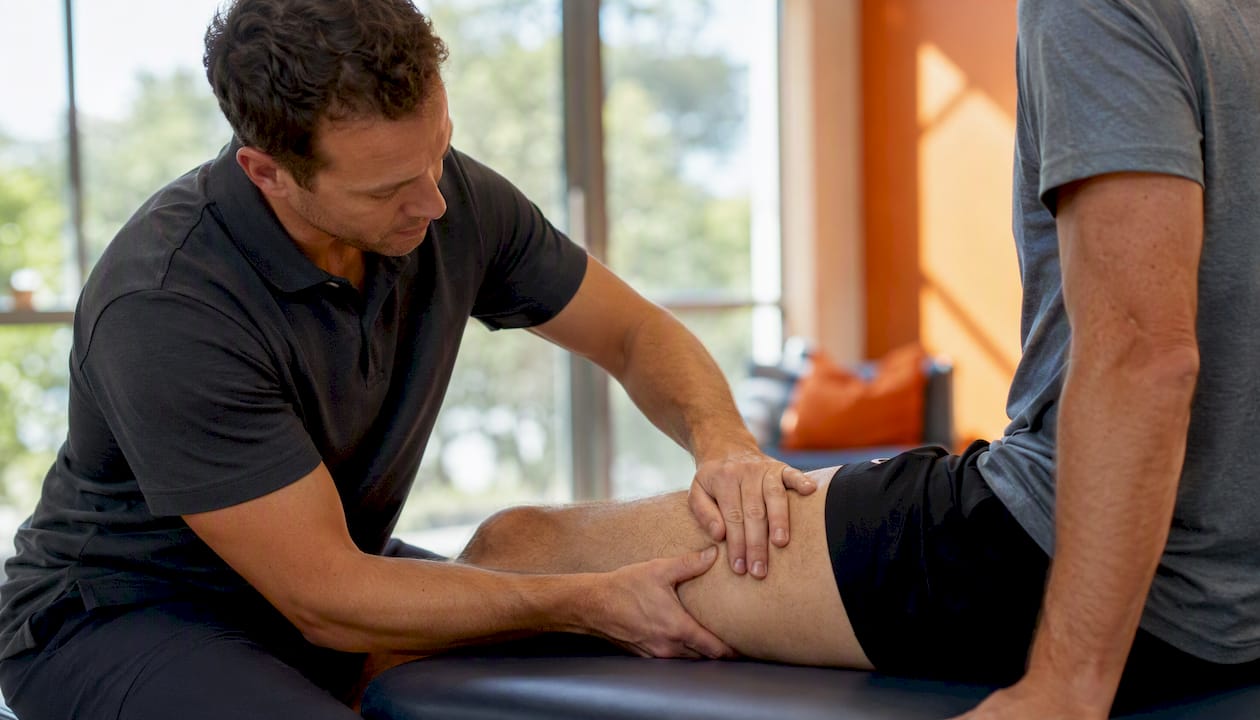
Hamstring strain recovery follows a clear, grade-dependent path. A grade I strain typically resolves within weeks; a grade II injury generally takes several weeks to months; and a grade III tear, involving a near-complete or complete rupture, can require several months or longer, with some cases needing surgical review. In the first 72 hours, the single most important action is to protect the limb, apply ice wrapped in a cloth for up to 20 minutes at a time, use compression and elevation, and avoid heat, deep massage and alcohol, all of which can worsen early bleeding and swelling.
Three sources underpin this guide:
NHS guidance on initial hamstring management, including PRICE principles and early precautions
StatPearls / NCBI evidence on staged rehabilitation, eccentric loading and the limited benefit of adjunct treatments
Parkstherapycentre clinical pathways, which combine objective assessment with personalised exercise prescription across clinics in Bedfordshire and Buckinghamshire
Key takeaways
Hamstring strain recovery requires graded loading, not rest alone: the grade of injury determines realistic timelines, and eccentric strengthening is the single most important rehabilitation element.
Point | Details |
Grade-based timelines | Grade I: two to four weeks; grade II: six to twelve weeks; grade III: four to six months or longer. |
First 72 hours | Use PRICE, avoid heat, massage and alcohol, and begin gentle walking as soon as pain allows. |
Rehab priority | Eccentric and lengthening hamstring exercises, not static stretching, drive faster return to activity. |
Return-to-activity criteria | Base decisions on functional milestones and strength symmetry, not time alone. |
Parkstherapycentre | Offers objective assessment and personalised staged rehab across Bedfordshire and Buckinghamshire clinics. |
Table of Contents
When should you see a clinician, and what are the red flags?
A staged rehabilitation programme: from early mobility to full loading
Do PRP injections and other adjunct treatments actually help?
How Parkstherapycentre assesses and treats hamstring strains
A clinician’s view: the mistakes that slow hamstring recovery most
Parkstherapycentre: personalised hamstring rehab, assessed and guided by clinicians
What is a hamstring strain and how do clinicians grade it?
The hamstring group comprises three muscles at the back of the thigh: the biceps femoris, semimembranosus and semitendinosus. A strain occurs when muscle fibres or their tendinous attachments are overstretched or torn, most commonly during sprinting, sudden deceleration or deep hip flexion with the knee extended. Understanding the terminology used in sports injury recovery helps you interpret what a clinician tells you about your injury.
Clinicians classify hamstring strains across three grades based on function rather than imaging alone:
Grade I involves a small number of torn fibres. You can walk, albeit with discomfort, and strength is largely preserved. Tenderness is localised and swelling is minimal.
Grade II is a partial tear. Walking is painful and noticeably altered; strength is reduced and you may feel a distinct pull or weakness when trying to jog. Bruising often appears within 24–48 hours.
Grade III means a near-complete or complete rupture, sometimes including an avulsion at the ischial tuberosity. Weight-bearing is severely limited, pain is intense and a palpable gap may be present. This grade warrants urgent clinical review and possible surgical referral.
Grade determines the care pathway. Grades I and II are managed conservatively with progressive rehabilitation. Grade III injuries require imaging, orthopaedic input and a shared decision about surgery versus extended non-operative care.
What to do in the first three to five days
Early management shapes the entire recovery trajectory. NHS guidance recommends PRICE for the first two to three days: Protect the limb from further load, Rest from aggravating activity, Ice for up to 20 minutes every two to three hours, Compress with a bandage to limit swelling, and Elevate the leg above hip height when resting.
Once acute pain begins to settle, usually after 48–72 hours, gentle movement is preferable to prolonged rest. The MEAT principle (Movement, Exercise, Analgesics, Treatment) guides this transition. Short, pain-free walks and gentle range-of-motion work limit scar formation and stiffness without stressing healing tissue.
Step-by-step early care:
Stop the activity immediately and protect the limb from further load.
Apply an ice pack wrapped in a cloth for up to 20 minutes; repeat every two to three hours for the first 48 hours.
Apply a compression bandage from the knee upward to reduce swelling.
Elevate the leg on a pillow or cushion whenever you are resting.
Take paracetamol for pain; NSAIDs such as ibuprofen can be used short-term but are generally recommended for no more than five to seven days in acute soft-tissue injuries.
Begin gentle pain-free walking as soon as it is tolerable, typically within 24–48 hours for grade I and 48–72 hours for grade II.
Seek professional assessment if pain is severe, you cannot weight-bear, or bruising is extensive.
Avoid in the first 72 hours:
Heat packs, hot baths or saunas
Deep or vigorous massage to the injured area
Alcohol, which dilates blood vessels and increases bleeding
Aggressive stretching of the hamstring
Returning to sport or heavy loading
Pro Tip: Wrap ice in a damp cloth rather than applying it directly to skin. Direct ice contact for more than a few minutes can cause an ice burn, adding a skin injury to a muscle one.
When should you see a clinician, and what are the red flags?
Most grade I strains can be managed at home initially, but professional assessment within the first week is advisable for any injury beyond mild discomfort. A physiotherapist or GP will take a detailed history, palpate the muscle belly and ischial tuberosity, and assess functional strength and range of motion. Imaging is not always necessary, but MRI or diagnostic ultrasound is indicated for suspected grade III injuries, proximal avulsions or when recovery stalls unexpectedly.
Seek same-day or urgent review if you notice any of the following:
Complete inability to weight-bear
A large, rapidly expanding haematoma or significant visible deformity
Neurological symptoms such as numbness, tingling or weakness radiating down the leg
A suspected avulsion at the ischial tuberosity (pain directly at the sitting bone)
No improvement after 72 hours of appropriate self-care
Within the NHS, your GP can refer you for physiotherapy or, in complex cases, orthopaedic assessment. Private physiotherapy assessment, such as that offered at Parkstherapycentre, is typically available within days and includes objective functional testing alongside clinical examination.
A staged rehabilitation programme: from early mobility to full loading
Graded rehabilitation that emphasises eccentric hamstring loading and trunk stabilisation is the evidence-based standard for hamstring strain rehab. The four stages below provide a practical framework; your physiotherapist will adjust timelines based on your grade, symptoms and functional progress.
Stage 1: Pain control and protected movement (days 1–7 for grade I; days 1–14 for grade II)
Short, pain-free walks on flat ground
Gentle prone knee flexion: lying face down, slowly bend the knee to 90° and return; 2 sets of 10 repetitions
Supine hamstring stretch: lying on your back, lift the leg with a towel around the foot, stopping well before pain; hold 20–30 seconds
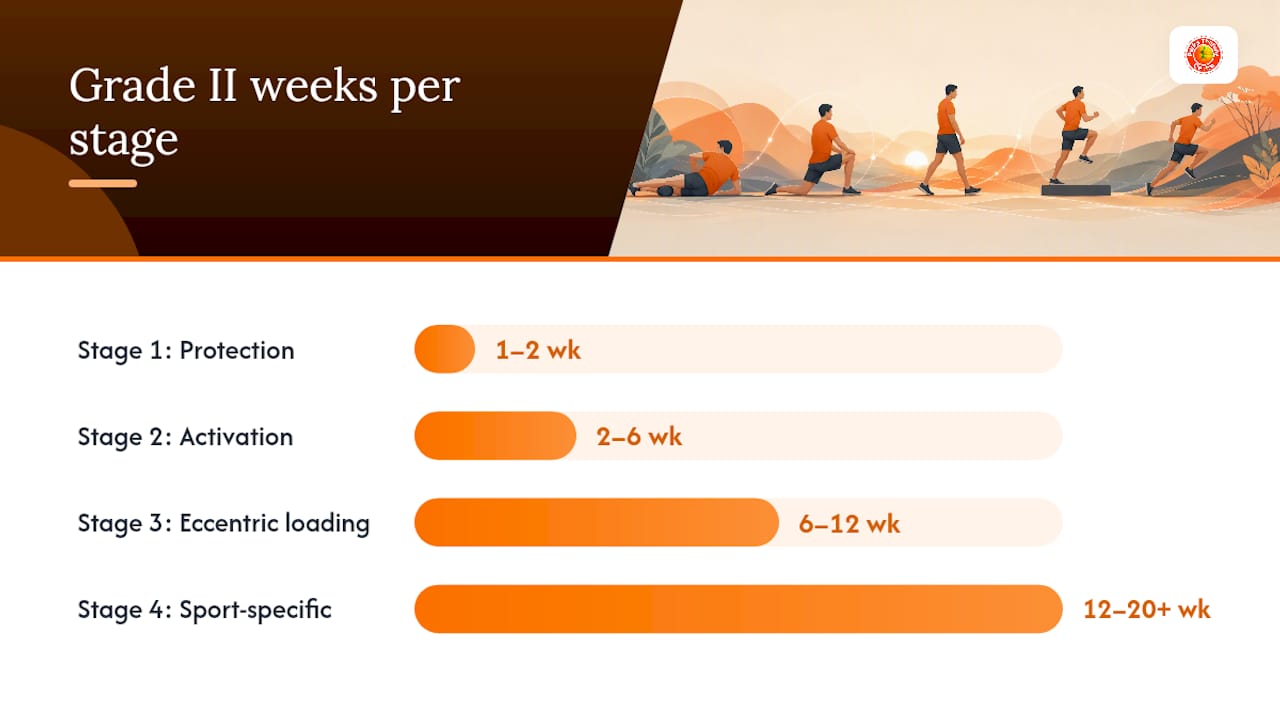
Stage 2: Early loading and activation (weeks 2–4 for grade I; weeks 2–6 for grade II)
Isometric hamstring holds: seated, press the heel into the floor and hold for 5–10 seconds; 3 sets of 10
Standing hip hinge: hinge at the hip with a slight knee bend, maintaining a neutral spine; 3 sets of 12
Concentric leg curl with resistance band: 3 sets of 12–15, stopping if pain exceeds 3/10
Stage 3: Eccentric and lengthening work (weeks 4–8 for grade I; weeks 6–12 for grade II)
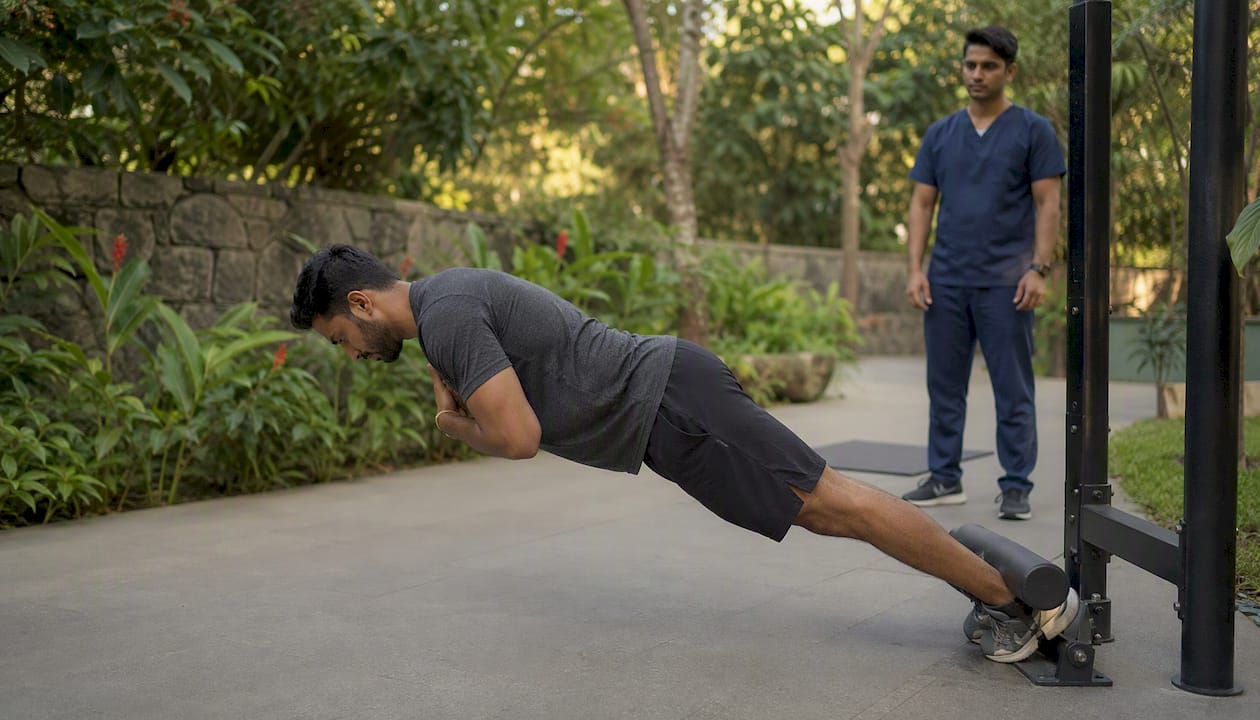
This stage is where most programmes fall short. Programmes that load the hamstring during extensive lengthening produce faster return to sport than those emphasising isolated strengthening alone. Nordic-type progressions are the most studied example.
Assisted Nordic curl: kneel with feet anchored, lower the torso slowly under control; begin with 3 sets of 4–6 repetitions
Romanian deadlift with light load: 3 sets of 10, emphasising the lowering phase
Single-leg deadlift for pelvic and trunk stability: 3 sets of 8 per side
Addressing pelvic and trunk control at this stage can shorten return-to-play time. Exercises such as dead bugs, pallof press and single-leg bridges complement hamstring loading by reducing compensatory patterns.
Stage 4: Sport-specific and plyometric progressions (weeks 8–12 for grade I; weeks 12–20+ for grade II; months 4–6+ for grade III)
Progressive running: walk–jog intervals, building to continuous jogging, then striding
Acceleration drills at 50%, 70% and 90% of maximum speed
Lateral change-of-direction drills and sport-specific agility patterns
Plyometric progressions: double-leg hops progressing to single-leg bounds
Pro Tip: *Never introduce high-speed running purely because a time target has been reached.
Stage | Approximate weeks (grade II) | Key goals | Sample exercises |
1: Protection | 1–2 | Pain control, reduce swelling | Gentle walks, prone knee flexion |
2: Activation | 2–6 | Restore basic strength | Isometric holds, hip hinge |
3: Eccentric loading | 6–12 | Lengthening strength, trunk control | Nordic curl, Romanian deadlift |
4: Sport-specific | 12–20+ | Full speed, agility, confidence | Sprint progressions, plyometrics |
For home exercise progressions during stages 1 and 2, a structured library of physiotherapist-authored movements can help you stay on track between clinic appointments.
How do you know when you are ready to return to activity?
Recovery time varies substantially with severity: mild strains may resolve in days to a few weeks, while severe injuries can take months. Time alone is not a reliable guide. Returning to sport based on a calendar date rather than functional criteria is one of the most common causes of reinjury.
Objective milestones to discuss with your physiotherapist before resuming higher-demand activities:
Pain-free walking on flat ground at normal pace
Pain-free jogging for at least 10 minutes continuously
Single-leg hamstring strength within 10–15% of the uninjured side (assessed by a clinician)
Ability to perform a single-leg bridge hold for 30 seconds without pain or pelvic drop
Completion of sport-specific drills at 90% effort without pain or apprehension
Milestone | Grade I (approx.) | Grade II (approx.) | Grade III (approx.) |
Pain-free walking | Days 1–3 | Days 3–7 | Weeks 2–4 |
Pain-free jogging | Weeks 1–2 | Weeks 4–8 | Months 2–4 |
Return to training | Weeks 2–4 | Weeks 8–12 | Months 4–6 |
Return to competition | Weeks 3–6 | Weeks 10–12 | Months 4–6+ |
Conservative measures including walking and low-stress activity, once pain allows, are a well-supported re-entry strategy. The key is that each step up in load is earned by meeting the previous milestone, not by the passage of time.
For guidance on building a safe post-injury training plan, structured load management principles help you progress without overloading healing tissue.
Which factors affect how quickly you recover?
Not all hamstring strains of the same grade recover at the same rate. Several clinical features predict a longer or more complicated course:
Mechanism of injury: Stretching injuries, such as those occurring during yoga or a split, often carry a worse prognosis than high-speed sprinting injuries, despite sometimes appearing less dramatic at first.
Location: Proximal injuries near the ischial tuberosity, particularly semimembranosus involvement, tend to recover more slowly and carry a higher rate of poor outcome. Large haematomas in this region are associated with longer rehabilitation.
Haematoma size: A large or deep haematoma, visible on imaging or clinically apparent as significant bruising, predicts a longer recovery. Clinical assessment combined with MRI or ultrasound better defines prognosis for these higher-grade or proximal injuries.
Early functional markers: Inability to walk pain-free within 24–48 hours of injury and a greater range-of-motion deficit at initial assessment are associated with longer healing times.
Pelvic and trunk control: Weakness or poor control of the lumbar spine and pelvis places greater demand on the hamstrings during movement, slowing return to full function if not addressed in rehabilitation.
Early physiotherapy assessment matters most for proximal injuries and those with significant haematoma, where imaging and clinical grading together guide the decision between conservative and surgical management.
Do PRP injections and other adjunct treatments actually help?
The honest answer is that most adjunct treatments have not demonstrated consistent benefit in well-designed studies. Rehabilitation emphasising eccentric loading and trunk stabilisation remains the evidence-based core; adjuncts should supplement, not replace, that foundation.
Platelet-rich plasma (PRP): Systematic reviews have not consistently shown that PRP reduces time to return to play or lowers reinjury rates compared with structured rehabilitation alone. It may be considered in high-level athletes or when standard rehab has stalled, but it is not a routine recommendation.
Therapeutic ultrasound: Evidence for accelerating soft-tissue healing in hamstring strains is limited and inconsistent. Some clinicians use it for symptom management in the early phase, but it should not be prioritised over progressive loading.
Low-level laser therapy and extracorporeal shockwave therapy (ECSW): Both have limited, inconsistent support for hamstring injuries specifically. They may have a role in chronic or recalcitrant cases under clinician guidance.
Deep massage in the acute phase: Contraindicated in the first 72 hours due to the risk of worsening bleeding. Soft-tissue work has a place in later rehabilitation stages but should be applied by a qualified therapist at the appropriate time.
NSAIDs: Useful short-term for pain and inflammation management in acute care, but prolonged use is not recommended. Paracetamol is a reasonable alternative for those who cannot tolerate anti-inflammatory medication.
The clinical recommendation is clear: prioritise progressive, graduated loading over passive or unproven treatments.
How can you reduce the risk of another hamstring strain?
Prevention after recovery is not optional. Reinjury rates for hamstring strains are notably high, particularly in the first few months after return to sport, and a structured maintenance programme substantially reduces that risk.
Maintenance programme components:
Ongoing eccentric and lengthening hamstring work: Nordic curls or Romanian deadlifts at least twice per week, even after full return to activity
Trunk and pelvic stability exercises: dead bugs, single-leg bridges and pallof press maintained as part of a regular training routine
Progressive high-speed exposure: avoid sudden increases in sprint volume or intensity; build speed work gradually over weeks, not days
Warm-up template for active adults:
5 minutes of brisk walking or light cycling
Dynamic leg swings: forward and lateral, 10 repetitions each side
Walking lunges with a trunk rotation: 10 metres
High-knee marching progressing to high-knee skipping: 10 metres each
Progressive strides: 30 metres at 50%, 70% and 85% of maximum speed
Practical load management after returning:
Reduce training volume by 20–30% in the first two weeks back and build incrementally
Avoid combining high-speed running with heavy lower-body strength work in the same session during the first month back
Review footwear and running surface; worn trainers and uneven terrain increase injury risk
How Parkstherapycentre assesses and treats hamstring strains
Parkstherapycentre has delivered physiotherapy and sports injury treatment across Bedfordshire and Buckinghamshire since 1986. The multidisciplinary team includes qualified physiotherapists experienced in musculoskeletal and sports injury assessment, working alongside podiatrists, sports therapists and other specialists.
A typical hamstring assessment at Parkstherapycentre includes a detailed injury history, palpation of the muscle belly and proximal attachment, functional strength and range-of-motion testing, and a discussion of your activity goals. From that baseline, the clinician builds a personalised exercise prescription aligned with the staged rehabilitation framework described in this guide.
For patients with NHS referrals, the team can work alongside GP and orthopaedic pathways. Private appointments are typically available within days, which matters most in the early phase when prompt assessment can shorten overall recovery. Where imaging or surgical review is indicated, the team provides clear onward referral guidance.
Physiotherapy tips for beginners from the Parkstherapycentre team offer a useful starting point if you are new to structured rehabilitation.
A clinician’s view: the mistakes that slow hamstring recovery most
The most common error is returning to running because the pain has gone, not because the hamstring is ready. Pain-free walking is a low bar. The tissue is still remodelling for weeks after symptoms resolve, and loading it at high speed before strength symmetry is restored is the primary driver of reinjury.
The second most frequent mistake is skipping eccentric loading entirely. Many people do a few gentle stretches, feel better and return to sport. Stretching alone does not rebuild the tensile strength the hamstring needs to absorb force at speed. Nordic-type progressions feel uncomfortable and unfamiliar, which is exactly why they tend to be avoided and exactly why they matter.
Trunk control is the third neglected element. A pelvis that drops or rotates under load forces the hamstring to work harder than it should, particularly during single-leg activities. Addressing this is not glamorous, but it shortens recovery and reduces the chance of coming back with the same injury six weeks later.
The practical advice: track your progress with simple functional tests, not just how the leg feels on a given morning. Work with a physiotherapist who uses objective measures, not just symptom reports, to guide progression.
Parkstherapycentre: personalised hamstring rehab, assessed and guided by clinicians
A thorough clinical assessment is the fastest route to a clear recovery plan. At Parkstherapycentre, a hamstring assessment covers objective strength and range-of-motion testing, functional movement screening and a personalised exercise programme built around your grade of injury and your activity goals, whether that is returning to recreational sport, managing a physical job or simply walking without pain.

Appointments are available privately across clinics in Bedfordshire and Buckinghamshire, with most patients seen within days of enquiry. The team also accepts many private health insurance policies and can advise on NHS referral routes where appropriate. If you are unsure whether you need an in-person appointment, telephone triage is available so a clinician can help you decide the right next step. When you book, bring a brief note of your symptom history, when the injury occurred and any imaging you have already had.
Book your hamstring assessment at Parkstherapycentre and receive a structured, evidence-based plan from the first appointment.
Sources
The following resources support the guidance in this article and are recommended for further reading:
This article provides general information for educational purposes and does not replace professional medical or physiotherapy advice. If you are unsure about your injury or symptoms, consult a qualified clinician or your GP.
This article is general information, not a substitute for advice from a qualified doctor. Consult a qualified healthcare professional about your own circumstances before acting on anything here.
Recommended