
Healthyugym.com alternatives for musculoskeletal care
TL;DR:
Clinician-led physiotherapy provides accurate diagnosis and staged rehabilitation, outperforming gyms and apps.
Private clinics like Parks Therapy Centre offer in-person, insurer-accepted care, while NHS appointments are free but slower.
For injury or chronic pain, the strongest alternative to HealthyUGym is a clinician-led physiotherapy clinic. Parks Therapy Centre is the featured option here: a multidisciplinary service established in 1986, with HCPC-registered and Chartered physiotherapists, insurance acceptance, and online booking across Bedfordshire and Buckinghamshire.
HealthyUGym is a women’s wellbeing facility offering group classes, personal training and community activities. That is a different service entirely from clinical rehabilitation. For musculoskeletal injury, the shortlist below reflects what actually works.
Shortlist by category:
Private physiotherapy clinic (e.g. Parks Therapy Centre): best for acute injury, chronic pain, staged rehabilitation
NHS physiotherapy: best for those with a GP referral and no time pressure
Telehealth physio: best for remote assessment and home exercise prescription
Specialist rehab clinic: best for post-surgical or complex orthopaedic recovery
Recovery-focused apps: best as an adjunct to prescribed home exercise, not a clinical replacement
Gym with rehab services: best for maintenance and reconditioning once discharged from clinical care
Option | Best for | Service type | Clinician qualifications | Insurance / NHS | Treatment approaches |
Acute injury, chronic pain, staged rehab | In-person / hybrid | HCPC-registered, Chartered physios | Insurance accepted; NHS referrals | Manual therapy, Pilates, acupuncture, podiatry, APOS device therapy | |
NHS physiotherapy | Moderate MSK conditions, GP-referred | In-person | HCPC-registered | NHS-funded | Exercise therapy, manual therapy |
Telehealth physio | Remote triage, home exercise | Remote | Varies; check HCPC registration | Some insurers cover | Video assessment, exercise prescription |
Specialist rehab clinic | Post-surgical, complex orthopaedic | In-person | Consultant-led, physio team | Insurance typically required | Staged rehab, hydrotherapy, device therapy |
Recovery apps | Home exercise adjunct | Digital | None (no clinical diagnosis) | Not applicable | Exercise programmes, HRV/load tracking |
Gym with rehab services | Maintenance, reconditioning | In-person | Fitness instructors (not clinicians) | Not applicable | Resistance training, group classes |
Clinician-led physiotherapy outperforms a fitness gym for injury care for three clear reasons. First, HCPC registration and Chartered status mean the clinician is accountable to a professional regulator, which no gym instructor is. Second, evidence-based physiotherapy uses diagnosis-specific treatment protocols rather than generic exercise. Third, clinical services such as sports physiotherapy include staged return-to-activity planning that a gym programme simply cannot replicate.
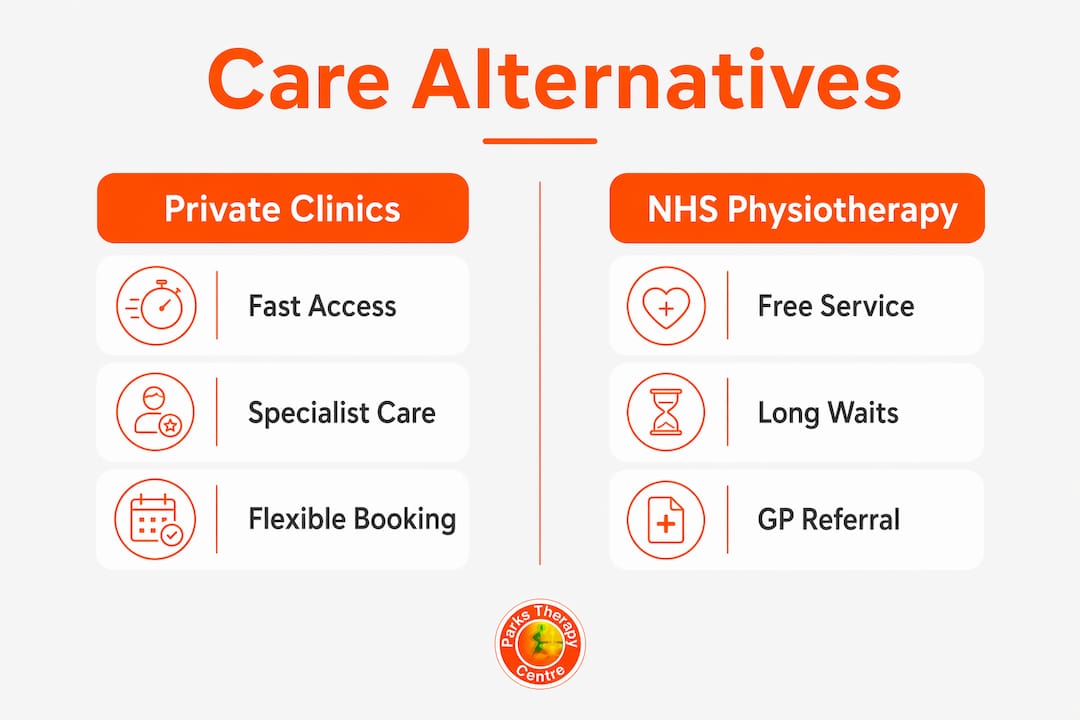
Quick decision rule: acute injury or new pain — book a private physio assessment today. Waiting for an NHS referral — do so, but consider private triage in the interim. Maintenance after discharge — a gym or app is appropriate. Pregnancy-related discomfort — choose a clinic offering specialist antenatal physiotherapy.
Table of Contents
What do physiotherapy sessions cost, and how long does recovery take?
Private physiotherapy sessions in the UK typically cost £50–£90 for an initial assessment, with fees for follow-up visits and total sessions depending on condition complexity. Recovery time varies from several weeks for straightforward cases to several months for complex or post-surgical situations.
NHS physiotherapy is free at the point of use but waiting times vary considerably by trust and region. Recovery timelines depend on the condition, the patient’s adherence to home exercise, and whether the underlying cause has been addressed clinically. A clinical guide to musculoskeletal injuries outlines typical recovery windows by injury type.
How do you access physiotherapy care in the UK?
There are four main routes. A GP referral opens the NHS pathway, which is free but subject to waiting lists. Private pay means booking directly with a clinic, with no referral needed and typically faster access. Health insurance (Bupa, AXA Health, Vitality and others) usually covers private physiotherapy with a pre-authorisation code. Online booking, offered by clinics including Parks Therapy Centre, removes the need for a phone call and lets you choose your clinician and appointment time directly.
Pros and cons of the main alternatives
Private physiotherapy clinics offer fast access, specialist diagnosis, and a broad treatment toolkit. The main drawback is cost if you are uninsured. NHS physiotherapy is free but waiting times can be lengthy, and treatment episodes are often shorter. Telehealth physio suits patients who cannot travel but lacks hands-on manual therapy. Recovery apps such as those reviewed by Forbes Health are useful for prescribed home exercise but are not a substitute for clinical diagnosis. PCMag’s guidance is clear: for injury or pain management, choose platforms with clinician-grounded content, not general workout apps.
How does booking work for each type of provider?
Parks Therapy Centre offers direct online booking through its website, with appointment confirmation by email. Most private clinics follow the same model. NHS physiotherapy requires a GP referral first, after which the trust contacts you with an appointment. Telehealth providers typically use a video platform and send a home exercise plan digitally after the session. Cancellation policies for private clinics usually require 24–48 hours’ notice to avoid a charge; check the specific clinic’s policy at the time of booking.
How does access differ across UK regions?
Urban areas have the widest choice of private physiotherapy clinics, specialist rehab centres, and telehealth providers. Rural patients often face longer travel times to in-person clinics and longer NHS waiting lists. Telehealth physiotherapy narrows this gap considerably, offering sports injury rehabilitation guidance and home exercise prescription regardless of location. Parks Therapy Centre serves patients across Bedfordshire and Buckinghamshire from its local clinic network.
Parkstherapycentre: clinician-led care you can book today
When you need more than a gym can offer, Parks Therapy Centre provides the clinical depth to assess, treat, and rehabilitate musculoskeletal conditions properly. HCPC-registered and Chartered physiotherapists, multidisciplinary services (physiotherapy, acupuncture, podiatry, Pilates, APOS device therapy), and insurance acceptance make it a practical choice for patients who want expert care without a lengthy wait.

Booking takes minutes online. Initial assessments typically last 45–60 minutes; bring any recent imaging or a list of current medications. Most major health insurers are accepted. If you need to cancel, do so at least 24 hours in advance. Book your assessment at Parks Therapy Centre and get a clear diagnosis and a treatment plan on the same day.
Pro Tip: Before your first appointment, note when the pain started, what makes it worse, and any previous treatment. This helps your clinician reach a diagnosis faster and tailor your plan from session one.
Key takeaways
For musculoskeletal injury or chronic pain, a clinician-led physiotherapy clinic is the most effective alternative to a fitness gym or wellness app.
Point | Details |
Clinician-led care is the priority | HCPC-registered physiotherapists offer diagnosis and treatment that gyms and apps cannot provide. |
Cost and access vary | Private sessions typically cost £50–£90 for an initial assessment; NHS is free but involves waiting times. |
Apps as adjuncts only | Recovery apps work best alongside a clinician’s prescribed home exercise plan, not as a standalone replacement. |
Regional access gaps exist | Telehealth physiotherapy reduces the disadvantage for rural patients who cannot reach a clinic easily. |
Parks Therapy Centre | Offers multidisciplinary in-person care across Bedfordshire and Buckinghamshire, with online booking and insurance acceptance. |
Recommended