
How to prepare for physiotherapy sessions in 2026

Walking into your first physiotherapy session can feel overwhelming, especially when you’re unsure what to expect or how to get ready. Many patients experience anxiety before their appointments, which can actually hinder treatment effectiveness. Proper preparation significantly impacts outcomes, reducing stress whilst helping your physiotherapist understand your needs better. This guide walks you through everything you need to know to prepare effectively, from gathering medical information to tracking your progress between sessions.
Table of Contents
Key takeaways
Point | Details |
Preparation improves outcomes | Getting ready beforehand reduces anxiety and helps your physiotherapist create targeted treatment plans |
Track your symptoms | Recording pain levels, triggers, and mobility changes gives your therapist valuable assessment data |
Communicate openly | Honest feedback during sessions about discomfort or concerns leads to better adjusted care |
Wear appropriate clothing | Loose, comfortable garments allow proper movement assessment and examination |
Stay engaged between sessions | Following exercise programmes and tracking progress between appointments accelerates recovery |
Understanding the physiotherapy process and your role
Your physiotherapy assessment typically includes an interview to understand your history, current issue, and how it affects your daily life. The physiotherapist will ask about your medical background, lifestyle habits, and specific movement problems you’re experiencing. This conversation forms the foundation for your entire treatment plan, so coming prepared with relevant details makes the process more efficient.
After the interview, expect a physical assessment where your therapist examines your movement patterns, strength, and flexibility. This hands-on evaluation helps identify specific limitations or imbalances contributing to your condition. Understanding what a physiotherapist’s role involves helps you prepare mentally for this physical component.
Being an active participant in your treatment directly influences results. Research shows that patient participation links to better outcomes, meaning your engagement matters as much as the therapist’s expertise. Don’t hesitate to ask for clarification if you’re unsure about any questions or procedures during your assessment.
Your physiotherapist isn’t just treating symptoms but working with you to understand root causes. This collaborative approach means you’ll be asked to describe not just where pain occurs, but when it worsens, what movements trigger it, and how it impacts your work or hobbies. The more specific you can be, the more targeted your treatment becomes.
Key aspects of a typical physiotherapy assessment include:
Detailed health history discussion covering past injuries and current medications
Movement analysis watching how you walk, bend, or perform specific actions
Physical examination involving palpation to identify tender areas or restrictions
Goal setting discussion about what you want to achieve through treatment
Initial treatment or exercise demonstration to begin your recovery journey
Following a step by step approach ensures you understand each phase of your recovery. This structured process helps you track progress and stay motivated throughout your treatment programme.
Effective preparation before your session
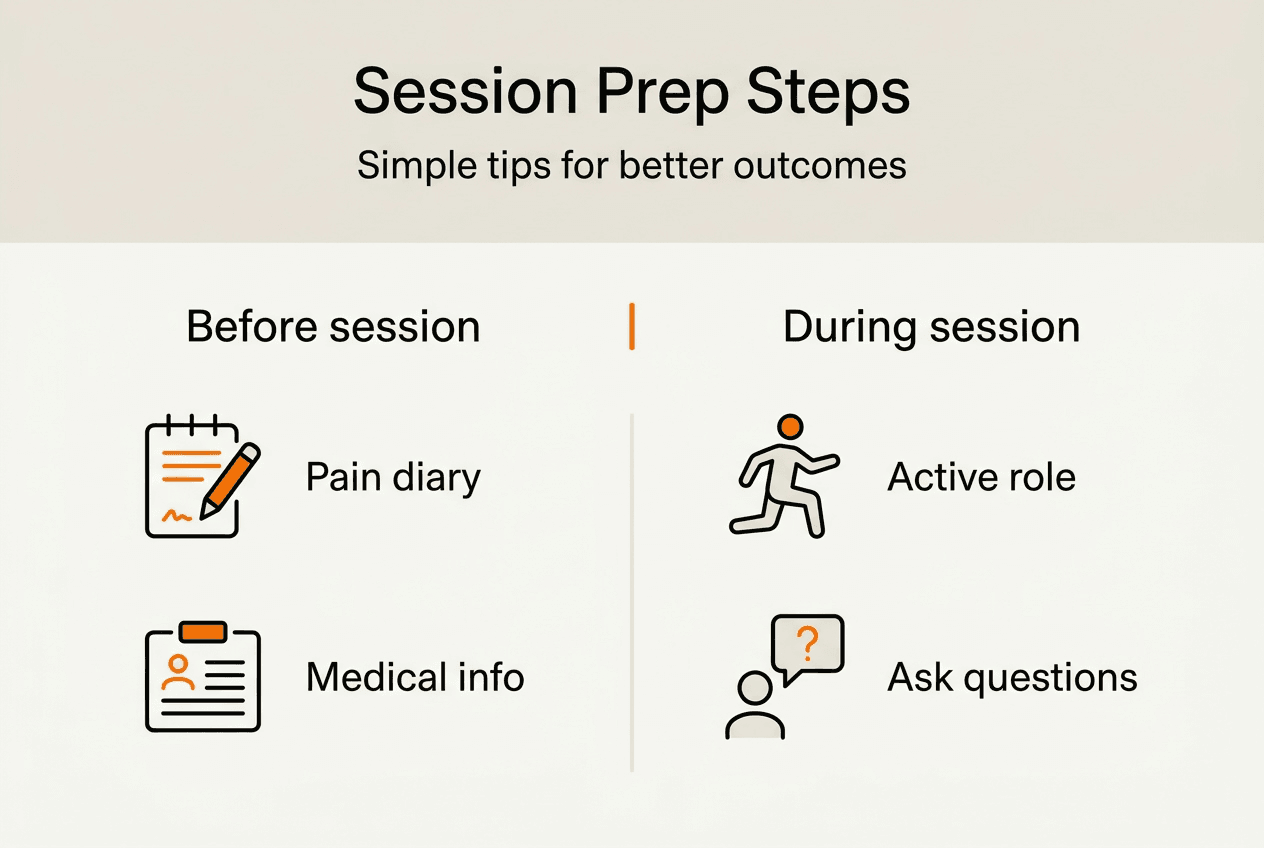
Gathering your medical information before your appointment saves valuable session time and ensures nothing important gets overlooked. Compile details about previous injuries, surgeries, current medications, and any imaging results like X-rays or MRI scans you’ve had. If you’ve seen other healthcare providers for this issue, bring referral letters or treatment notes they’ve provided.
For chronic pain conditions, keeping a pain diary proves incredibly valuable. Track your pain levels throughout the day using a scale of 0 to 10, noting what activities increase or decrease discomfort. Record how pain affects your sleep, work, and daily activities. This detailed information helps your physiotherapist identify patterns you might not notice yourself.
Your clothing choice matters more than you might think. Wear loose, comfortable garments that allow easy access to the area being treated. For lower body issues, shorts work better than jeans. For shoulder or back problems, a vest top or loose shirt helps. Avoid complicated fastenings, tight waistbands, or restrictive undergarments that make examination difficult.

Pro Tip: Prepare a list of questions before your appointment so you don’t forget to ask important things during the session. Write them down on your phone or a notepad you can reference easily.
If anxiety tends to affect you, practice relaxation techniques in the days leading up to your appointment. Deep breathing exercises, progressive muscle relaxation, or mindfulness meditation can help calm your nervous system. Understanding different physiotherapy techniques beforehand also reduces uncertainty about what might happen.
Practical preparation steps include:
Writing down your symptom history with specific dates when problems started
Listing all current medications including dosages and frequency
Bringing relevant medical documents or imaging results
Noting questions or concerns you want to discuss
Arriving 10 minutes early to complete any necessary paperwork calmly
Think about your goals for treatment too. What specific activities do you want to return to? Are you aiming to reduce pain, improve mobility, or prevent future injuries? Having clear objectives helps your physiotherapist tailor your programme to what matters most to you.
During your physiotherapy session: what to expect and how to engage
Your physiotherapist will explain their assessment findings and discuss treatment goals with you at the start. This conversation establishes a shared understanding of your condition and creates a roadmap for recovery. Listen carefully and ask questions if anything seems unclear or doesn’t match your experience.
Honest communication during treatment makes a massive difference. If an exercise causes sharp pain rather than mild discomfort, speak up immediately. Your therapist needs accurate feedback to adjust techniques appropriately. Similarly, if you’re finding homework exercises too difficult or easy, mention it so they can modify your programme.
Engaging actively with your treatment plan accelerates progress significantly. Patient belief in their treatment correlates strongly with better clinical outcomes. This doesn’t mean blind faith, but rather understanding why each exercise or technique matters and committing to the process.
During hands-on treatment, try to relax the area being worked on. Tensing up makes assessment and treatment more difficult whilst potentially causing unnecessary discomfort. Your physiotherapist will guide you through what they’re doing and why, helping you stay calm and cooperative.
Steps for maximising your session effectiveness:
Arrive with an open mind ready to learn new movement patterns
Provide honest feedback about pain levels during assessment and treatment
Ask for clarification if you don’t understand an exercise or instruction
Take notes or ask for written instructions for home exercises
Discuss any barriers you foresee to completing homework exercises
Request demonstration videos if you’re worried about remembering techniques
Pro Tip: Film yourself doing exercises during your session (with permission) so you can reference proper form when practising at home.
Some treatments like Pilates therapy require learning new movement patterns that feel awkward initially. Persist through this learning phase, as these techniques often provide long-term benefits once mastered. Your physiotherapist will progress exercises gradually as your ability improves.
Remember that physiotherapy works best as a partnership. Your therapist provides expertise and guidance, but you’re responsible for implementing recommendations between sessions. This shared responsibility means both parties contribute to successful outcomes.
Tracking progress and preparing for future sessions
Monitoring your progress between appointments helps you and your physiotherapist make informed decisions about treatment adjustments. Use simple metrics like how far you can walk without pain, how many stairs you can climb comfortably, or how well you’re sleeping. These functional measures often reveal improvements before formal assessments do.
Digital tools and apps can simplify progress tracking, but a basic notebook works just as well. Record your exercise completion, noting any difficulties or pain responses. Track activities you couldn’t do before but can now manage, even partially. These small victories accumulate into significant progress over time.
Changes in pain following treatment associate with improvements in self-reported well-being and physical health. This connection highlights why honest progress reporting matters. If something isn’t working, your physiotherapist needs to know so they can modify your approach rather than persisting with ineffective techniques.
For chronic conditions, understand that progress isn’t always linear. You might experience setbacks or plateaus that don’t indicate treatment failure but rather the complex nature of persistent pain. Maintaining open communication during these phases helps your physiotherapist adjust strategies appropriately.
Progress tracking methods comparison:
Method | Benefits | Best for |
Pain diary | Identifies triggers and patterns | Chronic pain conditions |
Exercise log | Tracks compliance and progression | Rehabilitation programmes |
Functional assessments | Measures real-world improvements | Return to sport or work |
Photos or videos | Visual evidence of posture or movement changes | Postural corrections |
Prepare for follow-up sessions by reviewing your progress notes and identifying new concerns or questions. If you’ve experienced any setbacks or unexpected symptoms, document when they occurred and what you were doing. This information helps your physiotherapist troubleshoot problems efficiently.
Consider these preparation steps for ongoing sessions:
Review your exercise programme and note which movements feel easier or harder
List any new symptoms or changes in your condition
Prepare questions about progression or long-term management
Bring updated pain diary entries if you’re tracking symptoms
Reflect on how your condition affects daily activities compared to previous weeks
For sports injuries, tracking specific performance metrics like running distance, lifting weights, or training duration provides concrete evidence of recovery. Share these details with your physiotherapist so they can ensure you’re progressing safely without risking re-injury.
Staying engaged throughout your treatment journey, even when progress feels slow, significantly impacts final outcomes. Your commitment to exercises, lifestyle modifications, and regular attendance compounds over time, leading to sustainable improvements rather than temporary fixes.
Learn more and book your physiotherapy session at Parks Therapy Centre
Preparing properly for physiotherapy transforms your treatment experience from uncertain to empowering. At Parks Therapy Centre, our expert physiotherapists specialise in creating personalised treatment plans that address your unique needs, whether you’re managing chronic pain, recovering from sports injuries, or seeking pregnancy-related support.

Our comprehensive approach combines hands-on treatment with education, ensuring you understand not just what to do but why it matters. With convenient locations across Bedfordshire and Buckinghamshire, accessing quality care has never been easier. You can book online to start your recovery journey with confidence.
Specialised services like bio-mechanical assessments help identify underlying movement issues contributing to pain or injury. Our team also provides targeted sports injuries treatment to help athletes return to peak performance safely and effectively.
FAQ
How do I prepare my medical history for a physiotherapy session?
Gather comprehensive details about your health conditions, current medications, previous injuries, and any surgeries you’ve had. Write down specific dates when symptoms started and how your condition affects daily activities like work, sleep, or exercise. Bring copies of relevant medical documents, imaging results, or referral letters from other healthcare providers. This preparation ensures your physiotherapist has complete information to create an effective treatment plan.
What should I wear to my physiotherapy appointment?
Wear loose, comfortable clothing that allows easy movement and access to the area being treated. For lower body issues, shorts work better than restrictive trousers, whilst vest tops or loose shirts suit upper body assessments. Avoid complicated fastenings, tight waistbands, or restrictive undergarments that hinder proper examination. Bringing alternative clothing options gives flexibility if your therapist needs to assess multiple areas.
How can I reduce anxiety before my physiotherapy session?
Practice deep breathing or mindfulness exercises in the days leading up to your appointment to calm your nervous system. Familiarise yourself with what happens during physiotherapy sessions by reading patient guides or watching educational videos to reduce uncertainty. Speak openly with your physiotherapist if you feel overwhelmed, as they can adjust their approach to help you feel more comfortable. Arriving early also gives you time to settle and complete paperwork without rushing.
Should I keep a pain diary before my physiotherapy?
Keeping a pain diary helps track pain levels, triggers, and patterns that inform targeted physiotherapy treatment. Record your pain intensity using a 0 to 10 scale throughout the day, noting what activities increase or decrease discomfort. Document how pain affects your sleep quality, work productivity, and daily activities to give your physiotherapist comprehensive insight. This detailed tracking reveals patterns you might not notice consciously, leading to more effective treatment strategies.
Recommended