
Insurance cover for physiotherapy: benefits in 2026
Updated: Mar 19

Many people assume NHS physiotherapy appointments are readily available, but the reality in Bedfordshire and Buckinghamshire tells a different story. Waiting times frequently stretch beyond several weeks, leaving patients with worsening symptoms and prolonged discomfort. Private health insurance offers a practical solution by enabling faster access to qualified physiotherapists who can address acute injuries before they become chronic problems. Understanding how insurance cover works, what policies typically include, and how to maximise your benefits ensures you receive timely treatment whilst managing costs effectively.
Table of Contents
Why Insurance Cover Is Crucial For Physiotherapy In Bedfordshire And Buckinghamshire
Understanding Private Health Insurance Coverage For Physiotherapy
Limitations Of Insurance Cover And Managing Costs Effectively
Cost Benefits And Effectiveness Of Private Physiotherapy With Insurance
Get Started With Insurance-Backed Physiotherapy At Parks Therapy Centre
Key takeaways
Point | Details |
Faster access | Insurance eliminates NHS waiting times, enabling treatment within days rather than weeks |
Variable coverage | Policies differ in session limits, excess charges, and approved provider requirements |
Exclusions apply | Pre-existing and chronic conditions are typically not covered by standard insurance plans |
Cost reduction | Direct billing and cash plans significantly lower out-of-pocket expenses for private physiotherapy |
Better outcomes | Earlier intervention through insurance leads to quicker recovery and prevents long-term complications |
Why insurance cover is crucial for physiotherapy in Bedfordshire and Buckinghamshire
NHS physiotherapy services face significant demand across Bedfordshire and Buckinghamshire, resulting in waiting times averaging 4-12 weeks for initial assessments. These delays create genuine health risks, particularly for patients with acute musculoskeletal injuries requiring prompt intervention. When you wait weeks for treatment, muscles weaken through disuse, joints stiffen, and compensatory movement patterns develop that complicate recovery. Insurance cover addresses this problem by providing immediate access to private physiotherapy services that bypass NHS queues entirely.
The consequences of delayed treatment extend beyond physical discomfort. Research demonstrates that prolonged waiting periods increase the likelihood of acute conditions becoming chronic, requiring more extensive and costly interventions later. For someone with a sports injury or workplace strain, every week without proper treatment means continued pain, reduced mobility, and potential absence from work or activities. Insurance enables you to book appointments within days, often at convenient times that fit your schedule rather than waiting for NHS availability.
Many residents strategically combine NHS and private care based on urgency and coverage. You might use insurance for sudden injuries requiring immediate attention whilst relying on NHS services for routine follow-ups or maintenance care. This hybrid approach maximises the value of your insurance policy whilst ensuring continuity of care. Parks Therapy Centre accepts most major insurance providers, making it straightforward to access private physiotherapy locally when you need it most.
Consider these factors when evaluating insurance value:
Acute injuries benefit most from immediate private treatment
Chronic conditions often require longer-term NHS support
Work-related injuries may need rapid intervention to prevent extended absence
Post-surgical rehabilitation timelines depend on prompt physiotherapy access
Pro Tip: Contact your insurance provider before injury occurs to understand your policy details, approved clinics, and referral requirements, saving valuable time when urgent treatment becomes necessary.
“The difference between treating an injury within days versus weeks can determine whether recovery takes three sessions or twelve. Early intervention through insurance prevents minor problems from becoming major complications.”
Understanding private health insurance coverage for physiotherapy
Private health insurance policies vary considerably in their physiotherapy coverage, making it essential to understand your specific plan details. Most insurers cover acute musculoskeletal injuries, sports-related trauma, and post-operative rehabilitation, but coverage includes session limits of 6-30 annually depending on your policy tier. Standard policies typically require excess payments ranging from £100 to £300 before coverage begins, though some premium plans waive this requirement for physiotherapy specifically.
The referral process represents a critical consideration when using insurance for physiotherapy. Many policies mandate GP referral letters before approving claims, though an increasing number now offer direct access for musculoskeletal conditions. This shift recognises that physiotherapists possess diagnostic expertise for movement-related problems, eliminating unnecessary GP appointments. However, you must verify your policy’s specific requirements to avoid claim rejections. Some insurers maintain approved provider networks, meaning you can only claim benefits when attending designated clinics that meet their quality standards.
Direct billing arrangements simplify the payment process considerably. Rather than paying upfront and claiming reimbursement, approved clinics submit claims directly to your insurer, and you only pay any excess or uncovered portions. This system reduces financial barriers and administrative burden, particularly beneficial when multiple sessions are needed. Cash plans offer an alternative approach, providing fixed annual allowances for physiotherapy that you claim regardless of specific diagnoses, though coverage amounts are generally lower than comprehensive policies.

Policy feature | Typical coverage | Considerations |
Session limits | 6-30 per year | Higher-tier policies offer more sessions |
Excess charges | £100-£300 | Some waive excess for physiotherapy |
Referral requirements | GP letter often required | Direct access increasingly available |
Approved providers | Network restrictions common | Verify clinic approval before booking |
Direct billing | Available at approved clinics | Simplifies payment and reduces upfront costs |
Understanding these policy features helps you maximise benefits whilst avoiding unexpected costs. Different types of physiotherapy techniques may fall under various coverage categories, so clarifying which treatments your policy includes prevents confusion later. For example, manual therapy and exercise prescription are universally covered, whilst specialised techniques like dry needling or electrotherapy might require specific policy endorsements.
Pro Tip: Request a policy summary document from your insurer highlighting physiotherapy-specific benefits, session limits, excess amounts, and approved provider lists, keeping this information readily accessible for quick reference when booking appointments.
Limitations of insurance cover and managing costs effectively
Insurance policies contain important exclusions that significantly impact physiotherapy coverage. Pre-existing conditions or symptoms treated within five years before policy commencement are typically excluded, as are chronic conditions like arthritis, fibromyalgia, or persistent back pain. These limitations mean that whilst insurance excels for acute injuries and sudden onset problems, it cannot replace NHS services for ongoing condition management. Understanding these boundaries prevents disappointment when filing claims and helps you plan realistic treatment expectations.
Chronic condition exclusions create particular challenges for patients with recurring musculoskeletal issues. If you experience periodic flare-ups of a long-standing problem, insurers may classify subsequent episodes as related to the pre-existing condition, denying coverage even for acute exacerbations. This policy design encourages preventive care and prompt treatment of new injuries whilst limiting insurer liability for conditions requiring extended management. Many patients therefore maintain dual pathways, using insurance for new acute problems and NHS services for chronic condition support, despite longer waiting times.
Effective cost management requires proactive communication with both your insurance provider and physiotherapy clinic. Before your first appointment, confirm exact coverage details, including how many sessions your policy allows and whether your chosen clinic appears on the approved provider list. During initial assessment, discuss treatment plans openly with your physiotherapist, ensuring proposed session numbers align with your insurance limits. This transparency prevents situations where you exhaust coverage mid-treatment, facing unexpected out-of-pocket expenses for remaining sessions.
Consider these strategies for optimising insurance benefits:
Review policy documents annually to understand coverage changes
Book appointments promptly after injury to maximise treatment within policy year
Ask physiotherapists to provide detailed treatment plans for insurer pre-approval
Keep copies of all referral letters and claim documentation
Track remaining covered sessions to plan treatment phases effectively
Combining insurance for acute issues with NHS support for chronic care represents the most practical approach for many patients. This strategy leverages insurance where it provides greatest value, rapid intervention for new problems, whilst accepting NHS waiting times for less urgent ongoing management. Following a comprehensive physiotherapy guide for full recovery helps you understand treatment phases and plan session usage strategically within your coverage limits.
Pro Tip: If approaching your annual session limit with ongoing treatment needs, ask your physiotherapist about exercise programmes and self-management techniques that extend progress between covered sessions, maximising recovery whilst controlling costs.
Cost benefits and effectiveness of private physiotherapy with insurance
Private physiotherapy costs in the UK demonstrate significant regional variation, with initial sessions averaging £74 and follow-ups £63 across most areas. In Bedfordshire and Buckinghamshire, rates typically fall within £60-£100 for initial assessments and £50-£70 for subsequent treatments, depending on clinic location and physiotherapist experience. Insurance coverage substantially reduces these out-of-pocket expenses through direct billing arrangements or reimbursement, making private physiotherapy financially accessible for policy holders who might otherwise rely solely on NHS services.
Clinical evidence strongly supports the cost-effectiveness of private physiotherapy when insurance facilitates early intervention. A comprehensive analysis found that specialist physiotherapy costs £143 more but delivers better outcomes compared to standard care, with patients achieving functional recovery weeks earlier. This incremental cost proves worthwhile when considering avoided productivity losses, reduced medication needs, and prevention of surgical interventions that might become necessary with delayed or inadequate treatment. Insurance transforms this cost-benefit equation by covering most expenses, leaving patients with only excess payments whilst gaining full recovery advantages.
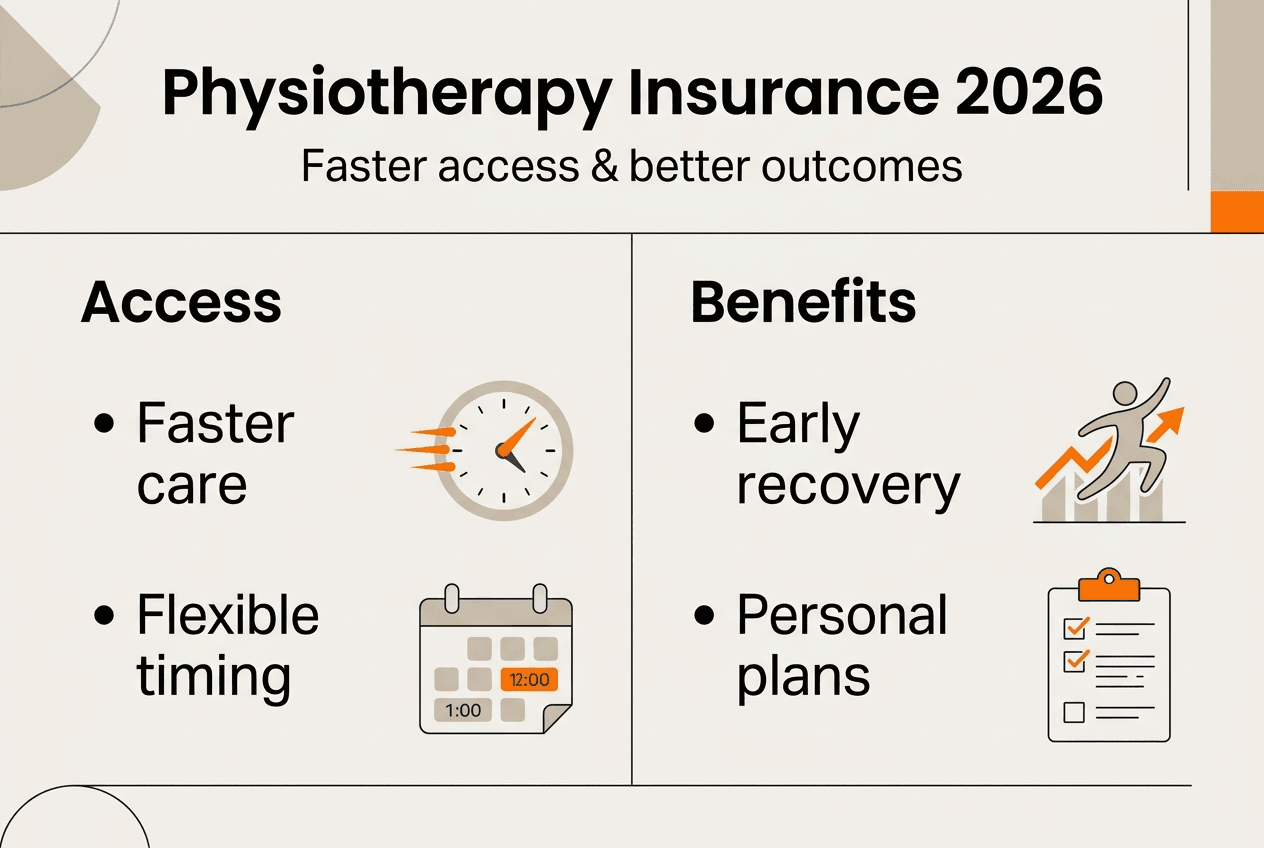
The societal benefits of insurance-funded physiotherapy extend beyond individual patient outcomes. Faster recovery means quicker return to work, reducing employer costs and maintaining economic productivity. Preventing acute injuries from becoming chronic conditions decreases long-term NHS burden, freeing resources for other patients. These broader impacts justify insurance premiums from both personal and public health perspectives, particularly for working-age adults whose musculoskeletal health directly affects earning capacity and quality of life.
| Cost comparison | NHS route | Insurance route | Difference | | — | — | — | | Initial wait time | 4-12 weeks | 2-5 days | 4-11 weeks faster | | Treatment sessions | 4-6 typically | 6-12 available | More intensive therapy | | Out-of-pocket cost | £0 | £100-£300 excess | Modest upfront payment | | Recovery timeline | 8-16 weeks | 4-8 weeks | 50% faster recovery | | Appointment flexibility | Limited slots | Evening/weekend options | Better scheduling control |
Personalised treatment plans represent another significant advantage of insurance-backed private physiotherapy. With more sessions available and flexible scheduling, physiotherapists can design comprehensive programmes incorporating manual therapy, exercise prescription, and patient education tailored to your specific condition and goals. This individualised approach, detailed in guides about personalised physiotherapy plans, accelerates recovery compared to standardised NHS protocols constrained by time and resource limitations.
Complementary therapies enhance physiotherapy outcomes when insurance coverage permits integrated treatment approaches. Services like Pilates therapy for recovery strengthen core stability and movement patterns, reducing re-injury risk after initial physiotherapy resolves acute symptoms. Some insurance policies include coverage for these adjunct treatments, providing holistic rehabilitation that addresses underlying biomechanical issues rather than merely treating immediate pain.
Follow these steps to maximise insurance value:
Verify exact coverage details before injury occurs
Book initial assessment within days of symptom onset
Attend all scheduled sessions to maintain treatment continuity
Complete prescribed home exercises to accelerate progress
Communicate openly with physiotherapist about coverage limits
Request treatment summaries for insurance documentation
“Insurance-backed physiotherapy delivers measurable value through faster recovery, reduced long-term complications, and maintained quality of life during rehabilitation. The modest excess payment proves worthwhile when weighed against weeks of pain and limited function whilst waiting for NHS appointments.”
Get started with insurance-backed physiotherapy at Parks Therapy Centre
Taking control of your musculoskeletal health becomes straightforward when you understand your insurance benefits and know where to access quality care. Parks Therapy Centre offers comprehensive physiotherapy services across multiple Bedfordshire and Buckinghamshire locations, accepting most major private health insurance providers. Our experienced team works directly with insurers to streamline claims processing, minimising administrative burden whilst you focus on recovery. Online booking for physiotherapy makes scheduling your initial assessment simple, with appointments often available within 48 hours.
Our multidisciplinary approach means your physiotherapist can coordinate with other specialists when needed, arranging diagnostic imaging referrals for complex cases or bio-mechanical assessments for pain to identify underlying movement dysfunction. This integrated care model ensures accurate diagnosis and targeted treatment, maximising your insurance benefits by avoiding unnecessary sessions through precise intervention from the start.
Pro Tip: Contact your insurance provider before booking to confirm your policy number, excess amount, and whether GP referral is required, then mention your insurance coverage when scheduling your appointment to ensure proper claim documentation from day one.
FAQ
Is insurance cover essential for all physiotherapy patients?
Insurance provides significant advantages for patients requiring prompt treatment but is not universally necessary. Those with acute injuries, sports trauma, or post-surgical rehabilitation needs benefit most from insurance-enabled rapid access. If your condition is non-urgent and you can manage NHS waiting times comfortably, insurance may be optional. However, faster treatment generally produces better outcomes regardless of injury severity.
Does insurance cover chronic physiotherapy treatment?
Most private health insurance policies explicitly exclude chronic conditions and pre-existing symptoms from coverage. Insurers typically define chronic conditions as those requiring ongoing management beyond 12 weeks or recurring problems related to previous diagnoses. The NHS remains the primary care pathway for chronic musculoskeletal conditions like arthritis, fibromyalgia, or persistent back pain. Some policies offer limited coverage for acute flare-ups of chronic conditions, but this requires careful policy review.
How many physiotherapy sessions does insurance typically cover?
Session limits vary widely depending on your insurance provider and policy tier, generally ranging from 6 to 30 sessions per policy year. Standard policies commonly provide 10-12 sessions, whilst premium plans may offer 20-30 sessions or unlimited coverage subject to medical necessity. Excess charges apply before coverage begins, typically £100-£300 depending on your plan. Always verify your specific policy details, as limits reset annually and unused sessions do not carry forward.
Can I use private insurance for physiotherapy without a GP referral?
Referral requirements depend entirely on your specific insurance policy terms. Many traditional policies mandate GP referral letters before approving physiotherapy claims, viewing this as medical gatekeeping to ensure appropriate treatment. However, increasing numbers of insurers now recognise physiotherapists as first-contact practitioners for musculoskeletal conditions, permitting direct access without GP involvement. Some policies allow self-referral for certain conditions whilst requiring GP letters for others. Contact your insurer directly to clarify referral requirements before booking appointments.
Recommended