
Is pregnancy massage safe? A trimester-by-trimester guide
- 1 day ago
- 9 min read
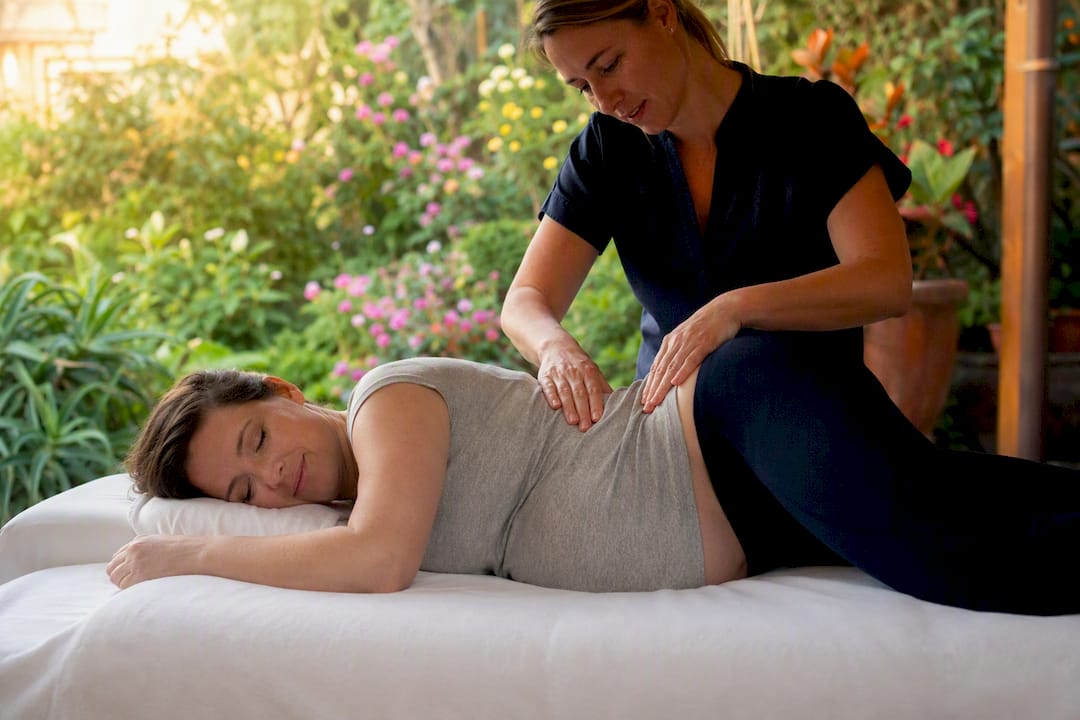
Pregnancy massage is generally safe for uncomplicated pregnancies when carried out by a trained prenatal massage therapist, and a systematic review of relaxation massage in pregnancy found genuine benefits, including reduced anxiety and less back and leg pain, with only minor, transient side effects. The caveat matters as much as the headline: if you have a high-risk condition such as pre-eclampsia, gestational diabetes or pre-term contractions, you need clearance from your midwife or obstetrician before booking a session.
Beyond that, three rules cover most of what you need to know before you get on the table.
Avoid deep leg work. Pregnancy raises your risk of deep vein thrombosis roughly fivefold compared with the non-pregnant population, so therapists use light, upward strokes rather than deep tissue techniques on the legs.
Skip direct abdominal pressure. There’s no proven mechanism linking gentle massage to miscarriage, but firm pressure directly on the bump is unnecessary and unsettling for most mothers.
Use a trained therapist and ask about oils. Confirm prenatal training and ask what essential oils they use, since some are best avoided in pregnancy.
At Parks Therapy Centre, pregnancy-related treatments sit alongside physiotherapy and podiatry within a multidisciplinary team that has operated across Bedfordshire and Buckinghamshire since 1986, which means screening and adaptation are built into how sessions are planned, not bolted on afterwards.
Key Takeaways
Pregnancy massage is safe for most uncomplicated pregnancies when a trained prenatal therapist adapts positioning, pressure and oil use to your trimester and medical history.
Point | Details |
Get clearance for high-risk conditions | Pre-eclampsia, placenta praevia and uncontrolled hypertension need midwife or obstetrician sign-off first. |
Avoid deep leg pressure | Pregnancy raises DVT risk roughly fivefold, so therapists use light, upward strokes on the legs instead. |
Positioning changes by trimester | Side-lying or semi-recline with pillow support prevents vena cava compression from the second trimester onward. |
Miscarriage fears aren’t evidence-based | No mechanism links routine massage to miscarriage; first-trimester caution is mostly a liability policy. |
Check therapist training before booking | Ask about prenatal CPD, insurance, screening forms and their essential oil policy directly. |
This article is general information, not a substitute for advice from a qualified doctor. Consult a qualified healthcare professional about your own circumstances before acting on anything here.
Table of Contents
Pregnancy massage safety trimester by trimester
Safety guidance shifts noticeably as pregnancy progresses, and understanding why helps you make sense of policies that can otherwise feel inconsistent between clinics.
First trimester: caution without much hard evidence
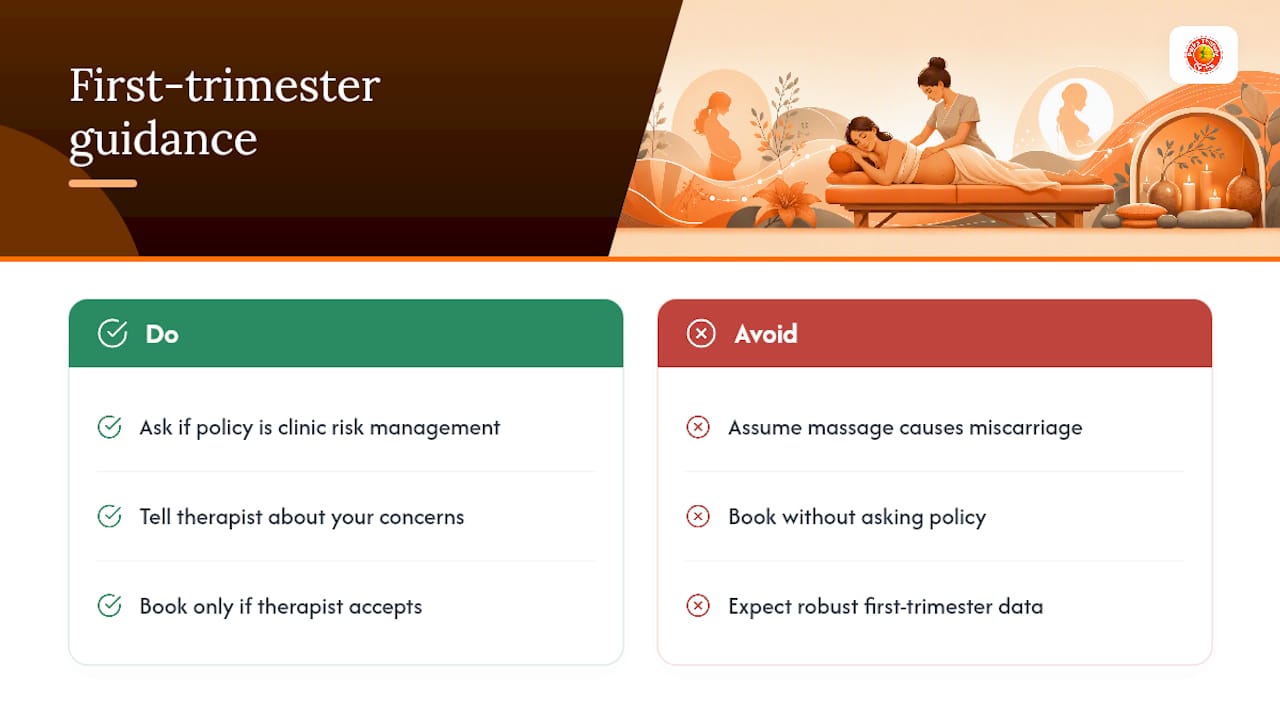
Many therapists decline to treat clients in the first trimester, and it surprises people to learn that this is largely a liability decision rather than one grounded in data. A qualitative thematic analysis of pregnancy massage safety found that avoidance policies are frequently driven by caution around miscarriage risk generally being highest in these weeks anyway, not by evidence that massage itself causes harm. Because most randomised trials began treatment at 12 to 14 weeks or later, there’s simply less first-trimester data to draw on, which pushes many clinics toward a conservative default. If you’re in your first trimester and keen to book, ask directly whether the therapist’s policy reflects clinic risk management or a specific concern about your case.
Second trimester: the sweet spot for most clinics
By the second trimester, most clinics consider massage therapy for pregnant women to be well within normal practice, and it’s when the bulk of clinical trial evidence sits. Side-lying positions become standard, pressure can be moderate across the back and limbs (excluding the lower legs), and sessions typically run 45 to 60 minutes. This is also the point where common pregnancy discomforts such as lower back pain and hip tightness tend to respond well to targeted work.
Third trimester: comfort and vena cava awareness take priority
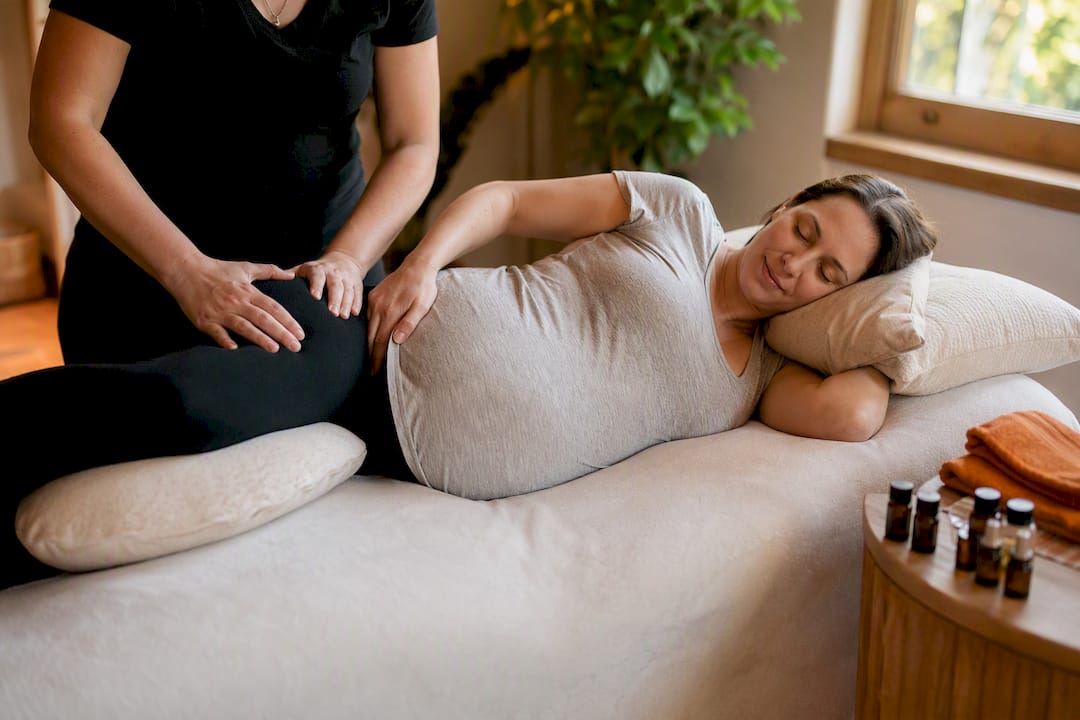
The third trimester introduces one non-negotiable physical consideration: lying flat on your back for extended periods can compress the vena cava, the large vein returning blood to your heart, reducing blood flow to both you and your baby. Left-side positioning, or a well-supported semi-recline with a wedge under the right hip, avoids this. Treatment time is often shortened, and pillows or a pregnancy cushion system support the bump, ankles and knees throughout.
Confirm position preferences before you lie down. Side-lying with pillow support is the default from mid-pregnancy onward.
Expect shorter sessions in late pregnancy. Thirty to forty-five minutes is common as comfort becomes harder to maintain for longer.
Flag any new symptoms immediately. Swelling, headaches or reduced fetal movement should be mentioned before, not after, the session begins.
Regardless of trimester, certain circumstances call for medical clearance every time: multiple pregnancy, a history of pre-term labour, or any diagnosed complication should go through your midwife or obstetrician first, no matter how far along you are.
Pro Tip: Bring your maternity notes to your first appointment. A trained therapist will want to check for any flagged risk factors, and it saves you trying to recall details from memory under time pressure.
Which areas should be avoided during pregnancy massage?
Certain body areas and techniques carry genuine caution, and it helps to understand the reasoning rather than simply memorising a list.
The abdomen. Direct pressure isn’t part of standard prenatal protocol; light, resting touch is sometimes used for relaxation, but deep work has no established benefit and no place in reputable pregnancy massage contraindications guidance.
Deep tissue work on the lower legs. This is the most clinically grounded caution on the list. Pregnant women face a substantially higher risk of DVT than non-pregnant people, and deep pressure on the calf could theoretically dislodge a clot if one is present, though undiagnosed. Watch for unilateral calf swelling, warmth or pain, which are the classic warning signs a therapist should ask about before starting.
Certain acupressure points. Points near the ankles and wrists are sometimes avoided as a precaution during pregnancy. It’s worth being clear that this reflects precautionary training rather than proven harm; no mechanism has been demonstrated linking these points to induced labour.
Some conditions rule out massage altogether until you’ve had medical input: pre-eclampsia, placenta praevia, active vaginal bleeding, uncontrolled high blood pressure, a recent DVT diagnosis, severe cardiac or renal disease, and poorly controlled diabetes. Clinics also tend to screen for recent insulin injection sites, since deep work near an injection point can alter insulin uptake and cause unexpected blood sugar swings.
What positions and techniques keep pregnancy massage safe?
Positioning does more work for safety than most people expect, often more than pressure level itself. Clinical guidance on prenatal positioning points to side-lying and semi-reclined setups as the default from the second trimester onward, with prone (front-lying) positions only possible using a specialist pregnancy cushion system that supports the bump through a cut-out.
Side-lying with pillow support protects against vena cava compression and tends to be the most comfortable option in later pregnancy.
Semi-recline with a wedge under the right hip shifts weight off the vena cava if lying fully on the side isn’t comfortable.
Superficial, upward strokes for swollen ankles and legs encourage lymphatic drainage without the deep pressure that raises DVT concerns.
Sciatica-specific adjustments, including gentle glute and piriformis release with the client side-lying, can ease nerve pain without straining the lower back. Our guide to managing sciatica safely during pregnancy covers this in more depth.
Pro Tip: If a position feels uncomfortable within the first two minutes, say so straight away. A good prenatal therapist would rather adjust three times than have you tense up and hold your breath through an hour-long session.
How do you choose a therapist qualified in pregnancy massage?
Training matters more here than almost anywhere else in massage therapy, because the risk factors are specific and easy to miss without proper preparation. Clinical guidance consistently points to therapist training and thorough screening as the single biggest factor in keeping prenatal sessions safe.
Check for pregnancy-specific training, not just a general massage qualification. Ask whether they’ve completed dedicated prenatal massage CPD or work within a physiotherapy-led practice.
Confirm they carry appropriate insurance and ask whether they use a written pregnancy health screening form before the first session.
Ask how they’ll adapt pressure and positioning for your specific stage, and what their essential oil policy is.
Ask directly about DVT precautions. A therapist who can explain their leg-work policy without hesitation is one who has actually thought about it.
Find out whether they’ll liaise with your midwife if you disclose a complication, rather than simply declining treatment outright.
Our guide to manual therapy in pregnancy covers how qualified practitioners structure these conversations in more detail.
Are essential oils safe to use during pregnancy massage?
Carrier oils such as jojoba, grapeseed, sunflower and avocado oil are considered safe choices for prenatal massage and are generally well tolerated on sensitive, stretched skin.
Essential oils need more care. A common guideline is to keep any essential oil blend at roughly a 1% dilution during pregnancy, which is considerably lighter than typical adult use. Lavender and neroli are usually considered lower-risk options at this dilution, while clary sage, cinnamon, fennel and marjoram are typically avoided, since some are associated with uterine stimulation. Always flag nut allergies before a session, as almond and other nut-derived carrier oils are common in massage practice and easy to overlook when booking.
A reputable therapist states their aromatherapy policy before you’re on the table, not after the bottle is open.
What does the research actually say about pregnancy massage safety?
The clearest finding across the pregnancy massage evidence base is a negative one: no study has established a plausible mechanism by which routine therapeutic massage causes miscarriage. Concerns about specific pressure points are taught as precaution, not as documented risk.
That framing, drawn from research applying scientific rationale to miscarriage concerns, reshapes how the whole safety conversation should be read. Systematic reviews and randomised controlled trials generally report real benefits from prenatal massage, alongside a low rate of adverse events.
Evidence area | What the research shows |
Anxiety and pain | Reviews report reduced anxiety and less back/leg pain in uncomplicated pregnancies |
Side effects | Minor and transient, such as tiredness or muscle soreness, with complications generally unrelated to the massage itself |
Miscarriage risk | No robust mechanism established; first-trimester caution is largely policy-driven |
DVT risk | Pregnancy raises risk roughly fivefold, supporting avoidance of deep leg work |
The practical upshot for clinics is straightforward: screening questions and treatment adaptations exist to manage the small number of genuine risk factors (DVT history, high-risk conditions, undiagnosed complications), while the broader fear that massage itself is dangerous for a healthy pregnancy isn’t supported by the trial data.
When should you stop a massage and seek urgent help?
Certain symptoms during or shortly after a session need immediate attention rather than a “wait and see” approach.
Severe abdominal pain, bleeding, or fluid loss. Stop the session immediately and contact your midwife or maternity unit.
Regular contractions before term. This warrants an urgent call to your maternity team, particularly before 37 weeks.
Unilateral calf swelling, pain or warmth. These are classic DVT warning signs and need same-day medical assessment.
Breathlessness or chest pain. This can indicate a pulmonary embolism and requires emergency care.
Sudden severe headache, visual disturbance or fainting. These can signal pre-eclampsia and should be assessed urgently, even if you had no prior diagnosis.
If in doubt, stop the treatment and call your midwife. Severe symptoms warrant emergency services without delay.
What should you disclose before and after your appointment?
A short checklist keeps the whole process straightforward for you and your therapist alike.
Before booking: disclose your full medical history, current medications, any recent injections (especially insulin), and any swelling or pain you’ve noticed.
At the appointment: confirm your preferred position, agree on pressure level, and ask what oils will be used. Expect a screening form and a proper consent conversation, not just a quick chat.
During the session: don’t hesitate to ask for a mid-session check-in, particularly if you’re lying in a new position for the first time.
Afterwards: rehydrate, rest where you can, and note any unusual symptoms over the following 24 hours. For additional support, consider mindfulness gifts for relaxation and wellbeing to enhance your aftercare routine.
Pro Tip: A simple script works well: “I’m [X] weeks pregnant, I have no diagnosed complications, and I’d like side-lying positioning with light pressure on my legs.” It tells the therapist everything they need in one sentence.
How Parks Therapy Centre approaches pregnancy massage safety
Parks Therapy Centre has treated musculoskeletal and pregnancy-related complaints since 1986, and pregnancy massage sits within a wider multidisciplinary team rather than as a standalone service. That structure matters in practice: a therapist who spots a possible DVT symptom or unexplained swelling can flag it to a physiotherapist colleague the same day, rather than the client having to start a referral conversation from scratch.
Screening begins before hands touch the table, covering medical history, current symptoms and any midwife guidance already given. Positioning and pressure are adapted trimester by trimester, and clients with high-risk conditions are directed back to their midwife or obstetrician for clearance before treatment proceeds. If you’re weighing up wider options during pregnancy, our overview of physiotherapy approaches for pregnancy sets out how these services fit together.
— Ivan
Sources
Recommended