
Clinician Led Shin Splints Treatment: 6–8 Week NHS Plan for Runners
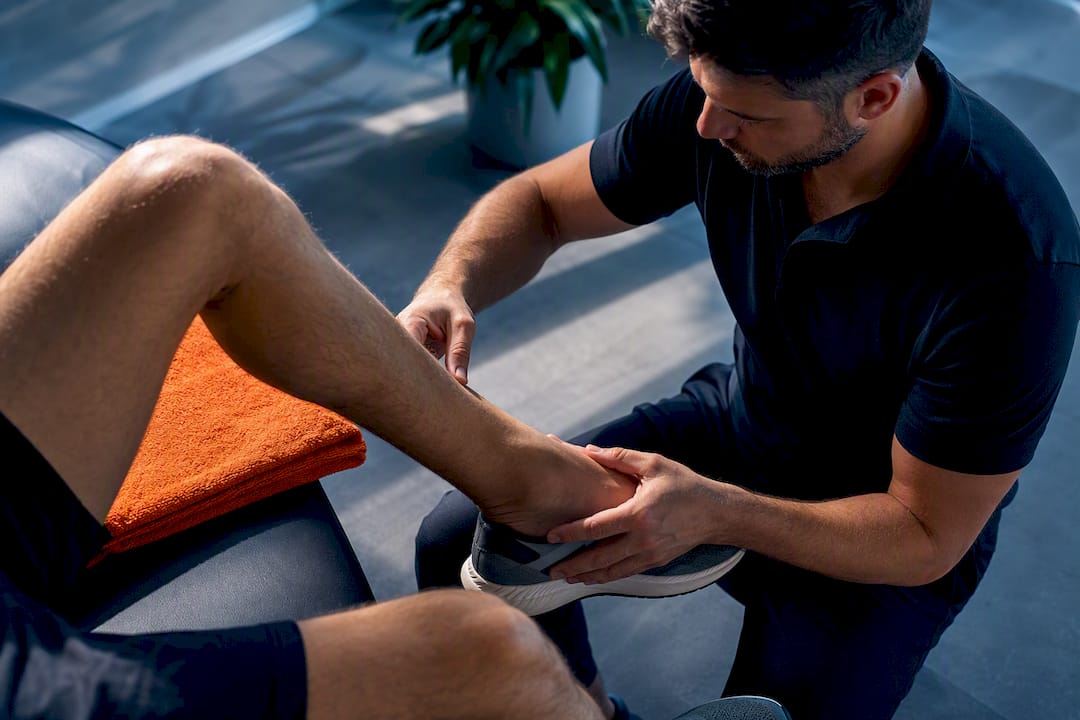
Stop the activity that caused the pain, apply ice, and switch to low-impact exercise such as swimming or cycling while the shin heals. Most cases settle within a few weeks with this approach, but persistent or worsening pain needs a physiotherapy assessment to prevent recurrence. Severe swelling, numbness, or inability to bear weight needs urgent medical review, not self-care.
TL;DR:
Initiate ice, elevation, and gentle supportive footwear immediately after pain starts, avoiding impact activities like running or jumping to prevent worsening.
Progress from graded movement to functional strength exercises over six to eight weeks, targeting calf, hip, and core muscles for long-term recovery.
Use paracetamol or topical NSAIDs for pain relief in the acute phase, but avoid relying solely on medication without addressing underlying load issues.
Seek urgent medical review if swelling worsens, numbness occurs, or you cannot bear weight, to rule out severe injury or fracture.
Delay returning to running until pain-free at rest and walking consistently, following a gradual plan that increases activity only once symptoms subside.
Table of Contents
How do you treat shin splints in the first few weeks?
The first 48 to 72 hours matter most. Get this stage right and you cut weeks off recovery; get it wrong and a manageable niggle can drift towards a stress fracture.
Stop or scale back the aggravating activity immediately. Running, jumping, or repetitive impact work should pause as soon as pain starts. This does not mean total bed rest. Swimming, cycling, or elliptical training keep your fitness up while sparing the shin, and you can generally start them as soon as they feel pain-free, according to MedlinePlus. Expect a period away from repetitive lower-leg loading, with full tissue healing sometimes taking longer.
Practical steps for this window:
Ice the shin for 15 to 20 minutes, three to four times a day, always with a cloth barrier between ice and skin.
Elevate the leg when resting to help control swelling.
Use a light compression bandage if swelling is present, loosening it if toes tingle or go numb.
Take paracetamol for pain, following NHS guidance on dosage, or consider short-term NSAIDs or topical ibuprofen if suitable for you.
Wear supportive, cushioned footwear even around the house.
Once the sharp pain has calmed, usually after several days, shift from strict rest to graded movement rather than staying inactive. Prolonged inactivity weakens the muscles that support the shin in the first place, working against your own recovery.
Pro Tip: Test the shin with a firm press along the bone each morning. If tenderness is shrinking day by day, you’re on track. If it’s the same or worse after a week, that’s your cue to book a physiotherapy assessment rather than wait it out.
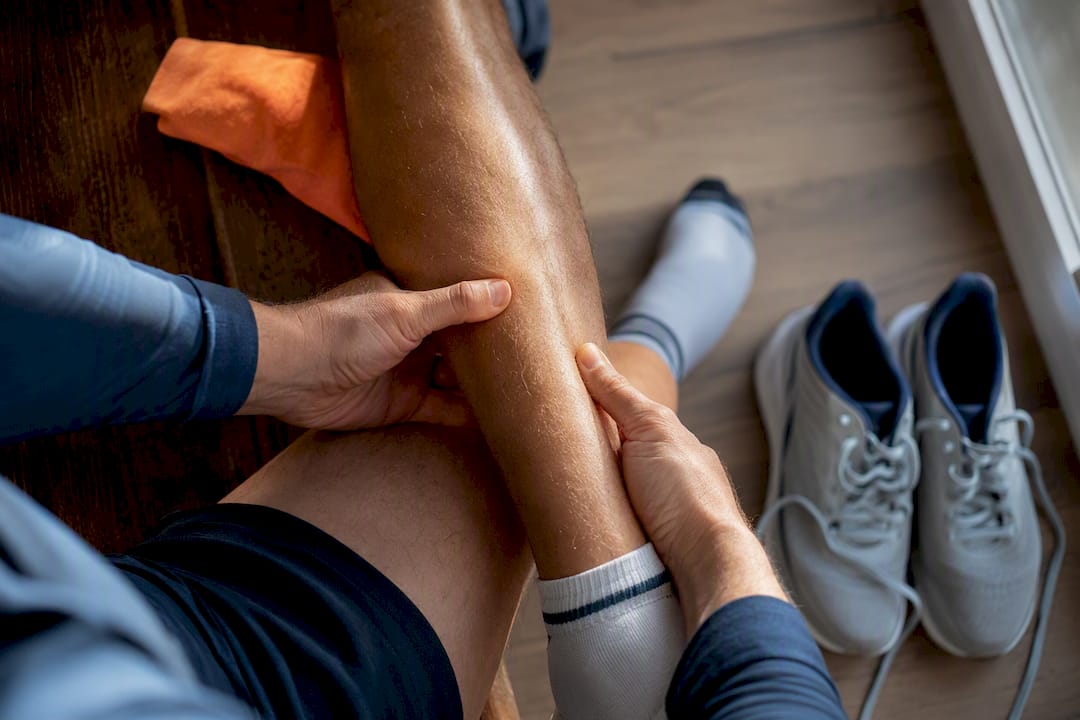
For more detail on icing technique and timing, safe first aid after injury covers the specifics.
What role does physiotherapy play in shin splint rehabilitation?
Shin splints, or medial tibial stress syndrome, rarely have a single cause. They usually stem from a combination of training load, footwear, running mechanics, and weakness further up the leg. A physiotherapist assesses all of these together rather than treating the shin as an isolated problem, and builds a loading plan specific to your gait, training history, and goals.
Strengthening the calf, ankle, hip, and gluteal muscles is central to rehabilitation, because targeted work there changes how load distributes through the lower limb, according to Verywell Health. Treating the shin alone and ignoring the hips is a common reason recovery stalls.
A workable six to eight week framework looks like this:
Weeks 1 to 2: Gentle calf stretches (30 seconds, three times daily) and isometric tibialis anterior holds, once acute pain has settled.
Weeks 2 to 4: Add resisted tibialis anterior strengthening (heel walks, resistance band dorsiflexion) and glute bridge or clamshell work for hip stability, three sessions a week.
Weeks 4 to 6: Introduce single-leg balance drills and step-downs to build proprioception and control under load.
Weeks 6 to 8: Progress to functional strength (lunges, single-leg squats) alongside the return-to-running plan below.
Gait analysis or orthotics may help if your foot mechanics contribute to the problem, particularly with flat feet or excessive pronation. Flat feet exercises work through this in more depth, and Pilates for runners offers a complementary strength approach many runners find useful alongside physiotherapy.
Pro Tip: If you’ve had shin splints more than once, get the assessment before you resume training this time. Recurrence almost always points to an unaddressed mechanical factor, not bad luck.
Which pain relief options work best for shin splints?
Paracetamol is the sensible first choice for pain control. NSAIDs such as ibuprofen can help with inflammation but carry gastrointestinal and cardiovascular cautions, so check with a pharmacist or GP if you take other medicines regularly.
Topical NSAID gels offer a lower-risk alternative, applied directly over the sore area.
Ice remains the mainstay in the acute phase; heat has a limited role until swelling has settled.
Compression sleeves can ease discomfort during light activity, though evidence for them is mixed, and some devices carry their own contraindications worth checking if you have circulation issues.
None of these substitute for addressing the underlying load problem.
When should you see a doctor for shin splints?
Certain symptoms need same-day medical review rather than a wait-and-see approach:
Severe or worsening swelling
Numbness or tingling in the foot
Inability to bear weight on the leg
Visible deformity or suspected fracture
Never push through shin splint pain, since doing so raises the risk of it progressing to a tibial stress fracture, according to Cleveland Clinic. If self-care hasn’t improved things after roughly two weeks, or pain keeps recurring, book a physiotherapy assessment. Many areas allow self-referral to community NHS musculoskeletal physiotherapy, though waiting times vary considerably by region. Private physiotherapy, including at clinics like Parkstherapycentre, typically offers faster access and a more tailored plan.
How can you prevent shin splints from coming back?
Most recurrences trace back to training errors rather than bad luck. Increase weekly running volume by no more than around 10%, build in rest days, and cross-train on cycling or swimming days rather than adding more impact work.
Replace running shoes every 300 to 500 miles, or sooner if cushioning feels compressed.
Get a specialist gait assessment if you’ve had recurrent shin pain or flat feet.
Vary running surfaces and avoid excessive downhill or cambered-road running where possible.
Build hip, glute, and core strength consistently, not just after an injury flares up.
A structured plan matters more than any single tweak. Building a safe post-injury training plan walks through how to sequence load increases properly.
Pro Tip: Rotate two pairs of running shoes rather than wearing one pair exclusively. It slightly varies the stress pattern on your shins and extends the life of both pairs.
What does a safe return-to-running plan look like?
Only begin running again once you’ve been pain-free at rest and walking for a sustained period, not just for a day or two.
Stage 1: Walk 30 minutes pain-free on flat ground for three consecutive days before attempting any running.
Stage 2: Run/walk intervals, starting at one minute running to four minutes walking, repeated for 20 minutes, three times in the first week.
Stage 3: Gradually shift the ratio towards more running, increasing total volume by no more than 10% each week.
Stage 4: Return to continuous running once you can complete 30 minutes at an easy pace with zero pain during or after.
Score your pain honestly at 0 to 10 after each session. Anything above a 2 to 3 means you regress to the previous stage and repeat it before progressing again. Relapse after too-quick a return is one of the most common reasons people end up back where they started, so patience at this stage pays off. If relapse happens more than once, that’s a clear signal to get a physiotherapist involved rather than repeating the same progression alone.
Why professional assessment matters for recurring shin pain
Parkstherapycentre has treated musculoskeletal and sports injuries since 1986, with physiotherapy, podiatry, and related services delivered across multiple clinics and accepted by most major health insurers. An initial physiotherapy assessment covers your injury history, a physical examination of gait and strength, and a personalised loading plan with exercises prescribed to your specific weaknesses, not a generic sheet. Online booking is straightforward, and most cases benefit from getting that assessment early rather than after weeks of guesswork.
Why the standard shin splints advice often falls short
Most guidance on this topic stops at “rest, ice, and stretch,” and that’s where recovery frequently stalls. Rest without a plan to rebuild capacity just delays the same problem. Peer-reviewed evidence backs conservative management over more invasive options, but conservative doesn’t mean passive. It means structured, progressive loading, starting gently and building deliberately, which is exactly what generic advice skips.
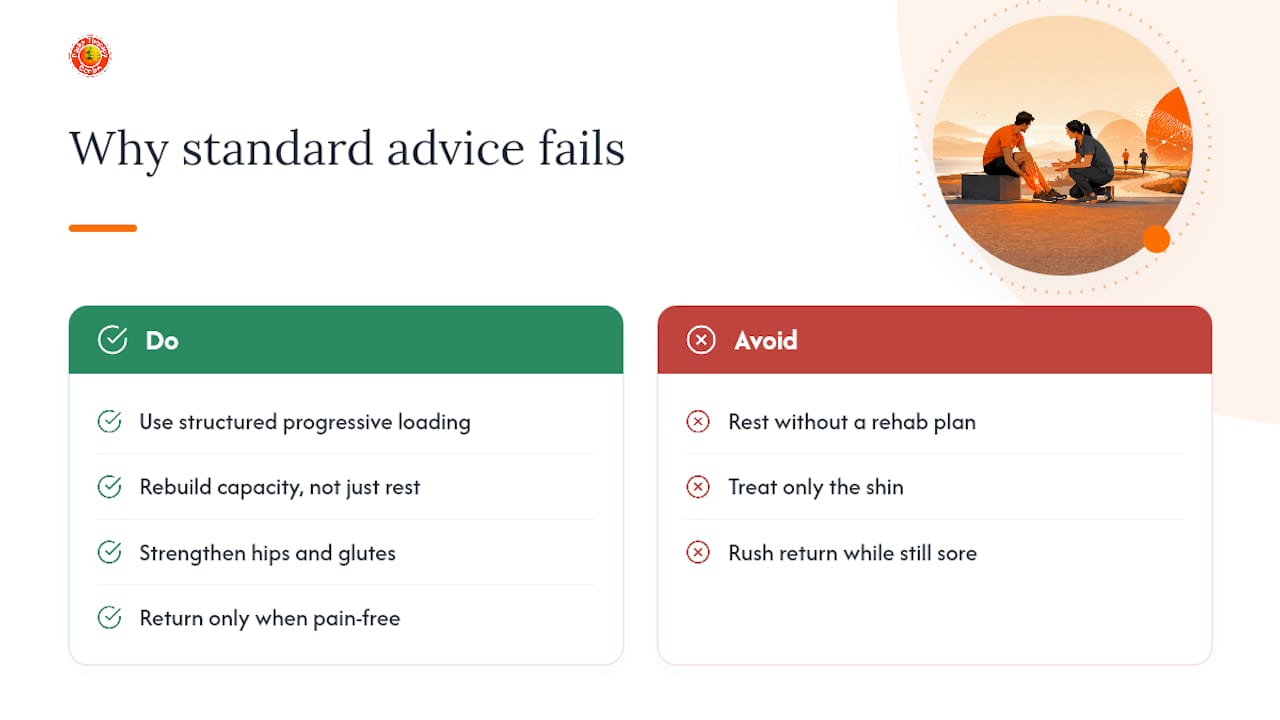
The other gap is proximal weakness. Runners and clinicians alike fixate on the shin itself, when hip and glute strength usually explains why the same person keeps getting the same injury. Fix the shin without fixing the hip, and you’re treating a symptom while the cause waits to resurface next season.
If there’s one priority above all others, it’s this: don’t rush the return to running. Being genuinely pain-free before progressing, not just less sore, is the detail that separates a full recovery from a cycle of flare-ups. Get that sequencing right and the rest of the plan looks after itself.
— Ivan
Ready to book a physiotherapy assessment?
If your shin pain hasn’t settled after a couple of weeks of self-care, or keeps coming back every time you build up your running, a proper assessment beats another few weeks of guesswork. Parkstherapycentre gives you a personalised loading plan from a qualified physiotherapist, rather than a generic printout, and appointments run across multiple clinic locations with straightforward online booking.
This suits anyone with pain lasting more than two weeks, athletes managing repeated episodes, or runners who want their return-to-training plan checked before they push volume back up. Your first appointment covers a full history, physical examination, and a tailored exercise programme you can start immediately. Parkstherapycentre accepts most major health insurers alongside private payment, and clinics are accessible without long waits. Book your assessment online to get a clear plan rather than another cycle of rest and relapse.
Sources
This article is general information, not a substitute for advice from a qualified doctor. Consult a qualified healthcare professional about your own circumstances before acting on anything here.
Recommended