
Sports injury prevention for pregnant women in 2026
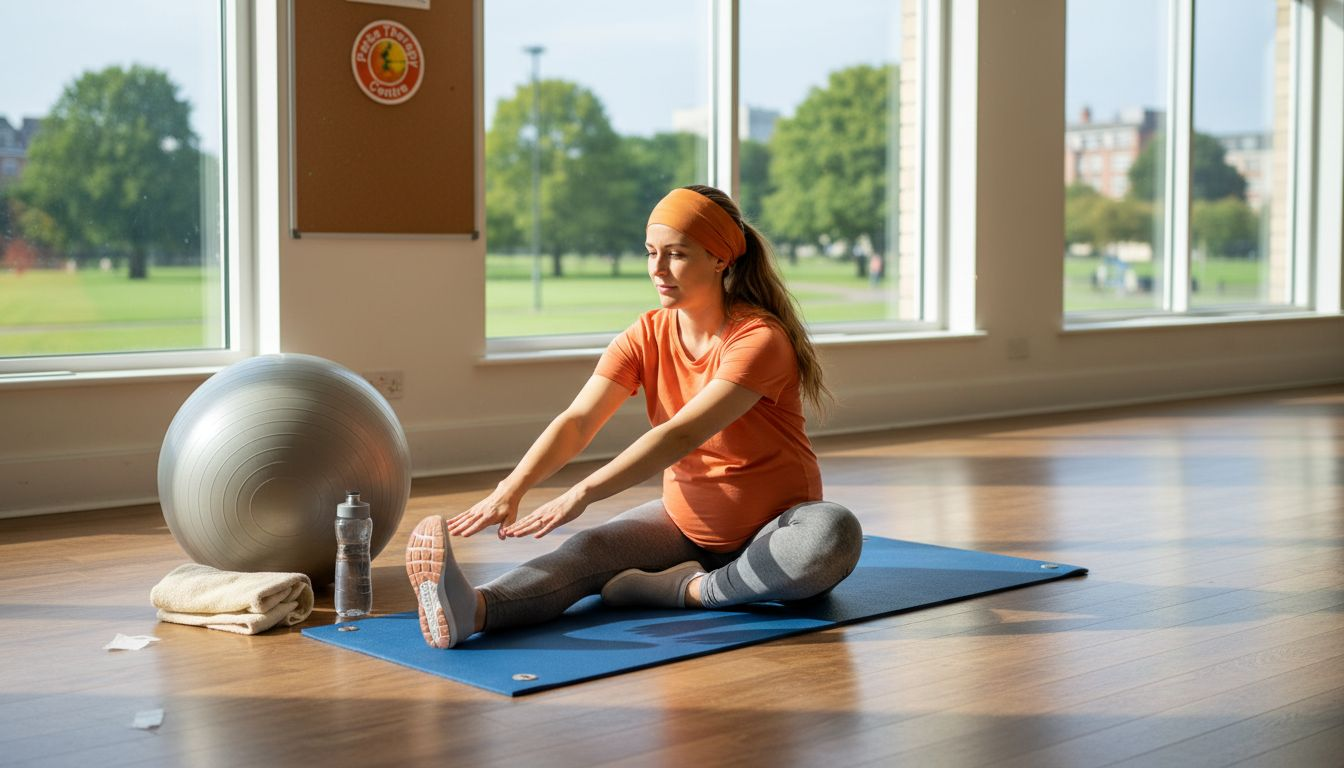
Many pregnant women mistakenly believe that exercise poses serious risks to themselves and their babies. Research shows the opposite: light to moderate exercise reduces miscarriage risk whilst supporting maternal health throughout pregnancy. This comprehensive guide explains how to maintain fitness safely during pregnancy, prevent common injuries, and return to activity after childbirth with confidence and professional support.
Table of Contents
Key takeaways
Point | Details |
Exercise adapted to pregnancy reduces injury risks and supports overall health | Moderate activity tailored to each trimester prevents complications whilst maintaining fitness |
Physiological changes affect joint stability and balance | Hormonal shifts increase ligament laxity by up to 30%, requiring careful safety adjustments |
Avoid contact sports; prioritise pelvic floor and core strength | Focus on low impact activities like swimming and walking with targeted muscle training |
Collaborate with physiotherapists for personalised plans | Professional guidance ensures safe exercise progression based on individual risk factors |
Gradual postpartum return aids recovery | Progressive activity reintroduction over 6 to 12 weeks reduces injury risk after birth |
Understanding sports injury prevention in pregnancy
Sports injury prevention during pregnancy means adapting physical activity to protect both mother and developing baby whilst maintaining fitness levels. This approach balances the health benefits of exercise with the unique physiological demands of pregnancy. Understanding how to modify routines prevents musculoskeletal injuries and supports overall wellbeing.
Regular moderate exercise reduces pregnancy complications such as gestational diabetes and hypertension. These benefits extend beyond immediate health, lowering injury risk by maintaining strength and cardiovascular fitness. Women who continue adapted exercise routines experience fewer falls, joint problems, and postural issues.
Pregnancy triggers significant physiological changes that affect injury susceptibility. Joint laxity increases, balance shifts, and weight distribution alters throughout the three trimesters. Safe exercise regimes account for these changes through careful intensity monitoring and activity selection.
Key components of injury prevention include:
Modifying exercise intensity based on trimester and individual health status
Selecting appropriate low impact activities that minimise fall and collision risks
Strengthening core and pelvic floor muscles to support changing biomechanics
Monitoring warning signs that indicate the need to reduce or stop activity
Consulting healthcare professionals for personalised guidance
Partnering with qualified professionals like those offering physiotherapy and acupuncture services ensures evidence based approaches. Detailed exercise guidelines during pregnancy provide frameworks that balance safety with maintaining physical conditioning throughout all stages.
Physiological changes during pregnancy that impact injury risk
Pregnancy fundamentally alters body mechanics through hormonal and anatomical adaptations. These changes, whilst supporting fetal development, create vulnerabilities that increase injury susceptibility during physical activity. Understanding these mechanisms helps pregnant women make informed exercise choices.
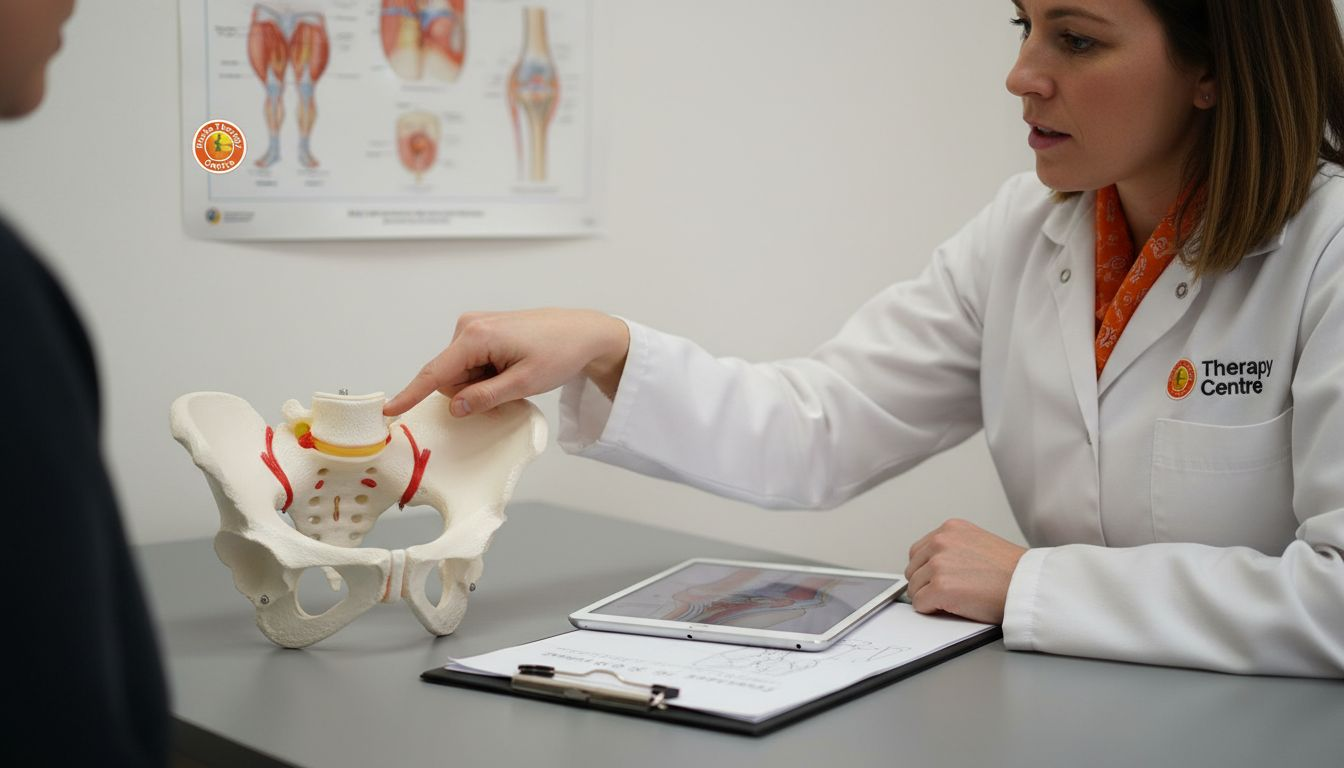
Relaxin and other pregnancy hormones cause ligament laxity increases by up to 30%, reducing joint stability throughout the body. Ankles, knees, hips, and pelvic joints become more mobile, raising the risk of sprains and strains during exercise. This laxity persists for months after delivery, requiring ongoing caution.
The growing uterus shifts the centre of gravity forward and upward, affecting balance and coordination. Research indicates pregnancy changes increase fall risk by 30% in late pregnancy without appropriate precautions. Women experience altered gait patterns and reduced stability during movement.
Additional biomechanical stressors include:
Weight gain averaging 11 to 16 kilograms adds load to joints, particularly knees and lower back
Fluid retention increases tissue volume, contributing to carpal tunnel syndrome and joint swelling
Postural changes compensate for the shifting centre of gravity, often causing lower back strain
Breathing capacity decreases as the diaphragm elevates, affecting exercise tolerance
Blood volume increases by 40 to 50%, altering cardiovascular response to physical activity
Aspect | Non-pregnant state | Pregnancy state | Injury impact |
Joint stability | Normal ligament tension | 30% increased laxity | Higher sprain and strain risk |
Centre of gravity | Lower pelvic position | Forward and upward shift | 30% increased fall risk |
Joint loading | Baseline body weight | 11 to 16 kg additional weight | Increased knee and back stress |
Balance control | Stable equilibrium | Altered proprioception | Reduced coordination |
Falls during pregnancy affect approximately 27% of women, with the majority occurring in the third trimester when biomechanical changes peak.
These physiological adaptations explain why previously safe exercises may become risky during pregnancy. Activities requiring quick direction changes, jumping, or precise balance challenge the body’s altered mechanics. Recognising these vulnerabilities allows for intelligent exercise modification that maintains fitness whilst protecting against injury.
Recommended exercise adaptations and safety guidelines
Adapting exercise intensity and type throughout pregnancy significantly reduces injury risk whilst preserving fitness benefits. Each trimester requires specific modifications based on physiological changes and developing fetal needs. Following evidence based guidelines ensures safe activity participation.
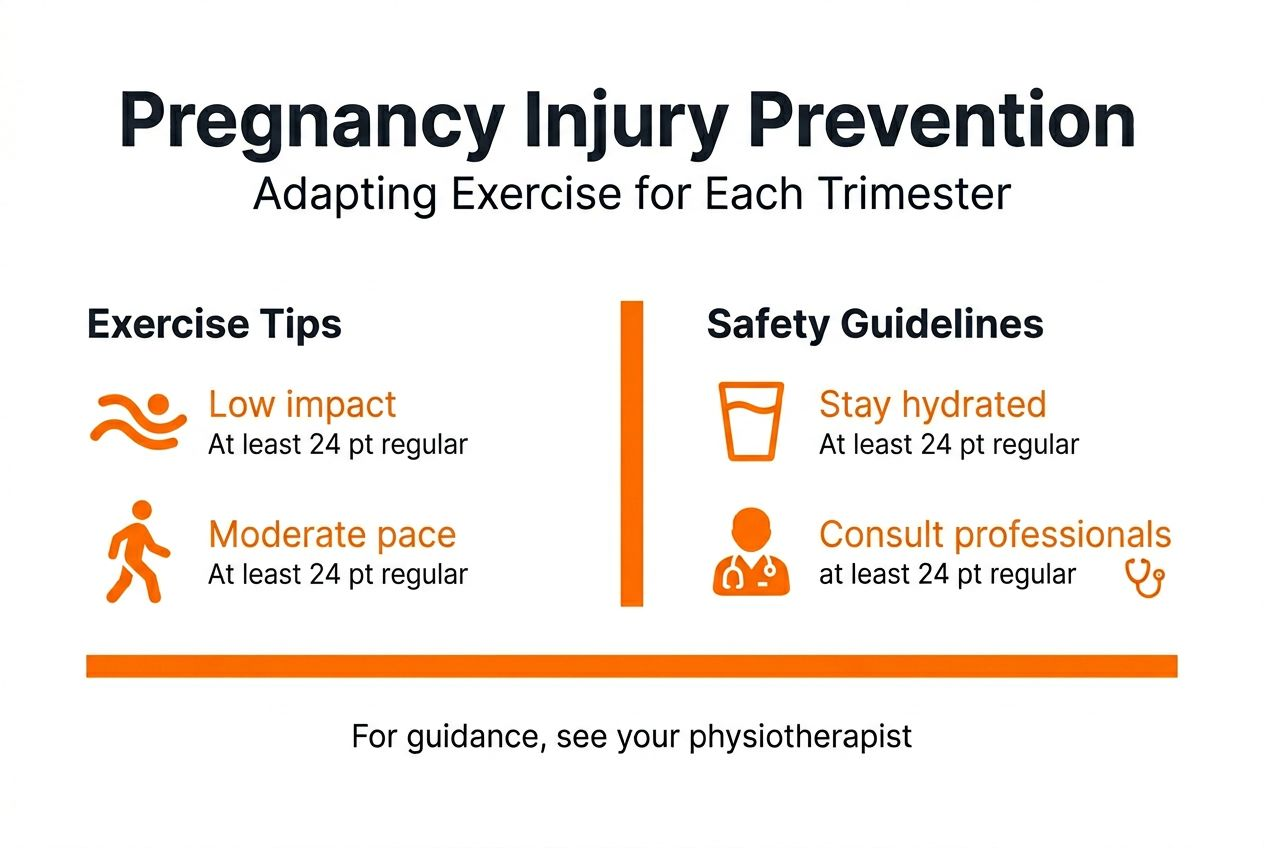
Pregnant women should target moderate intensity exercise where conversation remains possible throughout the activity. Heart rate guidelines vary by trimester, with first trimester allowing higher rates than third. Cutting exercise intensity by more than 50% in early pregnancy nearly doubles postpartum musculoskeletal injury risk, highlighting the importance of maintaining appropriate activity levels.
Contact and collision sports require complete avoidance throughout pregnancy. Pregnant women should avoid contact sports to reduce fetal injury risk and prevent maternal falls. Rugby, hockey, martial arts, and similar activities pose unacceptable risks regardless of fitness level or previous participation.
Safe exercise alternatives focus on controlled, low impact movements:
Swimming and water aerobics provide resistance training without joint stress
Walking maintains cardiovascular fitness with minimal fall risk
Stationary cycling eliminates balance challenges whilst building leg strength
Pregnancy specific yoga improves flexibility and core stability
Light resistance training with proper form supports muscle maintenance
Exercises requiring careful modification or avoidance include:
Supine exercises after 16 weeks due to reduced blood flow from uterine pressure
Activities involving lying flat on the back for extended periods
High impact movements like running or jumping in later trimesters
Exercises risking abdominal trauma or falls
Hot yoga or activities in environments above 32 degrees Celsius
Pro tip: Begin pelvic floor training early in pregnancy and maintain daily practice. Pelvic floor muscle training reduces urinary incontinence postpartum whilst supporting core stability to prevent injury throughout pregnancy and recovery.
Trimester | Exercise modifications | Safety priorities | Recommended frequency |
First (weeks 1 to 13) | Maintain pre-pregnancy intensity if comfortable | Monitor for bleeding, dizziness, excessive fatigue | 150 minutes moderate weekly |
Second (weeks 14 to 27) | Reduce high impact, modify supine positions | Focus on balance and core strength | 150 minutes moderate weekly |
Third (weeks 28 to 40) | Emphasise low impact, shorter sessions | Prioritise pelvic floor, avoid overheating | 150 minutes moderate weekly |
Incorporating a structured pre-workout routine for women helps prepare muscles and joints for safe exercise. Comprehensive pregnancy exercise adaptations and detailed exercise safety guidelines provide additional frameworks for maintaining fitness throughout pregnancy whilst minimising injury risk through intelligent activity selection and intensity management.
Common misconceptions and evidence based corrections
Misconceptions about exercise safety during pregnancy prevent many women from enjoying the health benefits of continued physical activity. Research consistently contradicts these myths, revealing that appropriate exercise supports rather than threatens pregnancy outcomes. Understanding evidence based facts empowers informed decision making.
Myth: Exercise increases miscarriage risk. Light to moderate exercise reduces miscarriage risk when proper risk assessments guide activity selection. Studies show no increased miscarriage rates amongst women maintaining appropriate exercise routines compared to sedentary pregnant women. The key lies in avoiding extreme intensity and high risk activities.
Myth: All high impact sports become unsafe during pregnancy. Whilst caution is essential, nuanced guidance with expert monitoring allows safe continuation for some trained athletes. Individual assessment considering fitness level, sport specific risks, and pregnancy progression determines appropriate participation. Elite athletes often continue modified training under specialist supervision.
Myth: Pregnant women should avoid all physical activity. The opposite proves true: exercise remains safe and beneficial unless medical contraindications exist. Complete inactivity increases risks of excessive weight gain, gestational diabetes, and postural problems. Healthcare providers recommend regular moderate exercise for most pregnant women.
Key evidence based corrections include:
Moderate exercise does not reduce blood flow to the fetus or impair development
Physical activity does not trigger preterm labour in healthy pregnancies
Continuing adapted exercise throughout pregnancy improves birth outcomes
Core and pelvic floor work prevents rather than causes injury
Swimming and water based exercise remain safe throughout all trimesters
Strength training with appropriate weight supports rather than harms pregnancy
These misconceptions often stem from outdated medical advice from decades past when bed rest was commonly prescribed. Modern research reveals the importance of maintained activity for maternal and fetal health. Detailed information on pregnancy exercise myths and comprehensive pregnancy exercise facts help women separate unfounded fears from legitimate safety concerns, enabling confident participation in beneficial physical activity throughout pregnancy.
Framework for personalised injury prevention plans
Creating individualised injury prevention strategies ensures exercise programmes match each woman’s unique risk profile, fitness level, and pregnancy progression. Collaboration between pregnant women, physiotherapists, and medical teams produces optimal outcomes. Structured planning prevents injuries whilst maximising health benefits.
Tailored pregnancy risk assessments including musculoskeletal screening prove essential for safely continuing sports participation. Early baseline evaluation identifies pre-existing conditions, previous injuries, and biomechanical vulnerabilities that pregnancy may exacerbate. This foundation guides all subsequent exercise decisions.
Steps for developing personalised plans:
Complete comprehensive musculoskeletal assessment in early pregnancy
Identify individual risk factors including joint hypermobility, previous injuries, and medical conditions
Establish baseline fitness level and current exercise habits
Develop trimester specific exercise targets with qualified healthcare professionals
Create contingency plans for modifying activities as pregnancy progresses
Schedule regular reassessment appointments every 4 to 6 weeks
Document warning signs requiring immediate activity cessation or medical consultation
Consideration | First trimester | Second trimester | Third trimester |
Exercise intensity | Maintain pre-pregnancy if comfortable | Moderate reduction as needed | Significant reduction, focus on mobility |
Balance activities | Normal stability exercises | Increased caution, support nearby | Avoid single leg or unstable surfaces |
Impact level | Low to moderate acceptable | Reduce to low impact | Emphasise non-impact activities |
Injury risk focus | Overuse from unchanged routines | Joint instability, falls | Pelvic floor strain, balance loss |
Pro tip: Reassess your exercise plan with healthcare professionals every 4 to 6 weeks throughout pregnancy. Physiological changes accelerate in later trimesters, requiring frequent adjustments to maintain safety whilst avoiding excessive activity restriction that increases postpartum injury risk.
Individual health status dramatically affects appropriate exercise parameters. Women with pregnancy complications like placenta previa or preeclampsia require modified or restricted activity. Conversely, athletes with strong fitness foundations may safely maintain higher intensity work than previously sedentary individuals. The pregnancy injury prevention framework emphasises individualisation over universal prescriptions, recognising that optimal injury prevention balances individual capability with pregnancy related vulnerabilities through ongoing professional guidance and responsive plan adjustments.
Postpartum injury prevention and returning to fitness
The postpartum period requires careful attention to injury prevention as the body recovers from pregnancy and childbirth. Rushing back to pre-pregnancy activity levels significantly increases injury risk. Gradual, monitored progression supports healing whilst rebuilding strength and fitness safely.
Resuming physical activity gradually reduces injury risk and supports mental health recovery after childbirth. The first six weeks focus on gentle movement and pelvic floor rehabilitation. Women who delivered via caesarean section require additional time for abdominal healing before advancing activity intensity.
Recommended stages for increasing activity:
Weeks 1 to 2: Short walks, gentle pelvic floor exercises, basic breathing work
Weeks 3 to 4: Extended walks up to 20 minutes, posture correction exercises
Weeks 5 to 6: Light resistance work, longer walks, core activation drills
Weeks 7 to 12: Progressive intensity increases with professional clearance
Months 3 to 6: Gradual return towards pre-pregnancy activities with ongoing monitoring
Months 6 to 12: Full activity resumption for most women, elite athletes may require longer
Pelvic floor rehabilitation forms the foundation of safe postpartum recovery. Pregnancy and delivery stress these muscles significantly, regardless of delivery method. Neglecting pelvic floor strengthening increases risks of prolapse, incontinence, and core instability that compromise exercise safety.
Physical activity benefits extend beyond physical recovery. Regular exercise reduces postpartum depression risk, improves sleep quality despite night wakings, and accelerates return to pre-pregnancy fitness levels. Mental health support through movement proves particularly valuable during the demanding early months of parenthood.
Precautions and warning signs requiring professional consultation:
Persistent or worsening pelvic or abdominal pain during or after exercise
Urinary or faecal incontinence that does not improve with pelvic floor work
Vaginal bleeding beyond normal postpartum recovery timeline
Severe fatigue disproportionate to activity level
Joint pain or instability suggesting ongoing ligament laxity
Separation of abdominal muscles (diastasis recti) not improving with rehabilitation
Pro tip: Consult physiotherapists specialising in postpartum recovery before resuming high impact or intense exercise. Professional assessment identifies lingering vulnerabilities like pelvic floor weakness or core dysfunction that require targeted rehabilitation before safely progressing activity intensity.
A structured physiotherapy guide for postpartum recovery provides detailed progression frameworks. Women returning to sport benefit from patience and professional guidance, recognising that full recovery typically requires six to twelve months. This investment in gradual progression prevents injuries that could sideline activity for extended periods, supporting long term fitness and health.
Accessing professional support in Bedfordshire and Buckinghamshire
Pregnant women in Bedfordshire and Buckinghamshire benefit from access to specialised physiotherapy services that support safe exercise throughout pregnancy and postpartum recovery. Professional guidance tailors injury prevention strategies to individual needs, ensuring optimal outcomes. Local multidisciplinary clinics provide comprehensive care.
Established providers like Parks Therapy Centre offer expert physiotherapy alongside complementary services including sports injury treatment and Pilates therapy for recovery. Their qualified team understands pregnancy specific biomechanical challenges and creates personalised exercise programmes that maintain fitness whilst preventing injury.
Professional consultations typically include:
Comprehensive musculoskeletal assessment identifying pregnancy related vulnerabilities
Personalised exercise prescription matching fitness level and trimester
Pelvic floor function evaluation and targeted strengthening programmes
Postural analysis and correction strategies for pregnancy related changes
Sports injury rehabilitation adapted for pregnant and postpartum women
Ongoing monitoring and programme adjustments as pregnancy progresses
Booking appointments proves straightforward through online systems or phone contact. Initial consultations establish baseline status and create tailored plans. Follow up sessions track progress, address emerging concerns, and modify programmes based on changing needs throughout pregnancy and recovery.
Convenient clinic locations in Bedfordshire and Buckinghamshire ensure accessible care close to home. Multiple sites reduce travel burdens, particularly important in later pregnancy when mobility becomes more challenging. Local access encourages consistent engagement with injury prevention programmes.
Early professional involvement optimises outcomes. Women who begin working with physiotherapists in early pregnancy establish strong foundations for safe exercise throughout all trimesters. This proactive approach prevents injuries rather than merely treating them after occurrence, supporting continuous fitness maintenance and confident physical activity participation during this transformative life stage.
Discover injury prevention support at Parks Therapy Centre
Maintaining fitness safely throughout pregnancy requires expert guidance tailored to your unique needs and changing body. Parks Therapy Centre brings decades of experience supporting pregnant women across Bedfordshire and Buckinghamshire with specialist physiotherapy services designed for injury prevention and recovery.
Our qualified team creates personalised exercise programmes that adapt as your pregnancy progresses. Whether you’re managing existing injuries or seeking to prevent new ones, comprehensive sports injury treatments address your specific concerns.
Convenient locations throughout the region ensure accessible care close to home. Book your consultation through our simple online booking system and take the first step towards confident, safe exercise throughout pregnancy and beyond. Professional support makes the difference between uncertainty and empowered fitness during this important time.
Frequently asked questions
Is exercise harmful to unborn babies during pregnancy?
No, moderate exercise benefits both mother and baby when appropriate intensity and activities are chosen. Research consistently shows that light to moderate physical activity does not harm fetal development and may actually reduce certain pregnancy complications. The key involves avoiding high risk activities like contact sports whilst maintaining regular movement.
How can pregnant women safely prevent sports injuries?
Pregnant women prevent injuries by adapting exercise intensity to each trimester, focusing on low impact activities, and strengthening core and pelvic floor muscles. Working with physiotherapists ensures personalised programmes that account for individual risk factors and pregnancy progression. Regular reassessment allows timely modifications as physiological changes occur.
When should I see a physiotherapist during pregnancy?
Ideally, consult a physiotherapist early in pregnancy to establish baseline fitness and identify any pre-existing vulnerabilities. Continue regular appointments every 4 to 6 weeks throughout pregnancy for programme adjustments. Seek immediate consultation if you experience pain, joint instability, or concerns about exercise safety at any stage.
What exercises are safest during different pregnancy trimesters?
First trimester allows continuation of most pre-pregnancy activities with monitoring for fatigue. Second trimester requires reducing high impact work and modifying supine positions after 16 weeks. Third trimester emphasises low impact activities like swimming and walking whilst prioritising pelvic floor strengthening. All trimesters benefit from core stability work adapted to pregnancy stage.
How soon after birth can I resume physical activity?
Gentle walking and pelvic floor exercises can begin within days of delivery if no complications occurred. Gradually increase activity over 6 to 12 weeks, waiting for medical clearance before returning to high intensity or impact exercise. Caesarean delivery requires additional healing time before progressing intensity. Professional assessment ensures safe progression tailored to individual recovery.
Recommended