
Types of physiotherapy techniques: choosing the right approach in 2026
Selecting the right physiotherapy technique for your musculoskeletal injury or recovery goal can feel overwhelming. With manual therapy, exercise programmes, electrotherapy, and emerging digital methods all available, knowing which approach suits your needs matters enormously. This article provides an evidence-based framework to help you evaluate key physiotherapy techniques, understand their benefits, and make informed decisions for faster, more effective recovery in Bedfordshire and Buckinghamshire.
Table of Contents
Key takeaways
Point | Details |
Diverse technique options | Physiotherapy includes manual therapies, exercise programmes, electrotherapy, shockwave treatment, and digital methods suited to different recovery stages. |
Combined approaches work best | Combining manual and exercise therapies improves outcomes by up to 42% compared to single methods. |
Technology boosts engagement | Virtual reality and AI-driven programmes increase patient adherence and motivation significantly. |
Evidence-based selection | Evaluate techniques by clinical evidence strength, injury type, recovery phase, and personal preferences. |
Local accessibility matters | Check which advanced techniques your local Bedfordshire and Buckinghamshire clinics offer before committing. |
How to choose the right physiotherapy technique: 5 key criteria
Before diving into specific techniques, you need a decision-making framework. Clinical evidence strength stands as your primary filter. Look for techniques backed by robust research showing measurable improvements in pain, function, and recovery time.
Suitability varies dramatically by injury type and recovery phase. Acute injuries respond differently than chronic conditions. Post-surgical rehabilitation demands different approaches than sports performance enhancement. What works brilliantly for tendinopathies may prove ineffective for nerve-related pain.
Patient engagement potential directly impacts treatment success. Techniques requiring daily home practice only work if you actually do them. Some people thrive with independent exercise programmes, whilst others need hands-on guidance and accountability.
Clinical evidence strength determines effectiveness and reliability
Injury type and recovery phase dictate technique suitability
Patient engagement affects adherence and outcomes
Local availability of technology influences accessible options
Balance immediate symptom relief against long-term functional gains
Availability matters practically. Advanced technologies like shockwave therapy or virtual reality systems require specialised equipment. Check what your local physiotherapy services in Bedfordshire and Buckinghamshire actually offer before building treatment expectations around unavailable options.
Pro Tip: Ring local Bedfordshire and Buckinghamshire clinics to verify which specific techniques and technologies they provide for your condition before booking initial assessments.
Manual therapy: hands-on treatment for immediate relief
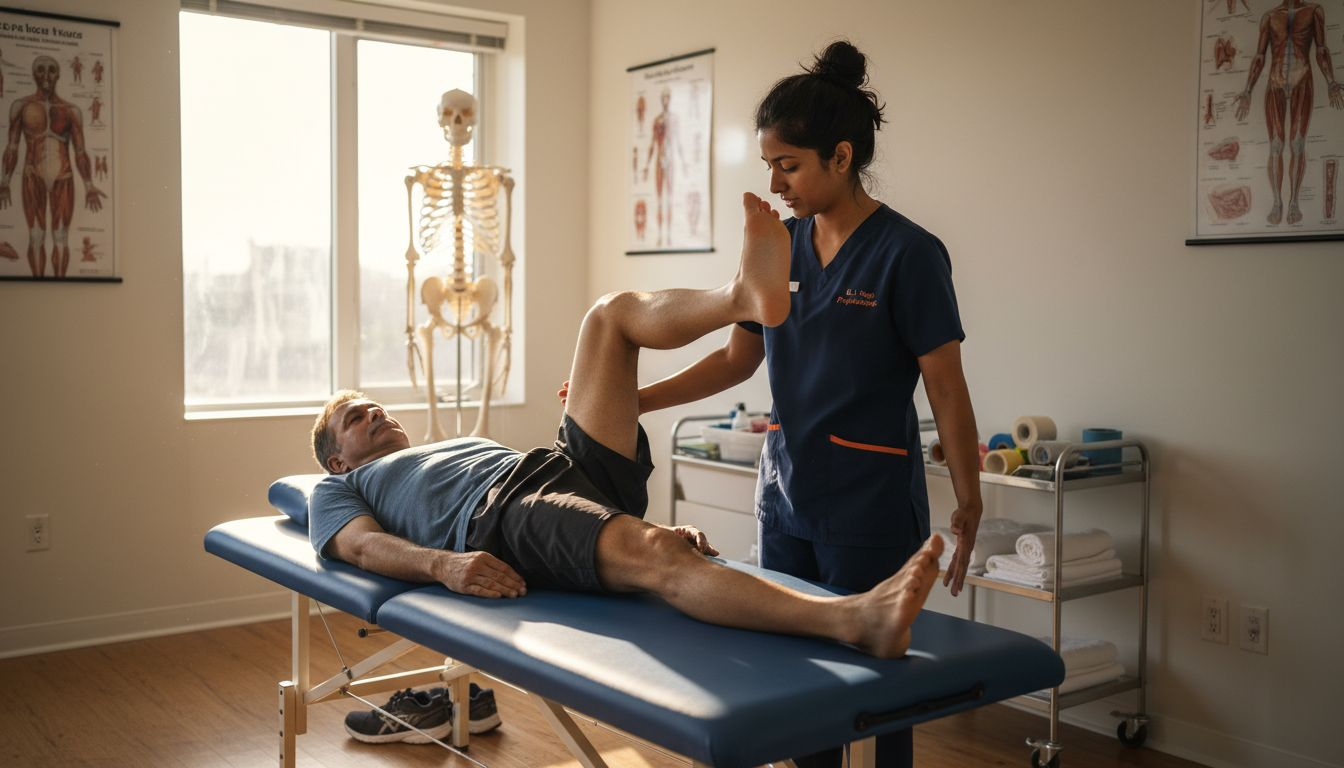
Manual therapy encompasses joint mobilisation and soft tissue manipulation performed by trained physiotherapists. These hands-on techniques target restricted joints, tight muscles, and fascial adhesions that limit movement and cause pain.
The mechanism works through mechanoreceptor stimulation. When physiotherapists manipulate tissues, they improve circulation, tissue pliability, and modulate the nervous system to reduce pain signals. This explains why many patients experience immediate relief after treatment sessions.
Provides rapid symptomatic relief in acute musculoskeletal pain
Enhances blood flow and reduces post-injury stiffness
Improves mobility restrictions following surgery
Works best combined with progressive exercise therapy
Limited long-term benefits when used alone
Manual therapy excels at breaking the pain-spasm cycle that traps people in restricted movement patterns. Following an ankle sprain or shoulder injury, tissues tighten protectively. Skilled manipulation releases these restrictions, allowing you to move more freely and begin active rehabilitation sooner.
Manual therapy delivers immediate symptomatic relief by improving circulation, tissue pliability, and modulating the nervous system through mechanoreceptor stimulation, making it invaluable for acute pain management.
The limitation? Passive treatments provide temporary relief without building lasting strength or function. You need progressive loading and active movement to prevent recurrence. That’s why evidence consistently shows manual therapy works best as part of a broader programme, not as a standalone solution. Stay updated on manual therapy news in Bedfordshire to learn about new techniques emerging locally.
Exercise therapy: building strength, flexibility, and function
Exercise therapy forms the foundation of effective musculoskeletal rehabilitation. Active movement programmes progressively challenge your body to rebuild strength, restore flexibility, improve balance, and enhance overall function. Unlike passive treatments, exercise empowers you to manage recovery independently.
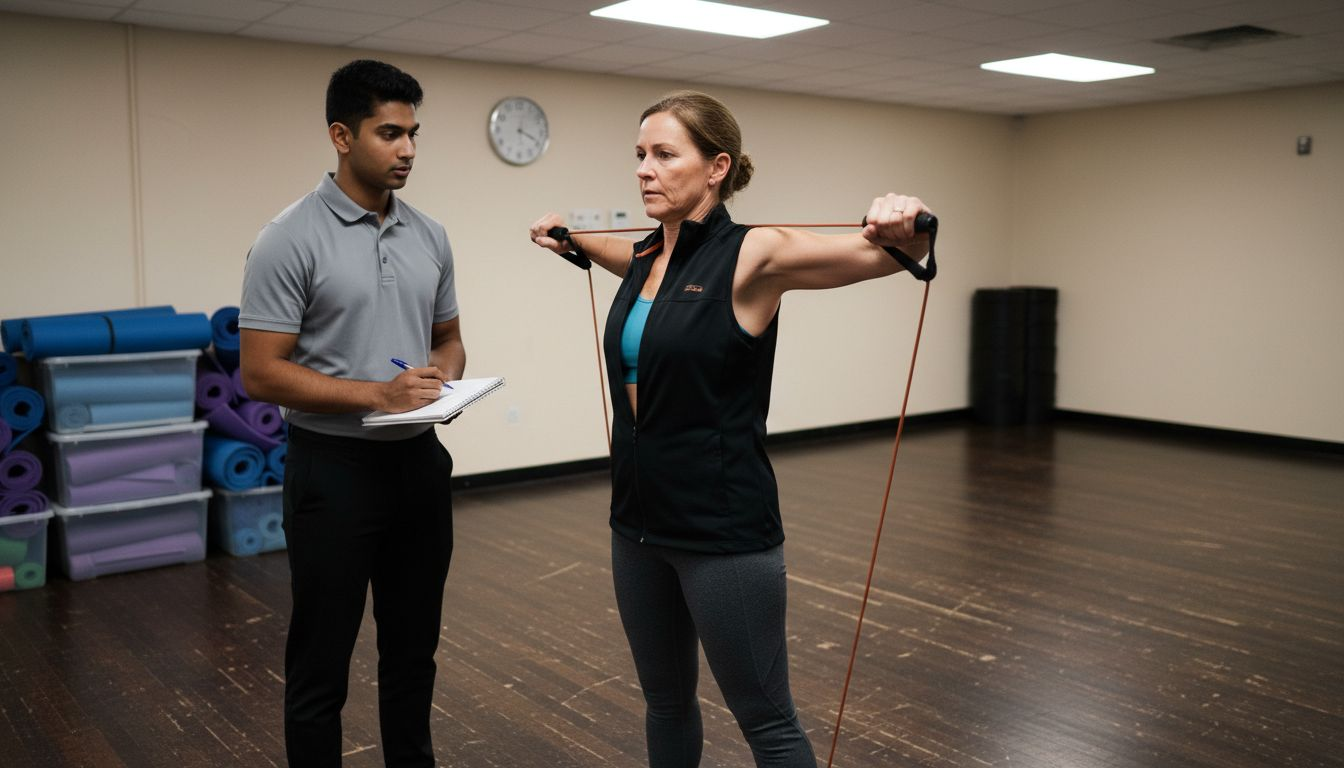
The gold standard for chronic musculoskeletal conditions and post-surgical rehabilitation, exercise therapy addresses root causes rather than just symptoms. Strengthening weak muscles, mobilising stiff joints, and retraining movement patterns prevents future injury whilst accelerating current recovery.
Research demonstrates that combining manual therapy with exercise therapy improves outcomes by up to 42% compared to either approach alone. Manual therapy provides initial pain relief and mobility gains, whilst exercise builds on those improvements to create lasting functional change.
Improves strength, balance, flexibility, and functional capacity
Considered the gold standard for chronic musculoskeletal rehabilitation
Empowers independent recovery management and injury prevention
Delivers superior long-term outcomes over passive treatments
Most effective when supplemented by manual therapy initially
Exercise programmes must match your current capacity and progress systematically. Starting too aggressively risks re-injury and discouragement. Beginning too gently wastes time without stimulating adaptation. Skilled physiotherapists calibrate intensity, volume, and progression to keep you in the sweet spot between challenge and safety.
Home exercise adherence determines success. Clinic sessions twice weekly matter far less than what you do the other five days. Setting realistic goals, tracking progress, and maintaining regular sessions maximises recovery benefits. Access exercise therapy in Bedfordshire and Buckinghamshire to begin structured programmes tailored to your needs.
Pro Tip: Keep a simple exercise log noting sets, repetitions, and how movements feel to track progress and identify patterns your physiotherapist can optimise.
Electrotherapy: pain modulation and muscle activation
Electrotherapy uses electrical stimulation to manage pain and facilitate muscle function. Two primary modalities dominate clinical practice: transcutaneous electrical nerve stimulation (TENS) and neuromuscular electrical stimulation (NMES). Each serves distinct purposes in rehabilitation.
TENS modulates pain by stimulating sensory nerves, effectively blocking pain signals from reaching your brain. This gate control mechanism provides symptomatic relief without medication, making it valuable for chronic musculoskeletal pain management. NMES directly stimulates motor nerves to produce muscle contractions, aiding re-education after injury or surgery when voluntary activation proves difficult.
Electrotherapy modalities complement manual and exercise therapies in managing chronic pain, muscle re-education, and post-injury rehabilitation. They enhance rather than replace active treatment approaches.
TENS reduces chronic pain through nerve stimulation
NMES facilitates muscle contraction when voluntary activation is limited
Supports muscle re-education following injury or surgery
Functions as supplementary treatment alongside manual and exercise therapy
Particularly useful when active exercises prove initially impossible
Electrotherapy shines when patients cannot perform active movements independently. Following knee surgery, quadriceps muscles often shut down despite conscious effort. NMES artificially stimulates contraction, maintaining muscle mass and retraining neural pathways until voluntary control returns.
The role remains supplementary. Electrical stimulation cannot replace the progressive loading and functional movement patterns that exercise therapy provides. Think of electrotherapy as a bridge helping you reach the point where active rehabilitation becomes possible. Check electrotherapy updates in Bedfordshire clinics to learn about new applications being introduced locally.
Shockwave therapy and emerging techniques
Advanced physiotherapy techniques offer powerful alternatives for stubborn conditions. Extracorporeal shockwave therapy (ESWT) and blood flow restriction (BFR) training represent evidence-backed innovations changing musculoskeletal care.
ESWT delivers acoustic waves to injured tissues, stimulating healing responses at the cellular level. The technique proves remarkably effective for chronic tendinopathies affecting Achilles tendons, tennis elbows, and plantar fascia. Success rates range from 62 to 83 percent, making ESWT a game-changer when traditional approaches plateau.
BFR training uses tourniquet-like cuffs to partially restrict blood flow during low-load exercises. This creates a hypoxic environment triggering muscle growth and strength gains comparable to high-load training, but with minimal joint stress. Post-surgical patients and those with painful conditions benefit enormously from building strength without heavy weights.
ESWT achieves 62 to 83 percent success rates for tendinopathies
BFR training enables muscle strengthening with significantly reduced loads
Both techniques offer alternatives when traditional methods prove insufficient
Particularly valuable for chronic conditions resistant to conventional therapy
Require specialised equipment and trained practitioners
Technique | Effectiveness | Primary applications | Duration of benefits |
ESWT | 62 to 83 percent success rate | Chronic tendinopathies, calcific conditions | Long-term tissue healing |
BFR training | Comparable to high-load training | Post-surgical strengthening, painful conditions | Progressive strength gains |
These advanced options work best as targeted interventions within broader rehabilitation programmes. ESWT treats the underlying tissue pathology whilst exercise therapy rebuilds function. BFR training accelerates strengthening during phases when heavy loading remains contraindicated.
Availability varies significantly between clinics. Not every physiotherapy centre invests in shockwave equipment or trains staff in BFR protocols. Research latest physiotherapy innovations to discover which Bedfordshire and Buckinghamshire providers offer these emerging techniques.
Hybrid and digital rehabilitation techniques: tele-rehab, VR, and AI
Technology revolutionises how physiotherapy reaches patients and drives engagement. Hybrid care models, virtual reality systems, and artificial intelligence platforms transform traditional rehabilitation into interactive, personalised experiences.
Hybrid models combine in-clinic assessments with tele-rehabilitation follow-ups. You receive hands-on treatment when needed whilst maintaining programme continuity through video consultations and app-based exercise guidance. This flexibility dramatically improves adherence, particularly for busy professionals or those with limited mobility.
Virtual reality gamifies rehabilitation exercises, turning tedious repetitions into engaging challenges. VR-enhanced rehabilitation increases patient engagement by 340% whilst modulating pain and improving adherence to home programmes. The immersive experience distracts from discomfort and provides instant feedback on movement quality.
Hybrid care improves accessibility and maintains continuity
VR gamification boosts motivation and adherence dramatically
AI enables personalised treatment plans and progress tracking
Digital tools support chronic condition self-management
Technology enhances rather than replaces practitioner expertise
Artificial intelligence analyses movement patterns, tracks progress, and adjusts exercise difficulty automatically. Smart sensors detect compensation patterns you might not notice, whilst algorithms recommend programme modifications based on your response. This personalisation optimises recovery speed and reduces injury risk.
Virtual reality enhanced rehabilitation increases patient engagement by 340 percent, modulates pain perception, and improves adherence to home exercise programmes in individuals with chronic musculoskeletal pain, making it a powerful tool for modern rehabilitation.
The technology supports rather than replaces physiotherapists. Human expertise remains essential for assessment, clinical reasoning, and motivational support. Digital tools extend that expertise, making high-quality care more accessible and engaging. Follow digital physiotherapy updates to learn how local clinics integrate these innovations.
Summary comparison and situational recommendations
Choosing the right technique depends on your specific condition, recovery stage, and personal preferences. This comparison synthesises the key differences to guide your decision.
Technique | Primary benefits | Ideal use cases | Evidence strength | Accessibility |
Manual therapy | Immediate pain relief, mobility gains | Acute pain, post-surgical stiffness | Strong | Widely available |
Exercise therapy | Long-term strength, function, independence | Chronic conditions, injury prevention | Very strong | Universal |
Electrotherapy | Pain modulation, muscle activation | Chronic pain, muscle re-education | Moderate | Common |
Shockwave therapy | Tissue healing, tendinopathy resolution | Chronic tendon issues | Strong | Limited availability |
BFR training | Low-load strength gains | Post-surgical, painful conditions | Growing | Specialised clinics |
Digital rehabilitation | Engagement, accessibility, personalisation | Adherence challenges, remote care | Emerging | Increasing |
For acute musculoskeletal pain from recent injury, manual therapy combined with early gentle movement provides the fastest symptom relief and mobility restoration. This prepares you for progressive exercise therapy as healing advances.
Chronic rehabilitation demands exercise therapy as the foundation, potentially supplemented by manual therapy for flare-ups and electrotherapy for pain management. Long-term success requires building strength, endurance, and movement quality through consistent active training.
Post-surgical recovery benefits from a phased approach: manual therapy for early mobility, NMES for muscle activation, progressing to exercise therapy as tolerance improves. BFR training accelerates strengthening when heavy loads remain contraindicated.
Stubborn tendinopathies resistant to conventional treatment often respond dramatically to shockwave therapy combined with progressive loading programmes. The combination addresses both tissue pathology and functional deficits.
If adherence to home programmes challenges you, explore digital tools and VR-enhanced rehabilitation. The gamification and instant feedback dramatically improve motivation and consistency, which ultimately determine outcomes.
Consult with local Bedfordshire and Buckinghamshire physiotherapy providers to discuss which combination of techniques matches your condition, preferences, and recovery goals. Personalised care delivers far better results than generic protocols.
Discover personalised physiotherapy care at Parks Therapy Centre
Ready to experience expert physiotherapy tailored to your musculoskeletal needs? Parks Therapy Centre brings over 35 years of excellence to adults across Bedfordshire and Buckinghamshire seeking effective injury management and performance enhancement.
Our multidisciplinary team delivers the full spectrum of techniques discussed in this article, from traditional manual therapy and progressive exercise programmes to advanced modalities. Whether you’re managing a sports injury, recovering from surgery, or addressing chronic pain, we create personalised treatment plans combining the most effective approaches for your situation.
Convenient clinic locations throughout Bedfordshire and Buckinghamshire make accessing quality care straightforward. Our sports injury treatment options address everything from acute sprains to chronic overuse conditions, whilst our comprehensive physiotherapy services support rehabilitation at every stage.
Online booking simplifies scheduling around your commitments. Take the first step towards faster recovery and enhanced physical function by choosing evidence-based care delivered by experienced practitioners. Book your physiotherapy appointment today and discover the difference personalised, expert treatment makes.
Frequently asked questions
What physiotherapy technique is best for acute musculoskeletal pain?
Manual therapy delivers the fastest symptomatic relief for acute musculoskeletal injuries by reducing pain and improving mobility immediately. It works best when combined with early gentle movement, preparing you for progressive exercise therapy as healing advances.
How does exercise therapy aid long-term recovery?
Exercise therapy builds lasting strength, flexibility, and functional independence that passive treatments cannot achieve. Research consistently shows superior long-term outcomes compared to manual therapy or electrotherapy alone, making it the rehabilitation gold standard.
Can technology like virtual reality improve my physiotherapy experience?
Absolutely. Virtual reality increases patient engagement by 340 percent by gamifying exercises and providing instant movement feedback. This dramatically improves adherence to home programmes whilst making rehabilitation more enjoyable and interactive.
When should I consider shockwave therapy for tendon pain?
Consider shockwave therapy when chronic tendinopathies resist three to six months of conventional treatment including exercise and manual therapy. Success rates of 62 to 83 percent make it highly effective for stubborn Achilles, elbow, and plantar fascia conditions.
How do I know which physiotherapy approach suits my needs?
Evaluate clinical evidence strength, injury type, recovery phase, and your personal preferences. Consult experienced physiotherapists who assess your condition comprehensively and recommend evidence-based combinations tailored to your specific goals and circumstances.
Recommended