
Diastasis recti treatment: what actually works
Updated: Sep 27

Most cases of diastasis recti are managed successfully with physiotherapy and pressure managed exercise; surgery is reserved for selected, persistent, or complicated cases. Physiotherapy, breath led core retraining, and graded loading are the accepted first-line diastasis recti treatment, and many women see genuine functional improvement, less bulging, and better load tolerance even when the midline gap never fully closes.
Surgery is only considered for significant functional impairment or a hernia that persists after a proper rehab trial, generally after a trial of core training for several months, and usually when no further pregnancy is planned soon.
Start with a physiotherapy-led programme before considering anything more invasive.
Watch for doming or coning along the midline: that’s your cue to stop or modify the movement.
Track function (lifting, carrying, coughing without leaking or bulging), not just the width of the gap.
Key fact: NHS clinical guidance states that surgery for diastasis recti is generally only considered after a six-month trial of structured core training, and only for patients with functional impairment or a coexisting hernia.
Key Takeaways
Diastasis recti treatment succeeds when physiotherapy-led, pressure-managed rehabilitation restores function first, with surgery reserved for persistent or complicated cases after a genuine conservative trial.
Point | Details |
Physiotherapy comes first | Structured, progressive rehab is the recommended starting point before any surgical discussion. |
Doming is your stop signal | Any midline bulging during exercise or lifting means the movement needs modifying immediately. |
Function matters more than the gap | Reduced doming and better load tolerance count as real progress even without full anatomical closure. |
Surgery has clear criteria | Considered only after roughly six months of rehab, for functional impairment or a hernia. |
Parks Therapy Centre offers assessment-led care | A first appointment includes a full functional assessment before a tailored, evidence-based exercise plan is built. |
This article is general information, not a substitute for advice from a qualified doctor. Consult a qualified healthcare professional about your own circumstances before acting on anything here.
Table of Contents
How is diastasis recti diagnosed, and can you check it yourself?
Diastasis recti is measured by inter-recti distance (IRD), the gap between the two halves of the rectus abdominis muscle. Clinicians commonly use finger widths or callipers above, at, and below the umbilicus, and a distance greater than a small gap is widely used as a working threshold for abnormality, though StatPearls notes that exact cut-offs vary by measurement method and clinician. Ultrasound gives more precise measurements but isn’t routinely needed for most cases.
You can do a basic self-check at home, but treat it as a starting point rather than a diagnosis.
Lie on your back with knees bent, feet flat on the floor.
Place your fingers just above your navel, gently press down, and lift your head and shoulders slightly off the floor.
Feel for a gap, its depth, and whether the tissue domes or bulges upward.
Repeat at the navel and a few centimetres below it.
Stop immediately if you feel pain or notice pronounced doming.
If you spot a lump that changes with coughing, or feel persistent pain around the midline, that warrants clinical assessment rather than a repeat self-test, since it could indicate a hernia.
Pro Tip: Photograph or film your self-test from the side. It’s far easier to spot doming on video than while you’re mid-crunch trying to feel your own abdomen.
What conservative treatments and exercises actually help?
Physiotherapy remains the first-line diastasis recti treatment, and a structured programme built around four components tends to work best: breath-led activation, pelvic floor coordination, transversus abdominis recruitment, and progressive functional loading. The order matters. Jumping straight to strength work before the deep system fires correctly is one of the most common reasons rehab stalls.

A scoping review of postpartum diastasis recti rehabilitation found that multiple exercise approaches show promising results for reducing inter-recti distance and improving function, but the same review found no single standardised protocol backed by strong evidence, largely because study designs and exercise combinations vary so widely. In plain terms: there’s no one “correct” programme, but consistent, progressive, pressure-aware training beats sporadic effort every time.
Several adjuncts get asked about regularly:
Abdominal binders and support garments can reduce discomfort and offer proprioceptive feedback in early recovery, though they shouldn’t replace active training.
Neuromuscular electrical stimulation (NMES) has shown benefit in some trials when paired with exercise, though results are inconsistent across studies.
Kinesiology taping may support awareness of the midline during daily movement.
Biofeedback can help some women learn to activate the correct muscles before adding load.
A typical progression runs: early control drills (diaphragmatic breathing, gentle transversus activation, supported rolling), moving into mid-stage work like isometric holds and loaded carries, then late-stage impact preparation and graded return to running or high-impact sport, with doming checked at every stage. Pilates-informed programmes often slot neatly into the mid-stage phase, since they emphasise controlled breath and core sequencing rather than raw repetitions. Our guide to Pilates in rehabilitation covers how this looks in practice.
Pro Tip: If an exercise causes your midline to bulge outward rather than flatten, that’s your body telling you the load exceeds your current capacity, not a sign to push through.
What happens during a diastasis recti physiotherapy assessment?
A pelvic-health or musculoskeletal physiotherapist will look well beyond the tape measure. Expect a thorough functional assessment before any exercise plan gets written.
Inter-recti distance measured above, at, and below the umbilicus, since the gap often varies along its length.
Linea alba quality, checking tension and stiffness in the connective tissue rather than just its width, which often predicts recovery better than the raw gap measurement.
Doming behaviour during a controlled curl-up or load test.
Pelvic floor function, breathing pattern, posture, and how you move through everyday tasks like standing from a chair or lifting a toddler.
Treatment plans typically combine education on pressure management, individually tailored exercises, graded progressions, and occasionally manual therapy to ease restricted movement patterns that are keeping you compensating. If manual techniques come up, our page on manual therapy explains where it fits and where it doesn’t.
Success is measured in function, not just numbers. Clinicians look for reduced doming under load, an improved ability to lift and carry without bracing awkwardly, and fewer symptoms during tasks that used to provoke them, rather than fixating solely on how many centimetres the gap has closed. This function-first framing matters because some cases improve meaningfully without the gap ever fully disappearing, and chasing full anatomical closure as the only marker of success sets women up to feel like rehab failed when it hasn’t. Our page on evidence-based physiotherapy outcomes explains why outcome measures matter more than any single number.
When is surgery considered for diastasis recti?
Surgery sits behind conservative care, not alongside it. NHS clinical policy frames surgical repair as appropriate only after a genuine trial of core rehabilitation, typically lasting several months, and specifically for people with significant functional impairment or a symptomatic hernia, ideally once future pregnancy isn’t planned in the near term.
Several surgical approaches exist, and the choice depends on severity, anatomy, and whether hernia repair is needed alongside it:
Rectus plication, performed open or laparoscopically, stitches the separated muscles back towards the midline.
Abdominoplasty with plication combines cosmetic tissue removal with the same muscle repair.
Combined hernia repair, sometimes involving mesh depending on technique and hernia size.
Surgical literature on abdominal rectus diastasis is clear that these procedures carry real risks: recurrence, wound complications, mesh-related issues, and scarring among them. Pre-operative optimisation and realistic expectations about function versus cosmetic appearance both matter enormously here. Surgery isn’t offered for appearance alone.
Which exercises should you avoid, and what’s safer?
Certain movements reliably spike intra-abdominal pressure beyond what a compromised midline can handle. Avoid or heavily modify these until you’ve built capacity:
Traditional crunches and full sit-ups.
Unmodified planks held for long durations.
Heavy lifting performed with poor bracing technique, especially breath-holding under load.
Any exercise that causes visible doming or coning along the midline.
Doming is your immediate stop signal, not a warning to push through, as Bedfordshire Hospitals NHS Trust’s patient guidance makes clear. If a movement causes it, either regress to an easier variation or drop the load.
For daily life, small changes reduce cumulative strain. Roll onto your side before pushing up to sit rather than crunching straight up from lying flat. Exhale as you lift, brace gently rather than gripping hard, and manage constipation actively since straining on the toilet loads the abdominal wall just as much as a bad exercise does. When coughing or sneezing, support your abdomen with a hand or cushion. Return to running or impact sport gradually, following the staged approach outlined earlier rather than jumping back in at pre-pregnancy intensity.
Pro Tip: Constipation is an underrated saboteur of diastasis recovery. Straining regularly can undo weeks of careful core retraining.
How long does recovery take, and what’s a realistic outcome?
Most women see meaningful improvement within 3 to 12 months of guided rehabilitation, with smaller separations often responding faster than larger ones. Function typically improves well before, or even without, complete anatomical closure of the gap.
Recurrence is a genuine possibility with future pregnancy, and prognosis depends on severity, tissue quality, parity, other health conditions, and simply how consistently the rehab programme gets followed. Adherence tends to matter more than any single exercise choice.
When should you seek clinical review?
Certain signs mean rehab exercises should pause in favour of a proper assessment.
A painful or tender bulge, particularly one that changes size with coughing, which can indicate a hernia rather than straightforward diastasis.
Severe or worsening pain that doesn’t settle with rest.
Signs of infection following any prior abdominal surgery, such as redness, warmth, or discharge.
No improvement at all despite several weeks of consistent, correctly performed exercise.
Start with your GP, who can refer you to pelvic-health physiotherapy or, where indicated, a surgical opinion. Bring a timeline of your symptoms, any video of doming during exercise, a list of what you’ve tried and how your body responded, and relevant obstetric or surgical history. That detail speeds up assessment considerably.
Can nutrition support diastasis recti recovery?
Tissue repair depends on raw materials, and the connective tissue involved in diastasis recti, the linea alba, needs adequate protein and specific micronutrients to rebuild tensile strength. Protein intake supports collagen synthesis, which matters directly here since linea alba integrity is a key predictor of functional recovery.
Vitamin C is a cofactor in collagen formation, and zinc supports the enzymatic processes involved in tissue remodelling. Postpartum women are also frequently iron deficient following blood loss at delivery, and low iron can leave you fatigued in ways that make consistent rehab adherence harder, not because of any direct effect on the tissue itself.
Hydration deserves a mention too, since well-hydrated connective tissue behaves more elastically under load than dehydrated tissue, which matters when you’re gradually reintroducing lifting and carrying tasks. Breastfeeding increases caloric and fluid demands further, so under-eating during this period can slow healing generally, quite aside from its effect on milk supply.
None of this replaces physiotherapy. Nutrition supports the biological groundwork for repair, but it doesn’t retrain the neuromuscular coordination between your breath, pelvic floor, and deep abdominals that’s actually driving your functional recovery. Think of it as making sure the workshop has materials, not as doing the building work itself.
How does diastasis recti affect mental wellbeing?
The physical gap gets most of the attention, but the psychological weight of diastasis recti is often underestimated. Many women describe a persistent sense of disconnect from their own midsection, frustration at clothes that no longer sit the way they used to, or anxiety every time they lift their child and feel that telltale bulge.
Body image distress after pregnancy is common and diastasis recti frequently compounds it, layering a visible, tangible reminder onto broader postpartum adjustment. Some women also feel dismissed when told a bulging tummy is “just normal after having a baby,” which can delay them seeking proper assessment.
Talking to a physiotherapist who takes both the physical and emotional dimension seriously helps considerably, and some women benefit from additional counselling support, particularly where symptoms overlap with broader postpartum mental health difficulties. If low mood, anxiety, or persistent body image distress is affecting daily life, mention it to your GP alongside the physical symptoms; the two are rarely separate issues in practice. Connecting with other women going through the same recovery, whether through a postnatal exercise class or an online community, also reduces the isolation that often makes the psychological side feel heavier than it needs to.
How can posture and daily habits speed up recovery?
Ergonomic adjustments do a surprising amount of the heavy lifting in diastasis recovery, often more than an extra set of exercises would.
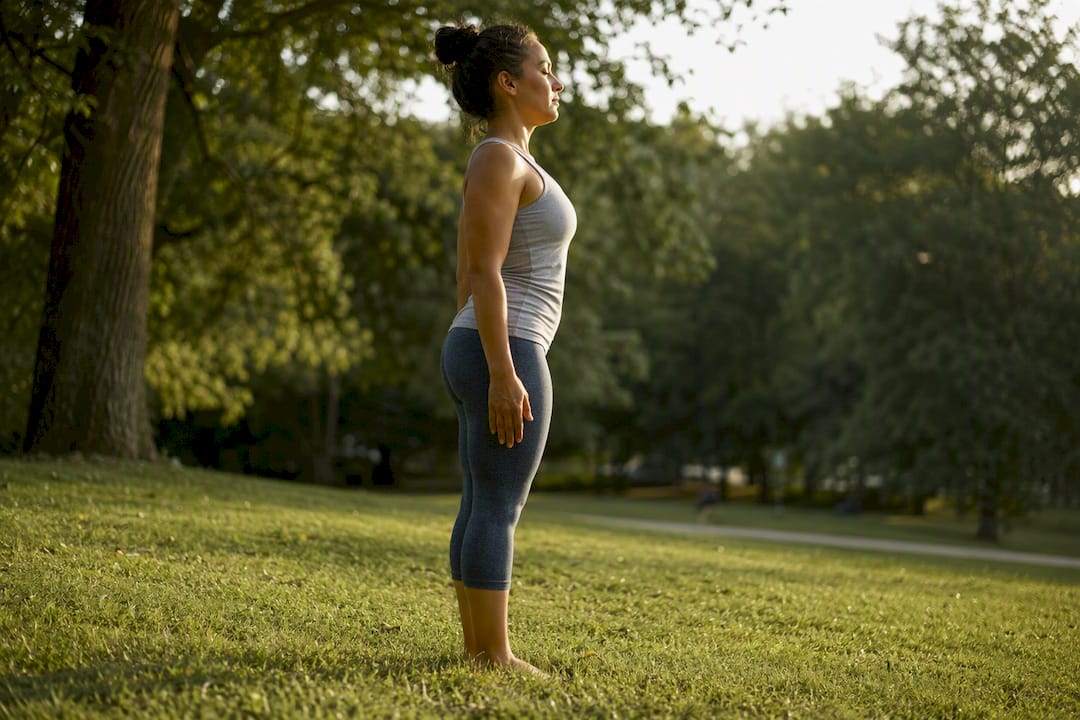
Posture matters because a habitually arched lower back or a collapsed, slouched stance both change how pressure distributes through your abdominal wall during everyday tasks. Standing tall with your ribcage stacked over your pelvis, rather than flared or tucked, gives your deep core muscles a mechanically fair chance to do their job.
Breathing technique is just as central. Shallow, chest-dominant breathing, common when you’re exhausted and holding tension in your shoulders, bypasses the diaphragm’s role in managing intra-abdominal pressure. Practising slow, lateral rib expansion on the inhale, with a gentle pelvic floor and deep abdominal engagement on the exhale, retrains the pressure system that diastasis rehab depends on.
Lifting technique deserves particular attention with a baby in the picture, since you’re bending and lifting dozens of times a day. Bend at the hips and knees rather than rounding through the spine, keep the load close to your body, and exhale as you lift rather than holding your breath and bracing rigidly. Our piece on pregnancy-related injury prevention covers several of these mechanics in more depth, and a well-designed strength programme, as this evidence-based look at strength training explains, builds the postural strength that makes good ergonomics sustainable rather than effortful.
How does Parks Therapy Centre approach diastasis recti rehabilitation?
Rehabilitation should never chase a number on a tape measure. What matters clinically is restoring pressure control, reducing doming, and getting a woman back to lifting her child without her body flagging a warning. That’s the frame every credible physiotherapy assessment should use, and it’s one Parks Therapy Centre has applied since 1986, blending pelvic-health physiotherapy with Pilates-informed progression to rebuild function step by step. A first clinic visit typically means a full functional assessment before any exercise gets prescribed, not a generic sheet handed over on day one.
— Ivan
Ready to book a diastasis recti assessment?
If you’ve read this far, you already know self-testing has limits and progress depends on a plan built around your own linea alba quality, doming pattern, and daily demands, not a generic printout. A first appointment at Parks Therapy Centre typically starts with exactly the functional assessment described above: IRD measurement, posture and breathing review, and a look at how your midline behaves under real load, before any exercise gets prescribed.

Sessions accept private payment and most major health insurance policies, and NHS referral routes may apply depending on your circumstances, so it’s worth checking what’s available to you. The focus throughout stays on function and evidence-based progression rather than promising a particular cosmetic result, because that’s the honest, clinically sound way to approach diastasis recti treatment. If you’re ready to get a proper assessment rather than guess your way through another exercise video, book an appointment with Parks Therapy Centre to start your tailored rehab pathway.
Sources
Recommended