
Early intervention in accident recovery: a 2026 guide

TL;DR:
Early intervention after an accident involves prompt medical assessment and multidisciplinary treatment to prevent long-term disability and chronic pain. Starting therapy within 24 to 72 hours improves physical recovery, reduces inflammation, and lowers emotional distress through personalized communication. Coordinating care across disciplines enhances outcomes and supports quicker return to normal life.
Early intervention in accident recovery is the practice of initiating medical assessment and therapeutic treatment within hours or days of an injury, before symptoms worsen or complications take hold. The role of early intervention in accident recovery is well supported by clinical evidence: multimodal treatment including acupuncture, physical therapy, and manual therapy reduces hospital stays by over 77% and cuts pain levels by half. The American College of Surgeons and the Academy of Certified Brain Injury Specialists (ACRM) both endorse this approach. Acting quickly is not just about comfort. It is about protecting your long-term function, mental health, and quality of life.
What is the role of early intervention in accident recovery?
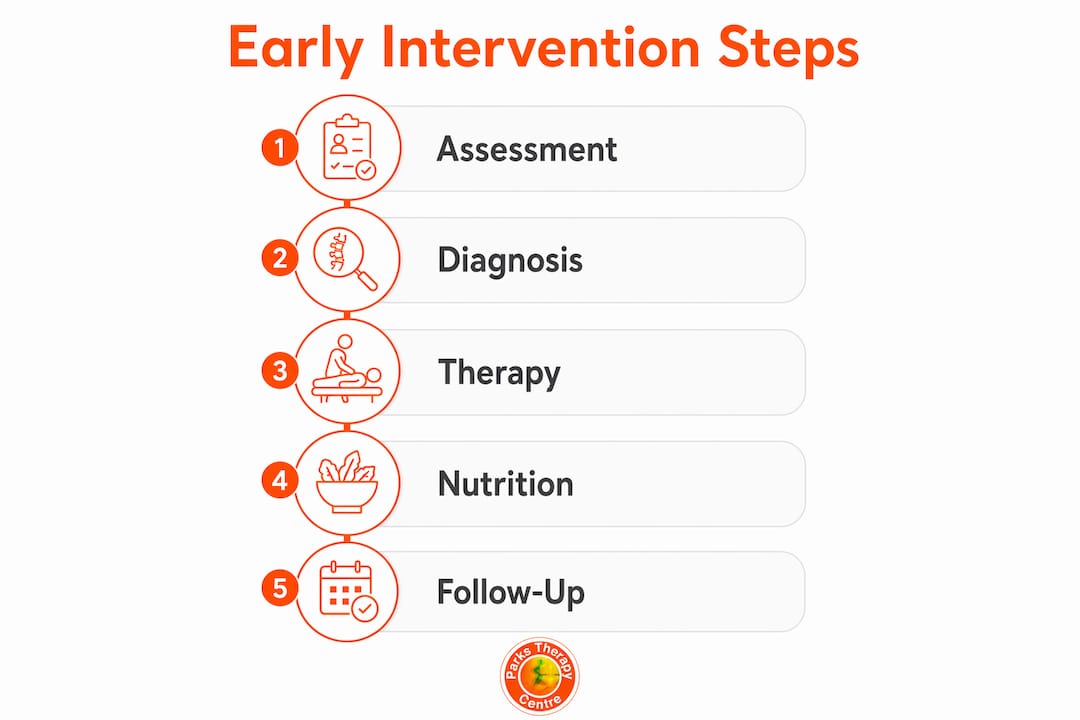
Early intervention, in clinical terms, refers to the coordinated initiation of assessment, diagnosis, and treatment within the acute phase of injury. This is typically the first 24–72 hours post-accident. The goal is to limit tissue damage, reduce inflammation, and prevent the body from adapting to dysfunction in ways that become permanent.
The evidence is clear. ACRM 2026 guidelines recommend starting rehabilitation within 48 hours of a traumatic brain injury for stable patients. That same principle applies across musculoskeletal injuries: the sooner treatment begins, the better the functional outcome.
Physical therapy is a medical necessity, not a lifestyle choice. Treating it as optional is one of the most common and costly mistakes patients make after accidents. Scar tissue forms quickly, and without guided movement, it can restrict mobility for months or years.
How does early intervention affect physical recovery?
Prompt physical rehabilitation aids muscle repair and reduces inflammation by restoring circulation and preventing the stiffness that follows immobility. When you stop moving after an injury, your body interprets that stillness as a signal to protect the area by tightening surrounding tissue. Early, guided movement interrupts that cycle.

Multimodal treatment approaches that combine acupuncture, manual therapy, and structured physical therapy produce measurable results. Research shows a 64.2% improvement in Neck Disability Index scores and an 89.1% improvement in Oswestry Disability Index scores with early treatment. Those are not marginal gains. They represent the difference between returning to normal function and living with chronic pain.
The key therapeutic approaches used in early physical recovery include:
Manual therapy: hands-on techniques that restore joint mobility and reduce muscle tension
Acupuncture: stimulates tissue healing and reduces pain signalling through targeted needle placement
Structured physiotherapy: progressive exercise programmes that rebuild strength and coordination
Soft tissue mobilisation: addresses scar tissue formation before it restricts movement
Pro Tip: Ask your physiotherapist to begin passive range-of-motion exercises within the first 48 hours if your injury allows. Even gentle movement signals the nervous system that the area is safe to heal.
Adequate nutrition, hydration, and sleep also directly influence tissue repair speed after accidents. These are not optional extras. They are the biological foundation on which all other treatment depends. You can explore physiotherapy aids for recovery to understand which tools support this early phase most effectively.
What are the psychological benefits of acting quickly?
The psychological impact of an accident is often underestimated. Shock, confusion, and fear can persist long after the physical injury heals. Early intervention addresses this directly.
Personalised early communication that validates a patient’s experience reduces emotional distress and confusion, and accelerates return to work or daily function. When a healthcare professional acknowledges what you have been through and gives you a clear plan, anxiety drops. That reduction in anxiety has a direct physiological effect: lower cortisol levels support faster tissue healing.
The psychological benefits of prompt rehabilitation include:
Reduced trauma response: early professional contact interrupts the cycle of fear and avoidance
Clearer expectations: knowing what to expect at each stage reduces catastrophising
Improved motivation: patients who feel heard are more likely to follow through with treatment
Faster return to routine: structured plans give patients a sense of control and forward momentum
Integrated physical and psychological rehabilitation produces better outcomes than treating either in isolation. A physiotherapist who communicates clearly and sets realistic milestones is doing psychological work as much as physical work. The two are inseparable in accident recovery.
When should you seek professional help after an accident?
Seek medical evaluation within 24–72 hours of any accident, regardless of how you feel in the immediate aftermath. Adrenaline masks the severity of soft-tissue tears and fractures for up to 72 hours. Whiplash, concussion, and internal bruising often present no obvious symptoms until the adrenaline clears. By then, the window for the most effective early treatment may have narrowed.
Follow these steps to get timely, effective care:
Seek medical evaluation within 24–72 hours. Do not wait for pain to worsen. A clinical assessment establishes a baseline and identifies hidden injuries.
Document everything. Photographs, written accounts, and medical records all support both your treatment plan and any insurance claim. Prompt documentation is critical to preserving insurance claim validity.
Request imaging where appropriate. X-rays and MRI scans identify structural damage that physical examination alone may miss.
Ask for a written recovery estimate. A formal written recovery timeline from your medical provider supports insurance negotiations and helps you plan realistically.
Enquire about medical liens. If cost is a concern, medical liens allow you to begin rehabilitation immediately, with payment deferred until your case resolves.
Pro Tip: Bring a written list of all symptoms to your first appointment, including ones that seem minor. Clinicians use this list to identify injury patterns that individual symptoms might not suggest on their own.
Learning how to assess injuries safely after an accident gives you a clearer picture of what to report and what to watch for in the days that follow.
How does multidisciplinary care improve recovery outcomes?
Coordinating care across multiple disciplines from the outset produces better outcomes than sequential, single-discipline treatment. A physiotherapist addresses movement and strength. A manual therapist works on joint mobility and soft tissue. A podiatrist assesses gait changes caused by the injury. A mental health professional supports psychological recovery. Each role is distinct, and each contributes something the others cannot replicate.
The table below outlines how different therapy modalities contribute to accident recovery:
Therapy modality | Primary contribution | Best suited for |
Physiotherapy | Restores strength, mobility, and function | Musculoskeletal injuries, post-surgical recovery |
Manual therapy | Reduces joint restriction and soft tissue tension | Neck, back, and limb injuries |
Acupuncture | Manages pain and supports tissue healing | Chronic pain, nerve-related symptoms |
Podiatry | Corrects gait and offloads injured structures | Foot, ankle, and lower limb injuries |
Psychological support | Reduces trauma response and improves adherence | All accident types, especially high-impact events |
Personalised care plans work because no two accidents produce identical injuries. A plan built around your specific damage, lifestyle, and recovery goals will always outperform a generic protocol. Multidisciplinary therapy approaches are most effective when all practitioners communicate with each other and update the plan as your recovery progresses.
Practical steps for managing your multidisciplinary care include:
Keep a single recovery journal that all practitioners can reference
Request that your lead clinician coordinates communication between team members
Track pain levels, mobility, and sleep quality weekly to identify trends
Build a post-injury training plan with your physiotherapist once the acute phase passes
Recovery after an accident is rarely linear. Setbacks are normal. What matters is that your care team adjusts the plan when they occur, rather than continuing with an approach that is no longer working.
Key takeaways
Early intervention is the single most effective accident recovery strategy: the sooner you begin structured, multidisciplinary treatment, the lower your risk of chronic pain and long-term disability.
Point | Details |
Act within 24–72 hours | Seek medical evaluation before adrenaline clears and hidden injuries worsen. |
Multimodal treatment works | Combining physiotherapy, acupuncture, and manual therapy produces the strongest recovery outcomes. |
Document from day one | Written records and imaging protect both your treatment plan and insurance claim. |
Address psychology early | Validated, personalised communication reduces trauma response and improves treatment adherence. |
Coordinate your care team | Multidisciplinary plans outperform single-discipline treatment for complex accident injuries. |
Why I think most patients wait too long
The most common mistake I see is patients treating the absence of severe pain as permission to delay treatment. They feel shaken but functional, so they rest, wait, and hope. Two weeks later, the stiffness has set in, the scar tissue has begun to form, and what could have been a six-week recovery is now a six-month one.
The clinical evidence is unambiguous on this point. The 48-hour window is not a guideline for the seriously injured. It is the recommended standard for anyone who has experienced trauma to the body. Waiting to see how bad it gets is not a conservative approach. It is a gamble with your long-term health.
Patients also underestimate the psychological dimension. I have seen people recover physically but remain stuck in a pattern of fear and avoidance because nobody addressed the emotional impact early enough. An integrated approach, where physical and psychological recovery are treated as equally urgent, changes that outcome entirely.
My advice is simple: self-advocacy is the most important skill you can bring to your recovery. Ask for early assessment. Ask for a written plan. Ask what each treatment is doing and why. The patients who recover fastest are not the ones with the least severe injuries. They are the ones who engaged with their care team from day one.
— Ivan
Parkstherapycentre: early intervention for accident recovery
Parkstherapycentre has been delivering multidisciplinary rehabilitation across Bedfordshire and Buckinghamshire since 1986. The team includes physiotherapists, acupuncturists, podiatrists, and manual therapists who work together from your very first appointment.
If you have been involved in an accident, the priority is getting the right assessment quickly. Parkstherapycentre accepts insurance cover and offers online booking, so there is no administrative barrier between you and the care you need. Whether your injury involves soft tissue, joints, or neurological symptoms, the team builds a personalised plan around your specific recovery goals. Visit Parkstherapycentre to book your initial assessment and begin your recovery on the right footing.
FAQ
How soon after an accident should I start treatment?
Seek medical evaluation within 24–72 hours of any accident. Adrenaline can mask serious soft-tissue injuries and concussions for up to 72 hours, making early assessment critical even when you feel relatively well.
What does early intervention include?
Early intervention typically includes clinical assessment, imaging, physiotherapy, manual therapy, and psychological support. ACRM 2026 guidelines recommend beginning rehabilitation within 48 hours for stable patients following traumatic injury.
Can early treatment prevent chronic pain?
Yes. Addressing scar tissue early through physical therapy and manual therapy significantly reduces the risk of chronic pain by preventing the body from adapting to dysfunction as a permanent state.
Does early intervention help with the psychological impact of accidents?
Early, personalised communication from healthcare providers reduces emotional distress and confusion, and supports faster return to daily function. Psychological recovery and physical recovery are most effective when treated together from the outset.
What if I cannot afford immediate treatment?
Medical liens allow patients to begin rehabilitation immediately without upfront costs, with payment deferred until the insurance claim or legal case resolves. Ask your healthcare provider or legal representative whether this option applies to your situation.
Recommended