
Ice after injury: safe first aid and when to see a physio
TL;DR:
Applying ice within the first few minutes of an acute soft tissue injury helps manage pain and swelling effectively.
Use a barrier and limit sessions to 10-20 minutes, repeating every 1-2 hours as needed during the first 48 to 72 hours.
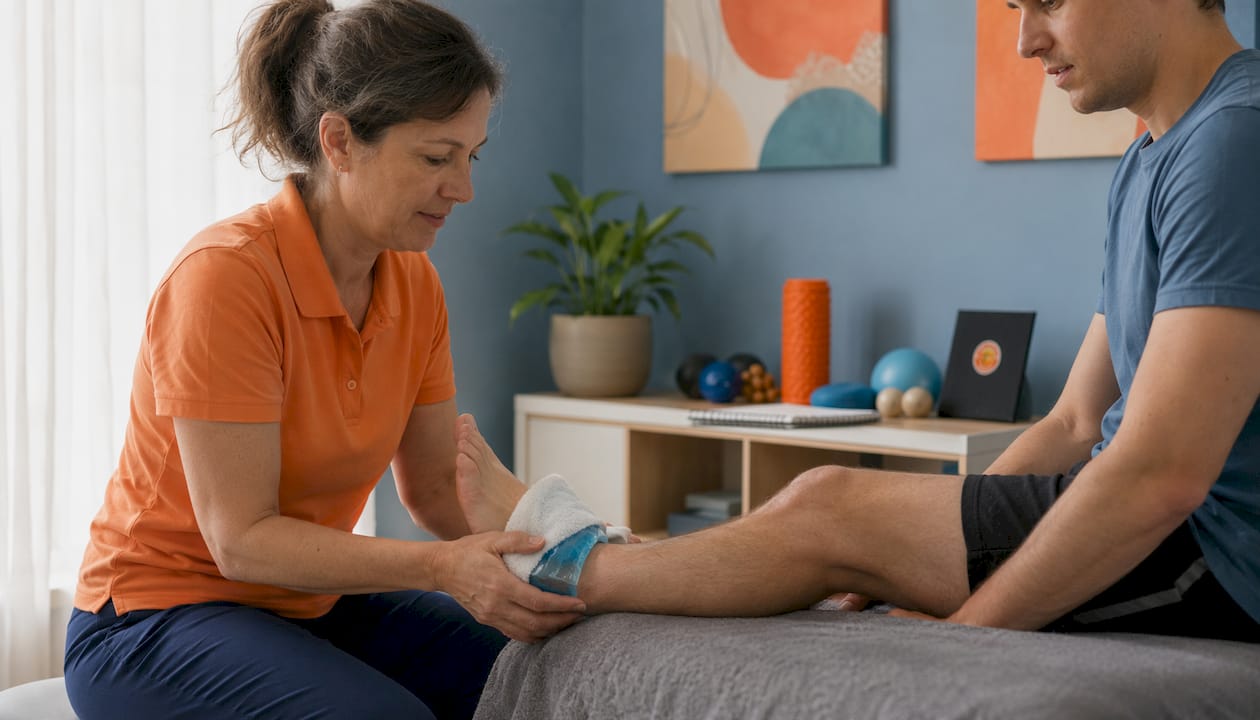
Yes, you should apply ice to most acute soft tissue injuries. Do it within the first few minutes, keep a cloth barrier between the ice and your skin, and limit each session to a short period appropriate for symptom relief. That is the short answer. The three immediate steps are: stop the activity, apply a wrapped ice pack to the injured area, and elevate the limb if possible. NHS guidance and clinical reviews from the British Journal of Sports Medicine (BJSM) both support short-term icing for pain and swelling control in the first 48–72 hours after an acute musculoskeletal injury.
Stop the activity immediately to prevent further damage.
Apply a wrapped ice pack for 10–20 minutes; never place ice directly on bare skin.
Elevate and compress the injured area where practical to reduce swelling.
Key point: Ice is primarily a pain-relief tool in the acute phase. It is not proven to speed up tissue healing, but used correctly it is safe and effective for immediate comfort.
Table of Contents
Why does ice help after an acute injury?
Cold therapy works on two main mechanisms: local analgesia and vasoconstriction. When you apply a cold pack to an injured area, the drop in skin temperature slows nerve conduction, which reduces the pain signals reaching your brain. At the same time, the blood vessels near the surface constrict temporarily, which limits the initial rush of fluid into the tissue and reduces visible swelling.
The clinical picture is worth understanding clearly:
Analgesia (pain relief): Cooling numbs the area quickly. This is the most reliable and well-supported benefit.
Reduced visible swelling: Vasoconstriction slows the early accumulation of fluid, though swelling may still develop.
No proven deep-tissue effect: Topical cooling typically lowers skin temperature rapidly but fails to cool deep muscle substantially at normal household application durations. Most perceived benefits are due to surface analgesia.
Not a healing accelerator: The clinical consensus, reflected in both NHS patient information and BJSM reviews, is that icing controls symptoms rather than repairing tissue.
The RICE method (Rest, Ice, Compression, Elevation) remains a familiar first-aid framework. Many clinicians now adapt the RICE protocol to emphasise short-term icing for comfort and early bleeding control, followed by graduated movement rather than prolonged rest. A more recent framework, PEACE & LOVE, similarly positions ice as a short-term analgesic while placing greater emphasis on active rehabilitation.
Which injuries benefit from cold therapy — and which do not?
Icing is most appropriate for acute musculoskeletal injuries where swelling and pain develop rapidly after a clear mechanism of injury. Common examples include:
Ankle sprains (twisted ankle with swelling)
Minor muscle strains (pulled hamstring, calf strain)
Blunt contusions (a knock to the thigh or shin)
Mild ligament sprains in the knee or wrist
A swollen ankle after a twist on uneven ground is a typical case where short-term cold therapy is appropriate. A foot that looks deformed after a fall from height is a different matter entirely.
When not to ice:
Open wounds or broken skin (risk of infection and cold injury)
Suspected fractures with visible deformity
Severe peripheral vascular disease or poor circulation
Raynaud’s phenomenon
Areas with reduced sensation (neuropathy, including diabetic neuropathy)
Over bony prominences where skin is thin and vulnerable
For deeper guidance on soft tissue injury types and which structures are involved, Parkstherapycentre’s clinical resources offer a useful starting point.
Pro Tip: If you are unsure whether a bone is broken, treat it as a fracture until assessed. Do not apply ice over suspected fractures without first immobilising the limb and seeking medical review.
How to apply an ice pack safely, step by step
You do not need specialist equipment. A bag of frozen peas, crushed ice in a sealed plastic bag, or a reusable gel pack all work well. Mouldable packs (frozen peas being the classic example) conform to the contours of joints like ankles and wrists, which improves contact and comfort.
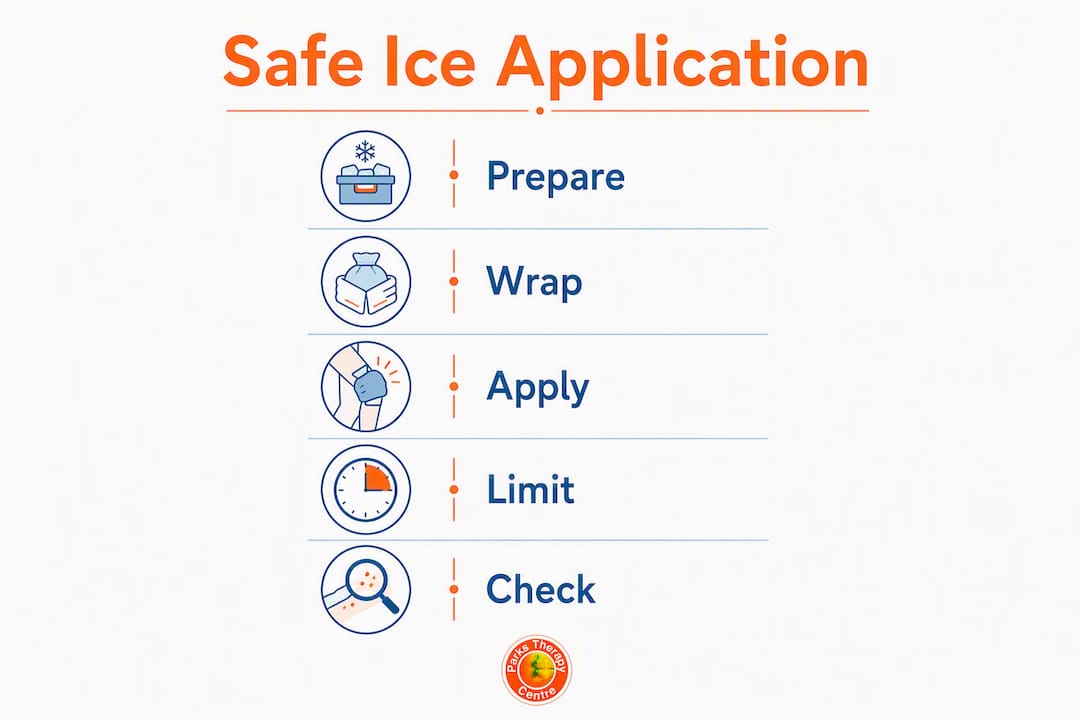
Prepare your ice pack. Use a gel pack, a bag of frozen peas, or ice cubes in a zip-lock bag. Squeeze out excess air so the pack moulds to the area.
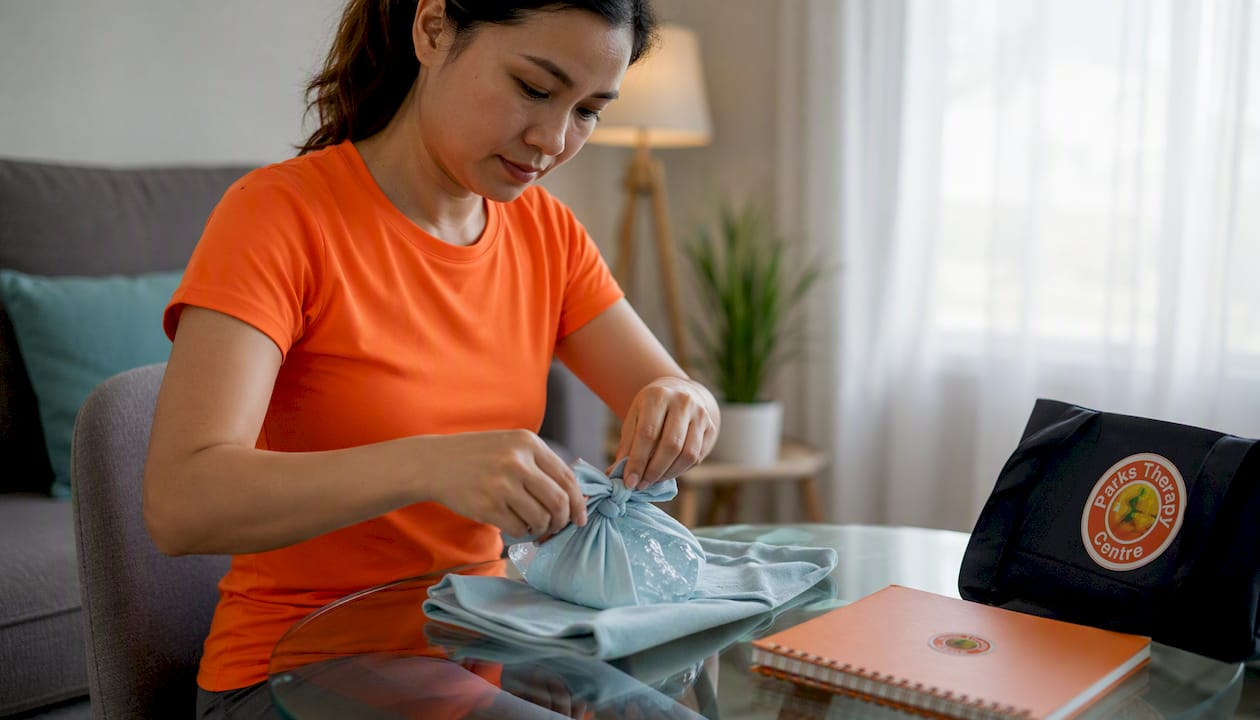
Create a barrier. Wrap the pack in a damp cloth, thin towel, or pillowcase. Never apply ice directly to bare skin.
Position and apply. Place the wrapped pack over the injured area. If possible, elevate the limb above heart level at the same time.
Time the session. Apply for 10–20 minutes per session; 10–15 minutes is often sufficient for small joints and sensitive areas such as the ankle or wrist.
Check your skin. After 5–10 minutes, briefly lift the pack and check the skin. It should look pink or slightly red. Pale, white, or mottled skin means too much cold — remove the pack immediately.
Rest between sessions. Wait at least 1–2 hours before reapplying. During the first 24–48 hours, repeat every 1–2 hours while awake if it is helping.
Continue elevation and compression. A compression bandage applied between icing sessions helps manage swelling further.
Pro Tip: Avoid icing while asleep. Without regular skin checks, prolonged cold exposure can cause frostnip or nerve damage before you are aware of it.
Precautions and contraindications you should know
Cold therapy is safe for most people when applied correctly, but there are real risks if precautions are ignored. The following groups should exercise particular caution or avoid icing altogether:
Poor peripheral circulation: Reduced blood flow means the tissue cannot respond normally to cold, increasing injury risk.
Raynaud’s phenomenon: Cold triggers arterial spasm in this condition; even brief cold exposure can cause a significant episode.
Diabetic neuropathy or other sensory impairment: Reduced sensation means you may not feel the warning signs of cold injury. Shorter sessions and frequent skin checks are advisable; consult your clinician before using cold therapy.
Open wounds: Cold applied over broken skin risks infection and delays wound healing.
Infants and young children: Skin is thinner and more vulnerable; always seek clinical advice first.
Signs of over-icing to watch for:
Skin turning white, pale, or mottled
Numbness that persists after removing the pack
Blistering or hardening of the skin
Burning sensation under the pack
If any of these occur, remove the ice pack immediately, warm the area gently with a blanket (not direct heat), and seek medical advice if symptoms do not resolve quickly. Prolonged cold exposure risks include frostnip, frostbite, and nerve damage — all of which are avoidable with a barrier and a timer.
What does the research actually say about icing?
The evidence on cold therapy is more nuanced than popular first-aid advice often suggests.

Outcome | Evidence quality | Clinical implication |
Immediate pain relief | Moderate — consistent across small trials | Reliable short-term benefit; use in first 48–72 hours |
Reduction in visible swelling | Low to moderate | Some benefit acutely; effect is temporary |
Accelerated tissue healing | Very low (human data) | Not supported; do not rely on ice to speed repair |
Risk of harm with correct use | Low | Safe when barrier used and sessions timed correctly |
A BJSM critical review found a lack of high-quality human evidence that cryotherapy limits secondary injury or meaningfully accelerates tissue regeneration. The same review recommends treating icing as short-term symptom control rather than a tissue-regenerative therapy. Separately, a PMC clinical commentary confirms that aggregate trials show limited sustained effect in human randomised controlled trials, with most cooling benefits being short-lived.
Animal research adds a note of caution: a critical review of 26 animal studies found evidence that icing reduces cellular metabolism and inflammation, raising theoretical concern that aggressive or prolonged cooling might impair tissue regeneration. Whether this translates meaningfully to humans remains uncertain, but it reinforces the clinical consensus to keep icing sessions short and focused on the acute phase.
Clinical takeaway: Ice is a reliable analgesic for the first 48–72 hours after an acute injury. It is not a substitute for rehabilitation, and prolonged or aggressive icing beyond the acute window is not supported by current evidence.
For a more detailed look at what the science says about ice and sports recovery, Parkstherapycentre’s blog covers the evidence in accessible terms.
When should you stop icing and start moving?
Most clinicians advise short-term icing within the first 48–72 hours of an acute injury. After this acute window, the priority shifts from symptom control to restoring movement and function.
Days 1–2: Ice every 1–2 hours while awake, 10–20 minutes per session. Rest, compress, and elevate.
Days 2–3: Reduce icing frequency as pain and swelling settle. Begin very gentle range-of-motion exercises if pain allows.
After 48–72 hours: Many people find gentle heat more comfortable than ice at this stage, particularly for muscle stiffness. Heat promotes blood flow and relaxation of tight tissue.
Ongoing swelling or pain after 72 hours: This is the threshold at which clinical assessment is advisable. Persistent symptoms may indicate a more significant injury — a ligament tear, stress fracture, or tendon injury — that requires imaging or hands-on physiotherapy.
Starting gentle movement early, within the limits of pain, is now recognised as a key driver of functional recovery. Physiotherapy tips for early rehabilitation can help you understand how to progress safely once the acute phase has passed.
Red flags: when to seek urgent medical help
Some symptoms after an injury require prompt professional assessment rather than home management. Do not delay if you notice any of the following:
Visible deformity or abnormal movement of a limb or joint — attend A&E; a fracture or dislocation needs imaging.
Inability to bear weight on a lower limb after an ankle or knee injury — seek urgent assessment, either at A&E or an urgent care centre.
Severe, uncontrolled pain that does not settle with rest and ice within the first hour.
Loss of sensation or circulation below the injury — pale, cold, or numb fingers or toes after a limb injury require emergency assessment.
Signs of infection developing over 24–48 hours: increasing warmth, spreading redness, fever, or discharge from a wound.
No improvement after 48–72 hours of correct home care — book a physiotherapy or GP assessment to rule out significant structural injury.
For guidance on assessing a sports injury at home before deciding whether to seek help, Parkstherapycentre’s stepwise resource covers the key indicators clearly.
Key takeaways
Ice is a safe, effective short-term analgesic for acute soft tissue injuries when applied correctly with a barrier, limited to 10–20 minutes per session, and used within the first 48–72 hours.
Point | Details |
When to ice | Apply in the first 48–72 hours for acute sprains, strains, and contusions to reduce pain and swelling. |
How long per session | 10–20 minutes per application; 10–15 minutes is sufficient for small joints and sensitive areas. |
Frequency | Repeat every 1–2 hours while awake during the first 24–48 hours if it is helping. |
When to seek help | Persistent swelling or pain beyond 72 hours, deformity, inability to weight bear, or loss of sensation all require professional assessment. |
Parkstherapycentre | Offers acute physiotherapy assessment, sports injury triage, and personalised rehabilitation across Bedfordshire and Buckinghamshire. |
A clinician’s perspective on early injury care
There is a tendency to treat ice as either a cure-all or, increasingly, as something to avoid entirely based on newer frameworks. Neither position is quite right.
The evidence does not support using ice to heal tissue faster. What it does support is using ice to make the first 24–48 hours more manageable — reducing pain enough that you can rest comfortably, sleep, and begin gentle movement sooner. That early movement is what actually drives recovery. Ice is the tool that gets you there, not the destination.
The PEACE & LOVE framework and similar updates to RICE are not arguments against icing. They are arguments against over-relying on it, against prolonged rest, and against treating inflammation as something to be eliminated rather than managed. Inflammation is part of healing. Short-term cold therapy does not suppress it meaningfully at the tissue level in most clinical scenarios; it simply reduces the pain signal at the surface.
What concerns clinicians more than whether someone ices is whether they seek assessment when they should. A significant ligament tear, a stress fracture, or a tendon rupture can all present initially as “just a sprain.” The 48–72 hour rule exists precisely because those injuries do not settle the way a minor sprain does. If you are still limping, still swollen, or still unable to use the joint normally after three days of correct home care, that is not a sign to ice more. It is a sign to get it looked at.
Parkstherapycentre: hands-on care when you need it most
When home care is not enough, Parkstherapycentre provides the clinical assessment and treatment that makes the difference between guessing and knowing what you are dealing with.
Parkstherapycentre has been delivering physiotherapy and sports injury care across Bedfordshire and Buckinghamshire since 1986. The multidisciplinary team offers acute injury assessments, sports therapy, and personalised rehabilitation plans designed around your specific injury and goals. Whether you have a sprained ankle that is not settling, a muscle strain that keeps recurring, or a joint injury you want assessed properly, the clinic provides same-day triage advice and prompt appointment booking. Private pay and most major health insurers are accepted. Book an appointment online or contact the clinic directly to speak with a clinician about your injury.
Useful sources and further reading
The sources below are reliable starting points for anyone who wants to read further or verify the guidance in this article.
Source | Why it is useful |
NHS — Ice and heat treatment (Gloucestershire Hospitals) | UK NHS patient leaflet covering safe application of cold and heat for common injuries. |
BJSM — Cryotherapy for soft tissue injuries: a critical review | Peer-reviewed clinical review summarising the evidence on cryotherapy; accessible to lay readers. |
PMC — Does ice affect healing after muscle injury? | Clinical commentary on the limits of topical cooling and what the human evidence actually shows. |
Cleveland Clinic — How long to ice an injury | Practical timing and safety guidance from a major clinical centre. |
Balanced overview of when cold and heat are each appropriate, with safety notes. |
All guidance in this article is general information for educational purposes. It is not a substitute for personalised clinical advice. If you are unsure about your injury, consult a registered physiotherapist, your GP, or attend an urgent care centre.
UK readers can access NHS patient information on ice and heat treatment through their local trust’s patient leaflet service or via NHS.uk.
Recommended