
5 Knee Braces After Injury UK Clinicians Recommend
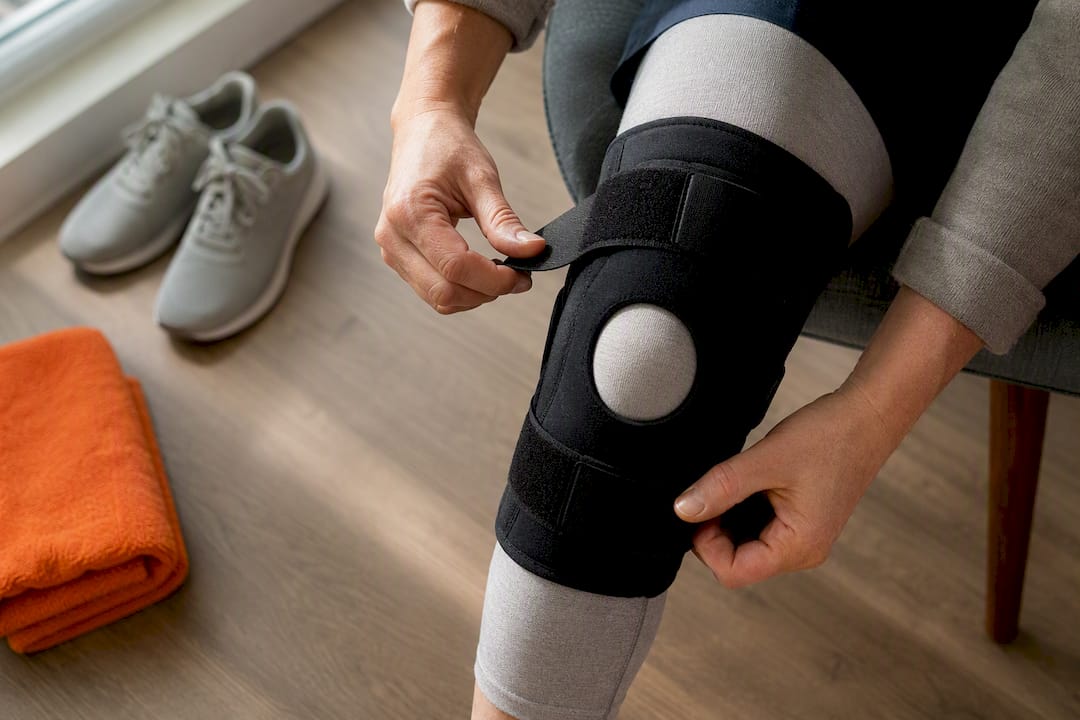
A knee brace after injury is often recommended, but the right type depends entirely on the diagnosis and the stage of healing. Mild sprains usually need nothing more than a compression sleeve, while ligament repairs and major surgery call for a hinged, range-of-motion brace set by a clinician. Get the knee properly assessed first; the brace class follows from that assessment, not the other way round.
TL;DR:
Hinged range-of-motion braces are typically used for ligament repairs, with strict staged timelines often lasting from four to six weeks based on the injury and surgical protocol.
PCL injuries may require bracing for several months, sometimes day and night, due to slower ligament healing, while osteoarthritis unloader braces can be worn indefinitely during activity.
Braces must be fitted correctly by a professional, with hinges aligned to the joint line and straps adjusted to avoid circulation restriction, to support proper healing.
Using the wrong brace type or wearing it unsupervised can hinder recovery, cause harm, or mask symptoms, highlighting the importance of professional assessment before bracing.
Bracing should always be part of a broader rehabilitation plan involving physiotherapy exercises and progressive muscle strengthening, never a standalone solution.
Table of Contents
Types of knee braces after injury and what each one does
Not every knee brace does the same job, and choosing the wrong class can slow recovery rather than support it. Each type controls movement, load, or swelling in a distinct way.
Post-op immobiliser braces lock the knee straight or at a fixed angle immediately after surgery, protecting fresh repairs from unwanted movement.
Hinged ROM (range-of-motion) braces allow a clinician to set precise flexion and extension limits, gradually widening as healing progresses.
Functional braces stabilise a joint that’s already largely healed, typically used for a return to sport after ligament injury.
Unloader braces shift weight-bearing pressure away from a damaged compartment of the knee, commonly used for osteoarthritis rather than acute trauma.
Soft or compression sleeves offer light support and swelling control for mild sprains or general knee pain after injury, and need no prescription.
Post-op and ROM braces are typically supplied and set by a surgeon or physiotherapist, since the hinge settings correspond to a specific surgical repair. Compression sleeves, by contrast, are widely available over the counter and reasonable for minor knee pain after injury or as general knee support for recovery once a clinician has ruled out anything more serious.
Which knee injuries actually need a brace?
Bracing decisions hinge on diagnosis, not just discomfort. A clinical overview from Cleveland Clinic stresses that a professional should assess the joint before any brace is fitted, because the wrong choice can genuinely work against recovery.
ACL reconstruction: hinged ROM or post-op brace, locked early and progressively opened.
Meniscal repair: limited ROM post-op brace, often with weight-bearing restrictions.
PCL injury: prolonged, controlled bracing, sometimes for months rather than weeks.
Patellar instability: a patellar-stabilising support that limits lateral movement of the kneecap.
Mild sprain or strain: a compression sleeve during activity, nothing more.
Braces cause harm when they’re the wrong type for the injury, fastened too tightly, or worn unsupervised for long stretches. Mayo Clinic Health System notes that a brace should never replace a proper diagnosis, and overreliance on one can inhibit the muscles it was meant to protect. Anyone with a suspected ligament rupture, a locked knee, numbness, or a recent surgical procedure should see a clinician before choosing or adjusting a brace themselves.
How long should you wear a knee brace after injury?
There’s no single answer, because timelines are set by the injury, not a generic rulebook. For major ligament or meniscal surgery, surgeons at the Royal Orthopaedic Hospital commonly prescribe a hinged ROM brace with staged unlocking, often running four to six weeks from strict immobilisation to fuller movement.
Recovery snapshot: early post-op protocols frequently start at 0 to 45 degrees of movement in week one, widening toward 0 to 90 degrees or more by week four to six, with the exact figures set by the surgical team.
PCL injuries sit at the other extreme. The Royal United Hospitals’ PCL bracing protocol can call for day-and-night bracing for up to four months, reflecting how slowly that ligament heals compared with others. An unloader brace, meanwhile, might be worn indefinitely during activity for ongoing arthritis relief rather than following a fixed timeline at all. The clinician or surgical protocol always sets the plan, since two people with what looks like “the same” injury can be on completely different schedules.
How to fit and check a knee brace safely
A brace only helps if it sits correctly and stays adjusted as swelling changes. Run through this each time you put one on:
Check the brace is the correct side and facing the right way; hinges should sit level with the joint line, not above or below the kneecap.
Centre any patella cut-out directly over the kneecap if the design includes one.
Fasten straps evenly from bottom to top, firm enough to stay put but never so tight that it restricts circulation.
Confirm the hinge pivots line up with the natural bend of the knee before you stand or walk.
Only alter ROM stop settings if a clinician has told you to. Never change them yourself between appointments.
See a clinician promptly if you notice persistent numbness or tingling, swelling that keeps increasing, red pressure marks that don’t fade, new instability, or a hinge that no longer feels correctly aligned. Royal Orthopaedic Hospital’s guidance on ROM braces recommends scheduled professional checks rather than leaving adjustments to guesswork at home.
Pro Tip: Wear a thin cotton sock or sleeve underneath the brace to reduce skin irritation, and take it off for short periods during rest unless you’ve been specifically told to sleep in it.
Bracing works best alongside physiotherapy, not instead of it
A brace protects healing tissue, but it doesn’t rebuild strength or control. That part of recovery comes from targeted exercise, and Cleveland Clinic is clear that bracing should support rehabilitation, not substitute for it.
Early on, while ROM is still limited, exercises typically stay simple: isometric quadriceps contractions and straight leg raises to prevent muscle atrophy without stressing the repair. As brace settings widen, progressive closed-chain work gets introduced under supervision, building toward full function rather than just protecting the joint passively.
A typical pathway looks like this:
Clinical assessment to confirm diagnosis and brace class.
Fitting and prescription of ROM settings where relevant.
Supervised adjustments as healing progresses.
Structured exercise progression matched to each stage of recovery.
Staged weaning off the brace once strength and control catch up with the tissue’s healing.
Anyone easing back into sport, including cyclists managing knee strain from poor positioning, will also find that correcting bike fit basics reduces unnecessary load on a recovering joint once activity resumes.
Why a brace should never be the whole plan
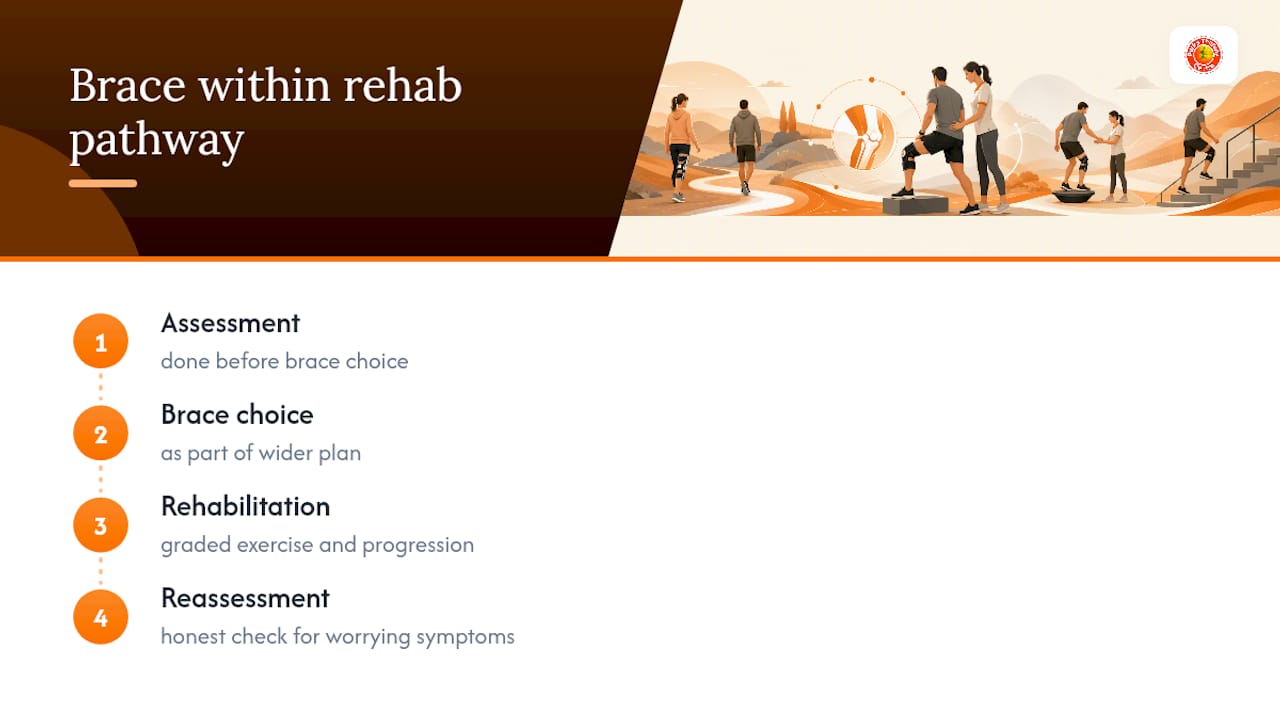
Bracing gets treated as a quick fix far too often, and that’s the mistake worth naming plainly. A brace controls movement and reduces load. It doesn’t strengthen a weak quadriceps, restore proprioception, or teach a knee how to absorb force again. Those come from graded exercise, supervised progression, and honest reassessment when something feels wrong.
The bigger risk isn’t wearing a brace. It’s wearing one as a substitute for professional input, month after month, while strength quietly falls further behind. Assessment always comes before brace choice, and brace choice always sits inside a wider rehabilitation plan built around the person, not just the joint. If a symptom worries you, whether that’s persistent swelling, locking, or a knee that still feels unstable weeks later, that’s the signal to get seen rather than adjust the strap another notch.
— Ivan
Book a knee assessment and brace fitting with Parks Therapy Centre
Some providers offer an actual clinical assessment before anyone decides what brace, if any, is right for your knee. Rather than guessing your way through online sizing charts, you get a physiotherapist who examines the joint, checks the specific injury, and fits or recommends bracing alongside a proper rehabilitation plan.
Services relevant to knee injury recovery include physiotherapy assessment, sports injury treatment, guided brace fitting, and supervised rehabilitation programmes across clinic locations. Whether you’re managing a fresh sprain, recovering from ligament surgery, or dealing with ongoing knee pain after injury, the starting point is the same: get assessed before you commit to a brace type or a training plan. Book an appointment to arrange a knee assessment and discuss the right support for your recovery.
Sources
This article is general information, not a substitute for advice from a qualified doctor. Consult a qualified healthcare professional about your own circumstances before acting on anything here.
FAQ
What knee injury requires a knee brace?
Ligament injuries such as ACL or PCL tears, meniscal repairs, and patellar instability typically require bracing, while mild sprains usually only need a compression sleeve.
When is a knee brace not recommended?
A brace isn’t appropriate when it’s the wrong type for the diagnosis, fitted incorrectly, or worn long-term without clinical review, since this can mask instability or weaken supporting muscles.
When should you not wear a knee brace?
Avoid wearing a brace during sleep or extended rest unless a clinician has specifically instructed otherwise, and remove it if you notice numbness, worsening swelling, or pressure marks.
How long should you wear a knee brace after injury?
Duration depends entirely on the injury. Post-op ROM braces often run four to six weeks with staged unlocking, while PCL injuries can require day-and-night bracing for up to four months.
Should I wear a knee brace for a mild sprain?
A soft compression sleeve is usually sufficient for a mild sprain, offering support and swelling control without the restriction of a hinged or post-op brace.
Recommended