
Physical therapy in the UK: what you need to know
- a few seconds ago
- 5 min read
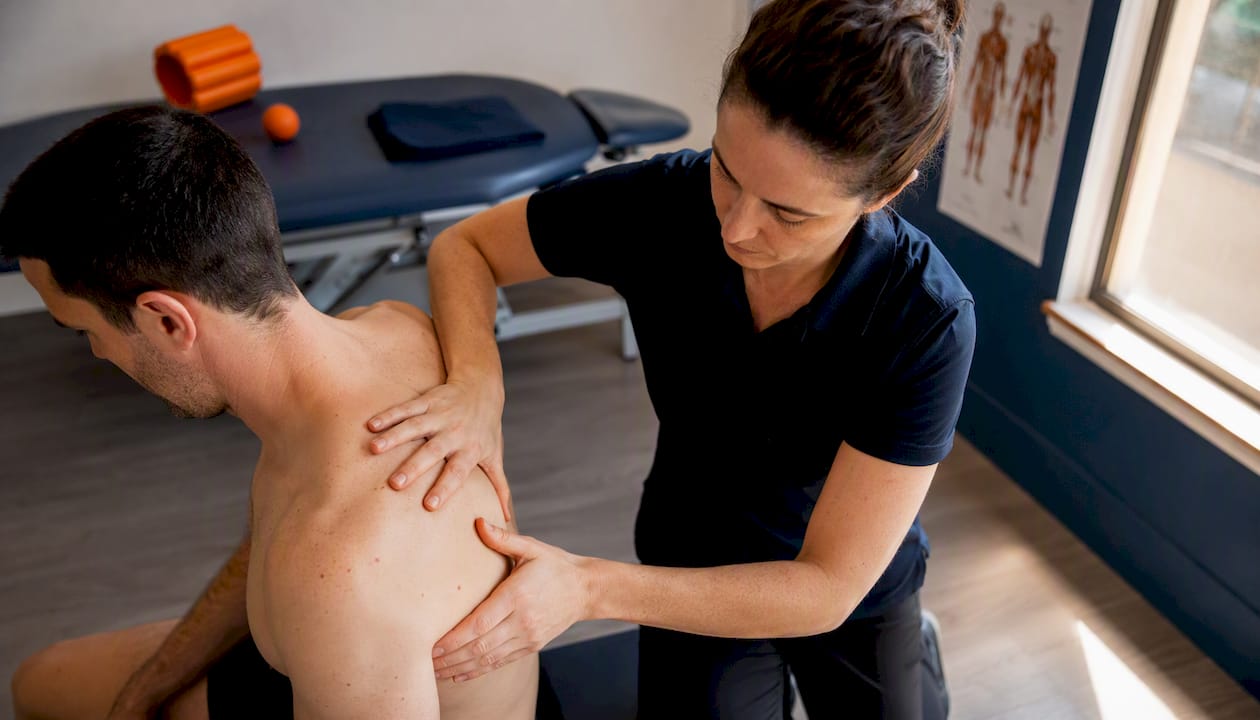
Physiotherapy in the UK is a regulated healthcare profession that treats musculoskeletal injuries, chronic pain, and rehabilitation needs through exercise therapy, manual therapy, and patient education. To access care, you can self-refer via NHS first-contact physiotherapy services, ask your GP for a referral, or book directly with a private clinic. Before booking anywhere, confirm the practitioner holds HCPC registration, which is a legal requirement to practise, and look for the MCSP postnominal indicating Chartered Society of Physiotherapy membership.
Common treatment components used in the UK include:
Exercise therapy — prescribed programmes targeting strength, mobility, and function
Manual therapy — hands-on joint and soft-tissue techniques
Electrotherapy modalities — TENS, ultrasound, and hydrotherapy where clinically indicated
Patient education — self-management strategies and injury prevention guidance
Access routes, ranked by speed:
NHS self-referral or first-contact practitioner — many GP surgeries now offer direct MSK triage without a GP appointment
GP referral — standard NHS route; waiting times vary by area
Private direct booking — immediate access, no referral needed
Employer or private medical insurance — check your policy for pre-authorisation requirements
Pro Tip: Bring a concise symptom timeline, a list of current medications, and notes on activities that aggravate or ease your pain. This lets your physiotherapist move straight to assessment rather than spending the first session on history-taking.
Key takeaways
Choosing the right physiotherapy route in the UK comes down to urgency, budget, and the credentials of the practitioner you see.
Point | Details |
Check credentials first | Confirm HCPC registration and look for MCSP (Chartered) status before booking any physiotherapist. |
NHS self-referral is faster than you think | First-contact practitioner schemes let many patients bypass the GP queue for MSK problems. |
Private sessions offer faster access | Private appointments are typically available within days and run 45–60 minutes. |
Home exercises drive recovery | Adherence to your prescribed home programme is the single biggest factor in a good outcome. |
Parkstherapycentre | Offers private physiotherapy in Bedfordshire and Buckinghamshire, with insurance acceptance and direct booking. |
Table of Contents
How long will you wait, and what does private care cost?
NHS waiting times for physiotherapy vary considerably by region and condition. Routine musculoskeletal referrals can involve waits of several weeks to a few months, though first-contact practitioner schemes are reducing this in many areas by triaging patients without a GP appointment first.
Private physiotherapy sessions in the UK usually cost varying amounts depending on location, clinic, and the physiotherapist’s experience. Many private medical insurance policies cover physiotherapy; check whether your insurer requires pre-authorisation or a GP referral before your first appointment. Employer-funded health schemes often include physiotherapy as a benefit worth checking before paying out of pocket.
How do NHS and private physiotherapy differ in practice?
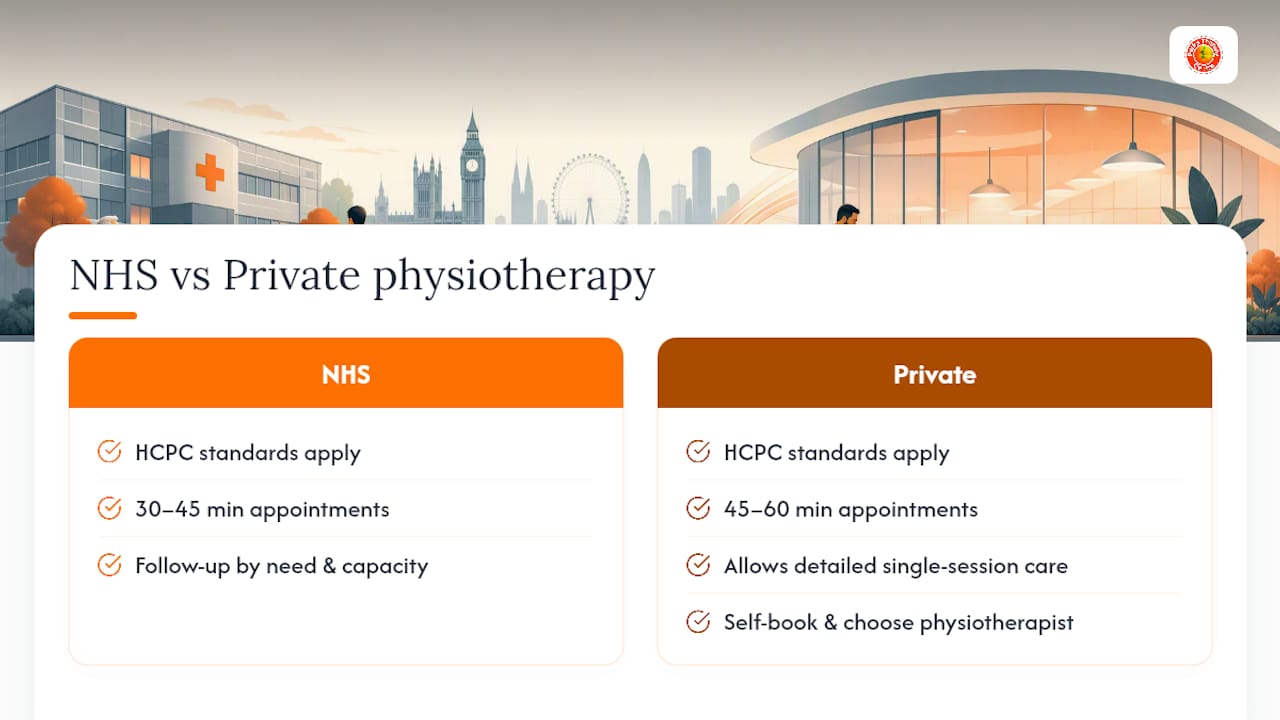
The core clinical standards are the same: every registered physiotherapist must meet the HCPC standards of proficiency regardless of setting. The practical differences lie in access and appointment structure.
NHS appointments are typically 30–45 minutes, with follow-up frequency determined by clinical need and capacity. Private appointments often run 45–60 minutes, allowing more time for detailed assessment and treatment in a single session. Private patients can usually self-book, choose their physiotherapist, and start treatment within days. Some physiotherapists also hold additional prescribing entitlements, as noted on the Regulated Professions Register, which can be relevant for complex pain management cases.
How do you access specialist physiotherapy services?
For sports injuries, neurological rehabilitation, or post-surgical recovery, specialist physiotherapy is available through both NHS and private routes. On the NHS, your GP or consultant can refer you to a specialist MSK or neurological rehabilitation service. Privately, look for clinics with physiotherapists who hold postgraduate qualifications in your area of need, such as sports physiotherapy or neurological rehabilitation.

The CSP’s find-a-chartered-physiotherapist directory lets you filter by speciality and location. For knee conditions and sports injuries specifically, allied therapies such as acupuncture and sports massage often complement physiotherapy as part of a structured recovery plan. Light therapy is another adjunctive option; research on how light therapy complements physiotherapy suggests it may support tissue recovery alongside manual and exercise-based treatment.
Physiotherapy options for children and older adults
Children’s physiotherapy, often called paediatric physiotherapy, is available on the NHS via GP or paediatrician referral. It addresses developmental conditions, sports injuries in young people, and post-surgical rehabilitation. Private paediatric physiotherapy is also available at specialist clinics.
For older adults, physiotherapy plays a central role in falls prevention, post-fracture rehabilitation, and managing conditions such as osteoarthritis. NHS community physiotherapy teams often work alongside occupational therapists and GPs to deliver coordinated care. Private clinics can offer faster access and more flexible appointment scheduling, which suits patients managing multiple conditions or transport limitations. Adherence to home exercise programmes is particularly important for older adults, where consistent movement between sessions drives the majority of functional improvement.
Your rights and the complaints process
As a physiotherapy patient in the UK, you have the right to receive care from a practitioner registered with the HCPC. You can verify any physiotherapist’s registration on the HCPC online register at no cost. If you have concerns about your treatment, raise them first with the clinic directly. NHS patients can escalate unresolved complaints to the Parliamentary and Health Service Ombudsman. Private patients can contact the HCPC if they believe a registrant has breached professional standards, or approach their insurer if a billing dispute arises.
What outcomes-focused physiotherapy actually looks like
The most common gap between a good physiotherapy outcome and a poor one is not the treatment technique. It is whether the patient follows their home exercise programme between sessions. NHS guidance is clear that consistent adherence to prescribed exercises is the primary driver of recovery, not the number of clinic visits alone.
At Parkstherapycentre, the approach reflects this directly. Every patient receives an assessment-led plan with measurable goals set at the first appointment. Treatment combines hands-on work with a structured home programme, and progress is tracked at each follow-up. The clinic’s multidisciplinary team, covering physiotherapy, sports injury treatment, acupuncture, and podiatry, means that where a condition needs more than one discipline, patients do not need to go elsewhere.
HCPC registration and Chartered membership are baseline hiring criteria at Parkstherapycentre, not optional extras. When booking anywhere, ask three questions: Is the physiotherapist HCPC-registered? Do they hold MCSP or Chartered status? Who will deliver your treatment at each session?
Private physiotherapy at Parkstherapycentre
Parkstherapycentre offers private physiotherapy across multiple clinics in Bedfordshire and Buckinghamshire, with direct booking and no GP referral required. Established in 1986, the centre accepts private medical insurance from major providers and offers self-pay appointments with transparent pricing.
Private patients typically benefit from longer initial assessments, faster appointment availability, and continuity with a named physiotherapist. Bring a summary of your condition, your insurance details if applicable, and any imaging reports to your first session.
Pro Tip: If you hold private medical insurance, call your insurer before booking to confirm physiotherapy cover and whether pre-authorisation is needed. This avoids unexpected costs and delays.
To book or check availability, visit Parkstherapycentre.
Sources
The sources below are the authoritative references for physiotherapy regulation, access, and finding a qualified practitioner in the UK.
To verify a physiotherapist’s registration, search their name on the HCPC register. MCSP after their name confirms Chartered Society of Physiotherapy membership, an additional mark of professional commitment beyond the legal minimum.
Recommended