
Physiotherapist's role in arm rehabilitation 2026
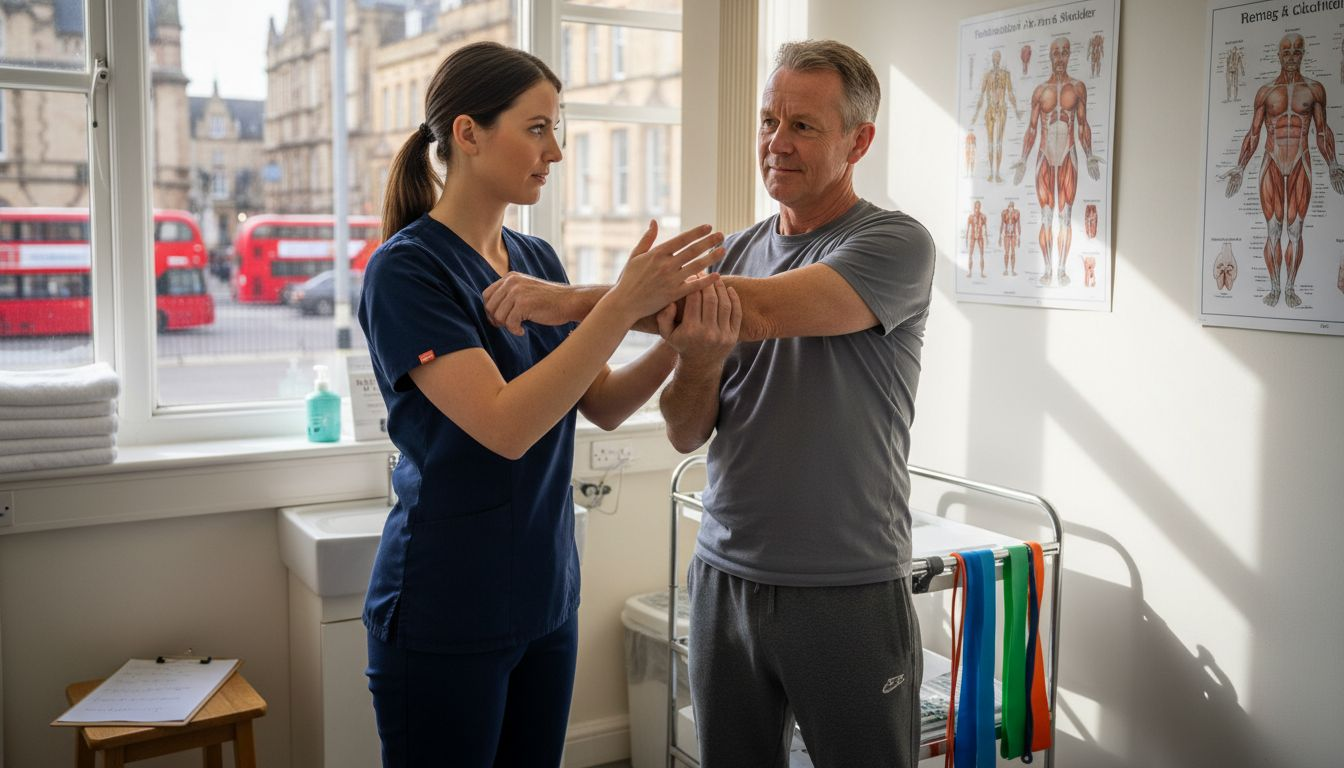
Early physiotherapy can accelerate arm recovery by up to 25%, yet many patients underestimate the comprehensive support physiotherapists provide beyond simple exercises. From initial assessment through functional restoration, physiotherapists design personalised programmes that rebuild strength, restore mobility, and prevent long-term disability. Understanding their multifaceted role helps you maximise recovery outcomes and regain independence faster.
Table of Contents
Key takeaways
Point | Details |
Personalised assessment | Physiotherapists conduct thorough evaluations of range of motion, strength, pain levels, and functional limitations to tailor treatment plans. |
Phased progression | Rehabilitation advances through early mobilisation, strengthening, and functional restoration stages with evolving goals. |
Diverse interventions | Treatment combines exercise therapy, manual techniques, and modalities like ultrasound to improve outcomes. |
Adaptive monitoring | Continuous progress tracking allows treatment adjustments that improve functional results by 20-30%. |
Patient empowerment | Education and home programmes support sustained recovery and prevent re-injury. |
Understanding arm rehabilitation and the physiotherapist’s role
Arm rehabilitation addresses injuries and surgical recoveries affecting the shoulder, elbow, wrist, and hand. Whether recovering from fractures, rotator cuff repairs, or tendon injuries, restoring full function requires expert guidance. Physiotherapists serve as primary rehabilitation specialists, combining diagnostic expertise with therapeutic interventions to optimise healing.
Physiotherapists conduct thorough initial assessments including range of motion, strength, pain levels, and functional limitations to tailor arm rehabilitation programmes. These evaluations identify specific impairments that restrict daily activities like dressing, cooking, or working. Your physiotherapist measures joint angles, muscle strength grades, and pain intensity to establish baseline data.
Initial assessment methods include:
Goniometry to measure joint range of motion precisely
Manual muscle testing to grade strength from 0 to 5
Pain scales and functional questionnaires to capture symptom impact
Palpation to identify swelling, tenderness, or tissue restrictions
Movement analysis to observe compensatory patterns
This comprehensive data informs your personalised treatment plan. Your physiotherapist sets collaborative goals based on your priorities, whether returning to sport, resuming work tasks, or managing household activities. Initial sessions establish trust and educate you about the recovery timeline. Exploring physiotherapy services overview helps you understand the breadth of support available throughout your rehabilitation journey.
Phases and tailored goals of arm rehabilitation
Rehabilitation progresses through distinct phases, each with specific objectives that build upon previous gains. Understanding these stages helps you appreciate why treatment evolves and what to expect at each milestone.
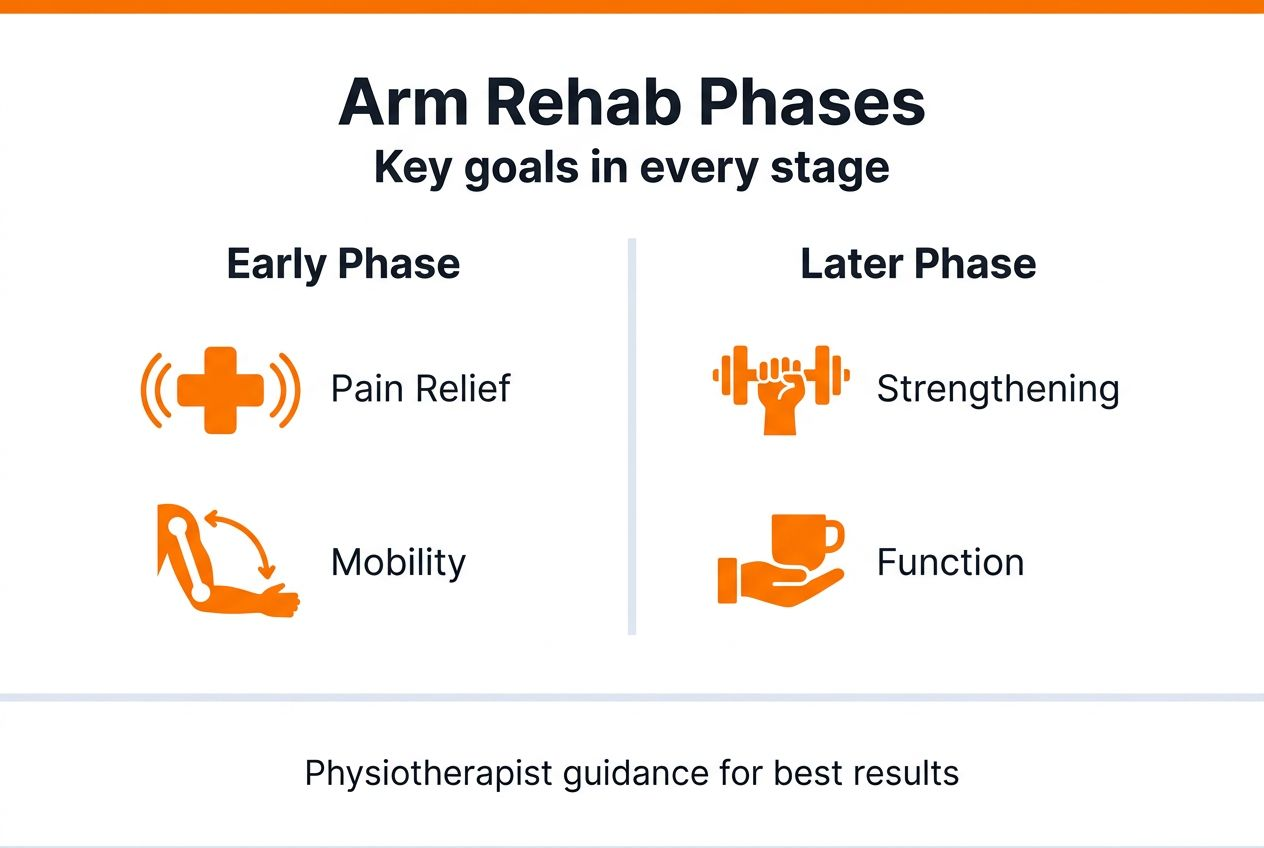
Early mobilisation begins immediately post-injury or surgery to prevent stiffness and maintain circulation. Gentle passive movements protect healing tissues whilst reducing scar tissue formation. Your physiotherapist carefully balances rest with controlled movement to avoid complications.
The strengthening phase introduces progressive resistance exercises as tissues heal. You’ll perform targeted exercises to rebuild muscle endurance and power. This phase typically begins 3 to 6 weeks post-injury, depending on healing progress.
Functional restoration focuses on real-world activities specific to your lifestyle. Rehabilitation shifts from isolated exercises to task-specific training:
Simulating work movements like lifting, typing, or overhead reaching
Practising sport-specific skills with graduated intensity
Refining coordination for precise hand tasks
Building endurance for sustained activity
Pain management integrates throughout all phases using techniques from ice application to therapeutic exercises. Your physiotherapist adjusts approaches as inflammation subsides and function improves. Tracking your rehabilitation progress updates keeps you motivated and informed about typical recovery trajectories.
Pro Tip: Attend every scheduled physiotherapy session to maximise phased goal realisation and prevent regression between appointments.
Therapeutic interventions used by physiotherapists
Physiotherapists employ diverse treatment methods tailored to your specific impairments and recovery stage. This multimodal approach addresses pain, mobility, strength, and function simultaneously.
Exercise therapy forms the cornerstone of rehabilitation. Progressive exercises rebuild strength systematically whilst improving joint mobility and neuromuscular control. You’ll perform:
Passive and active-assisted range of motion exercises
Isometric strengthening for early-stage muscle activation
Resistance band and weight training for progressive overload
Proprioceptive exercises to restore joint position sense
Functional movement patterns mimicking daily activities
Manual therapy techniques complement exercise interventions. Your physiotherapist uses hands-on methods to improve tissue extensibility, reduce pain, and restore normal movement patterns. Soft tissue massage releases muscle tension and breaks down adhesions. Joint mobilisations gently restore accessory movements that underpin full range of motion.

Therapeutic modalities provide symptom relief and accelerate healing. Ultrasound delivers deep heat to promote tissue repair and reduce inflammation. Electrotherapy options like TENS manage pain through nerve stimulation. Ice and heat applications control swelling and improve tissue pliability respectively.
Your physiotherapist combines these approaches based on assessment findings and your response to treatment. Learning about therapeutic treatment modalities expands your understanding of available options.
Pro Tip: Communicate any symptom changes promptly so your physiotherapist can adapt therapies and prevent setbacks.
Monitoring progress and adjusting rehabilitation plans
Continuous evaluation ensures your rehabilitation remains effective and responsive to changing needs. Physiotherapists use standardised outcome measures to track improvements objectively.
Standard assessment tools include pain scales, goniometric measurements, and functional questionnaires. Your physiotherapist compares current results against baseline data to quantify progress. Strength testing with dynamometers provides precise metrics for muscle recovery.
Continuous physiotherapy monitoring allows adjustment of treatment plans leading to 20-30% better functional outcomes in arm rehabilitation. This adaptive approach prevents plateaus and accelerates return to full function.
Treatment Approach | Pain Reduction | Range of Motion Gain | Strength Recovery | Patient Satisfaction |
Static protocol | 40% | 60% | 50% | 65% |
Adaptive plan | 65% | 85% | 75% | 90% |
Your physiotherapist modifies exercise difficulty, introduces new modalities, or adjusts session frequency based on objective data. If progress stalls, treatment strategies shift to address barriers. Patient feedback about pain levels, function, and confidence informs clinical decisions alongside measurements.
Regular reassessment appointments every 2 to 4 weeks document improvement trajectories. These checkpoints motivate continued effort and validate your commitment to recovery. Exploring arm rehabilitation tracking demonstrates how clinics implement systematic monitoring.
Common misconceptions about physiotherapy in arm rehabilitation
Misunderstandings about physiotherapy’s scope can limit patient engagement and outcomes. Clarifying these myths aligns expectations with evidence-based practice.
Many believe physiotherapy involves only exercise prescription. Whilst exercise forms a core component, physiotherapists also provide manual therapy, pain management, education, and functional training. Your treatment encompasses multiple interventions tailored to your specific needs.
Some patients expect physiotherapy to replace surgery. Physiotherapy can significantly reduce pain and improve function, but severe structural damage may require surgical intervention. Your physiotherapist collaborates with surgeons to determine optimal treatment pathways.
Key misconceptions to dispel:
Passive treatments alone achieve recovery without active patient participation
Pain during rehabilitation always signals harm or setback
Recovery timelines follow identical patterns for all patients
Physiotherapy ends once pain subsides
Preventive strategies are unnecessary after initial recovery
Successful rehabilitation requires your active engagement. Performing home exercises, modifying activities, and communicating honestly with your physiotherapist accelerate outcomes. Pain during certain exercises may indicate appropriate tissue loading rather than damage when properly prescribed.
Physiotherapists play crucial preventive roles by teaching proper movement patterns and strengthening vulnerable areas. Understanding physiotherapy myths and facts helps you approach treatment with realistic, informed expectations.
Patient education and self-management strategies
Education empowers you to participate actively in recovery and maintain long-term arm health. Physiotherapists teach principles that extend benefits beyond clinical sessions.
Injury prevention education addresses biomechanical factors and movement patterns that contributed to your condition. You’ll learn proper lifting techniques, ergonomic workspace setup, and warm-up strategies for sport or physical work. Understanding tissue healing timelines prevents premature return to demanding activities.
Home exercise programmes form your daily rehabilitation foundation. Your physiotherapist prescribes specific exercises with clear instructions on repetitions, frequency, and progression criteria:
Perform prescribed exercises twice daily at consistent times
Track completion and note any pain or difficulty
Progress resistance or repetitions only when movements feel controlled
Contact your physiotherapist before modifying the programme
Maintain exercises even after pain resolves to prevent recurrence
Physiotherapists help prevent long-term disability and dependency by promoting early and sustained recovery after arm injuries and surgeries. Self-management skills you develop during rehabilitation serve you throughout life.
Long-term self-care includes recognising early warning signs of overuse or strain. You’ll learn to modify activities when symptoms emerge rather than pushing through pain. Regular movement breaks, targeted stretching, and gradual activity progression maintain arm health. Accessing patient self-care education resources reinforces these principles.
Pro Tip: Schedule regular programme updates with your physiotherapist every 4 to 6 weeks to optimise exercise progression and prevent plateaus.
Comparing physiotherapy to other rehabilitation approaches
Understanding how physiotherapist-led rehabilitation compares with alternatives helps you make informed decisions about your care pathway.
Supervised physiotherapy differs fundamentally from unsupervised home programmes. Whilst online exercise videos and generic protocols cost less, they lack personalised assessment and progression. Your physiotherapist adjusts treatment based on your specific impairments, responses, and goals.
Aspect | Supervised Physiotherapy | Unsupervised Home Programme |
Initial assessment | Comprehensive clinical evaluation | Self-assessment or none |
Exercise prescription | Individualised, progressively adjusted | Generic, static protocols |
Pain management | Multimodal, responsive strategies | Limited to ice and rest |
Adherence monitoring | Regular accountability and motivation | Self-directed discipline |
Functional gains | Optimised through expert guidance | Variable, often suboptimal |
Cost | Higher upfront investment | Lower immediate cost |
Adherence rates prove significantly higher with supervised physiotherapy. Regular appointments provide accountability, motivation, and social support. Your physiotherapist celebrates progress and addresses barriers to exercise completion.
Cost-effectiveness balances initial expenses against long-term outcomes. Whilst supervised sessions cost more initially, they typically achieve faster, more complete recovery. This reduces overall disability duration and healthcare utilisation.
Complex or post-surgical cases particularly benefit from expert monitoring. Your physiotherapist identifies compensatory movements, prevents complications, and coordinates care with surgeons or physicians. Reviewing comparison of rehabilitation approaches illustrates outcomes across different treatment intensities.
Bringing it all together: practical tips for choosing and engaging with physiotherapists
Selecting the right physiotherapist and engaging effectively maximises your rehabilitation success. These practical strategies help you navigate the process confidently.
When choosing a physiotherapist, prioritise qualifications and specialised experience. Verify registration with the Health and Care Professions Council and membership in the Chartered Society of Physiotherapy. Ask about specific experience treating arm conditions similar to yours.
Selection criteria to consider:
Postgraduate training in musculoskeletal or orthopaedic physiotherapy
Experience with your specific injury or surgical procedure
Clear communication style that matches your preferences
Convenient location and appointment availability
Positive patient reviews and testimonials
Insurance acceptance if relevant to your situation
Set collaborative, realistic goals during initial sessions. Share your priorities honestly, whether returning to competitive sport or managing household tasks. Your physiotherapist translates these into measurable objectives with defined timelines.
Active engagement strategies accelerate outcomes. Arrive prepared with questions about exercises, expected timelines, or activity modifications. Complete home programmes consistently and track your performance. Communicate barriers to adherence so your physiotherapist can problem-solve solutions.
Maintain motivation through recovery plateaus by focusing on incremental gains. Celebrate small victories like increased range of motion or reduced pain during specific tasks. Connect with other patients through clinic groups or online communities for peer support.
Leverage available clinic resources including educational materials, equipment demonstrations, and follow-up consultations. Exploring options for choosing a physiotherapy clinic helps you identify providers aligned with your needs and values.
Explore expert arm rehabilitation services with Parks Therapy Centre
Recovering full arm function requires expert guidance tailored to your unique injury and goals. Parks Therapy Centre offers specialised physiotherapy services across Bedfordshire and Buckinghamshire, combining evidence-based treatments with personalised patient care since 1986.
Our qualified physiotherapists conduct comprehensive assessments and design individualised rehabilitation programmes incorporating manual therapy, exercise prescription, and modern therapeutic modalities.
Whether you’re recovering from surgery, managing a sports injury, or seeking pain relief, our team provides the expertise and support you need. We educate patients on self-management strategies that promote sustained recovery and prevent future injuries. Explore our expert physiotherapy services to learn more about our multidisciplinary approach. Our sports injuries rehabilitation programmes help athletes return to peak performance safely. Ready to start your recovery journey? Use our convenient online physiotherapy booking to schedule your initial consultation today.
Frequently asked questions
What does a physiotherapist do in arm rehabilitation?
Physiotherapists assess movement impairments, strength deficits, and pain levels to design personalised treatment programmes. They combine exercise therapy, manual techniques, and patient education to restore arm function. Treatment evolves through rehabilitation phases based on continuous progress monitoring.
How long does physiotherapy for arm rehabilitation usually take?
Duration varies by injury severity and individual healing rates. Most patients regain functional arm use within 6 to 12 weeks with consistent physiotherapy attendance. Complex surgeries or severe injuries may require longer rehabilitation periods of 3 to 6 months.
Can physiotherapy reduce arm pain without surgery?
Physiotherapy significantly reduces pain and improves function through targeted interventions and progressive exercise. However, it does not replace surgery when structural damage requires surgical repair. Your physiotherapist collaborates with surgeons to determine the most appropriate treatment pathway.
What should I look for when choosing a physiotherapist for my arm rehabilitation?
Seek physiotherapists with HCPC registration, CSP membership, and specific experience treating arm conditions. Prioritise clear communication skills, positive patient reviews, and convenient appointment availability. Verify they offer comprehensive assessments and individualised treatment approaches aligned with your recovery goals.
Recommended