
Shockwave therapy explained: Benefits, science, and recovery
TL;DR:
Shockwave therapy stimulates natural tissue healing through acoustic pulses without surgery or needles.
There are two main types: focused ESWT for deep tissue and radial waves for surface-level conditions.
Effectiveness relies on personalized treatment plans, combining therapy with rehabilitation exercises.
Shockwave therapy has quietly become one of the most talked-about treatments in physiotherapy, yet many people still assume it is reserved for professional athletes. That assumption could not be further from the truth. Whether you are dealing with persistent heel pain, a stubborn tendon problem, or a sports injury that simply refuses to heal, acoustic wave treatment is being used across Bedfordshire and Buckinghamshire to stimulate tissue regeneration for musculoskeletal pain and chronic conditions. This guide walks you through the science, the different types of treatment, what a session actually feels like, and what the evidence genuinely shows, so you can make an informed decision about your recovery.
Table of Contents
Key Takeaways
Point | Details |
Mechanism matters | Shockwave therapy promotes tissue healing via acoustic energy, boosting blood flow and pain relief. |
Not all shockwave is equal | Different types (fESWT, RPW) and protocols affect results, so treatment should be tailored. |
Combine for best results | Shockwave therapy is most effective alongside rehabilitation and expert supervision. |
Evidence is promising | Research supports shockwave therapy for musculoskeletal and sports injuries, but standardisation is still evolving. |
What is shockwave therapy and how does it work?
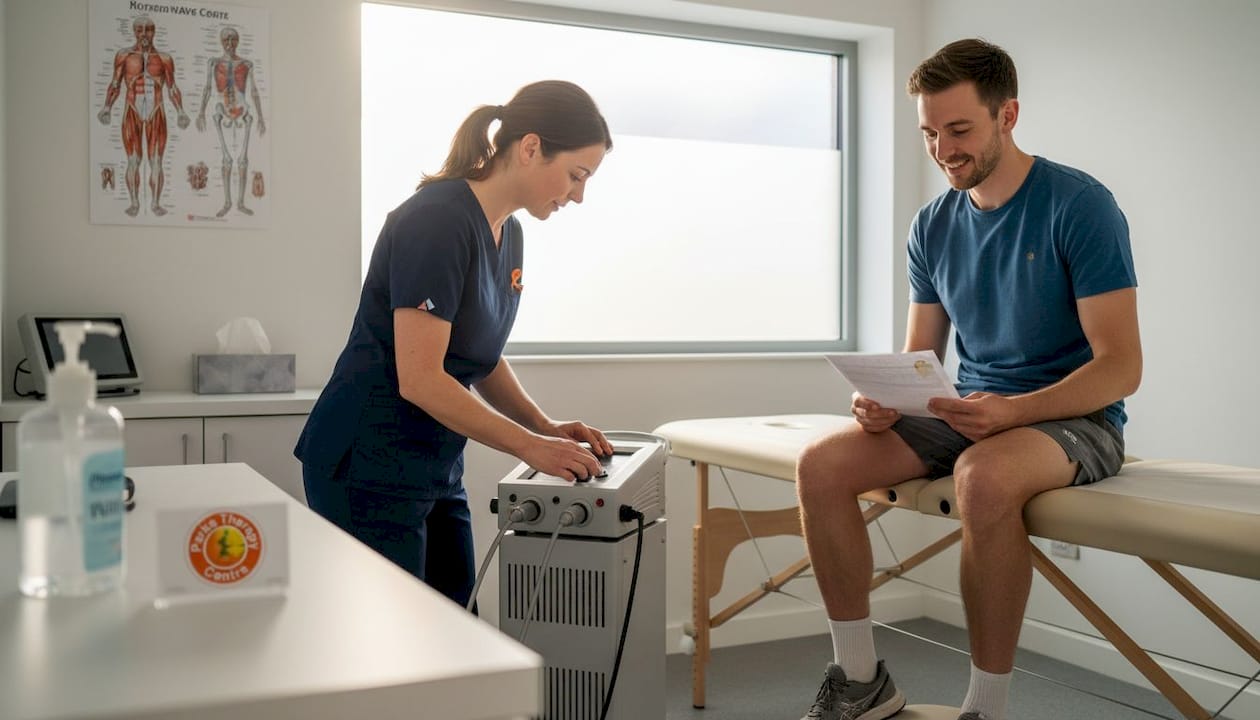
Extracorporeal shockwave therapy, widely known as ESWT, delivers high-energy acoustic pulses into injured tissue from outside the body. The word “extracorporeal” simply means the energy source sits outside you. A handheld device pressed against the skin transmits pressure waves into the targeted area, stimulating the body’s natural healing response without needles or surgery.
The core principle is mechanotransduction. That is the process by which mechanical forces are converted into biochemical signals inside your cells. When a shockwave pulse travels through tissue, it effectively tells the body there is damage present, triggering a cascade of biological repair processes. Think of it like rebooting a frozen computer. The system was not working efficiently, so the shockwave provides the prompt it needed to start operating properly again.
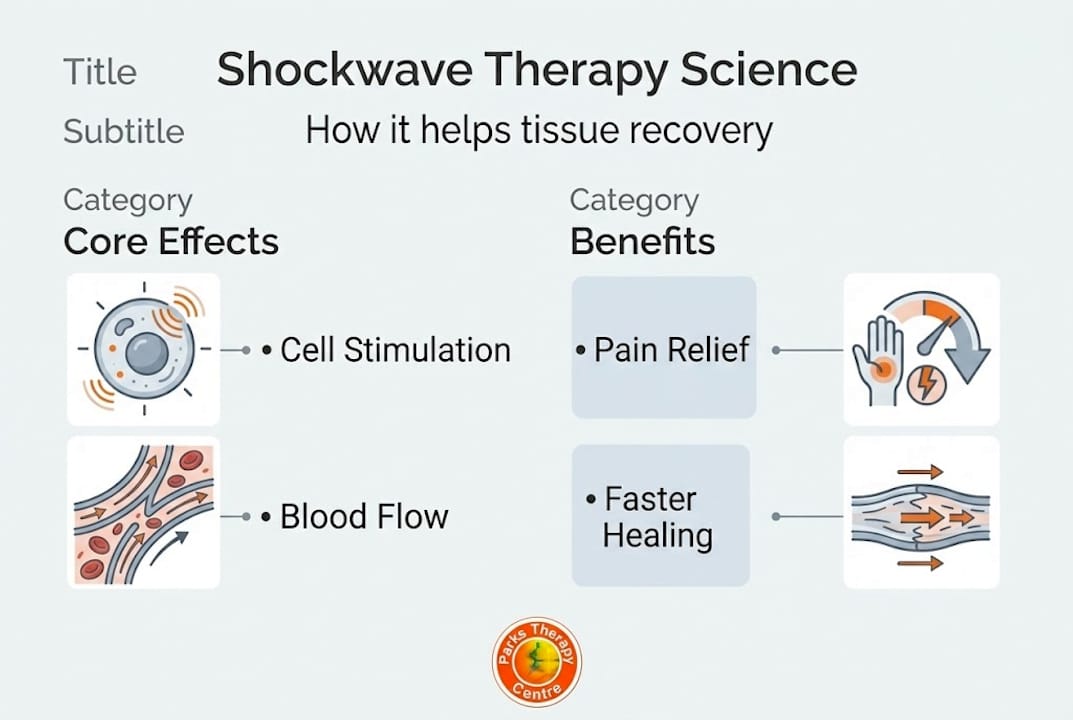
The specific physiological effects are wide-ranging and genuinely impressive. Research confirms that ESWT mechanisms include enhanced perfusion (improved blood flow), immunomodulation (regulation of the immune response), stem cell regulation, and exosome release. Those are not just impressive-sounding terms. Each plays a direct role in repairing damaged tissue, calming overactive pain signals, and rebuilding healthy structure in areas like tendons, fascia, and bone.
Here are the key physiological effects explained simply:
Neovascularisation: The formation of new blood vessels in damaged tissue, which brings fresh oxygen and nutrients to the area and accelerates healing.
Analgesia: Shockwaves disrupt the transmission of pain signals by affecting substance P and other neurotransmitters, which is why some patients feel immediate relief after just one session.
Fibroblast stimulation: Fibroblasts are the cells responsible for producing collagen. Stimulating them helps rebuild tendon and connective tissue more effectively.
Calcium deposit breakdown: In calcific tendinopathy, shockwaves physically break down calcium deposits within the tendon, which is something exercise alone cannot achieve.
As one leading research overview notes:
“The underlying mechanisms of shockwave therapy are still not fully understood, and clinical protocols continue to develop as new evidence emerges.”
This is an important point to carry through the rest of this article. The science is promising and growing, but it is honest science. Understanding the injury recovery terminology used by your physiotherapist will help you ask better questions and understand your own treatment plan more clearly.
Types of shockwave therapy: fESWT vs RPW
Understanding the science behind shockwave therapy is one thing, but knowing which type of shockwave is being used on you is equally important. Two main technologies exist, and they are not interchangeable.
Focused extracorporeal shockwave therapy (fESWT) directs high-energy acoustic waves to a precise, defined point deep within tissue. It is particularly useful for targeting deep structures like bone and deeper tendons. The energy level is typically higher, and the treatment area is narrow and concentrated.
Radial pressure waves (RPW) work differently. Rather than focusing energy at a depth, RPW disperses pressure across a broader, more superficial area. This makes it better suited to conditions affecting surface-level muscles, fascia, or tendons that sit closer to the skin. RPW is also generally less intense, which tends to make it more comfortable during treatment.
Here is a side-by-side comparison to make the distinction clear:
Feature | Focused ESWT (fESWT) | Radial pressure wave (RPW) |
Energy depth | Deep tissue | Superficial to mid-depth |
Energy intensity | Higher | Lower to moderate |
Precision | Highly targeted | Broader dispersal |
Common uses | Bone stress reactions, calcific tendinopathy | Plantar fasciitis, myofascial pain |
Patient comfort | May be more intense | Generally more comfortable |
Equipment cost | Higher | Lower |
An important caveat worth raising: research that compares these two approaches directly is complicated by methodological inconsistencies between studies, making confident conclusions difficult. Some trials mix the two types without clearly distinguishing them, which affects how confidently we can say one is superior to the other for a given condition.
For patients managing complex injuries, understanding how clinicians approach sports injury management can help frame why your therapist selects one type over another. Similarly, for upper limb conditions like tennis elbow, the approach may differ from lower limb work, and there are specific physiotherapy tips for epicondylitis that inform treatment selection.
Pro Tip: Before your first shockwave session, ask your therapist directly which type of device they are using and why it suits your specific condition. A knowledgeable practitioner should be able to answer that question clearly without hesitation.
What does shockwave therapy feel like? Sessions, energy, and outcomes
Once you know the type best suited to your condition, it is helpful to know what happens during a session and what results to expect.
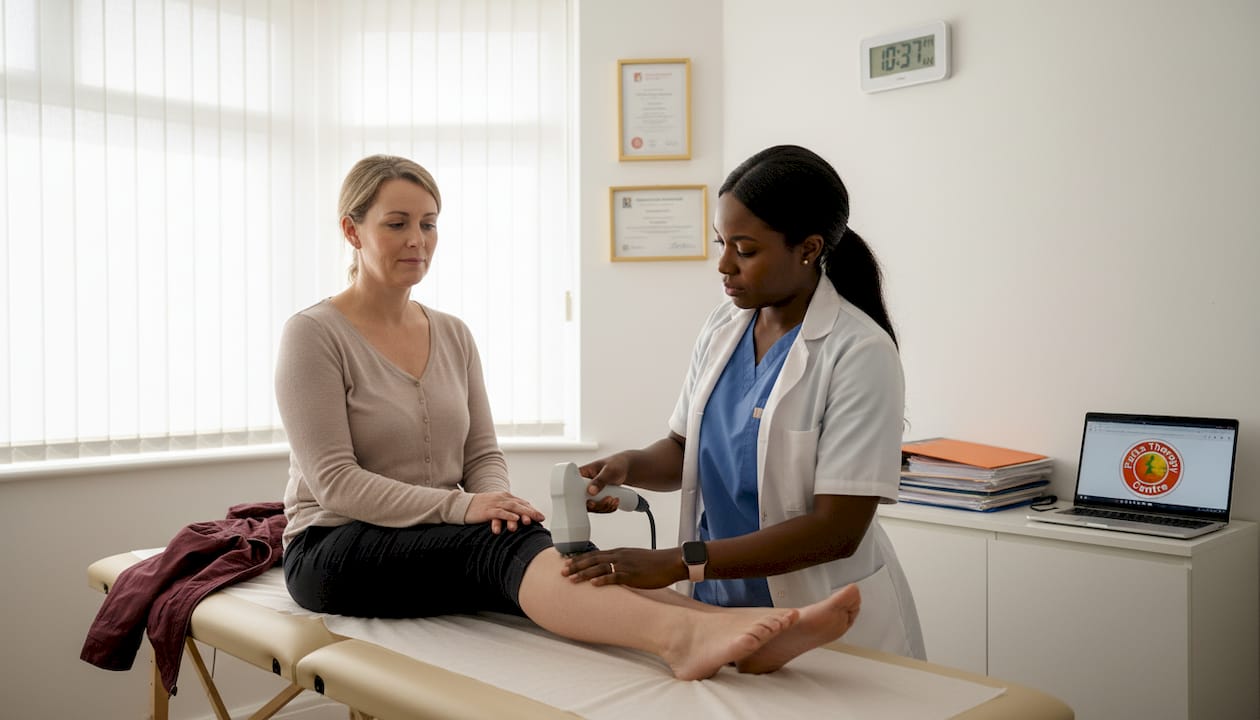
Most patients describe the sensation as a repetitive tapping or pressure, sometimes accompanied by a dull ache or brief sharp sensation when the probe hits the most sensitive area. It is not painless, but the discomfort is manageable and typically fades within minutes of the session ending. Some practitioners apply a small amount of gel to the skin beforehand to improve acoustic transmission, similar to an ultrasound scan.
A typical shockwave therapy protocol looks like this:
Assessment and target identification: Your therapist confirms the treatment site and adjusts device settings.
Gel application: Acoustic gel is applied to the skin to maximise energy transfer.
Initial low-intensity pulses: The session often starts gently to allow the tissue to acclimatise.
Main treatment phase: Energy and frequency are increased to the therapeutic range.
Post-session advice: You receive guidance on activity modification and rehabilitation exercises.
Follow-up scheduling: Further sessions are arranged, usually at weekly intervals.
The empirical benchmarks for a standard protocol, supported by clinical evidence, are 3 to 6 sessions per course, approximately 2,000 pulses per session, using low to medium energy levels at weekly intervals. That structure is not arbitrary. It reflects the body’s biological repair cycle and allows sufficient time between sessions for tissue remodelling to occur.
Here is a summary of expected timelines based on clinical data:
Outcome | Expected timeline |
Immediate pain relief | During or shortly after first session |
Sustained pain reduction | 4 to 8 weeks into treatment |
Functional improvement | 8 to 12 weeks |
Full tissue remodelling | Up to 12 weeks post-treatment |
One of the most important findings across the research is that combining shockwave therapy with rehabilitation exercises consistently produces better outcomes than shockwave therapy alone. This is not a minor footnote. Patients who engage with prescribed exercises alongside their sessions tend to see more durable results, particularly for tendinopathies.
Understanding the broader context of sports recovery science helps explain why multimodal recovery approaches outperform single treatments. Similarly, thinking about recovery and prevention strategies alongside your shockwave course gives your body the best chance of a lasting result rather than temporary relief.
Evidence, limitations, and controversies: What the research really shows
While session experiences are often positive, the research brings a balanced view, including both strengths and genuine limitations.
The good news first. Shockwave therapy has earned endorsement from credible bodies. Expert consensus in sports medicine, including a Delphi panel involving specialists in musculoskeletal care, supports its use for tendinopathies as an adjunct treatment. The Mayo Clinic and the International Society for Medical Shockwave Treatment (ISMST) both recognise its value in appropriate clinical settings. For conditions like plantar fasciitis, calcific shoulder tendinopathy, and patellar tendinopathy, the evidence base is particularly strong.
Here is a summary of what current research supports and where uncertainty remains:
Strong evidence: Calcific shoulder tendinopathy, chronic plantar fasciitis, and greater trochanteric pain syndrome all show consistent positive responses to ESWT in multiple studies.
Moderate evidence: Achilles tendinopathy, patellar tendinopathy, and lateral epicondylitis (tennis elbow) show promising results but with more variability between trials.
Contested territory: In myofascial pain syndrome, some studies show shockwave therapy is superior to a control condition but equal to needling or exercise, which raises questions about whether the shockwave itself is the active component or whether any structured attention to the area achieves similar effects.
Sham comparisons: Several rigorous trials have found no clear superiority over sham treatment in some conditions, which is a meaningful finding worth discussing with your clinician before committing to a full course.
The broader challenge is the heterogeneity of the research itself. Studies vary widely in the devices used, energy levels applied, the number of sessions delivered, and the patient populations assessed. This makes pooling results across trials difficult, and it is why mechanisms remain incompletely understood and protocols continue to evolve.
“Shockwave therapy shows genuine promise across a range of musculoskeletal conditions, but standardised protocols are still needed before we can draw definitive conclusions in all clinical settings.”
For patients exploring complementary approaches, it is worth knowing that acupuncture for sports injuries presents a similarly nuanced evidence picture, with strong support in some areas and ongoing debate in others. Knowing both helps you have a richer, more informed conversation with your clinician about what combination of treatments best suits your presentation.
What most guides miss about shockwave therapy
Here is the honest reality that most clinical summaries and online guides overlook. Shockwave therapy is not a passive treatment you receive while waiting for your body to fix itself. Its effectiveness is directly tied to the clinical reasoning behind it, the experience of the practitioner delivering it, and the rehabilitation programme built around it.
We have worked with patients across Bedfordshire and Buckinghamshire who have received shockwave elsewhere with disappointing results, not because the treatment failed them, but because it was delivered in isolation without a tailored recovery plan. Standard protocols exist for good reason, but no two tendon presentations are identical. The person with Achilles tendinopathy who sits at a desk all day requires a different approach to the weekend runner returning from a half-marathon.
The research is also honest about this. Outcomes vary individually. A course that works brilliantly for one patient may produce more modest results for another, even with the same diagnosis. That is not a failure of the treatment. It reflects the complexity of the human body and the fact that working with a sports injury specialist who understands your whole picture will always outperform a generic protocol delivered by someone you have only just met.
Choose local expertise. Choose practitioners who ask questions before they reach for the device. Real recovery is built on the relationship between clinician and patient, with the right tools in the right hands.
Connect with local experts for your shockwave therapy needs
Personalised care is key, so connecting with local physiotherapy clinics is your next best step for evidence-based support.
At The Parks Therapy Centre, our experienced physiotherapy team across Bedfordshire and Buckinghamshire offers shockwave therapy as part of an integrated, individually tailored approach to musculoskeletal recovery. Whether you are dealing with a long-standing tendon problem, a sports injury that is holding you back, or chronic pain that has not responded to other treatments, we can help you decide whether shockwave therapy is the right option. Visit our centre to explore our services, book a consultation online, and take the first step towards a recovery plan designed specifically around you. Our award-winning team has been delivering patient-centred care since 1986.
Frequently asked questions
How quickly can I expect pain relief after shockwave therapy?
Pain relief may be immediate for some patients or develop gradually over the following weeks, with most people experiencing functional improvement within 8 to 12 weeks when combined with rehabilitation.
Is shockwave therapy suitable for everyone?
Shockwave therapy is generally appropriate for musculoskeletal pain and sports injuries, but suitability depends on your specific diagnosis, medical history, and a clinical assessment from a qualified physiotherapist.
What side effects or risks are associated with shockwave therapy?
Most side effects are mild and temporary, including slight discomfort, redness, or minor bruising at the treatment site, which typically resolves within a day or two.
Does shockwave therapy replace other treatments like exercise or needling?
Research indicates shockwave therapy is often comparable to needling or exercise for certain conditions, making it best used as part of a wider rehabilitation programme rather than as a standalone replacement.
Are results permanent after shockwave therapy?
Long-term superiority is not proven across all conditions, and results vary between individuals, which is why ongoing rehabilitation and maintenance are often recommended alongside treatment.
Recommended