
Essential post-marathon recovery tips: heal faster, run stronger

TL;DR:
Recovery after a marathon is crucial for building strength and preventing injuries.
Proper nutrition, hydration, rest, and monitoring optimize tissue repair and immune function.
Seeking professional support ensures a safe return to training and long-term running health.
The greatest performance gains after a marathon do not come from training. They come from what you do in the days and weeks that follow. Most runners cross the finish line, collect their medal, and immediately start planning their next training block, underestimating just how much damage 26.2 miles inflicts on muscles, joints, and the immune system. Whether you’ve just finished the Milton Keynes Marathon or a race closer to home in Bedfordshire, the recovery phase is where your body actually gets stronger. This guide gives you evidence-backed, practical strategies to recover smarter and come back faster.
Table of Contents
Key Takeaways
Point | Details |
Act quickly with nutrition | Refuel and rehydrate within an hour of finishing to jumpstart muscle repair. |
Phase recovery wisely | Alternate periods of rest and gentle activity using evidence-based timelines for optimal healing. |
Monitor mind and body | Tune into sleep, heart rate, soreness, and mental stress to track progress and prevent injuries. |
Use therapy and prevention | Massage, compression, and professional guidance help speed recovery and lower future injury risk. |
Immediate post-race actions: nutrition and hydration
The moment you cross the finish line, your body is running on empty. Glycogen stores are depleted, muscle fibres are torn, and your fluid balance is significantly disrupted. What you consume in the first hour shapes how well you recover over the following days.
Post-race nutrition guidance recommends consuming 20-30g of protein and carbohydrates within 30 to 60 minutes of finishing. This window is critical for jump-starting glycogen replenishment and beginning muscle repair. Missing it means your body has to work harder later, and recovery stalls.
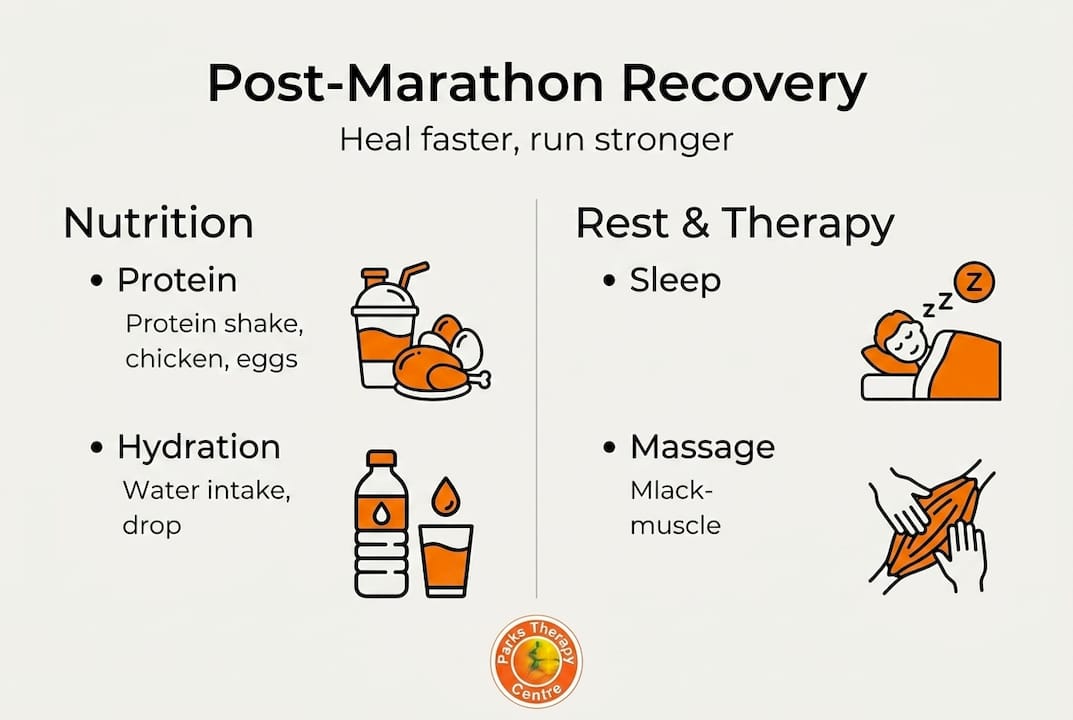
Hydration is equally non-negotiable. The target is to replace 150% of your body weight loss through fluids. So if you lost 1kg during the race, you need to drink 1.5 litres, ideally with electrolytes to restore sodium, potassium, and magnesium levels. Plain water alone is not enough.
Here is what to prioritise straight after the finish:
Chocolate milk or a protein shake (fast protein and carbs together)
Bananas or dates (quick natural sugars and potassium)
A sports drink or electrolyte tablet dissolved in water
A balanced meal within 2 hours: rice or pasta with chicken, eggs, or fish
Coconut water as a gentle electrolyte source
The comparison below shows how quickly replenishment affects recovery markers:
Timing of nutrition | Glycogen recovery rate | Muscle soreness at 48h |
Within 30 minutes | High | Reduced |
60 to 90 minutes | Moderate | Moderate |
2 hours or more | Low | Increased |
For runners interested in healthy eating for athletes, building a consistent post-race nutrition habit across training cycles makes a measurable difference to long-term performance.
Pro Tip: Avoid reaching for ultra-processed snacks at the finish line, even if they’re convenient. Crisps and sweets spike blood sugar without delivering the protein your muscles urgently need. A pre-packed recovery snack in your kit bag removes the temptation entirely.
Rest and active recovery phases: how long, what type?
After addressing early nutritional steps, attention shifts to physical rest, movement, and choosing the right approach for your body.
There is no single answer to how long you should rest, but the evidence provides a clear framework. Marathon recovery tips for runners suggest that complete rest from running should last between 3 and 14 days, followed by a gradual return through a reverse taper. The range reflects differences in experience, pace, and how the race felt physically.
Here is how a structured phased recovery looks in practice:
Days 1 to 3: Complete rest. Sleep, gentle stretching only, and prioritise nutrition.
Days 4 to 7: Light walking for 20 to 30 minutes. No running, no intensity.
Days 7 to 14: Introduce easy jogging for short durations if soreness has resolved.
Weeks 3 to 4: Reverse taper begins, rebuilding volume slowly.
Week 4 onwards: Return to structured training only when biometric signals are stable.
For first-time marathon runners or those who ran a slower time, the recovery window is typically longer. Edge case considerations note that first-timers often need 3 to 7 days of complete rest as a minimum, and that biomarker recovery from a slower race may take significantly longer because the body spends more time under stress.
“The reverse taper is not laziness. It is the structured process through which your body consolidates the fitness you’ve built. Skipping it is like baking a cake and pulling it from the oven ten minutes early.”
Active recovery and passive recovery serve different purposes. Here is a quick comparison:
Recovery type | Benefits | Limitations |
Active (walking, swimming) | Improves circulation, reduces stiffness | Requires energy output |
Passive (rest, sleep) | Full tissue repair, hormone reset | Can cause stiffness if prolonged |
Understanding injury recovery strategies and following injury prevention steps are both valuable during this phase, particularly for runners who felt twinges or discomfort during the race. Building a post-race recovery routine around these phases ensures you return stronger rather than broken.
Supporting recovery: sleep, monitoring, and therapy
Once rest and gradual movement are underway, science shows that sleep, therapy, and monitoring are key to preventing setbacks and optimising healing.
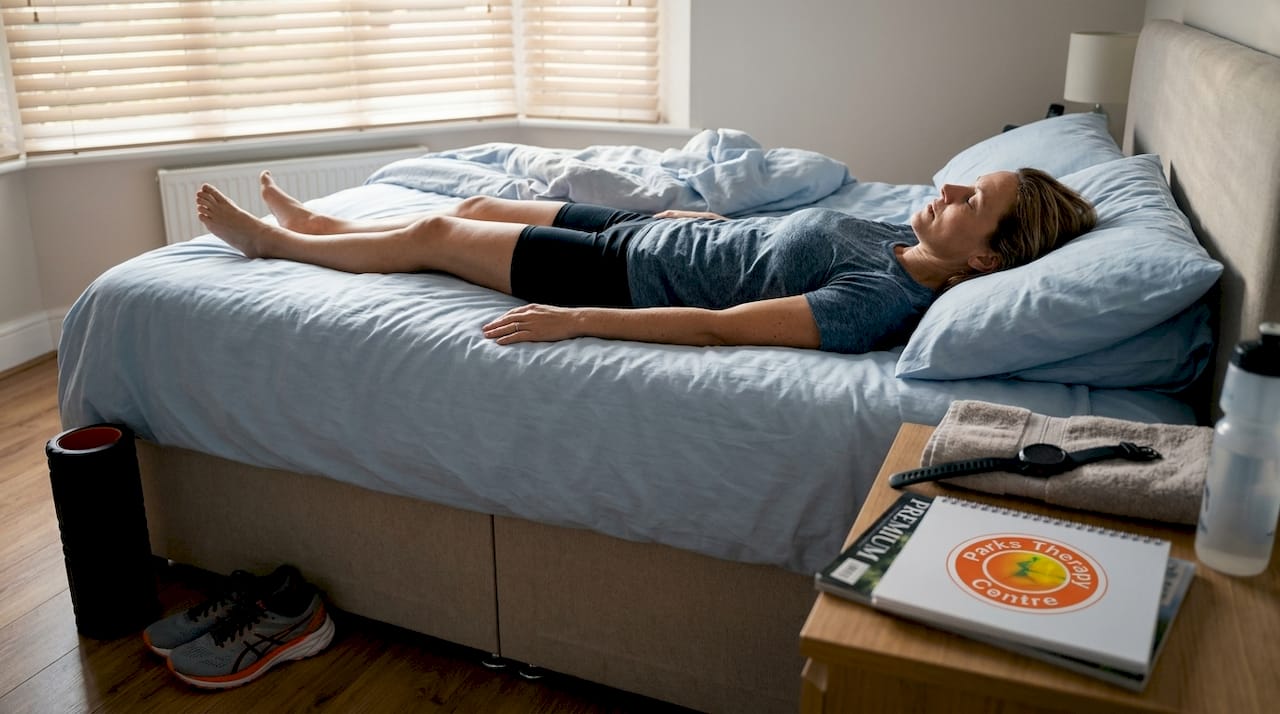
Sleep is arguably the most powerful recovery tool available, and it costs nothing. Monitoring for readiness to run means tracking resting heart rate, heart rate variability (HRV), and subjective soreness scores each morning. These signals tell you far more than how your legs feel during a warm-up.
Aim for 8 to 10 hours of sleep per night during the first week after your race. This is when growth hormone is released, tissue repair accelerates, and your nervous system resets. Cutting sleep short to squeeze in cross-training is counterproductive.
Key tools and signals to monitor during recovery:
Resting heart rate: An elevated RHR of more than 5 to 7 beats above your baseline suggests your body is still under stress
HRV (heart rate variability): A lower reading than normal indicates incomplete recovery
Muscle soreness: Should reduce noticeably between days 3 and 5; if it persists, extend your rest phase
Mood and motivation: Persistent low mood or fatigue is a sign of overreaching
Sleep quality: Restless nights often reflect systemic inflammation still at work
For therapy, timing matters. Massage after 24 to 48 hours is far more effective than immediately post-race. Direct soft tissue work too soon can increase inflammation. Contrast therapy (alternating warm and cold water immersion) supports circulation. Compression garments worn in the first 24 to 48 hours help reduce swelling in the lower legs.
Exploring injury recovery therapies and investing in physiotherapy for full recovery makes particular sense for runners who finished the race with joint pain or noticeable biomechanical issues.
Pro Tip: Do not rely on how your legs feel during the first 48 hours. Adrenaline and inflammation can mask real damage. Track objective markers like RHR and HRV before making any decisions about returning to exercise.
Mental and long-term recovery: journaling, mindset, staying healthy
Physical recovery only tells half the story. The marathon’s toll on the mind and immune system is often overlooked but just as crucial.
Many runners experience what is known as the post-marathon blues, a dip in mood and motivation in the week or two following the race. This is normal. Months of structured purpose suddenly disappear, and without a plan, it can feel disorienting. Mental recovery techniques including journaling and stress management actively support physical healing by reducing cortisol levels, which directly interferes with tissue repair.
Your immune system is also particularly vulnerable. In the 24 to 48 hours after a marathon, your immune defences are significantly suppressed, raising infection risk noticeably. During this window:
Avoid crowded public spaces where possible
Wash hands frequently and keep your hands away from your face
Prioritise vitamin C rich foods: oranges, kiwis, bell peppers
Avoid alcohol, which suppresses immune function further
Stay warm, especially after outdoor cool-downs
The long-term picture is also worth understanding. Biomarker data post-marathon shows that internal markers of stress and inflammation take far longer to normalise than leg soreness alone would suggest:
Biomarker | Peak elevation | Normalisation point |
Creatine kinase (CK) | Up to 96 hours | Around 144 hours |
Lactate dehydrogenase (LDH) | Up to 120 hours | Around 192 hours |
C-reactive protein (CRP) | Prolonged | Variable |
High-sensitivity troponin T | 24 to 48 hours | Around 96 hours |
Following injury prevention tips and understanding sports therapy for marathon recovery are both important long-term habits that protect you in subsequent training cycles.
Pro Tip: Celebrate the fact that you finished. Journaling even two or three sentences about how the race felt each day keeps you connected to the process without the pressure of performance. It is a simple habit that supports both mental and physical recovery.
Why smart recovery beats tough training: what most runners overlook
Here is something worth sitting with. Most runners track every training session obsessively but treat recovery as an afterthought, a gap between the real work. The uncomfortable truth is that recovery is the real work. Fitness is not built during a run. It is built in the hours and days after.
At Parks Therapy Centre, we see this pattern repeatedly. Runners come in with overuse injuries in Bedfordshire and Buckinghamshire that trace directly back to premature return to training after a race. A slightly sore Achilles became a rupture. A stiff hip became a stress fracture. These are not bad luck. They are the predictable result of ignoring what the body is communicating.
Smart recovery is not passive. It is a deliberate, informed process that includes nutrition, sleep, therapy, monitoring, and mental rest. Runners who start recovery right consistently outperform those who rush back. The data is clear. The logic is sound. The challenge is that rest does not feel productive. But that feeling is wrong.
Get expert support for your post-marathon recovery
Reading about recovery is a strong first step. Acting on it with professional support is where the real difference is made.
At Parks Therapy Centre, we work with marathon runners across Bedfordshire and Buckinghamshire who want structured, hands-on recovery support. Whether you need soft tissue therapy, a biomechanical assessment, or a personalised plan for your return to training, our team of qualified physiotherapists and sports therapists is here to help. We also offer targeted advice on Achilles injury prevention to keep you on the road for your next race. Visit Parks Therapy Centre to book your recovery session and make sure your next training block starts from a position of genuine strength.
Frequently asked questions
How long should I rest after a marathon before running again?
Complete rest of 3 to 14 days is recommended before gradually reintroducing running, with the exact duration depending on your experience and how your body is responding to recovery signals.
What foods and drinks help the most after a marathon?
Consuming 20-30g protein and carbs within 30 to 60 minutes post-race, combined with electrolyte-rich fluids totalling 150% of your body weight loss, gives your muscles the fastest route to repair and glycogen replenishment.
Is it true that mental recovery is important after a marathon?
Journaling and stress management post-race reduce cortisol levels that interfere with physical healing, while also protecting against the immune suppression that raises infection risk in the first 24 to 48 hours after a race.
Should I use massage, ice baths, or compression after the race?
Massage is most beneficial after 24 to 48 hours post-race, as immediate soft tissue work can increase inflammation; contrast therapy and compression garments from the outset help manage swelling and support circulation effectively.
Recommended