
Physiotherapy insurance UK: check cover and claim fast
- 11 minutes ago
- 7 min read

Most UK private health insurance policies cover physiotherapy, but only when the plan includes outpatient cover, and only when you have pre-authorisation before your first session. Miss that step and you risk paying the full physiotherapy cost yourself. Insurers also expect your treatment to come from an HCPC-registered physiotherapist, and most cap cover with either a set number of sessions or an annual financial limit.
Before you book anywhere, do this:
Check your policy documents for an outpatient benefit, not just inpatient or day-patient cover.
Confirm whether you need a GP referral or whether your insurer allows direct access.
Call the insurer’s claims or pre-authorisation line before your first appointment, not after.
Pro Tip: Ask the clinic whether it’s recognised by your insurer and can bill them directly. This avoids the common shortfall where insurers pay only “reasonable and customary” rates, leaving you to cover the difference.
Key Takeaways
Physiotherapy cover under UK private health insurance depends on outpatient benefits, pre-authorisation, and referral rules that vary by insurer and policy tier.
Point | Details |
Confirm outpatient cover | Physiotherapy is only covered if your policy includes outpatient treatment, not just inpatient care. |
Get pre-authorisation first | Call the claims line before booking to avoid paying for sessions the insurer later refuses. |
Expect a session block | Insurers often approve three to six sessions initially, then require a progress report to extend treatment. |
Watch for shortfalls | Excesses and “reasonable and customary” rate caps can leave you paying part of the bill even when covered. |
Ask Parks Therapy Centre for help | The clinic can check insurer recognition, confirm outpatient eligibility, and advise on likely costs before you book. |
Table of Contents
What counts as a pre-existing condition and how it affects cover
A pre-existing condition is any injury, symptom, or diagnosis you had before your policy started, or before you upgraded it, whether or not you sought treatment at the time. Insurers ask detailed medical history questions precisely to identify these, and most standard policies exclude them from physiotherapy cover entirely.
This catches people out more often than you’d think. A twinge in your back five years ago that you never mentioned to a GP can still count as pre-existing if it’s connected to the problem you’re now claiming for. Insurers commonly apply “moratorium” underwriting, meaning a condition is excluded for a set period (often two years) unless it’s been symptom-free throughout that time.
There’s also a distinction worth understanding: private medical insurance is built around acute, treatable problems rather than long-term management. Chronic conditions such as ongoing arthritis or recurring lower back pain are frequently excluded even when physiotherapy genuinely helps control symptoms, because the policy isn’t designed to fund indefinite maintenance care.
If you’re unsure whether your condition counts as pre-existing, don’t guess. Ring the insurer’s medical underwriting team and describe the injury plainly. Getting this confirmed before you book saves you from a declined claim after treatment has already started, which is a far harder position to argue from.
How do you check your policy and make a claim?
Start with the policy document itself, not the marketing brochure. Look specifically for the words “outpatient treatment” or “outpatient benefit” in the schedule of cover, alongside any session limits, financial caps, or excess figures.
Follow this sequence:
Read your policy schedule to confirm outpatient physiotherapy is included and note any limits.
Check the referral rules. Many insurers still require a GP referral, though some now offer direct access or digital GP services that issue a referral instantly by phone or app.
Call the pre-authorisation line before booking. Give them the diagnosis, the referring GP’s details if needed, and ask for a written or emailed authorisation reference.
Confirm session numbers. Insurers typically approve an initial block of three to six sessions before asking for a progress report.
Book with a recognised provider. Ask the clinic directly whether they’re on your insurer’s approved list and whether they handle direct billing.
Keep every reference number. Authorisation codes, claim numbers, and email confirmations matter if a dispute arises later.
Ringing the insurer feels like an extra chore when you’re already in pain, but it’s the single step that determines whether you’re reimbursed or left holding the invoice.
What does physiotherapy cost, and what will you pay?
Self-funded physiotherapy in the UK typically runs from around £45 to £75 per session depending on region and clinic, though costs vary. Under insurance, your out-of-pocket exposure depends less on the headline session price and more on how your policy is structured.
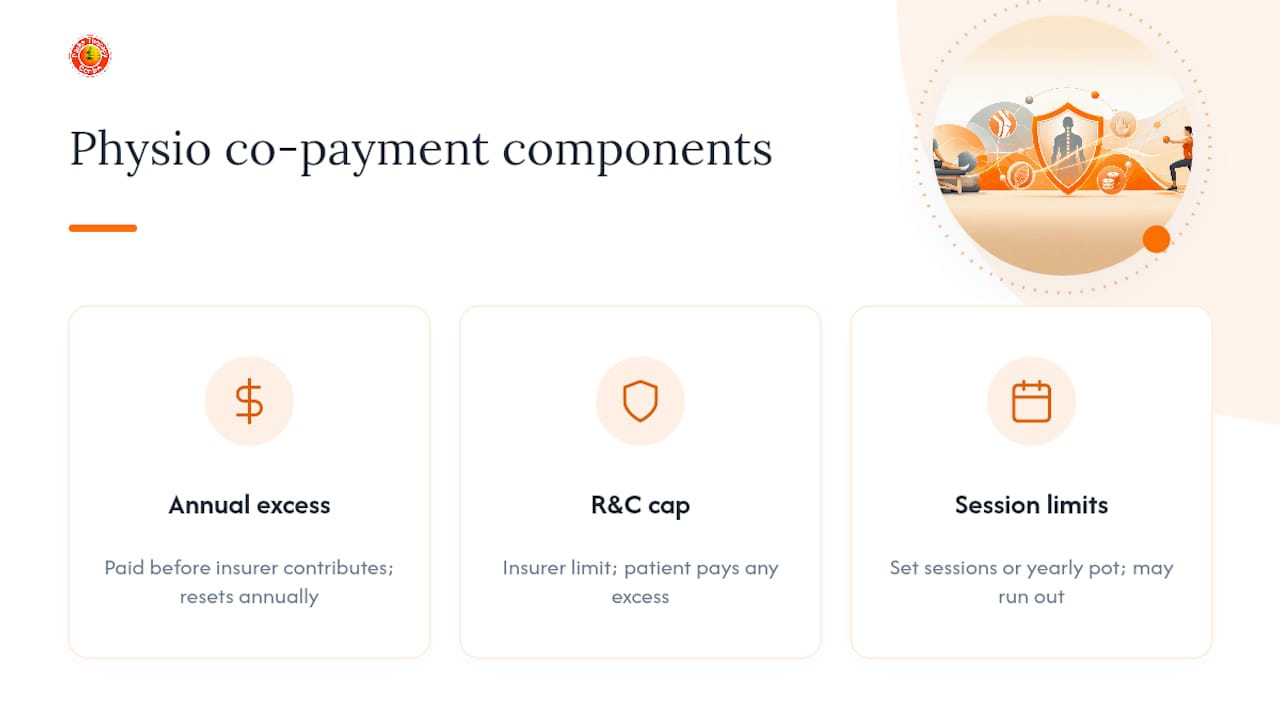
Three things create a co-payment even when you’re covered. First, an excess, a fixed amount you pay before the insurer contributes anything, which resets annually on most policies. Second, a “reasonable and customary” cap, meaning the insurer only pays up to what it considers a fair market rate. If your clinic charges above that, you cover the gap. Third, running out of authorised sessions before your recovery is complete.
Policy tiers vary considerably: entry-level plans sometimes exclude outpatient physiotherapy altogether, mid-range plans typically offer a set number of sessions or a modest yearly pot, and comprehensive plans can allow ongoing clinically necessary treatment subject to continued authorisation. Post-surgical rehabilitation is often treated differently from standalone musculoskeletal complaints, sometimes with more generous session allowances because it follows a covered procedure.
Ask your insurer for their reasonable and customary rate for physiotherapy in your area before you commit to a clinic. It’s a five-minute call that can prevent an unwelcome invoice later.
Is private physiotherapy faster than the NHS?
Yes, generally, and this is usually the main reason people take out cover for it in the first place. NHS physiotherapy waiting times for musculoskeletal problems commonly stretch to several weeks, sometimes longer in areas with higher demand, because referrals go through a triage system before an appointment is even offered.
Private cover cuts that wait dramatically in most cases. Once pre-authorisation is confirmed, many patients are seen within days rather than weeks, particularly where the insurer offers a direct-access route that skips the GP referral stage entirely. Some insurers run dedicated physiotherapy triage lines that assess your symptoms over the phone and book you straight into a clinic.
The trade-off is scope, not speed. Private cover moves quickly for the initial assessment and early sessions, but if your recovery needs an extended course of treatment, you’re back to the authorisation cycle, session reports, and possible limits described earlier. The NHS, once you’re in the system, doesn’t impose the same financial caps, though the initial wait is the price for that.
For anyone weighing up whether cover is worth the premium, the honest answer is that it buys you time at the front end of an injury, when early treatment often makes the biggest difference to recovery.
What clinics see going wrong with insurance claims
The most common mistake is booking before calling the claims line, which leaves patients paying privately for sessions the insurer later refuses to backdate. Others assume any physiotherapist qualifies, without checking HCPC registration, or don’t realise their outpatient limit has already been used elsewhere.

Clear treatment notes and a structured progress report make the difference when a physiotherapist requests more sessions beyond the initial block. Parks Therapy Centre has supported patients through this process for years and can advise on what an insurer typically needs before authorising extended physiotherapy treatment.
Let Parks Therapy Centre confirm your cover before you book
Working out whether your policy pays for treatment shouldn’t add stress to an already painful problem. Parks Therapy Centre can check whether your outpatient benefit applies, confirm if the clinic is recognised by your insurer for direct billing, and flag likely shortfalls before you commit to a course of sessions, so you know the real cost upfront rather than after your first appointment.

Our team across Bedfordshire and Buckinghamshire works with HCPC-registered physiotherapists and regularly liaises with insurers on pre-authorisation, session extensions, and progress reporting, taking that administrative back-and-forth off your plate. If you’re ready to find out exactly where you stand, call your chosen clinic location or book an appointment with Parks Therapy Centre and ask the team to help confirm your cover before your first visit.
Where to check policy details and get support
Start with your insurer’s own policy wording and pre-authorisation line, since terms vary between providers and even between tiers of the same product. The Chartered Society of Physiotherapy’s guidance on private medical insurers explains how clinicians work with insurers on clinical necessity, useful background if your claim gets queried.
If an insurer refuses a claim you believe is valid:
Raise a formal complaint through the insurer’s internal complaints process first.
If unresolved, escalate to the Financial Ombudsman Service, which handles unresolved insurance disputes independently.
Read Parks Therapy Centre’s guide to insurance cover for physiotherapy for clinic-specific booking advice.
Frequently asked questions
Does private health insurance always cover physiotherapy in the UK? No. Cover depends on your policy including outpatient treatment, and most plans set limits through either a session cap or an annual financial allowance for outpatient care.
Do I need a GP referral for insurance-covered physiotherapy? Often yes, though a growing number of insurers offer direct access or digital GP referral services that skip the traditional GP visit entirely. Check your specific policy wording.
What happens if I don’t get pre-authorisation before treatment? Your insurer may refuse to reimburse those sessions, even if physiotherapy would otherwise have been covered. Always call the claims line first.
How many physiotherapy sessions will my insurer approve initially? Many insurers authorise an initial block of around three to six sessions, then ask for a clinical progress report before agreeing to further treatment.
What can I do if my physiotherapy claim gets refused? Raise an internal complaint with your insurer first. If that doesn’t resolve it, you can take the dispute to the Financial Ombudsman Service for an independent review.
This article is general information, not a substitute for advice from a qualified financial advisor. Consult a qualified financial professional about your own circumstances before acting on anything here.
Sources
Recommended