
Pilates for back care: 9 exercises that work
TL;DR:
Pilates for back care involves controlled, low-impact exercises that strengthen deep spinal stabilizers to reduce pain and enhance mobility. Focused movements like pelvic tilts, bird dogs, and glute bridges target key muscles, emphasizing precise activation over effort for effective support. Regular, short sessions and tailored modifications based on diagnosis are essential for safe, lasting back health improvement.
Pilates for back care is defined as a system of controlled, low-impact exercises that strengthen the deep stabilising muscles surrounding the spine to reduce pain and improve mobility. The best examples of pilates for back care include pelvic tilts, bird dogs, glute bridges, modified side planks, and spine stretch forward. These moves target the multifidus and transverse abdominis, the two muscle groups most responsible for spinal stability. Unlike general fitness routines, clinical Pilates prioritises precise muscle activation over effort or fatigue, making it one of the most effective approaches for adults managing persistent back discomfort.
1. Examples of pilates for back care: the foundational five
The five exercises below form the backbone of any back care pilates routine. They are suitable for beginners, adaptable for pain flare-ups, and supported by clinical evidence.
1. Pelvic tilt. Lie on your back with knees bent and feet flat. Gently flatten your lower back into the mat by tilting your pelvis upward, hold for three seconds, then release. This teaches spinal alignment and wakes up the transverse abdominis without loading the spine.
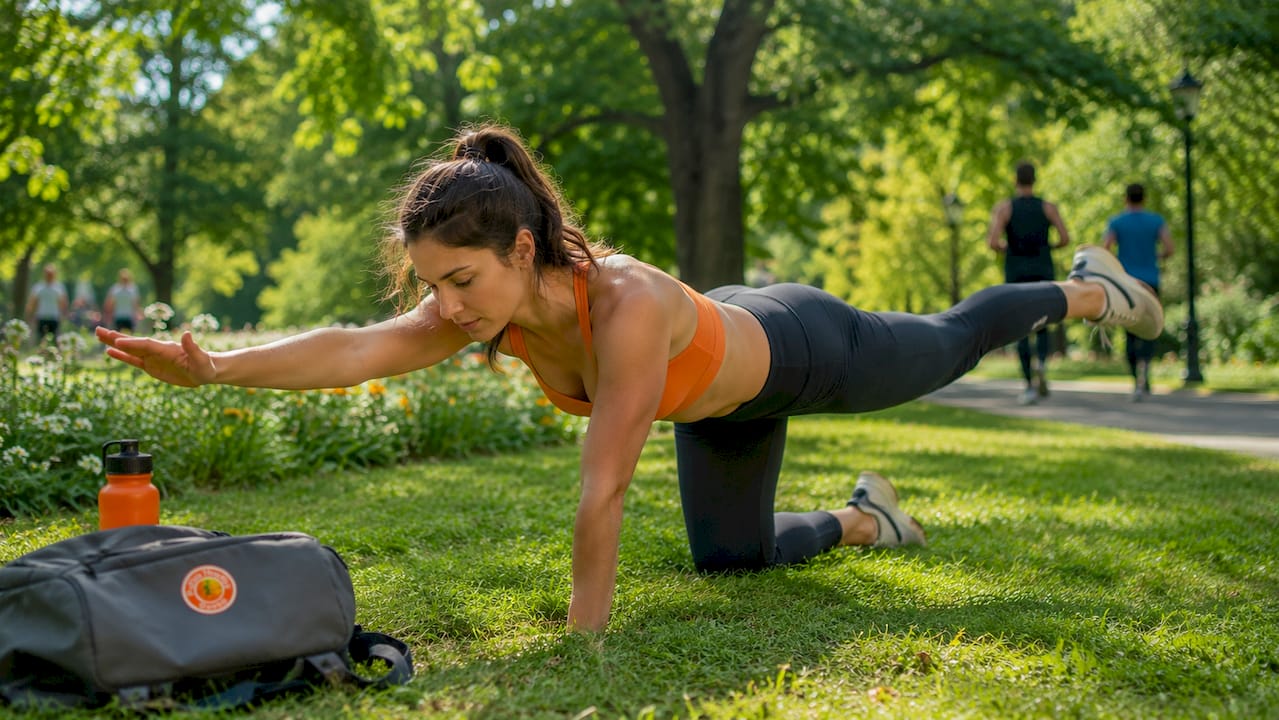
2. Bird dog. Start on all fours with a neutral spine. Extend one arm forward and the opposite leg back simultaneously, hold for five seconds, then return. Bird dogs build multifidus and transverse abdominis strength, the two muscles most associated with lumbar instability.
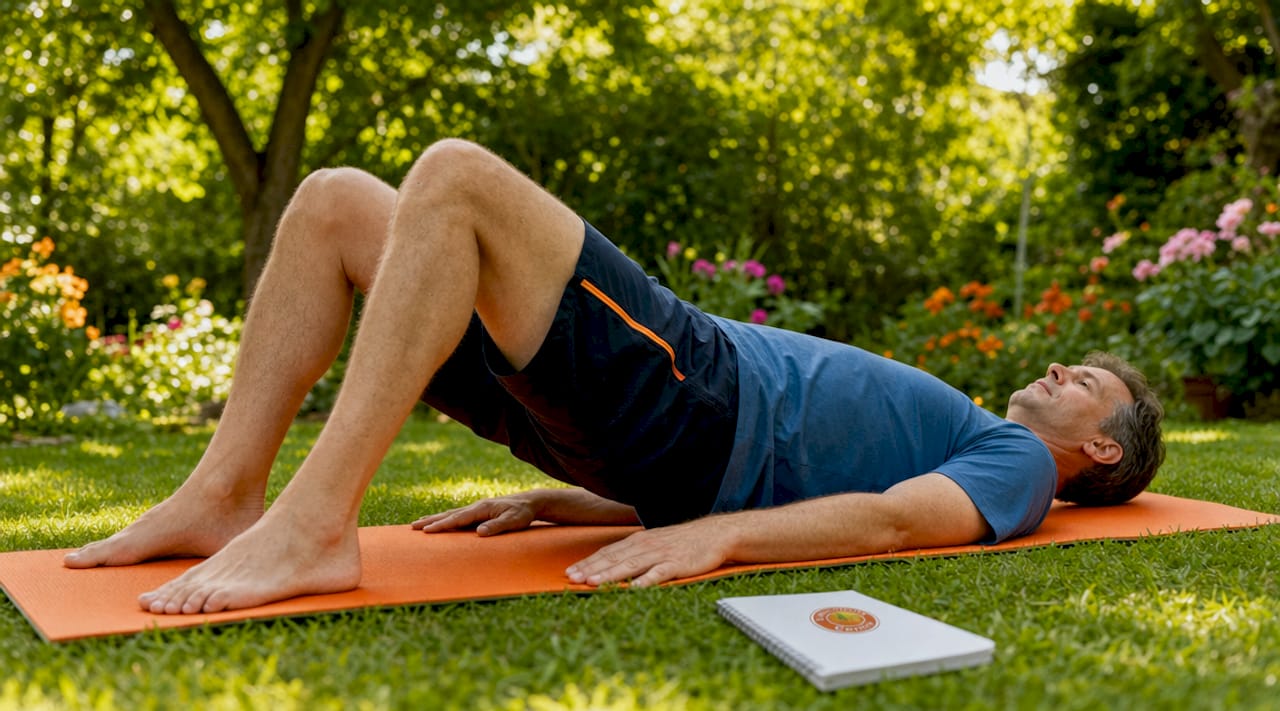
3. Glute bridge. Lie on your back, feet hip-width apart. Press through your heels to lift your hips until your body forms a straight line from knees to shoulders. Weak glutes force the lower back to overwork, so this exercise directly offloads the lumbar spine.
4. Modified side plank. From a side-lying position, prop yourself onto your forearm with knees bent. Lift your hips to create a straight line from knees to shoulders. This engages the obliques and lumbar stabilisers without placing axial load on the spine.
5. Spine stretch forward. Sit tall with legs extended and feet flexed. Reach forward slowly, rounding through the spine one vertebra at a time. This improves flexibility, decompresses the lumbar discs, and reinforces postural awareness.
Pro Tip: Aim for 3 sets of 10 to 20 repetitions for stabilisation exercises. If repetitions feel too demanding, reduce to 5 and build gradually over two weeks.
2. How Pilates targets specific back muscles
Understanding which muscles each exercise activates helps you practise with intention rather than just going through the motions.
The deep core stabilisers, particularly the transverse abdominis and multifidus, act as a natural corset for the spine. These muscles do not respond to high-intensity effort. They respond to slow, controlled activation, which is precisely what Pilates delivers. Most people with back pain have reduced activation in these muscles, often without realising it.
Gluteal strength is equally important. Addressing muscle imbalances, especially by strengthening the glutes, reduces the compensation patterns that cause the lower back to overwork during everyday movements like walking and standing.
The thoracic spine, the mid and upper back, also benefits significantly from Pilates. Exercises like the spine twist and cat-cow stretch restore mobility in this region, which reduces the load transferred to the lumbar spine. Controlled, small movements enhance flexibility without compression, making them particularly useful for morning stiffness.
Breathing technique ties all of this together. Lateral thoracic breathing keeps the pelvic floor and abdominals engaged throughout each movement, preventing the breath-holding that increases lumbar pressure. Most people hold their breath when concentrating, which is the opposite of what the spine needs.
“Pilates is primarily about spinal stabilisation with precise, controlled movements, not muscle fatigue or ‘burn’. Proper modification is essential for pain-free practice.”
Additional exercises that target specific muscle groups include:
Swimming: Performed prone, this exercise activates the posterior chain including the erector spinae and glutes without spinal compression.
Side-lying leg lifts: Strengthen the hip abductors and reduce lateral lumbar loading.
Spine twist: Improves thoracic rotation and reduces stiffness in the mid-back.
3. How to modify Pilates safely for your back condition
Safe Pilates practice is not one-size-fits-all. The right modification depends on your specific diagnosis, pain level, and mobility on any given day.
Neutral spine is a dynamic range, not a rigid flat-back position. The pelvis finds a natural “sweet spot” that allows deep stabiliser muscles to activate comfortably. Forcing a flat back can actually increase discomfort and reduce muscle engagement, which is the opposite of the intended outcome.
For sciatica, extension-based exercises such as the prone press-up or swimming tend to be more comfortable. For spinal stenosis, flexion-based exercises like the spine stretch forward and knee-to-chest stretches are generally better tolerated. Getting this distinction right prevents unnecessary flare-ups.
Pro Tip: Place a folded blanket or firm cushion under your pelvis during prone exercises if your lower back arches uncomfortably. This small adjustment can make the difference between a productive session and a painful one.
Key modification principles to follow:
Reduce range of motion before reducing repetitions. A smaller movement done correctly is more beneficial than a full movement done poorly.
Shorten hold times from 10 seconds to 3 to 5 seconds if fatigue sets in quickly.
Avoid any exercise that reproduces sharp, shooting, or radiating pain. Mild muscular effort is expected; nerve pain is not.
Use a rolled towel under the neck during supine exercises if your chin lifts away from neutral.
4. Pilates versus other exercises for back pain relief
Pilates occupies a distinct position among back pain interventions. Understanding where it differs from other approaches helps you make better decisions about your own back care programme.
Approach | Focus | Limitation |
General stretching | Flexibility and tension relief | Does not build stabilising strength |
Gym-based strengthening | Muscle hypertrophy and load | Risk of poor form under fatigue |
Yoga | Flexibility, balance, and mindfulness | Less emphasis on deep stabiliser activation |
Pilates | Controlled stabilisation and breath integration | Requires consistent practice to see results |
Physiotherapy exercise | Diagnosis-specific rehabilitation | May not address full movement patterns |
Pilates addresses muscle imbalances with slow, precise movement patterns that general fitness routines rarely replicate. The integration of breath and movement is what separates it from standard core training. You can learn more about how Pilates supports rehabilitation as part of a broader treatment plan.
Graded exposure to movement through Pilates also helps overcome the fear of pain that often develops with chronic back conditions. Prolonged rest weakens stabilising muscles and reinforces avoidance behaviour. Gentle, progressive Pilates breaks that cycle safely.
5. How to structure a back care Pilates routine
A practical back care pilates routine does not require a studio, an hour of free time, or specialist equipment. What it requires is consistency.
6. Recommended session structure for back health
Follow this sequence to build a safe and effective daily practice:
Warm-up (3 to 5 minutes). Begin with cat-cow stretches and gentle knee rolls to mobilise the spine and increase circulation to the surrounding muscles.
Stabilisation work (8 to 10 minutes). Perform pelvic tilts, bird dogs, and glute bridges. Focus on breath and control rather than speed.
Mobility and flexibility (4 to 5 minutes). Include spine stretch forward and spine twist to restore range of motion and decompress the lumbar discs.
Cool-down (2 to 3 minutes). Finish with a supine knee-to-chest hold and a gentle child’s pose to release residual tension.
Sessions as short as 15 to 20 minutes are effective for daily back tension management when performed consistently. This is one of the most practical aspects of gentle pilates for back health. You do not need to train for an hour to see results. You need to train regularly.
Progress by adding one new exercise every two weeks rather than increasing repetitions too quickly. If you are unsure whether your technique is correct, a session with a clinical Pilates specialist can identify compensations before they become habits.
Key takeaways
The most effective Pilates exercises for back care are those that activate deep stabilisers, strengthen the glutes, and restore thoracic mobility through controlled, breath-integrated movement.
Point | Details |
Foundational exercises matter most | Pelvic tilts, bird dogs, and glute bridges directly target the muscles that protect the lumbar spine. |
Neutral spine is not flat back | Finding your pelvis’s natural sweet spot activates deep stabilisers more effectively than forcing a rigid position. |
Modify by diagnosis | Extension exercises suit sciatica; flexion exercises suit spinal stenosis. Getting this right prevents flare-ups. |
Short sessions work | Daily sessions of 15 to 20 minutes are sufficient for meaningful improvement in back pain and mobility. |
Glute strength is non-negotiable | Strengthening the posterior chain reduces lumbar overcompensation and is as important as abdominal work. |
Why Pilates for back care changed how I think about pain management
Most people come to Pilates expecting an abdominal workout. What they find, when taught correctly, is something far more specific. Pilates is a stabilisation practice focused on controlling movement without pain, not on achieving fatigue or a “burn” sensation. That distinction matters enormously for anyone with a back condition.
The most common mistake I see is people pushing through discomfort because they assume effort equals progress. In Pilates for back care, the opposite is true. A pelvic tilt performed with full breath control and genuine transverse abdominis engagement is more therapeutic than ten repetitions of a harder exercise done with held breath and a braced jaw.
Gluteal weakness is the most underestimated factor in lower back pain. Patients are often surprised to learn that their back pain is partly driven by what their hips are not doing. Once they begin Pilates exercises for injury recovery that address the posterior chain, the change in their daily comfort is often more noticeable than any amount of lumbar stretching alone.
Breath control is the element most people skip. It feels passive, but lateral thoracic breathing is what keeps the pelvic floor and deep abdominals active throughout each movement. Without it, you are performing the shapes of Pilates without the substance.
The long-term outcomes for people who practise mindful, well-modified Pilates are genuinely different from those who rely on passive treatments alone. Movement, done carefully and consistently, is the most powerful tool available for lasting back health.
— Ivan
How Parkstherapycentre can support your back care
If you are ready to move from reading about Pilates to practising it safely, Parkstherapycentre offers expert-led clinical Pilates programmes tailored to individual back conditions and mobility needs.
The team at Parkstherapycentre, established in 1986 and serving patients across Bedfordshire and Buckinghamshire, includes qualified physiotherapists and clinical Pilates practitioners who assess your specific diagnosis before recommending any exercise programme. Whether you are managing sciatica, spinal stenosis, or general lumbar stiffness, their practitioners ensure every movement is appropriate for your condition. Explore Pilates for lower back problems or book directly at Parkstherapycentre to take the first step towards lasting back health with professional support.
FAQ
What are the best Pilates exercises for lower back pain?
Pelvic tilts, bird dogs, glute bridges, modified side planks, and spine stretch forward are the most effective starting points. These exercises strengthen the multifidus and transverse abdominis, the primary stabilisers of the lumbar spine.
How often should I do Pilates for back care?
Daily sessions of 15 to 20 minutes are sufficient for managing back tension and improving mobility. Consistency matters more than session length when building stabilising strength.
Is Pilates safe if I have sciatica or spinal stenosis?
Yes, with the correct modifications. Extension-based exercises generally suit sciatica, while flexion-based movements are better tolerated by those with spinal stenosis. A clinical Pilates practitioner can tailor your programme to your specific diagnosis.
Does Pilates actually help chronic back pain?
Evidence supports Pilates as an effective intervention for chronic back pain management. It addresses muscle imbalances, improves spinal mobility, and uses graded movement exposure to reduce pain-related fear of activity.
Do I need equipment to start a back care Pilates routine?
A mat is sufficient for all foundational exercises. A folded blanket or firm cushion can support prone and seated postures, but no specialist equipment is required to begin an effective back care programme.
Recommended