
Qualifications for physiotherapy: what you need to know
TL;DR:
Physiotherapy careers require more than just academic qualifications; they involve clinical practice, registration, and compliance with legal requirements in each country. International recognition is complex and demands specific assessments, additional courses, and evaluations before practicing abroad. Prospective students should plan early, gain healthcare experience, and understand licensing processes to ensure successful qualification and registration.
Thinking about a career in physiotherapy? The qualifications for physiotherapy go well beyond sitting a degree. Most prospective students assume that getting the right A-levels and graduating is enough. It is not. Physiotherapy is a regulated healthcare profession, which means your route to practice involves academic study, hundreds of supervised clinical hours, professional registration, and in some countries, formal licensing examinations. This guide covers every stage of that process, from school entry requirements through to post-graduation registration, with examples from the UK, Australia, New Zealand, Canada, the United States, South Africa, and Hong Kong.
Key takeaways
Point | Details |
Academic entry is just the start | You need the right GCSEs, A-levels, and science subjects before you can even apply for a physiotherapy programme. |
Clinical hours matter as much as grades | Most programmes require around 1000 hours of supervised clinical practice before you qualify. |
Registration is a legal requirement | Practising without registration is a criminal offence in countries such as South Africa and is equally prohibited in the UK. |
International recognition is complex | Qualifications earned in one country are not automatically accepted elsewhere and often require additional evaluations. |
Fitness prerequisites are often overlooked | Police clearance and health checks are required before clinical placements, not just at registration. |
Qualifications for physiotherapy: academic entry requirements
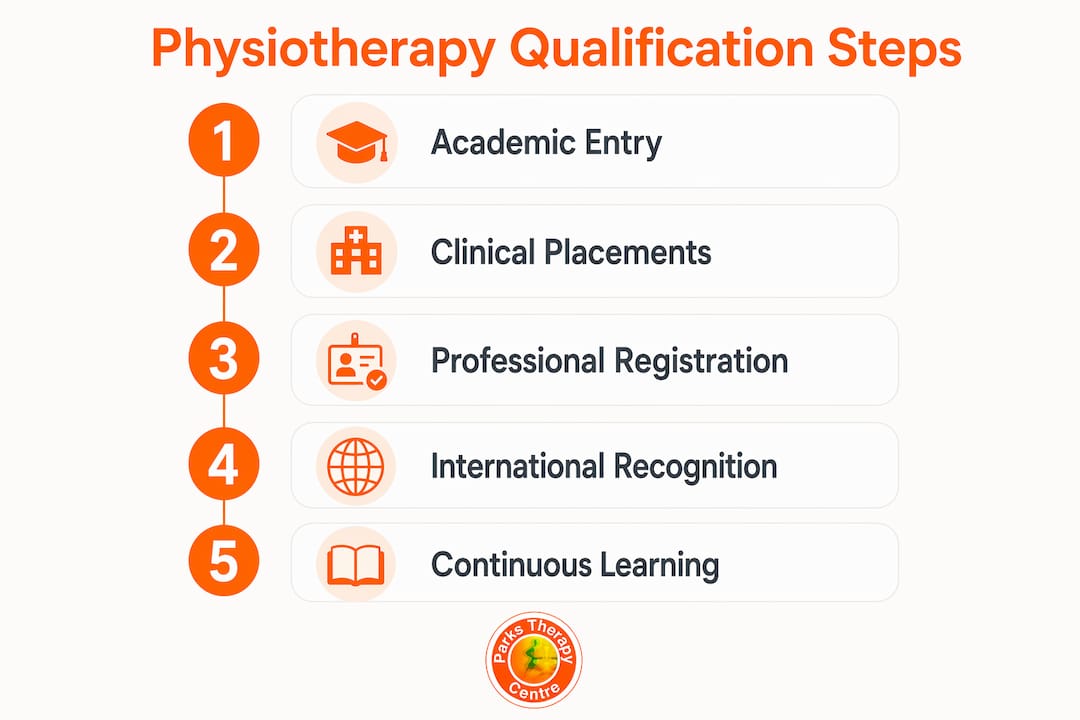
The education needed for physiotherapy in the UK begins well before university. Most undergraduate physiotherapy programmes require strong GCSE results plus A-level study in science subjects. UK entry requirements typically include five or more GCSEs at grade C or above, covering English, maths, and a science subject, along with two or three A-levels with UCAS points ranging from 96 to 136 depending on the institution. General Studies is rarely accepted.
Biology is almost universally required at A-level. Many universities also want Chemistry, Physics, or Psychology. The logic is straightforward: physiotherapy draws on anatomy, physiology, and neuroscience from the very first semester. Students who arrive without solid science foundations tend to struggle.
Outside the UK, physiotherapy degree requirements follow a similar pattern but vary in structure. In Australia, a four-year Bachelor of Physiotherapy is the standard route. In New Zealand, AUT’s Bachelor of Health Science (Physiotherapy) combines academic study with a substantial clinical component. In North America, entry-level qualifications have shifted towards master’s and doctoral level programmes, particularly in the United States where a Doctor of Physical Therapy is now the standard. Understanding these differences matters enormously if you are considering studying abroad or planning to work internationally after graduating.
A small number of related undergraduate degrees such as sport science or biomedical science can serve as a stepping stone to postgraduate physiotherapy conversion programmes. These routes are longer but can suit students who discover the profession later in their studies.
Pro Tip: Research your shortlisted universities early and check their specific A-level subject requirements rather than assuming all institutions accept the same combinations. Some universities will not accept Double Award Science at A-level, and others require work experience in a healthcare setting before they will consider your application.
Clinical placements: more than just hours
Understanding the physiotherapy qualification criteria means accepting that clinical practice is not an optional add-on. It is the mechanism through which academic knowledge becomes professional competence. Bachelor of Physiotherapy programmes typically build in over 1000 hours of professional clinical experience across the duration of the degree, spread across multiple settings and patient populations.
Here is what those placements normally cover:
Musculoskeletal physiotherapy. Work with patients recovering from fractures, back pain, joint replacements, and sports injuries. This is often where students spend the most time, and it reflects the largest area of physiotherapy practice. You can read more about how qualified physiotherapists apply this expertise in sports injury recovery.
Neurological physiotherapy. Treating patients with conditions such as stroke, Parkinson’s disease, multiple sclerosis, or spinal cord injuries. These placements demand both technical skill and emotional resilience.
Cardiorespiratory physiotherapy. Supporting patients with respiratory conditions, post-surgical recovery, or cardiac rehabilitation. This area proved particularly significant during and after the COVID-19 pandemic.
Paediatric or community settings. Some programmes include placements with children or in community rehabilitation, broadening clinical exposure beyond hospital environments.
The structure of these placements differs by country. In New Zealand, AUT’s programme concentrates significant clinical hours in dedicated clinical centres to prepare graduates for professional registration. In Australia, placements are distributed across all four years of the degree rather than front-loaded or back-loaded.
One point that catches students off-guard: fitness prerequisites such as police clearance and health checks are required before clinical placements begin, not after graduation. You cannot simply turn up on placement day without having satisfied your institution’s legal compliance requirements.
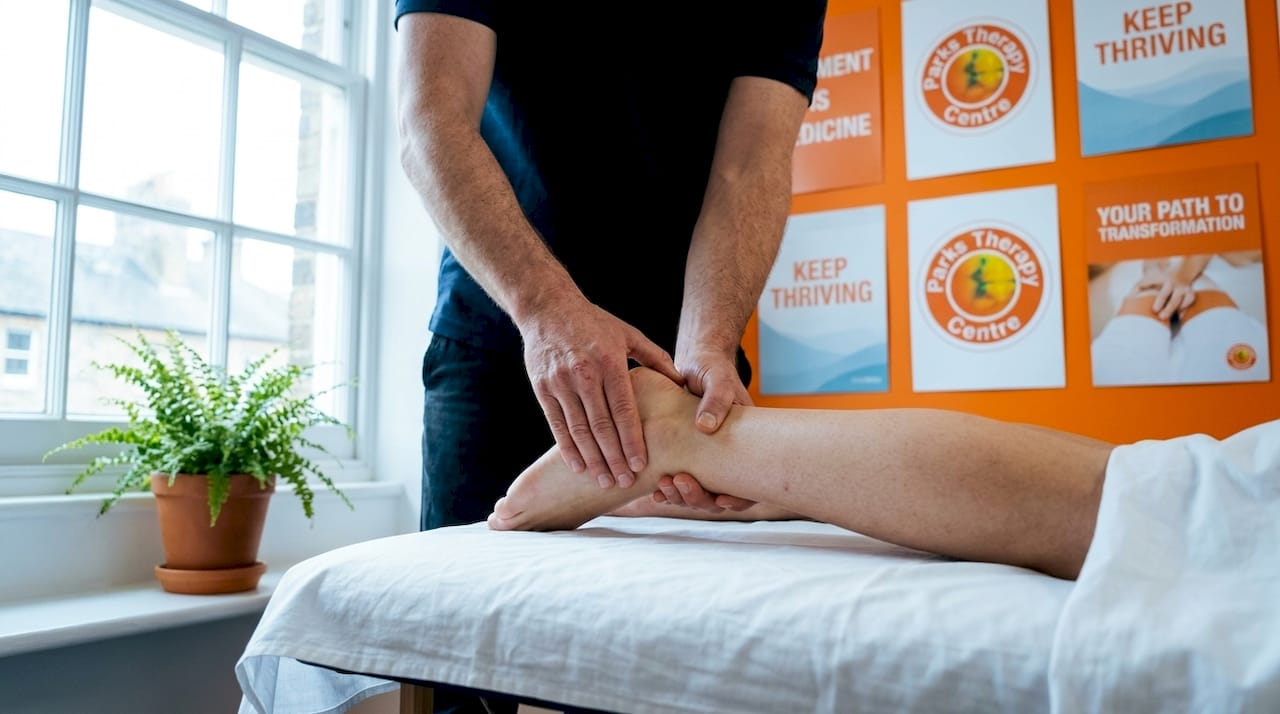
Pro Tip: Treat every placement as an interview. Supervisors across the profession speak to each other, and a student who shows genuine curiosity, asks good questions, and engages with patients confidently will build a professional reputation long before graduation. Do not treat placements as box-ticking exercises.
Professional registration and licensing
Academic success alone does not make you a physiotherapist. The PT certification process and licensing requirements are a distinct and legally significant part of becoming practise-ready. Each country operates through its own regulatory body, and physiotherapy qualifications are understood to include education, supervised clinical practice, and formal registration steps working together.
Here is how the major regulatory systems compare:
Country | Regulatory body | Key requirement |
United Kingdom | Health and Care Professions Council (HCPC) | Graduation from an approved programme; application for registration |
United States | State licensing boards | Graduation from accredited programme plus passing the NPTE exam |
Canada | CAPR member regulators | Comparability evaluation, Canadian healthcare course, Physiotherapy Evaluation Tool |
South Africa | HPCSA | Annual registration; practising without registration is a criminal offence |
Hong Kong | Physiotherapists Board | Only prescribed qualifications accepted for registration |
In the UK, registration with the HCPC is the standard post-graduation step. Practising as a physiotherapist without HCPC registration is unlawful, and the register is publicly searchable. Patients can and do check it.
In the United States, the NPTE is a computer-based examination held at approximately 300 test centres across the country. It covers sections on evaluation, interventions, safety, and professional ethics. Some states additionally require a jurisprudence exam covering state-specific laws. Missing these state-level requirements is a common cause of delayed practice eligibility. As one resource notes, timing and preparation for these licensing exams can make or break your ability to start working.
In South Africa, registration with the Health Professions Council of South Africa runs on an annual cycle from 1 April to 31 March. Failure to renew is not an administrative oversight. It is a breach of professional and legal obligations.
Beyond passing exams and submitting forms, most regulators require:
Evidence of criminal background clearance
Proof of language proficiency where the instruction language differs from the country of practice
Confirmation of physical and mental fitness to practise
Payment of registration fees and, in some jurisdictions, ongoing continuing professional development (CPD) records
International qualification recognition
If you trained in one country and want to practise in another, be prepared for a structured assessment process that does not simply take your degree at face value.
Canada provides one of the clearest illustrations. The CAPR comparability evaluation pathway requires internationally educated physiotherapists to demonstrate that their academic training and clinical hours are equivalent to Canadian entry-to-practice standards. Meeting that bar is not automatic. Candidates must also complete a course on the Canadian healthcare system and achieve the required score on the Physiotherapy Evaluation Tool before being eligible for provincial registration.
The table below outlines common additional requirements faced by internationally educated applicants across different destinations:
Destination country | Common additional requirements for international graduates |
Canada | Comparability evaluation, healthcare system course, language test, Physiotherapy Evaluation Tool |
United States | Credential evaluation, state board application, NPTE, possible jurisprudence exam |
United Kingdom | HCPC qualification assessment, English language test (IELTS for non-native speakers) |
Hong Kong | Qualification must appear on prescribed register; quotable qualifications do not automatically qualify for registration |
Hong Kong’s system is particularly instructive. The Physiotherapists Board distinguishes between qualifications that are quotable and those that are registrable. A degree may appear on the quotable list without being accepted for registration. This catches many internationally trained physiotherapists by surprise.
The practical lesson is straightforward: if you are planning to work internationally, research your destination country’s regulatory requirements before you graduate, not after. Some remediation or bridging courses may add months to your timeline, and knowing about them early means you can plan accordingly.
Practical considerations for prospective students
If you are weighing up whether and how to pursue a physiotherapy career, the decisions you make before applying to university have consequences that follow you through qualification and beyond. Here is what to focus on:
Choose your programme carefully. Not all physiotherapy degrees carry equal weight with regulators. In the UK, only programmes approved by the HCPC lead to registration eligibility. Check approval status before applying. You can also use guidance on how to select a physiotherapy clinic to understand what patients look for in qualified practitioners, which gives you a useful perspective on professional standards.
Arrange healthcare work experience early. Most UK universities expect evidence of exposure to healthcare settings. Volunteering in a hospital, care home, or physiotherapy clinic strengthens your application and your awareness of what the role actually involves.
Understand the full timeline. A UK undergraduate physiotherapy degree takes three to four years. After that, HCPC registration takes additional weeks. If you plan to work abroad, factor in the recognition and assessment processes described above.
Do not underestimate the physical demands. Physiotherapy involves sustained periods of hands-on work, patient handling, and clinic-based activity. Your own physical health and fitness are part of professional readiness.
Start CPD habits early. Regulators across all jurisdictions expect ongoing professional development after registration. Getting into the habit of reflective learning during your degree makes that requirement feel less like a burden post-qualification.
My perspective on qualifying as a physiotherapist
I have spoken to enough recently qualified physiotherapists, and worked alongside enough experienced ones, to know that the biggest regrets tend not to be about A-level choices or university rankings. They are about timing and preparation for the steps nobody told them about clearly.
In my experience, students who struggle most after graduation are the ones who treated registration as something to deal with once they finished studying. The regulatory steps in every country require documentation, exam preparation, and in many cases third-party verifications that take time to arrange. Starting that process six months before you graduate is not overcautious. It is sensible.
I would also push back on the instinct to collect clinical hours passively. The skills required for physiotherapy are built through deliberate practice, not attendance. Students who ask for feedback, seek out challenging cases, and reflect honestly on what they are getting wrong develop competence faster than those who simply show up.
Finally, if international practice is on your radar, treat it as a distinct planning exercise that runs in parallel with your degree. The process of qualifying internationally is complex, takes longer than most people expect, and rewards those who start researching early.
— Ivan
Ready to see what qualified physiotherapy looks like in practice?
At Parkstherapycentre, we have been delivering professional physiotherapy care since 1986 across multiple locations in Bedfordshire and Buckinghamshire. Our team holds the registrations, clinical experience, and ongoing development that every qualified physiotherapist needs to practise to the highest standard.
Whether you are considering physiotherapy as a career and want to understand what professional practice looks like from the inside, or you are a patient looking for care delivered by properly qualified practitioners, we are here to help. Explore our full range of services, meet our qualified team, and book your appointment directly through our online portal. We accept insurance cover and offer appointments across multiple sites for your convenience.
FAQ
What academic qualifications do you need for physiotherapy?
In the UK, you typically need five GCSEs including English, maths, and science, plus two or three A-levels in science subjects with UCAS points between 96 and 136 depending on the university. Biology at A-level is almost always required.
How many clinical hours are required to qualify as a physiotherapist?
Most physiotherapy degree programmes require at least 1000 hours of supervised clinical placement, covering areas such as musculoskeletal, neurological, and cardiorespiratory physiotherapy, distributed across the duration of the degree.
Do you need to register with a regulatory body after graduating?
Yes. In the UK, registration with the HCPC is a legal requirement before you can practise. In South Africa, registration with the HPCSA is mandatory and must be renewed annually. Practising without valid registration constitutes a criminal offence in both countries.
Can I use a physiotherapy qualification from one country to work in another?
Not automatically. Each country has its own recognition process. Canada, for example, requires internationally educated physiotherapists to complete a comparability evaluation, a healthcare system course, and pass the Physiotherapy Evaluation Tool before provincial registration is possible.
Is a certificate in a physiotherapy-related subject enough to register as a physiotherapist?
No. Certificate programmes do not equate to registrable qualifications. Regulators require an approved entry-to-practice degree and, in most cases, evidence of sufficient supervised clinical practice before registration eligibility is considered.
Recommended