
The role of podiatry in injury prevention
TL;DR:
Podiatry focuses on early diagnosis and intervention to prevent foot, ankle, and lower limb injuries. It uses biomechanical assessments and custom orthoses to reduce stress and address structural vulnerabilities before problems develop. Proper adherence to prescribed treatments is essential for effective prevention in both sports and chronic conditions.
Podiatry is defined as the clinical assessment and treatment of foot, ankle, and lower limb conditions, with injury prevention forming its core function rather than an afterthought. The American Academy of Podiatric Sports Medicine places prevention at the centre of its professional mission, recognising that biomechanical imbalances in the foot create injury risk throughout the entire kinetic chain. Whether you are a competitive runner, a weekend footballer, or managing a chronic condition such as diabetes, the role of podiatry in injury prevention is to identify structural and functional vulnerabilities before they become serious problems. Podiatric tools including biomechanical assessments, custom orthoses, and load management strategies address conditions from plantar fasciitis and Achilles tendinopathy to diabetic foot ulceration.
How podiatrists assess and identify injury risk
Sports podiatrists treat injury prevention as a load-path problem. They analyse how stress travels through the foot, ankle, knee, and hip, then intervene with targeted plans before tissue damage occurs. This kinetic chain evaluation is what separates podiatric care from simply buying a better pair of trainers.
The biomechanical assessment process
A podiatric assessment typically covers several interconnected areas:
Gait analysis: Observing how you walk or run, identifying compensatory movement patterns caused by overpronation, supination, or leg length discrepancy.
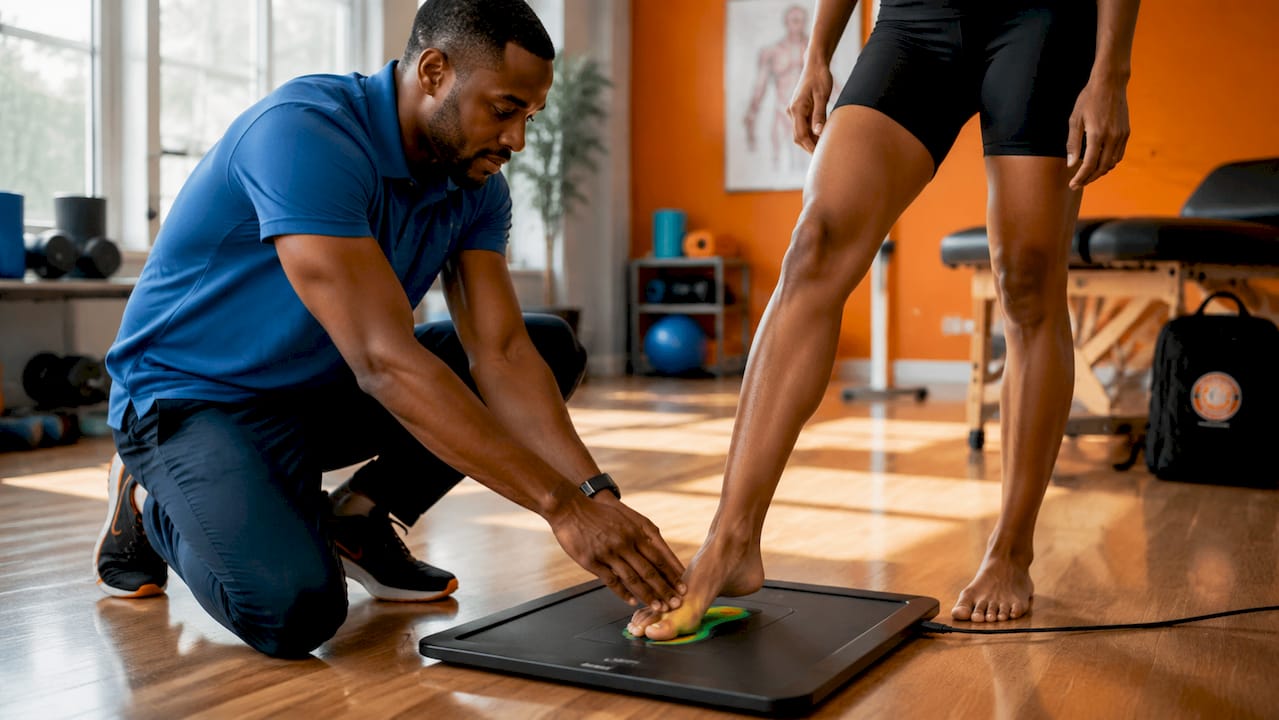
Pressure distribution mapping: Pressure plates record where force concentrates under the foot during movement, revealing high-risk zones before pain develops.
Foot posture evaluation: Static and dynamic posture tests identify structural issues such as pes planus (flat feet) or pes cavus (high arches) that alter load distribution.
Range of motion testing: Restricted ankle dorsiflexion, for example, is a documented risk factor for Achilles tendinopathy and plantar fasciitis.
Muscle strength screening: Weakness in the posterior tibial tendon or intrinsic foot muscles increases collapse risk under load.
Early detection matters most in athletes and young people. Overuse injuries such as Sever’s disease (calcaneal apophysitis) in youth athletes are directly linked to biomechanical factors including tight calves and flat feet. Podiatrists address these factors with activity modification and offloading before growth plate damage becomes irreversible.
Pro Tip: If you experience recurring shin splints, knee pain, or heel pain during training, request a full biomechanical assessment rather than treating symptoms in isolation. The source of the problem is almost always proximal to where it hurts.
What podiatric interventions prevent sports injuries?
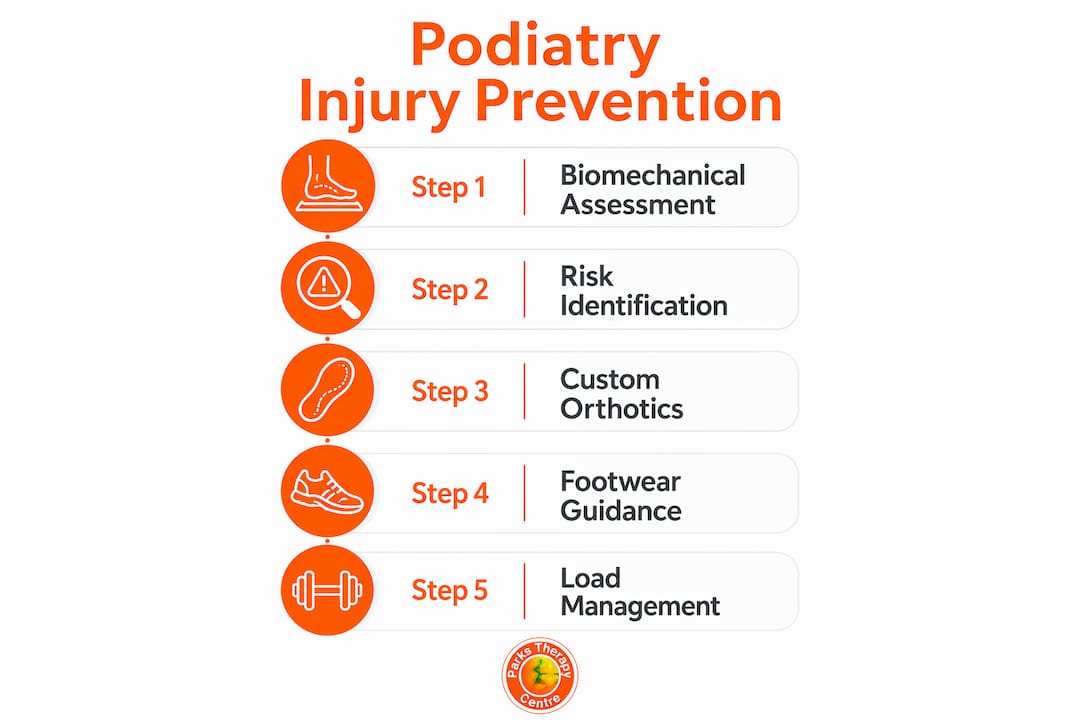
Podiatry interventions are multidimensional. Prevention is most effective when footwear and orthoses are combined with load management and mobility strategies, rather than relying on any single approach. For athletes and active individuals, a structured prevention plan typically follows these steps:
Biomechanical assessment and baseline mapping. The podiatrist establishes your current movement patterns, pressure distribution, and structural risk factors before prescribing anything.
Custom or semi-custom orthotic prescription. Orthoses are designed to redistribute plantar pressure, correct alignment, and reduce cumulative loading on vulnerable structures. Specific features such as medial forefoot posting and metatarsal pads target distinct pressure regions, which means generic insoles rarely achieve the same outcome.
Sport-specific footwear guidance. Shoe type, heel drop, and midsole density all influence injury risk. A podiatrist matches footwear to your foot type and the demands of your sport, not just your shoe size.
Load management planning. Training volume and intensity are adjusted to stay within tissue tolerance. For youth athletes, guidelines recommend limiting single-sport participation to less than eight months per year to reduce overuse injury rates.
Flexibility and strengthening protocols. Calf stretching, posterior-chain mobility work, and intrinsic foot strengthening reduce the mechanical stress that accumulates during repetitive sport. Synchronising these with orthotic use optimises outcomes, particularly in youth heel pain.
Understanding biomechanics for sports injury prevention helps athletes appreciate why each component of this plan works together rather than independently.
Pro Tip: Calf stretching is not optional if you run or play field sports. Restricted ankle dorsiflexion forces compensatory pronation, which loads the plantar fascia and medial knee. Three sets of 30-second calf stretches daily costs nothing and prevents a great deal.
How does podiatry prevent chronic foot complications?
The podiatrist role in rehabilitation and prevention of chronic conditions, particularly diabetic foot disease, is one of the most evidence-rich areas in the profession. Early podiatry referral for diabetic patients is directly associated with reduced major amputation rates and improved survival. This is not a marginal benefit. It represents a fundamental shift in health trajectory.
Routine podiatric foot examinations for people with diabetes include risk stratification, neuropathy screening, vascular assessment, and callus management. Callus removal is a clinical intervention, not cosmetic care. Callus concentrates plantar pressure by up to 30%, and leaving it untreated accelerates ulcer formation under the metatarsal heads.
A 2026 systematic review confirmed that foot orthoses reduce peak plantar pressure and cumulative forefoot loading across 12 studies, with the greatest effects seen in rheumatoid arthritis patients. This pressure reduction is the mechanical mechanism by which orthoses prevent ulceration. The evidence also shows that pressure-guided custom footwear produces a 46% reduction in diabetic foot ulcer recurrence when patient adherence exceeds 80%. That figure underscores a critical point: the device alone does not prevent injury. Consistent use does.
Intervention | Mechanism | Evidence outcome |
Routine foot examination | Risk stratification and early detection | Reduced amputation rates and mortality |
Callus management | Removes pressure concentration sites | Lowers ulcer formation risk |
Custom orthoses | Redistributes plantar pressure | Reduces forefoot loading across multiple conditions |
Pressure-guided footwear | Offloads high-risk plantar zones | 46% reduction in ulcer recurrence with high adherence |
Patient education | Promotes consistent footwear use | Maximises long-term preventive benefit |
The cost-effectiveness argument for podiatric care in chronic conditions is compelling. Preventing a single diabetic foot ulcer avoids hospitalisation, surgical debridement, and potential amputation costs that far exceed years of routine podiatric appointments.
Podiatry in sports versus chronic conditions: what differs?
Preventing injuries with podiatry follows the same core logic across both sports and chronic conditions: identify biomechanical imbalance, reduce harmful pressure, and support tissue resilience. The differences lie in timescale, intervention intensity, and the consequences of non-adherence.
In sports injury prevention, the focus is on acute load management. An athlete’s tissue tolerance changes week to week depending on training volume, fatigue, and recovery. Podiatric advice for athletes therefore includes dynamic adjustments to footwear and orthoses as training phases change, not a single prescription that lasts indefinitely.
In chronic foot care, the focus shifts to long-term pressure offloading and ulcer surveillance. The stakes are higher in one respect: a missed ulcer in a diabetic patient can progress to limb-threatening infection within days. Podiatry in physical therapy settings bridges both worlds, with podiatrists and physiotherapists collaborating on rehabilitation plans that address both biomechanical correction and functional recovery.
Shared approaches across both populations include:
Gait correction through orthotic design and footwear modification.
Patient education on recognising early warning signs such as skin changes, localised pain, or swelling.
Adherence support, which remains the single greatest challenge in both groups. Prescribed footwear is frequently abandoned within weeks without structured follow-up.
For practical guidance on one of the most common sports injuries influenced by foot mechanics, the Achilles injury prevention tips resource at Parkstherapycentre covers the overlap between podiatric and physiotherapy approaches in detail.
What are best practices in preventive podiatry?
The most effective approach to preventive podiatry combines early referral, regular reassessment, and a genuinely integrated clinical plan. Waiting until pain is severe before seeing a podiatrist is the equivalent of waiting for a tyre blowout before checking tyre pressure. The damage is already done.
Early referral is particularly important for three groups: youth athletes showing signs of overuse, adults with newly diagnosed diabetes or peripheral neuropathy, and recreational athletes increasing training load rapidly. In all three cases, a podiatric assessment before symptoms become established produces better outcomes than reactive treatment.
Emerging orthotic designs are targeting specific plantar pressure zones with greater precision than previous generations. Research into orthoses as neurosensory tools, rather than purely mechanical supports, suggests that proprioceptive feedback from well-designed insoles may reduce fall risk and improve balance in older adults. Pressure mapping technology is advancing to the point where real-time in-shoe data can guide orthotic modifications between clinic visits.
Pro Tip: Ask your podiatrist to review your orthoses every 12 months even if they feel comfortable. Orthotic materials compress and lose their corrective properties over time, often before you notice any change in how they feel.
The importance of injury prevention in 2026 has grown as athlete training loads increase and chronic disease prevalence rises. Podiatry sits at the intersection of both trends, making regular foot care for injury prevention a sound investment for almost any active person.
Key takeaways
Podiatry prevents injury by identifying biomechanical imbalances early and applying targeted orthotic, footwear, and load management strategies before tissue damage occurs.
Point | Details |
Biomechanical assessment is foundational | Gait analysis and pressure mapping identify risk factors before symptoms develop. |
Orthoses work through pressure redistribution | Specific design features target distinct plantar zones; generic insoles rarely replicate this. |
Adherence determines outcome | Custom footwear reduces diabetic ulcer recurrence by 46% only when worn consistently above 80% of the time. |
Youth athletes need early intervention | Overuse injuries like Sever’s disease are preventable with load management and biomechanical offloading. |
Podiatry integrates with wider care | Combined podiatric and physiotherapy approaches produce better outcomes than either discipline alone. |
Why podiatry deserves more credit than it gets
I have worked alongside podiatrists for years at Parkstherapycentre, and the consistent pattern I observe is this: patients arrive having already tried physiotherapy, sports massage, and new trainers, and they improve significantly once a proper biomechanical assessment is finally done. The foot was the problem all along.
The profession is frequently reduced to nail care and insoles in the public imagination. That misrepresentation costs people months of unnecessary pain. A podiatrist assessing a runner with chronic knee pain is not treating the knee. They are treating the ground contact pattern that loads the knee incorrectly on every single stride. That is a fundamentally different and often more effective approach.
What I find most underappreciated is the adherence challenge. Prescribing an orthosis is straightforward. Getting a patient to wear it consistently, modify their training, and return for reassessment is the actual clinical work. The 46% reduction in diabetic ulcer recurrence cited in the research is not achieved by the device. It is achieved by the relationship between clinician and patient that makes consistent use possible.
Technology will improve orthotic precision and pressure mapping. But the human element, explaining why the intervention matters and building the patient’s confidence in it, will always determine whether the evidence translates into real-world outcomes. Podiatry done well is not just biomechanics. It is behaviour change applied to foot health.
— Ivan
Take the next step with Parkstherapycentre podiatry
Parkstherapycentre has delivered specialist podiatric care across Bedfordshire and Buckinghamshire since 1986, combining biomechanical assessments, custom orthotic prescription, and sport-specific footwear guidance within a multidisciplinary team. Whether you are an athlete managing training load, a runner dealing with recurring heel pain, or someone with diabetes seeking proactive foot care for injury prevention, the podiatry team works alongside physiotherapists and sports injury specialists to build a plan that addresses the full picture. Early consultation prevents the kind of compounding injury that sidelines people for months. Book your assessment at Parkstherapycentre and get a clear picture of what your feet are telling you.
FAQ
What does a podiatrist do for injury prevention?
A podiatrist conducts biomechanical assessments including gait analysis and pressure mapping to identify structural risk factors, then prescribes orthoses, footwear modifications, and load management strategies to reduce injury risk before symptoms develop.
How can podiatry prevent sports injuries?
Sports podiatry combines orthotic prescription, sport-specific footwear guidance, and training load adjustments to keep cumulative stress within tissue tolerance, targeting conditions such as plantar fasciitis, Achilles tendinopathy, and stress fractures.
Can podiatry help with diabetic foot complications?
Routine podiatric examinations, callus management, and pressure-guided custom footwear reduce diabetic foot ulcer recurrence by 46% when adherence is high, and early podiatric referral is directly associated with reduced amputation rates.
When should I see a podiatrist for foot pain?
See a podiatrist at the first sign of recurring heel pain, shin splints, or any foot discomfort that persists beyond two weeks of rest. Early assessment prevents minor biomechanical issues from progressing into overuse injuries requiring prolonged rehabilitation.
Do foot orthoses actually prevent injuries?
A 2026 systematic review confirmed that foot orthoses reduce peak plantar pressure across 12 studies, with specific design features such as metatarsal pads targeting distinct pressure zones more effectively than generic insoles.
Recommended