
Understanding the role of ergonomics in injury prevention

Work-related musculoskeletal disorders affect over 80% of office workers, yet many individuals remain unaware of how profoundly ergonomics influences their daily comfort and long-term health. This guide reveals how evidence-based ergonomic interventions reduce pain, prevent injuries, and transform workplace wellbeing. You’ll discover which strategies genuinely work, which fall short, and how to implement practical changes that protect your body during work and everyday activities. Whether you’re experiencing discomfort or seeking prevention, understanding ergonomic principles empowers you to take control of your musculoskeletal health.
Table of Contents
Key takeaways
Point | Details |
Ergonomic risks drive musculoskeletal disorders | Poor workstation design, awkward postures, and repetitive tasks contribute significantly to workplace injuries affecting the neck, back, and shoulders. |
Multi-component interventions deliver results | Combining training, workstation adjustments, and exercises reduces pain more effectively than single-strategy approaches. |
Active training outperforms passive methods | Participatory ergonomic training creates better outcomes than simply distributing information leaflets or posters. |
Workplace improvements boost productivity | Ergonomic redesign can increase productivity by 31% whilst reducing injury-related costs substantially. |
Stretching alone shows limited evidence | Standalone stretching programmes lack robust support as preventative measures and work best when combined with comprehensive ergonomic strategies. |
Understanding musculoskeletal disorders and ergonomic risks
Musculoskeletal disorders encompass injuries and conditions affecting muscles, tendons, ligaments, nerves, and joints throughout your body. Symptoms range from mild discomfort and stiffness to severe pain that limits movement and disrupts daily activities. These disorders develop gradually through cumulative strain or suddenly from acute injury, but workplace environments create particularly fertile ground for their development.
The prevalence amongst office workers reveals a concerning pattern. Work-related musculoskeletal disorders affect over four-fifths of office workers, with the neck, lower back, and shoulders bearing the brunt of ergonomic failures. Your wrists, elbows, and upper back also face substantial risk, particularly when desk setups force your body into unnatural positions for extended periods. Similar injury patterns emerge across various professions, highlighting how ergonomic principles apply beyond traditional office settings to anyone performing repetitive tasks or maintaining static postures.
Physical risk factors create the foundation for most musculoskeletal problems. Awkward postures, such as hunching over a keyboard or craning your neck towards a poorly positioned monitor, place excessive stress on specific body structures. Repetitive movements without adequate variation fatigue muscles and strain connective tissues. Poor workstation setup compounds these issues: chairs at incorrect heights, desks that force uncomfortable arm positions, and screens placed too high or low all contribute to cumulative damage. Even seemingly minor misalignments accumulate over months and years, eventually manifesting as chronic pain.

Psychological and organisational factors amplify physical risks in ways many people overlook. Job stress and psychological demands are significantly associated with musculoskeletal pain, creating a bidirectional relationship where stress increases muscle tension whilst pain elevates stress levels. High workload demands, lack of control over work pace, and insufficient recovery time prevent your body from healing micro-injuries that occur during normal activities. This connection between mental wellbeing and physical health underscores why comprehensive sports injury prevention strategies address both domains.
The economic burden extends far beyond individual suffering. WMSDs represent about 40% of occupational compensation costs and roughly 1% of gross national product in industrialised nations, translating to billions in lost productivity, medical expenses, and disability payments annually. For you personally, these disorders mean reduced earning capacity, increased healthcare costs, and diminished quality of life. Understanding ergonomics for injury prevention transforms these statistics from abstract numbers into actionable knowledge that protects your wellbeing and financial security.
Pro Tip: Document your current workstation setup with photographs from multiple angles, then compare these images against ergonomic guidelines to identify specific areas requiring adjustment before symptoms develop.
Ergonomic interventions that reduce injury risks and symptoms
Evidence-based interventions demonstrate clear pathways to reducing musculoskeletal symptoms and preventing injury progression. Multi-component and participatory ergonomic interventions reduce pain and discomfort in the short to medium term, offering relief that single-strategy approaches cannot match. These comprehensive programmes combine workstation modifications, targeted exercises, and educational training to address ergonomic challenges from multiple angles simultaneously.
The multi-component approach delivers superior results because it acknowledges that musculoskeletal health depends on interconnected factors. Physical workspace adjustments correct immediate postural problems, whilst exercise programmes strengthen supporting muscles and improve flexibility. Educational components ensure you understand why specific modifications matter and how to maintain proper techniques during daily activities. This synergy creates lasting behavioural changes rather than temporary symptom relief, addressing root causes instead of merely managing consequences.
Training methodology significantly influences intervention effectiveness. Active ergonomic training proves more effective than passive education methods like leaflets, posters, or generic presentations. Active approaches engage you directly through hands-on practice, personalised feedback, and problem-solving exercises that build genuine competence. You learn to assess your own workspace, identify risk factors, and implement corrections independently rather than passively receiving information you might forget or misapply.
Participatory training transforms workers from passive recipients into active collaborators in their ergonomic health. This involvement increases compliance because you understand the reasoning behind recommendations and feel ownership over implemented changes. Contrast this with top-down directives that often face resistance or half-hearted adoption. The ergonomic training benefits extend beyond immediate symptom reduction to creating sustainable workplace cultures that prioritise musculoskeletal health.
Intervention Type | Effectiveness Level | Implementation Complexity | Sustainability |
Multi-component programmes | High | Moderate to high | Excellent with ongoing support |
Active participatory training | High | Moderate | Very good |
Passive education materials | Low to moderate | Low | Poor |
Workstation adjustments alone | Moderate | Low to moderate | Good if maintained |
Stretching programmes alone | Limited evidence | Low | Variable |
Sit-stand desks represent one popular ergonomic intervention with nuanced evidence. Whilst these adjustable workstations offer moderate benefits for reducing musculoskeletal symptoms, they function best as part of broader ergonomic strategies rather than standalone solutions. Alternating between sitting and standing throughout your day reduces sustained postural strain, but proper desk height, monitor positioning, and movement breaks remain equally critical. The key lies in variation and movement rather than simply replacing one static position with another.
Stretching programmes warrant particular scrutiny given their widespread promotion. Evidence for standalone stretching as injury prevention is weak, with research showing minimal impact when implemented without complementary ergonomic measures. This doesn’t mean stretching lacks value entirely, but rather that it cannot compensate for poor workstation design, inadequate training, or harmful work practices. Stretching works best when integrated into comprehensive programmes that address multiple risk factors simultaneously, similar to approaches used in effective injury management.
Pro Tip: Schedule brief movement breaks every 30 minutes using a timer or software reminder, incorporating simple stretches alongside posture changes and short walks to maximise ergonomic benefits throughout your workday.
Optimising your workspace and habits for long-term injury prevention
Transforming ergonomic knowledge into daily practice requires systematic attention to workspace design and behavioural habits. Your workstation setup forms the foundation for injury prevention, with specific adjustments yielding measurable improvements in comfort and productivity. Chair height should position your feet flat on the floor with thighs parallel to the ground, creating 90-degree angles at your hips and knees. Desk height must allow your forearms to rest comfortably whilst maintaining relaxed shoulders, typically positioning your elbows at approximately 90 degrees when typing.
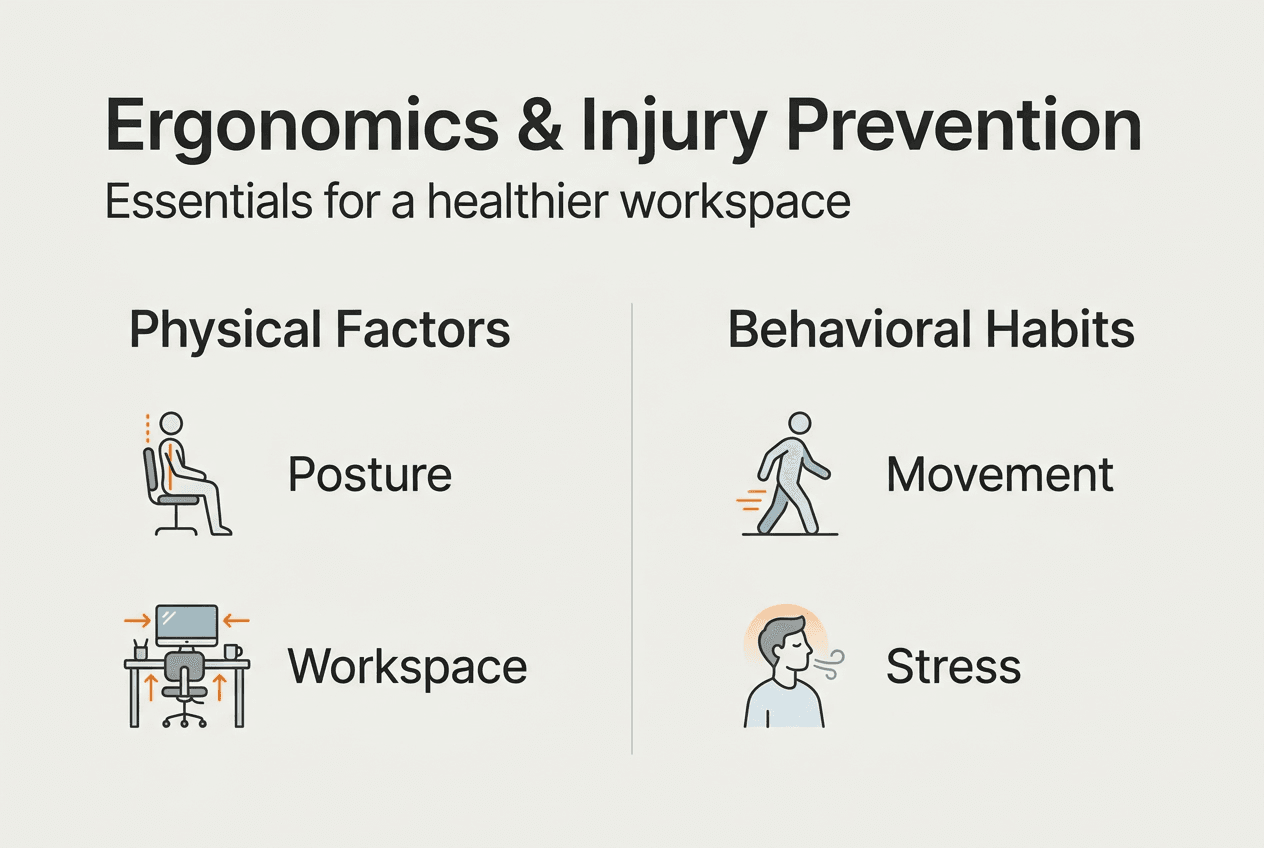
Monitor positioning dramatically influences neck and shoulder strain. Position your screen at arm’s length distance with the top of the display at or slightly below eye level, preventing the forward head posture that creates excessive cervical spine loading. Laptop users face particular challenges since the integrated keyboard and screen prevent optimal positioning for both simultaneously. Consider using an external keyboard and mouse with a laptop stand to achieve proper screen height without compromising arm and wrist positions.
Posture correction extends beyond simply sitting up straight, requiring awareness of subtle positioning throughout your entire kinetic chain. Your lower back benefits from lumbar support that maintains the spine’s natural curve rather than allowing it to round into harmful flexion. Wrists should remain in neutral alignment during typing, avoiding excessive extension or flexion that compresses median nerve pathways. Supportive equipment like footrests, document holders, and ergonomic keyboards address specific anatomical needs that standard furniture overlooks.
Ergonomic Element | Optimal Setting | Common Error | Impact on Body |
Chair height | Feet flat, thighs parallel to floor | Too high or low | Hip and knee strain, circulation issues |
Monitor distance | Arm’s length away | Too close | Eye strain, forward head posture |
Screen height | Top at/below eye level | Too high or low | Neck and shoulder tension |
Keyboard position | Elbows at 90 degrees, relaxed shoulders | Reaching or hunching | Wrist, elbow, shoulder problems |
Lumbar support | Maintains natural spine curve | Absent or excessive | Lower back pain, disc pressure |
Workload management and stress reduction complement physical workspace optimisation by addressing the psychological dimensions of musculoskeletal health. Coordinated workload measurement, task simplification, and ergonomic rules improve health without harming productivity, demonstrating that wellbeing and performance enhance each other rather than competing. Breaking large projects into manageable segments, varying task types throughout your day, and incorporating adequate rest periods prevent the cumulative fatigue that increases injury risk.
Stress management techniques directly reduce muscle tension and improve recovery capacity. Mindfulness practices, breathing exercises, and brief relaxation breaks throughout your workday lower physiological stress responses that manifest as tight shoulders, clenched jaws, and shallow breathing patterns. These seemingly minor tensions accumulate into significant musculoskeletal strain over time, making stress reduction a legitimate ergonomic intervention rather than merely a wellness bonus.
Multimodal rehabilitation approaches offer the most comprehensive framework for addressing existing symptoms whilst preventing recurrence. These strategies combine manual therapy techniques, targeted exercise programmes, patient education, and ergonomic modifications into integrated treatment plans. Posture retraining and ergonomic modifications sustain improvements in sedentary workers with chronic low back pain, highlighting how behaviour change and environmental design work synergistically. This integration mirrors the comprehensive approach offered through various physiotherapy techniques that address musculoskeletal issues from multiple therapeutic angles.
The productivity benefits of ergonomic optimisation extend beyond injury prevention into measurable performance gains. Ergonomic redesign in workplaces can increase productivity by 31% and reduce handling costs by 14%, demonstrating clear return on investment for both employers and individuals. When you work comfortably without pain or fatigue, you maintain focus longer, make fewer errors, and sustain higher quality output throughout your day. This performance enhancement creates a compelling business case for ergonomic improvements that complements the health and safety rationale.
Implementing ergonomic changes systematically ensures sustainable adoption:
Conduct a thorough ergonomic assessment of your current workspace, documenting specific measurements and identifying risk factors using standardised checklists or professional evaluation.
Prioritise modifications based on severity of current symptoms, frequency of problematic postures, and feasibility of implementation within your constraints.
Make incremental adjustments rather than attempting comprehensive overhaul simultaneously, allowing your body to adapt gradually whilst evaluating each change’s effectiveness.
Schedule regular reassessments every three to six months, recognising that ergonomic needs evolve with changing tasks, equipment, and physical conditions.
Integrate movement and variation into your routine through scheduled breaks, task rotation, and deliberate posture changes that prevent sustained static loading.
Specialised therapeutic approaches like Pilates therapy complement workplace ergonomics by developing the core strength, flexibility, and body awareness that support optimal postures during daily activities. These mind-body practices teach you to recognise subtle postural deviations before they escalate into painful symptoms, creating an internal feedback system that supplements external ergonomic modifications.
Pro Tip: Create a personalised ergonomic checklist based on your specific workspace and review it weekly during the first month after implementing changes, then monthly thereafter to maintain awareness and prevent gradual drift back to harmful habits.
How Parks Therapy Centre can help you prevent and manage injuries
Transforming ergonomic principles into personalised injury prevention requires expert guidance tailored to your unique biomechanical patterns and risk factors. Parks Therapy Centre offers comprehensive biomechanical assessments that identify subtle movement dysfunctions and postural imbalances contributing to musculoskeletal symptoms. These detailed evaluations reveal how your body compensates for ergonomic stressors, enabling targeted interventions that address root causes rather than superficial symptoms.
When persistent pain suggests underlying structural issues, our diagnostic imaging referrals provide thorough evaluation to guide treatment decisions. This access to advanced diagnostics ensures nothing gets overlooked whilst you pursue ergonomic improvements and therapeutic interventions. Our multidisciplinary team integrates physiotherapy, manual therapy, and exercise prescription into cohesive treatment plans that complement your workplace ergonomic modifications. Convenient online appointment booking makes accessing expert care straightforward, removing barriers between recognising problems and receiving professional support. With over three decades of experience and award-winning service, we deliver evidence-based care that transforms ergonomic knowledge into lasting musculoskeletal health.
Frequently asked questions about ergonomics and injury prevention
How quickly can ergonomic interventions reduce pain?
Multi-component ergonomic interventions typically reduce pain and discomfort within four to twelve weeks, though individual responses vary based on symptom severity and compliance with recommendations. Short-term improvements often appear within days as acute postural strain diminishes, whilst addressing chronic conditions requires sustained effort over several months. Combining workspace modifications with active training and therapeutic exercises accelerates recovery compared to passive approaches.
Is stretching alone effective for injury prevention?
Stretching programmes implemented without complementary ergonomic measures show limited effectiveness for preventing musculoskeletal injuries in workplace settings. Research indicates stretching works best when integrated into comprehensive programmes addressing workstation design, posture training, and movement variation. Whilst flexibility remains valuable for overall musculoskeletal health, it cannot compensate for fundamental ergonomic failures or harmful work practices that create injury risk.
What are simple ergonomic adjustments for home working?
Home workers should prioritise monitor height at eye level, chair adjustment for proper hip and knee angles, and keyboard positioning that maintains neutral wrist alignment. Use books or boxes to elevate laptops when external keyboards aren’t available, ensuring screen height takes precedence over keyboard position. Establish a dedicated workspace separate from leisure areas, schedule regular movement breaks, and maintain consistent work hours to prevent the boundary erosion that increases musculoskeletal strain. Additional guidance appears in our sports injury prevention resources.
How does stress influence musculoskeletal disorders?
Psychological stress increases muscle tension, elevates inflammatory markers, and impairs recovery processes that repair daily micro-injuries to musculoskeletal tissues. Chronic stress creates sustained muscle guarding patterns, particularly affecting the neck, shoulders, and jaw, which compound physical ergonomic stressors. This bidirectional relationship means pain increases stress whilst stress amplifies pain perception, creating cycles that comprehensive ergonomic interventions must address through both physical and psychological strategies.
Can ergonomic changes improve productivity along with health?
Workplace ergonomic improvements demonstrate measurable productivity gains, with research documenting increases up to 31% alongside reduced injury costs and improved worker satisfaction. When you work without pain or discomfort, you maintain concentration longer, make fewer errors, and sustain higher quality output throughout your workday. These performance benefits create compelling business justification for ergonomic investments that complement the moral and legal imperatives of protecting worker health and safety.
Recommended