
What causes ankle injuries: your guide to pain and prevention
- 11 hours ago
- 9 min read

TL;DR:
Ankle injuries mainly result from lateral sprains caused by inward foot rolls, affecting the ATFL. Recognizing specific pain locations and risk factors allows targeted treatment to prevent chronic instability. Early rehabilitation and proprioception training are essential for effective recovery and injury prevention.
Ankle injuries are defined as damage to the ligaments, tendons, or joint structures of the ankle, most commonly caused by inversion trauma that overstretches the anterior talofibular ligament (ATFL). Understanding what causes ankle injuries is the first step toward effective treatment and lasting recovery. The lateral ankle sprain is the most frequent type, accounting for the majority of ankle presentations in both sport and daily life. Beyond sprains, tendon problems, joint degeneration, and systemic conditions all contribute to ankle pain. Recognising the specific cause shapes every decision about rehabilitation, footwear, and return to activity.
What are the most common types and mechanisms of ankle injuries?
Ligament sprains occur when the ankle twists or rolls beyond its normal range of movement, stretching or tearing the supporting ligaments. The mechanism matters enormously because it determines which structures are damaged and how treatment should proceed.
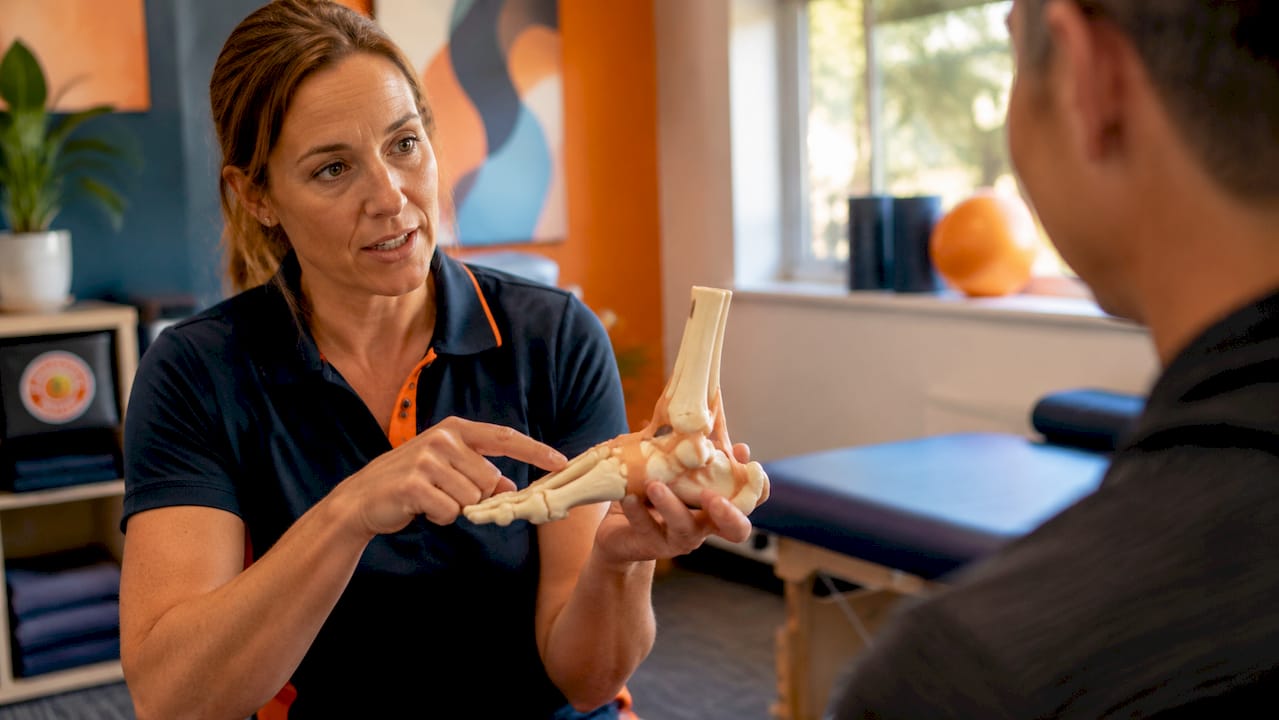
The most common pattern is the lateral ankle sprain, caused by inversion. This is when the foot rolls inward, forcing the outer ankle ligaments to absorb a sudden load they cannot handle. Approximately 70% of lateral ankle sprains involve the ATFL, particularly during sports that demand rapid direction changes such as football, basketball, and netball. The ATFL is the weakest of the three lateral ligaments, which is precisely why it fails first.
The lateral ligament complex includes three structures that are typically injured in sequence during inversion trauma:
Anterior talofibular ligament (ATFL): the first and most commonly torn ligament in a lateral sprain
Calcaneofibular ligament (CFL): injured in more severe sprains when the ATFL has already failed
Posterior talofibular ligament (PTFL): rarely torn except in complete dislocations or high-energy injuries
Beyond lateral sprains, other injury types are frequently misunderstood or overlooked:
Medial ankle sprain: caused by eversion, where the foot rolls outward. Less common because the deltoid ligament on the inner ankle is considerably stronger.
High ankle sprain (syndesmotic injury): involves the ligaments connecting the tibia and fibula above the ankle joint. Often occurs in contact sports and takes significantly longer to heal than a standard lateral sprain.
Tendon injuries: the Achilles, peroneal tendons, and tibialis posterior can all rupture or develop tendinopathy from overuse or sudden overload.
Pain location provides reliable diagnostic clues. Lateral pain points to an inversion injury; medial pain suggests tibialis posterior involvement; posterior pain implicates the Achilles. Knowing where it hurts guides both clinical assessment and early self-management decisions.
Pro Tip: If you can identify the mechanism of your injury, tell your physiotherapist exactly how it happened. Whether the foot rolled in, out, or twisted under load gives them critical information that shapes the entire treatment plan.
What are the key risk factors that increase the likelihood of ankle injuries?
Ankle injury risk factors fall into two categories: intrinsic factors (within your body) and extrinsic factors (in your environment or equipment). Both are modifiable to varying degrees, which means understanding them directly informs prevention.
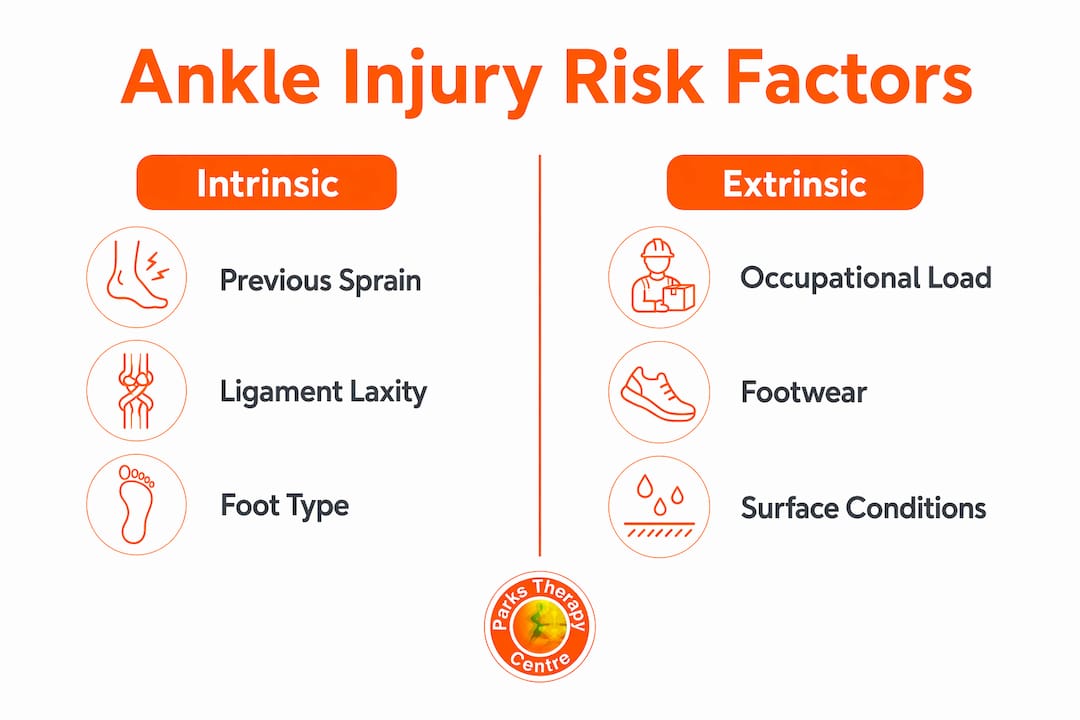
Structured physical therapy involving eccentric strengthening and balance training is the most effective way to address intrinsic risk. That tells you something important: the body’s own deficits are the most controllable part of the equation.
Risk factor | Why it increases injury risk |
Previous ankle sprain | Residual ligament laxity and impaired proprioception raise re-injury risk significantly |
Poor proprioception and balance | The ankle cannot react quickly enough to unexpected surface changes |
Muscle weakness (peroneals, calf) | Insufficient muscular support leaves ligaments to absorb forces alone |
Flat feet or high arches | Altered foot biomechanics shift load distribution and stress specific structures |
Worn or inappropriate footwear | Reduced support and grip increase the chance of the foot rolling on uneven ground |
Uneven or rough terrain | Environmental hazards such as trail running or playing on poor-quality pitches raise sprain frequency |
High-risk sports participation | Sudden pivoting, jumping, and contact sports create repeated high-load ankle events |
One factor that receives less attention than it deserves is ligamentous laxity. Some people are naturally more flexible in their joints, which sounds like an advantage but actually reduces the passive restraint that ligaments provide. Combined with weak peroneal muscles, this creates a significant vulnerability. Understanding your own biomechanical risk profile is a practical starting point for targeted prevention.
Occupational risk is also real. Nurses, construction workers, and warehouse staff who spend long hours on their feet, often on hard or uneven surfaces, face elevated ankle injury rates compared to desk-based workers. The cumulative load on ankle structures over a working day is substantial.
How do tendon, joint, and systemic conditions contribute to ankle pain?
Not all ankle pain follows a sudden twist or fall. A significant proportion of common causes of ankle pain develop gradually, without any memorable injury event. These non-traumatic causes are frequently underdiagnosed because patients and clinicians alike default to assuming a sprain.
Tendon-related ankle injuries develop gradually due to overuse, training errors, and calf weakness, and they behave very differently from ligament sprains. The key distinction is that tendon pain typically worsens with loading activities and eases with rest, at least in the early stages.
The most clinically significant tendon conditions affecting the ankle include:
Achilles tendinopathy: pain and stiffness at the back of the heel, worsened by running, jumping, or climbing stairs. Caused by repetitive overload, often compounded by sudden increases in training volume.
Peroneal tendinopathy: pain along the outer ankle and lower leg, frequently confused with a lateral ligament sprain. The peroneal tendons can also sublux (slip out of their groove), causing a snapping sensation.
Tibialis posterior tendinopathy: pain on the inner ankle and arch, often associated with flat feet. Left untreated, it can progress to adult-acquired flatfoot deformity.
Joint conditions add another layer of complexity. Ankle impingement syndromes occur when soft tissue or bony spurs are pinched within the joint during movement, producing sharp pain at the front or back of the ankle. Osteoarthritis of the ankle joint, though less common than hip or knee arthritis, produces a deep, aching pain that worsens with weight-bearing and stiffens after rest.
Systemic inflammatory conditions including gout, rheumatoid arthritis, and reactive arthritis can all present as ankle pain. Gout characteristically causes sudden, severe pain with redness and swelling, often overnight. Rheumatoid arthritis tends to affect multiple joints symmetrically and is accompanied by morning stiffness lasting more than 30 minutes. Early-stage degenerative joint changes can masquerade as overuse pain, which is why gait analysis and imaging are key to accurate early diagnosis.
The practical implication is clear: if ankle pain develops without a specific injury event, or if it persists beyond the expected recovery window for a sprain, professional assessment is not optional. It is the only reliable way to distinguish between conditions that require very different treatment approaches.
What steps can be taken to prevent ankle injuries and promote recovery?
Prevention and recovery share the same foundations. The strategies that reduce injury risk in a healthy ankle are the same ones that restore function after damage.
Proprioception and balance training. Proprioception training is critical after ligament injury to retrain the nervous system and reduce recurrent instability. Single-leg balance exercises, wobble board work, and progressive agility drills all rebuild the automatic responses that protect the ankle during unexpected movements. Start on a stable surface and progress to unstable ones as control improves.
Eccentric strengthening for tendons. Eccentric exercises, where the muscle lengthens under load, are the most evidence-supported intervention for tendinopathy. For Achilles tendinopathy, the heel drop protocol on a step is the standard starting point. For peroneal or tibialis posterior issues, resistance band exercises in the relevant movement planes are the foundation of recovery.
Footwear assessment and replacement. Worn footwear loses its structural support long before it looks visibly damaged. Replacing training shoes every 400–600 miles is a widely cited guideline in sports medicine. For patients with flat feet or high arches, orthotic insoles can correct load distribution and reduce stress on vulnerable structures.
Load management. Sudden increases in training volume or intensity are a primary driver of overuse tendon injuries. A structured increase of no more than 10% per week in running mileage or training load is a practical rule that significantly reduces tendon injury risk.
Early rehabilitation after any sprain. Ignoring rehabilitation after an ankle sprain leads to chronic instability and recurrent injury cycles. Early physiotherapy, beginning within days of injury rather than weeks, restores range of movement, reduces swelling, and begins the proprioceptive retraining that prevents re-injury.
The Parkstherapycentre guide to ankle sprain rehabilitation sets out a structured, stage-by-stage recovery programme that addresses each of these elements in sequence. For sport-specific prevention, the ankle ligament injury prevention resource covers warm-up protocols, taping techniques, and return-to-sport criteria.
Pro Tip: Do not wait until pain has resolved before starting rehabilitation. Gentle movement, proprioception work, and strengthening can begin within 24–48 hours of a sprain, provided there is no fracture. Early movement consistently produces better long-term outcomes than prolonged rest.
Key takeaways
Ankle injuries are caused by a combination of traumatic mechanisms, intrinsic risk factors, and chronic conditions that require specific, targeted treatment rather than a generic approach.
Point | Details |
ATFL is the primary target | Approximately 70% of lateral ankle sprains damage the ATFL, making it the most vulnerable ankle structure. |
Pain location guides diagnosis | Lateral, medial, or posterior pain each point to different structures and require different treatment strategies. |
Risk factors are modifiable | Proprioception training, footwear, and load management directly reduce both first-time and recurrent injury risk. |
Gradual pain needs assessment | Non-traumatic ankle pain from tendinopathy or joint conditions requires professional diagnosis to avoid mismanagement. |
Early rehab prevents chronicity | Starting rehabilitation within days of injury breaks the cycle of chronic instability and repeat sprains. |
What I have learned from years of seeing ankle injuries
The most common mistake I see is patients treating ankle pain as a single, uniform problem. A lateral sprain, Achilles tendinopathy, and early ankle osteoarthritis can all produce similar levels of discomfort, but they respond to completely different interventions. Treating them the same way is how people end up with chronic problems that should have resolved in weeks.
The second mistake is conflating pain relief with recovery. Swelling goes down, walking becomes comfortable again, and people return to sport or full activity. Then the ankle gives way three months later because the proprioceptive deficit was never addressed. The nervous system needs retraining after ligament injury. That process takes longer than the pain does to settle.
What I find genuinely encouraging is how much of ankle injury risk is within a person’s control. Footwear, training load, balance training, and early treatment decisions all make a measurable difference. The patients who do best are the ones who understand their specific cause and commit to the full rehabilitation process, not just the first two weeks of it. If you are unsure what is causing your ankle pain, get a proper assessment. The Achilles injury prevention guidance from Parkstherapycentre is a useful starting point for tendon-related concerns, but there is no substitute for a clinical examination when symptoms persist.
— Ivan
Ankle injury assessment and rehabilitation at Parkstherapycentre
Parkstherapycentre has provided physiotherapy and sports injury treatment across Bedfordshire and Buckinghamshire since 1986. The team offers thorough ankle assessments, evidence-based rehabilitation programmes, and podiatry services for patients dealing with sprains, tendinopathy, joint conditions, and biomechanical issues.
Whether you are managing a recent sprain or a persistent ankle problem that has not responded to rest, a clinical assessment at Parkstherapycentre gives you a clear diagnosis and a structured plan. The team accepts most major insurance providers and offers online booking for appointments at multiple locations. Book your ankle assessment today and get the clarity your recovery needs.
FAQ
What is the most common cause of ankle injuries?
The lateral ankle sprain is the most common ankle injury, caused by the foot rolling inward and overstretching the anterior talofibular ligament (ATFL). It occurs most frequently during sport but also happens in everyday activities on uneven ground.
How do I know if my ankle pain is a sprain or something else?
Pain location provides the clearest clue: lateral pain suggests a ligament sprain, posterior pain points to the Achilles tendon, and medial pain may indicate tibialis posterior involvement. Persistent or gradually developing pain without a clear injury event warrants professional assessment.
What are the main ankle injury risk factors?
Previous ankle sprains, poor balance, weak peroneal muscles, flat feet or high arches, and worn footwear are the leading risk factors. Environmental hazards such as uneven surfaces and high-impact sports also increase injury likelihood significantly.
Can ankle injuries become chronic if left untreated?
Failing to rehabilitate after an ankle sprain leads to chronic instability and a cycle of recurrent injury. Proprioception training and structured physiotherapy are the most effective ways to restore full function and prevent re-injury.
When should I see a physiotherapist for ankle pain?
Seek professional assessment if ankle pain does not improve within a week of a sprain, if swelling is severe, if weight-bearing is impossible, or if pain developed gradually without a specific injury. Early clinical evaluation consistently produces better outcomes than delayed treatment.
Recommended