
Acupuncture in back surgery recovery: what to know
- May 29
- 9 min read
TL;DR:
Acupuncture can significantly reduce pain and opioid use during post-back surgery recovery when integrated into multimodal treatment plans. Starting acupuncture within 24 hours and working with trained practitioners enhances healing and functional outcomes. Proper coordination with surgical and physiotherapy teams ensures safe, effective, and personalized recovery support.
After back surgery, many patients expect the hard part to be over. Instead, they find themselves managing persistent pain, reducing heavy medication, and searching for natural recovery methods after surgery that genuinely make a difference. The role of acupuncture in back surgery recovery is gaining serious clinical attention, and for good reason. Research now shows it can reduce pain scores, cut opioid consumption, and support faster functional recovery when used alongside conventional care. This article covers the evidence, the mechanisms, the timing, and exactly how you can approach acupuncture and post-operative healing as part of your recovery plan.
Table of Contents
Key takeaways
Point | Details |
Acupuncture reduces pain post-surgery | Clinical trials show lower pain scores and reduced opioid use within the first week after lumbar surgery. |
Early treatment improves outcomes | Starting acupuncture within 24 hours post-operation can positively influence acute pain and functional recovery. |
It works best alongside conventional care | Acupuncture is most effective as part of a multimodal plan that includes physiotherapy and standard medical treatment. |
Multiple modalities are available | Manual acupuncture, electroacupuncture, and TEAS (transcutaneous electrical acupuncture stimulation) all have evidence behind them for post-surgery use. |
Practitioner quality matters | Safety and effectiveness depend on working with a trained, regulated acupuncturist who coordinates with your surgical team. |
The role of acupuncture in back surgery recovery: what the evidence shows
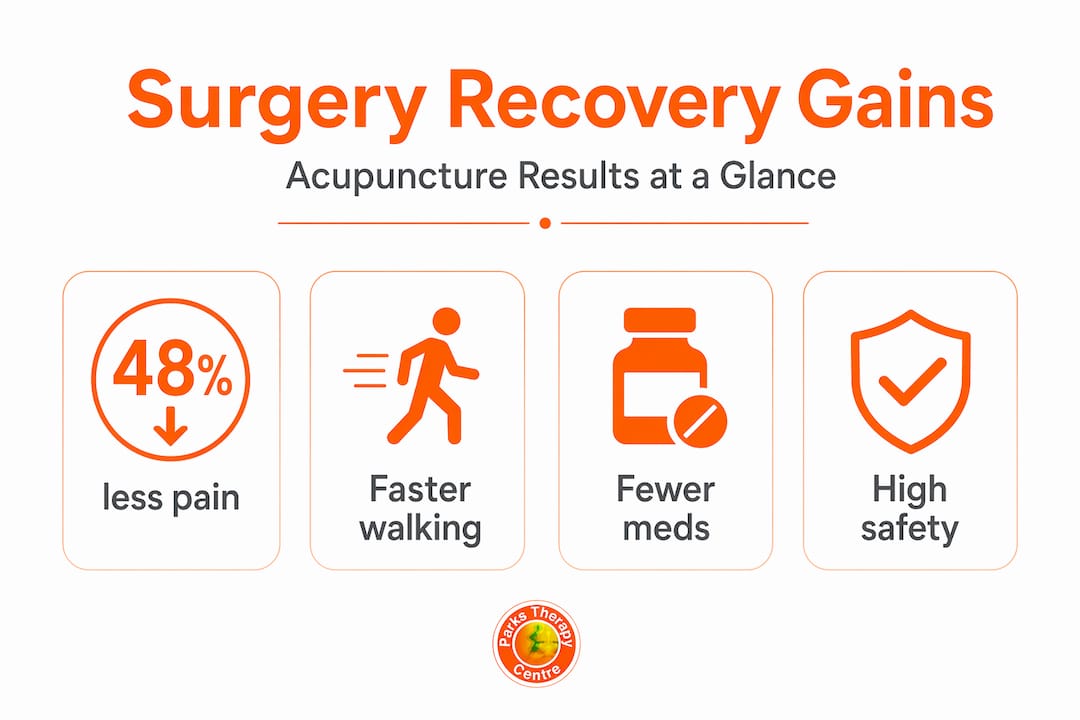
The conversation around acupuncture in back surgery recovery has shifted noticeably in recent years. It is no longer fringe. A well-designed randomised controlled trial found that acupuncture starting within 24 hours after posterior lumbar fusion surgery significantly reduced VAS pain scores, lowered opioid consumption, and improved both JOA (Japanese Orthopaedic Association) lumbar function scores and QOR-15 quality of recovery scores at three and seven days post-surgery. Those are not marginal gains. They represent a meaningful difference in how patients experience the first critical week of recovery.
The most important clinical context here is multimodal analgesia. Modern surgical recovery protocols, including Enhanced Recovery After Surgery (ERAS) frameworks, deliberately combine multiple pain management tools rather than relying on opioids alone. Perioperative acupuncture within ERAS protocols has been shown to reduce postoperative analgesic medication use, support faster recovery, and potentially shorten hospital stays. Acupuncture fits naturally into this framework because it targets pain pathways through entirely different mechanisms than pharmaceutical drugs.
“Acupuncture is best used as an adjunct to comprehensive multimodal pain management rather than as a standalone treatment after back surgery.” — Multistage acupuncture intervention perioperatively: a clinical optimization plan based on the ERAS concept
Safety is a concern many patients raise immediately, and the data here is reassuring. A VA evidence review covering numerous trials concluded that acupuncture carries no greater risk than standard care for adult health conditions, including back pain, when applied by a trained practitioner. There is no evidence from trials that adding acupuncture to your recovery plan increases the risk of complications.
Outcome measured | Effect with acupuncture | Compared to standard care |
VAS pain scores (day 3 and 7) | Significantly lower | Standard care alone |
Opioid consumption (first week) | Reduced | Standard care alone |
Lumbar function (JOA score) | Improved | Standard care alone |
Quality of recovery (QOR-15) | Higher scores | Standard care alone |
Adverse effects | No increase | Standard care alone |
This table summarises findings from the RCT on lumbar fusion recovery. The pattern is consistent: acupuncture benefits post-surgery appear across multiple outcome measures without introducing new risks.
How acupuncture actually works during recovery
Many people assume acupuncture is vague or unscientific. The mechanisms are actually well-studied, and they are particularly relevant to back surgery recovery.
The primary mechanism is neuromodulation. Acupuncture needles stimulate specific points that activate sensory nerve fibres, which then send signals up the spinal cord and into the brain. This engages the pain gate control system, essentially dialling down the intensity of pain signals before they reach conscious awareness. At the same time, the body releases endogenous opioids, including endorphins and enkephalins, which are natural pain-suppressing chemicals. These effects combine to reduce both the sensation and the emotional distress of post-operative pain.
Inflammatory mediator reduction: Acupuncture influences the release of inflammatory substances such as prostaglandins and cytokines at needle sites and systemically, reducing local inflammation around healing tissues.
Improved microcirculation: Needle stimulation increases blood flow to targeted areas, supporting oxygen delivery and nutrient exchange in damaged tissues, which accelerates natural repair processes.
Central nervous system modulation: Beyond the spinal cord, acupuncture affects brain regions involved in pain perception, stress response, and mood, which explains why patients often report feeling calmer and sleeping better during a treatment course.
Gastrointestinal recovery: Acupuncture improves bowel function recovery after surgery, reducing a common complication that can slow overall healing and extend hospital stays.
A detail that surprises most patients is that acupuncture for post-surgical recovery is not focused on the wound site itself. The approach targets pain pathways and functional recovery points rather than the surgical area directly. This is why needles are often placed at points in the legs, feet, or hands rather than near the spine.
Pro Tip: If you are curious about the underlying science before your first session, the acupuncture and pain management breakdown from Parkstherapycentre is a good place to start.

Timing, protocols, and working safely with your care team
Getting the timing right makes a genuine difference. Starting acupuncture early post-operatively can positively shape your acute pain trajectory and lay the groundwork for functional recovery. The clinical protocols that have shown the best results follow a structured approach:
Begin within 24 hours post-operation if cleared by your surgical team. The early window, while the acute pain response is still active, is when acupuncture has the greatest influence on how your pain trajectory develops.
Attend daily sessions of approximately 30 minutes through the first week. Repeated sessions across the perioperative period provide superior analgesia compared to single treatments, so consistency matters more than any individual session.
Communicate your surgical site and wound locations to your acupuncturist before every session. Needles must be placed well away from incision sites, drains, or areas of compromised tissue. Your acupuncturist should always be briefed on your surgery type, date, and any complications.
Discuss your full medication list with your acupuncturist. Anticoagulants, steroids, and certain pain medications affect how the body responds to needling and whether precautions are needed.
Choose the right modality with your practitioner. Manual acupuncture, electroacupuncture (where a small electrical current is passed between needles), and TEAS (transcutaneous electrical acupuncture stimulation) all have evidence for post-surgical use. TEAS in particular has shown benefits for reducing opioid side effects and promoting early mobilisation after lumbar procedures, and does not require needle insertion, which some patients prefer immediately post-surgery.
Pro Tip: Ask your surgeon to note any acupoint areas that should be avoided during recovery. A brief written note to your acupuncturist removes any ambiguity and keeps both sides of your care team aligned.
The safety of acupuncture when applied properly is well established, but that qualifier matters. Practitioner training and coordination with your surgical team are what keep the therapy safe. Avoid practitioners who cannot demonstrate formal qualifications or who are unwilling to liaise with your surgical or physiotherapy team.
Practical guidance for patients considering acupuncture
Thinking about acupuncture as part of your recovery? Here is what to consider before, during, and after sessions.
Ask your surgeon first. Most surgeons are supportive of acupuncture when framed as a complementary, not alternative, option. Ask specifically whether there are wound locations or activity restrictions that might affect your first sessions.
Find a qualified, regulated practitioner. In the UK, look for membership of the British Acupuncture Council (BAcC) or equivalent bodies. This confirms minimum training standards and professional accountability.
Set realistic expectations. Acupuncture benefits post-surgery are meaningful, but acupuncture is not a cure and does not replace physiotherapy, medication management, or surgical follow-up. The goal is better pain control, reduced medication dependence, and faster functional progress. Understanding this distinction from the start avoids disappointment.
Combine it with physiotherapy. The two therapies work well together. Acupuncture reduces the pain intensity that can limit your engagement with physiotherapy after back surgery, which in turn accelerates your return to normal movement and function.
Know what to expect in sessions. Most patients feel mild pressure or a dull ache at needle insertion points, followed by a sense of relaxation. Sessions typically last 30 minutes, and you should feel no acute pain during treatment. If you would like a clear picture of what your first appointment involves, a session guide from Parkstherapycentre covers the process step by step.
Track your outcomes. Keep a simple daily log of your pain score, sleep quality, and mobility before and after sessions. This helps your care team evaluate progress and adjust the treatment plan if needed.
One persistent myth worth addressing: acupuncture only produces a placebo effect. The clinical trials cited throughout this article used sham acupuncture controls precisely to test this. The superior outcomes seen with real acupuncture in those trials cannot be explained by expectation alone.
My perspective on acupuncture as a recovery tool
I have worked alongside patients navigating post-surgical recovery for many years, and my honest view is this: acupuncture is one of the most underused tools in back surgery recovery, not because the evidence is weak, but because the conversation between surgeons and complementary therapists rarely happens early enough.
What I have seen consistently is that the patients who engage with acupuncture early, within that first week, tend to move through the acute pain phase with less distress and less reliance on medication. That has a knock-on effect on everything: sleep quality, motivation for physiotherapy, and confidence in their own recovery. Those things are hard to quantify in a trial but are unmistakable in practice.
My caution is always about who delivers the treatment. The risk in this space is not acupuncture itself. It is the unregulated practitioner who does not understand surgical recovery timelines or who treats the procedure as a standalone fix rather than part of a broader plan. I always encourage patients to be direct with their acupuncturist: ask about their experience with post-surgical cases specifically, not just general musculoskeletal pain.
Acupuncture as an alternative to conventional back surgery care is not what I advocate. Acupuncture as part of a well-coordinated, evidence-informed recovery plan? That is a different conversation entirely, and one I believe every post-surgical patient deserves to have.
— Ivan
How Parkstherapycentre supports your back surgery recovery
At Parkstherapycentre, we have been providing evidence-based acupuncture and physiotherapy services since 1986 across multiple locations in Bedfordshire and Buckinghamshire. Our team understands that recovering from back surgery requires more than rest. It requires a coordinated, personalised approach.
Our qualified acupuncturists work as part of a multidisciplinary team, aligning treatment timing and acupoint selection with your surgical recovery milestones. Whether you are looking for pain management support in the early post-operative days or longer-term rehabilitation, we build plans that complement rather than conflict with your surgical care. We accept most insurance providers and offer straightforward online booking. To find out how our acupuncture services at Parkstherapycentre can support your recovery, visit our website or contact your nearest centre to arrange an initial consultation with one of our experienced practitioners.
FAQ
Can acupuncture help reduce pain after back surgery?
Yes. Clinical trials show that acupuncture starting within 24 hours of lumbar fusion surgery significantly reduces pain scores and opioid consumption compared to standard care alone, with improvements measurable at three and seven days post-operation.
Is acupuncture safe to use during back surgery recovery?
Acupuncture is safe during recovery when delivered by a qualified, regulated practitioner who coordinates with your surgical team. A large evidence review found no increased risk from acupuncture compared to standard care for adult health conditions when applied according to guidelines.
When should acupuncture start after back surgery?
Evidence suggests starting within the first 24 hours post-operation produces the best outcomes for pain and functional recovery. Daily 30-minute sessions through the first week align with the protocols used in clinical trials.
Can acupuncture replace physiotherapy after back surgery?
No. Acupuncture and physiotherapy serve different purposes and work best together. Acupuncture reduces pain intensity, which allows you to engage more fully with your physiotherapy programme and reach functional recovery milestones faster.
What type of acupuncture is best after back surgery?
Manual acupuncture, electroacupuncture, and TEAS all have evidence for post-surgical use. TEAS is particularly useful for patients who prefer a non-needle option immediately after surgery, as it delivers electrical stimulation to acupuncture points via surface electrodes and has been shown to reduce opioid side effects and support early mobilisation.
Recommended