
Acupuncture for sports injuries: proven benefits explained
TL;DR:
Acupuncture is a safe, evidence-supported tool for pain relief and faster recovery in sports injuries.
It works through endorphin release, muscle resetting, and improved blood flow, especially for chronic pain and overuse injuries.
For best results, integrate acupuncture with physiotherapy and targeted rehabilitation as part of a comprehensive recovery plan.
Rest, ice, and painkillers are the default response most athletes reach for when injury strikes. But growing clinical evidence suggests this picture is incomplete. Acupuncture, once dismissed as fringe medicine, is now recognised by sports medicine specialists as a legitimate tool for pain relief and recovery through mechanisms including endorphin release and reduced inflammation. Whether you are dealing with a stubborn overuse injury, delayed muscle soreness, or chronic joint pain, this article explains how acupuncture works, what the evidence actually shows, and how to decide whether it belongs in your recovery plan.
Table of Contents
How acupuncture works for sports injuries: the science explained
Acupuncture’s key benefits for injury recovery and performance
Is acupuncture safe for athletes? Risk, side effects, and drug-free perks
Limitations and scepticism: what the evidence actually shows
A sports therapy perspective: what most guides miss about acupuncture
Key Takeaways
Point | Details |
Drug-free pain relief | Acupuncture offers athletes a way to reduce pain without the side effects of medication. |
Faster recovery | Modern evidence shows acupuncture can speed up muscle healing and improve flexibility after sports injuries. |
Safe for athletes | Very low risk of side effects makes acupuncture a practical option for most active people. |
Best as adjunct therapy | Acupuncture works best when combined with physiotherapy and other conventional treatments. |
How acupuncture works for sports injuries: the science explained
Let’s start by demystifying what actually happens in your body when you choose acupuncture for recovery. For many athletes, the idea of fine needles producing measurable physiological change sounds implausible. The science, however, is more convincing than most people expect.
Acupuncture works through several interconnected mechanisms. Endorphin release and opioid modulation are among the most well-documented, meaning the treatment activates your body’s own pain-suppressing chemistry rather than relying on external drugs. When a needle is inserted into specific points, it triggers a neurochemical cascade that can reduce pain perception across the targeted area.
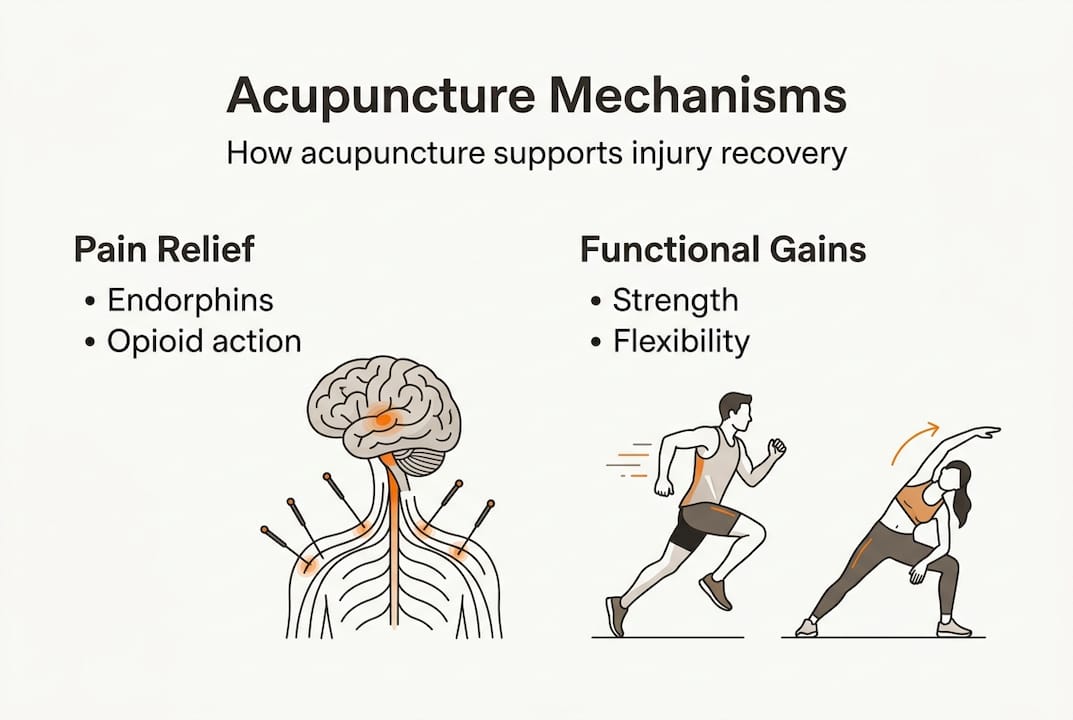
Motor point needling is another mechanism that deserves attention. This technique targets the most electrically active point within a muscle, resetting abnormal tension patterns and restoring normal muscle firing. For athletes with chronic tightness or inhibited muscle groups, this can be genuinely transformative. Empirical data supports its effectiveness particularly for musculoskeletal pain conditions common in sport.
Improved local blood flow is a third factor. Needling creates a mild micro-trauma that draws circulation to the treated area, accelerating nutrient delivery and metabolic waste removal. This is precisely why acupuncture is increasingly used alongside conventional sports injury terms and treatment protocols.
Common injuries where acupuncture shows strong evidence:
Chronic low back pain
Knee osteoarthritis and patellofemoral pain
Rotator cuff overuse injuries
Achilles tendinopathy
Lateral epicondylalgia (tennis elbow)
Mechanism | Effect on the body | Relevant injury types |
Endorphin release | Reduces pain perception | All musculoskeletal injuries |
Motor point needling | Resets muscle tension patterns | Chronic tightness, inhibited muscles |
Improved blood flow | Accelerates tissue repair | Tendinopathy, strains |
Inflammation reduction | Decreases swelling and local irritation | Joint injuries, overuse conditions |
Statistic: Research identifies fewer than 0.05 serious adverse events per 10,000 acupuncture treatments, placing it among the safest available interventions for injury management.
Pro Tip: When booking your first session, specifically ask your practitioner about motor point targeting. If your goal is performance restoration rather than just pain relief, this approach can address the neuromuscular dysfunction that often lingers long after the initial injury heals.
Acupuncture’s key benefits for injury recovery and performance
Now that you understand how it works, let’s look at the practical, evidence-backed advantages acupuncture can give you as an athlete.
The most immediate benefit most athletes notice is pain reduction without medication. This matters enormously for those who want to train, compete, or simply avoid the gastrointestinal and cardiovascular risks associated with regular NSAID use. Acupuncture offers an alternative that manages pain through your own neurochemistry.
Beyond pain, acupuncture accelerates recovery of function, including measurable improvements in strength, flexibility, and jump height, particularly when used alongside structured rehabilitation. It also reduces the formation of excessive scar tissue, which is a common obstacle to full return-to-sport. Athletes who integrate it into their acupuncture and athletic recovery programmes consistently report faster return to pre-injury performance levels.
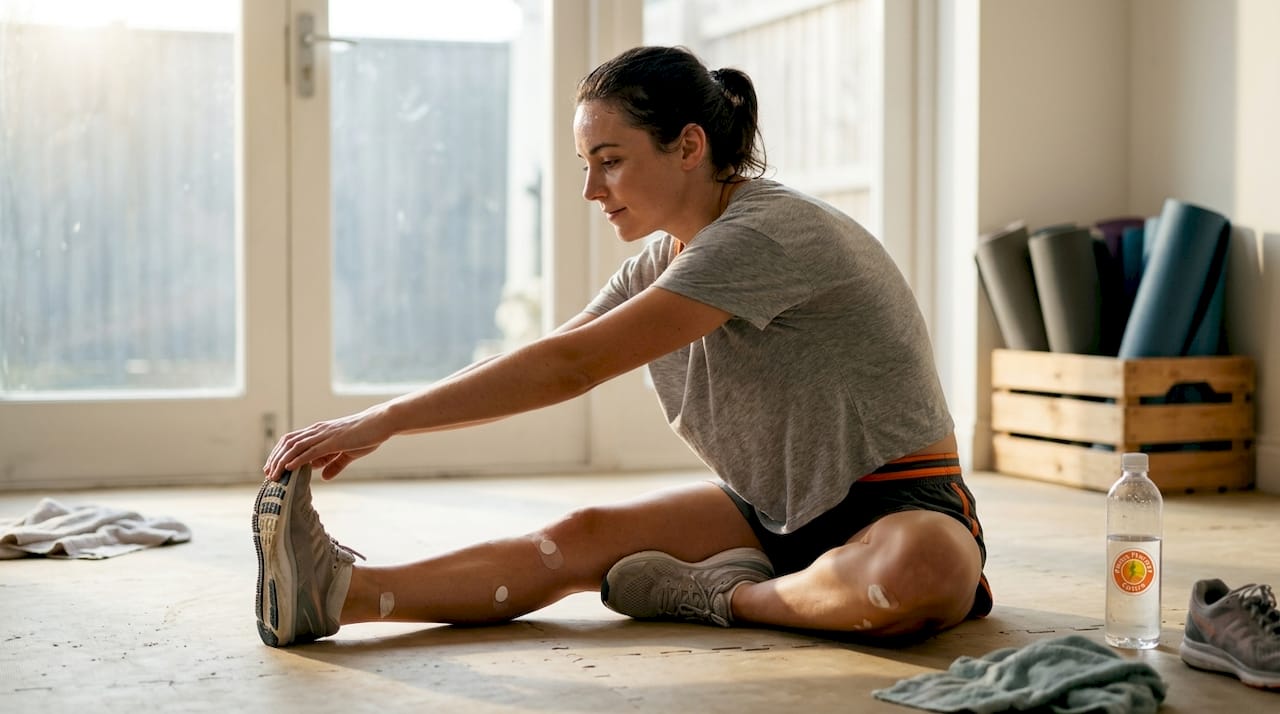
Delayed-onset muscle soreness (DOMS) is another area where acupuncture shows real-world value. Applied within 24 hours of intense training, it can reduce the severity and duration of soreness, helping you maintain training frequency during demanding competition periods.
Key benefits at a glance:
Drug-free pain management
Reduced DOMS after high-intensity training
Improved range of motion and flexibility
Reduced scar tissue formation
Enhanced neuromuscular coordination
Supports anti-doping compliance
Feature | Acupuncture | Conventional care alone |
Pain relief | Drug-free, neurochemical | Often medication-dependent |
Recovery speed | Faster with integrated rehab | Standard timeline |
DOMS reduction | Demonstrated benefit | Limited non-pharmacological options |
Scar tissue management | Active reduction | Passive, time-dependent |
Anti-doping risk | None | Depends on substances used |
Pro Tip: The best results come from sports therapy explained in an integrated context. If your physiotherapist and acupuncturist communicate about your treatment goals, the combined effect is typically greater than either approach used in isolation.
Is acupuncture safe for athletes? Risk, side effects, and drug-free perks
With benefits in mind, safety is the next critical question for any athlete considering acupuncture.
The honest answer is that acupuncture is one of the safest physical therapies available. Serious adverse events occur at fewer than 0.05 per 10,000 treatments. To put that in context, a single course of NSAIDs carries significantly higher risks of gastrointestinal bleeding, renal impairment, and cardiovascular complications.
Mild side effects do occur and athletes should be aware of them:
Temporary local bruising at the needle site
Brief muscle soreness for 12 to 24 hours post-treatment
Occasional light-headedness during or immediately after treatment
Minor bleeding at the needle insertion point
These effects are transient and rarely interfere with training schedules. Compare this to the risk profile of opioid-based pain management, which carries addiction potential and significant performance-impairing side effects, and the case for considering acupuncture becomes considerably stronger.
“The safety profile of acupuncture compares favourably with most conventional pharmacological interventions used in sports medicine, with serious adverse events recorded at fewer than 0.05 per 10,000 treatments.”
For competitive athletes, the drug-free nature of acupuncture is particularly valuable. It supports full compliance with anti-doping regulations and removes any uncertainty around prohibited substance exposure. When combined with approaches like understanding the role of ice for injuries and other non-pharmacological strategies, you build a recovery toolkit that keeps you both healthy and competition-ready.
One practical consideration: always ensure your practitioner uses single-use, sterile needles. This is standard practice in regulated settings across the UK, but it is worth confirming before treatment begins.
Limitations and scepticism: what the evidence actually shows
However, not every study paints acupuncture as a miracle cure; it is important to scrutinise the limitations and controversies.
The most persistent criticism comes from researchers who argue that some analyses show little or no advantage over sham acupuncture, where needles are placed in non-traditional locations or do not penetrate the skin. If sham acupuncture produces similar results to real acupuncture, the argument goes, then the specific needle placement may matter less than the ritual and therapeutic relationship itself.
This is a legitimate challenge. The evidence quality across acupuncture research is generally rated as low to moderate. Many trials involve small sample sizes, inconsistent blinding methods, and highly variable treatment protocols. Larger, well-controlled randomised controlled trials are still needed before definitive conclusions can be drawn for specific injury types.
“Current evidence for acupuncture in pain management ranges from low to moderate quality, and some meta-analyses report minimal advantage over sham controls. Clinical decision-making should account for this uncertainty.”
When acupuncture is less likely to be the priority:
Acute fractures or dislocations requiring immediate structural management
Open wounds or active skin infections at the treatment site
Conditions requiring urgent surgical intervention
Severe nerve compression with progressive neurological symptoms
The honest position is that acupuncture works best as an adjunct to types of injury management protocols, not as a standalone replacement for physiotherapy, medical imaging, or surgical assessment where these are clinically indicated. Athletes who approach it with realistic expectations and use it as part of a broader rehabilitation plan are those most likely to benefit. The evidence supports its inclusion; it does not support replacing everything else with it.
A sports therapy perspective: what most guides miss about acupuncture
Let’s pull back and share what decades in sports therapy reveal that most articles miss.
Most online guides treat acupuncture as either a cure-all or complete pseudoscience. Neither position serves athletes well. In clinical practice, the picture is more nuanced: acupuncture is a powerful tool when applied to the right patient at the right stage of recovery, and when it is integrated thoughtfully into a broader rehabilitation framework.
Motor point acupuncture, in particular, is underused in sports settings. Many athletes still receive only traditional point-based treatment when motor point work could directly address the neuromuscular dysfunction preventing them from returning to full training. The distinction matters and it is worth asking specifically for this approach.
What we have observed through years of physiotherapy integration is that the athletes who recover fastest are not those who rely solely on acupuncture, but those who use it strategically alongside targeted exercise rehabilitation. Acupuncture manages the pain window that allows more productive physiotherapy. That sequencing is where the real value lies, and most general guides simply do not discuss it.
Unlock your recovery: next steps for athletes
If you are ready to see how acupuncture could fit into your recovery, here is how to take the next step.
At Parks Therapy Centre, our team has been supporting athletes across Bedfordshire and Buckinghamshire since 1986, combining acupuncture with physiotherapy, sports injury treatment, and personalised rehabilitation planning. We understand that no two injuries are identical, which is why every treatment plan is tailored to your sport, your body, and your performance goals. Whether you are managing a chronic overuse injury or looking to reduce recovery time between sessions, our qualified practitioners can assess whether acupuncture is the right fit for you. Visit Parks Therapy Centre to book a consultation and start building a recovery plan that actually works for you.
Frequently asked questions
How quickly can acupuncture relieve sports injury pain?
Many athletes report reduced pain within one to three sessions, as acupuncture triggers endorphin release which can deliver relatively fast results, though outcomes vary based on injury type and severity.
Is acupuncture suitable for all types of sports injuries?
It works best for overuse, chronic, and musculoskeletal injuries; most evidence supports use in chronic pain, knee conditions, and strains, but it should not replace emergency care for acute trauma.
Are there any side effects or risks with acupuncture?
Serious risks are extremely rare; serious adverse events occur at fewer than 0.05 per 10,000 treatments, with mild bruising and temporary soreness being the most commonly reported effects.
Can acupuncture be combined with physiotherapy or other treatments?
Yes, it is often most effective when integrated with rehabilitation; enhanced outcomes are consistently reported when acupuncture is paired with structured physiotherapy or chiropractic care.
Recommended