
Spotting warning signs: preventing sports injuries early
TL;DR:
Recognizing early signs like persistent pain, swelling, or instability helps prevent serious injury.
Immediate rest, ice, and activity modification improve recovery when injury signals appear.
Early professional assessment ensures better outcomes and shorter time away from sport.
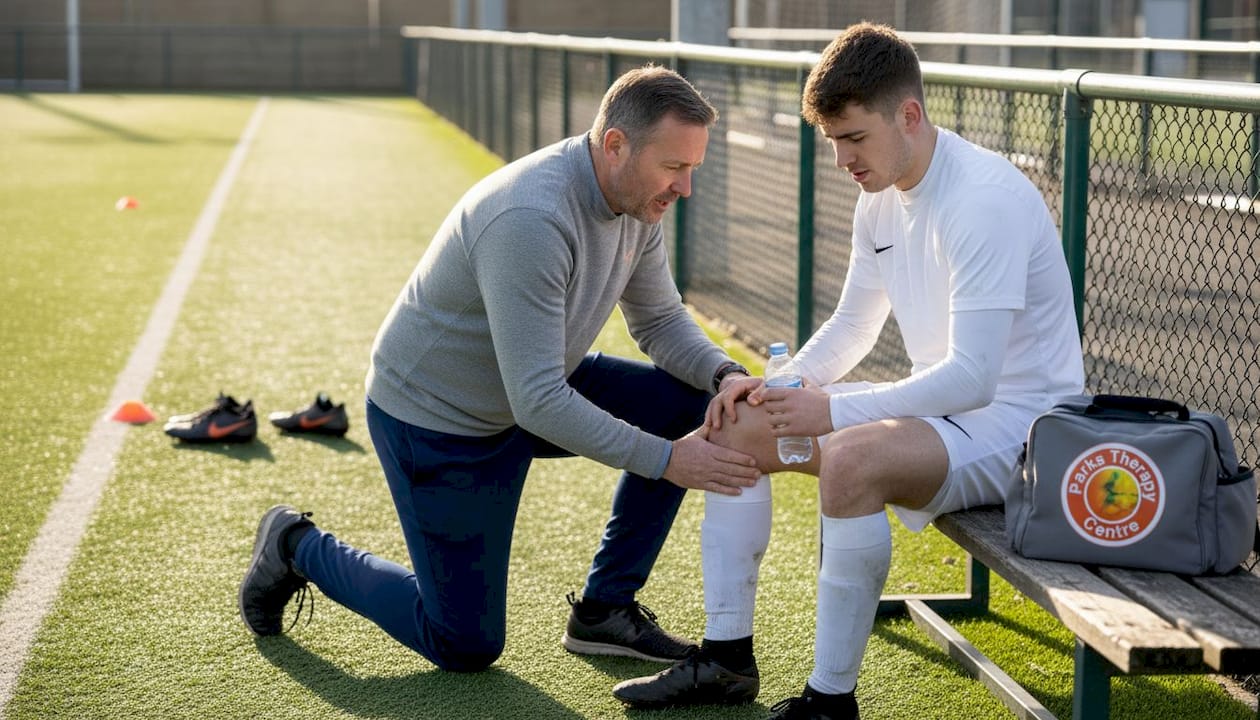
Many active people in Bedfordshire and Buckinghamshire are unknowingly one ignored twinge away from a serious setback. Sports injuries rarely arrive without warning. They send signals first, subtle aches, a slight swelling, a joint that feels oddly loose. The trouble is, most of us are too focused on the next training session or weekend match to pay attention. Up to 50% of sports injuries could be reduced in severity through early intervention, yet the vast majority of amateur athletes and fitness enthusiasts push through early signs until the problem becomes impossible to ignore. This guide will help you recognise those signals and act on them.
Table of Contents
Key Takeaways
Point | Details |
Early action matters | Noticing and responding to warning signs helps prevent serious injury. |
Recognise unique symptoms | Different injuries have distinct early warning signs that shouldn’t be ignored. |
Seek timely help | Professional advice speeds up recovery and reduces long-term complications. |
Use prevention strategies | Regular monitoring and targeted self-care can reduce injury risk for active people. |
Key warning signs of common sports injuries
Now that you understand why recognising early signals matters, let’s look at the specific warning signs to watch for. Sports injuries often develop gradually, and the body is surprisingly good at giving you advance notice. The issue is that most people either dismiss these signals or misread them entirely.
The five warning signs worth knowing are:
Persistent pain that doesn’t ease within 24 to 48 hours of rest
Swelling or puffiness around a joint or muscle, even if mild
Reduced range of motion, such as struggling to fully straighten or bend a limb
Instability, when a joint feels like it might give way under load
Numbness or tingling, which can suggest nerve involvement or compression
The reason people dismiss these signs is mostly psychological. There’s a strong cultural pull in sport to stay active, to not let the team down, or to avoid appearing weak. But ignoring minor pain can escalate a manageable strain into a prolonged injury requiring months off activity.
When you notice any of these signs, the immediate priority is to reduce load on the affected area. Stop the activity causing discomfort. If the symptom resolves within a day or two of rest, you may be fine to return gradually. If it doesn’t, that’s your cue to assess sports injuries properly rather than guessing.
Pro Tip: Keep a simple injury diary on your phone. Note when discomfort appears, what activity preceded it, and how long it lasts. Patterns in your diary can reveal whether you’re dealing with a recurring issue rather than a one-off niggle.
Types of injuries and their early warning signs
With a clear idea of general warning signs, it’s crucial to distinguish between injury types and their symptoms. Not all sports injuries feel the same, and confusing a stress fracture with a muscle strain, for example, can lead to completely the wrong response.
Different injuries show distinct warning patterns, and being able to spot those differences is genuinely useful. Here’s a comparison to help:
Injury type | Early warning sign | Sensation |
Muscle strain | Tightness or pulling sensation during activity | Dull or sharp, localised |
Ligament sprain | Joint instability and swelling post-activity | Aching, sometimes sharp |
Tendonitis | Stiffness after rest, worse in the morning | Dull ache along tendon |
Stress fracture | Point-specific pain that worsens with impact | Sharp, localised |
Overuse injury | Gradual onset pain without a clear trigger | Dull, recurring |
Morning stiffness is particularly telling. If a joint or tendon feels notably worse when you first get out of bed but improves once you move around, that pattern often points to tendonitis or early-stage overuse. Sharp, point-specific pain that flares with weight-bearing activity, especially in the shin, foot, or forearm, should raise suspicion of a stress fracture.
For each type, a step-wise response helps:
Strains and sprains: Rest immediately, apply ice, and avoid loading the area for 48 hours.
Tendonitis: Reduce training volume, address any biomechanical causes, and seek types of sports injuries guidance if pain persists beyond two weeks.
Stress fractures: Stop impact activity entirely and seek imaging. Do not attempt to run or play through this.
Overuse injuries: Audit your training load and look for sudden spikes in mileage or intensity.
Being specific about injury type means your response is targeted, not generic.

When to seek professional help for sports injuries
Recognising the signs is only half the battle. Knowing when to seek expert help is just as important. Self-management works well for mild, short-lived symptoms. But there are clear red flags that signal you need a professional assessment rather than another day of ice packs.
Seek professional help without delay if you experience:
Inability to bear weight on a limb
Visible deformity or significant swelling
Pain that worsens rather than improves after 48 to 72 hours of rest
A joint that locks, gives way, or feels grossly unstable
Numbness, tingling, or weakness that doesn’t resolve
“Many patients come to us weeks after an injury, having convinced themselves it would settle on its own. By then, compensatory movement patterns have often set in, making recovery longer and more complex. Early assessment almost always leads to better outcomes.” — Physiotherapist at The Parks Therapy Centre
Prompt assessment reduces long-term complications, and a proper sports injury assessment is far less daunting than most people expect. A physiotherapist will assess your movement, test joint stability, identify any muscular imbalances, and give you a clear picture of what’s happening and why.
If you’re unsure where to start, physiotherapy tips for beginners can help you understand the process before you even book an appointment. The key point is this: waiting doesn’t save time. It almost always adds it.
Practical tips for responding to early sports injury warning signs
Once you recognise a warning sign and know when to consult a professional, knowing what to do immediately can make all the difference. Acting quickly and sensibly in the first 24 to 72 hours often sets the trajectory for how fast you recover.
Here’s what to do when warning signs appear:
Rest: Reduce or stop the aggravating activity. Relative rest, where you maintain gentle movement, is often better than total rest for muscle injuries.
Ice: Apply for 15 to 20 minutes every two to three hours in the first 48 hours to manage swelling.
Activity modification: Swap high-impact activity for low-impact alternatives like swimming or cycling while symptoms settle.
Monitor closely: Track whether symptoms improve, plateau, or worsen over 48 to 72 hours.
Warm-up properly: Once you return to sport, invest time in a structured warm-up to protect the area.
Consistent self-monitoring decreases the risk of a short-term injury becoming a chronic problem. The data below shows how different responses compare in terms of typical recovery impact:
Response | Typical outcome |
Immediate rest and ice | Fastest initial recovery |
Activity modification only | Moderate recovery, lower relapse risk |
Ignoring symptoms entirely | High risk of worsening and chronic injury |
Early physiotherapy | Best long-term outcome |
Pro Tip: Set smartphone reminders for rest intervals and rehab exercises. It sounds simple, but consistency in the first week of recovery dramatically improves outcomes. A three-minute reminder beats a forgotten ice pack every time.
For longer-term protection, follow a structured injury prevention guide and review your training equipment regularly. Worn-out footwear, poorly fitted kit, or sudden spikes in training load are among the most common and preventable causes of sports injury. Pair that with solid beginners’ physiotherapy tips and you’re building real resilience.
Why proactive injury management trumps toughing it out
There’s a deeply ingrained belief in sport that pushing through discomfort is a sign of mental strength. We’ve all heard it. “Walk it off.” “Pain is just weakness leaving the body.” It sounds motivating, but in practice, it’s one of the most counterproductive attitudes we see in our clinic.
The athletes who recover fastest aren’t the ones who ignored the early signals. They’re the ones who paid attention, acted early, and treated their body’s warnings as useful information rather than inconvenience. That’s not softness. That’s intelligent training.
From years of working with active people across Bedfordshire and Buckinghamshire, the pattern is consistent: those who seek early input spend far less time on the sidelines overall. A two-day rest taken early is worth ten times more than a six-week layoff taken reluctantly later.
Our advice? Set a positive example in your sports club or running group. Being the person who takes injury management seriously is not a weakness. It’s what keeps you playing year after year. For those ready to take ownership of their recovery, our full recovery guide is a strong starting point.
Find the right sports injury support in Bedfordshire & Buckinghamshire
If anything in this guide has resonated with something you’re currently experiencing, don’t wait for it to become a bigger problem.

At The Parks Therapy Centre, our experienced team has been supporting active people since 1986 with tailored assessment and treatment for all types of sports injuries. Whether you’re dealing with a nagging tendon issue or something more acute, we offer practical, evidence-based care across multiple locations in Bedfordshire and Buckinghamshire. Find out more about sports physiotherapy explained and how our team can help you recover smarter, not slower. Book your assessment today and take the next step confidently.
Frequently asked questions
What are the very first warning signs of a sports injury?
Early signs include persistent pain, swelling, reduced range of movement, and joint instability. Catching these in the first day or two gives you the best chance of a quick recovery.
Can I keep playing if I have mild pain after sport?
It’s best to rest and monitor, as continuing with pain can worsen the injury significantly. A 24-hour rest is rarely a major setback, but a worsening injury often is.
When should I see a physiotherapist for a sports injury?
Seek medical help if pain persists for more than a few days or if you can’t use the joint normally. Any significant swelling, instability, or inability to bear weight warrants prompt professional assessment.
What can I do at home for early injury signs?
Rest, ice, compression, and elevation are effective first steps, combined with careful symptom tracking over 48 to 72 hours to gauge whether professional input is needed.
Recommended