
How to assess sports injuries: steps for safe recovery
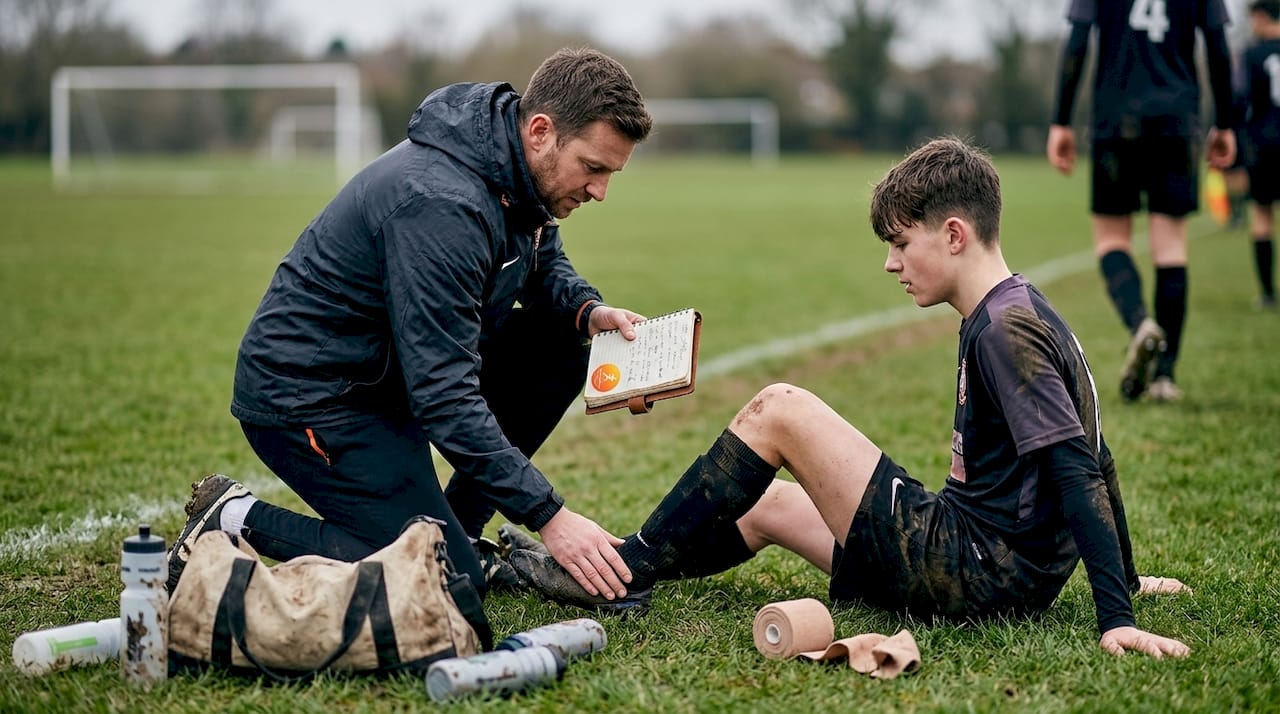
You’re mid-run, you plant your foot awkwardly, and suddenly there’s a sharp pain shooting through your ankle. Do you walk it off? Stop immediately? Head straight to A&E? For athletes and active people across Bedfordshire and Buckinghamshire, this moment of uncertainty is all too familiar. Getting your initial assessment right can be the difference between a two-week recovery and a two-month setback. This guide walks you through a practical, evidence-based approach to assessing sports injuries, so you can make confident decisions from the moment it happens.
Table of Contents
Key Takeaways
Point | Details |
Know the red flags | Recognise when symptoms mean you should seek urgent professional care rather than self-assessing. |
Systematic assessment steps | Follow a clear process—history, observation, examination—for safe and thorough evaluation. |
Use clinical decision aids | Employ Ottawa Rules and guidelines to decide if imaging or immediate review is needed. |
Modern recovery approach | Prioritise active, supported recovery with early loading and optimism over outdated rest-and-ice routines. |
When to get expert help | If recovery stalls or you’re unsure, consulting a physiotherapist ensures the safest path back to sport. |
Understanding the urgency: when to seek immediate help
Before you attempt any self-assessment, you need to know when to skip it entirely and get professional help straight away. Some injuries are beyond the scope of home evaluation, and acting quickly in those cases genuinely matters.
The following symptoms are red flags that require urgent medical attention:
Visible deformity or bone protruding through skin
Severe, unrelenting pain that does not ease with rest
Complete inability to move the affected limb
Loss of sensation, tingling, or numbness below the injury
Significant swelling appearing within minutes
A limb that looks pale, blue, or feels cold (possible circulation issue)
Familiarising yourself with basic sports therapy terms will help you communicate these symptoms clearly to a clinician.
“Refer urgently if red flags are present: suspected fracture or dislocation, neurovascular compromise, penetrating wound, or symptoms disproportionate to the injury.” — NICE Clinical Knowledge Summary
When in doubt, always err on the side of caution. No training session or match is worth risking long-term damage.
Tools and preparation: what you need before assessing
Once you have confirmed there are no red flags, preparation is your next priority. A calm, systematic approach prevents you from missing important details and keeps the injured person safe.
Here is what you should have to hand:
Ice pack or cold compress
Elastic bandage or compression wrap
Disposable gloves and hand sanitiser (especially if there is any skin break)
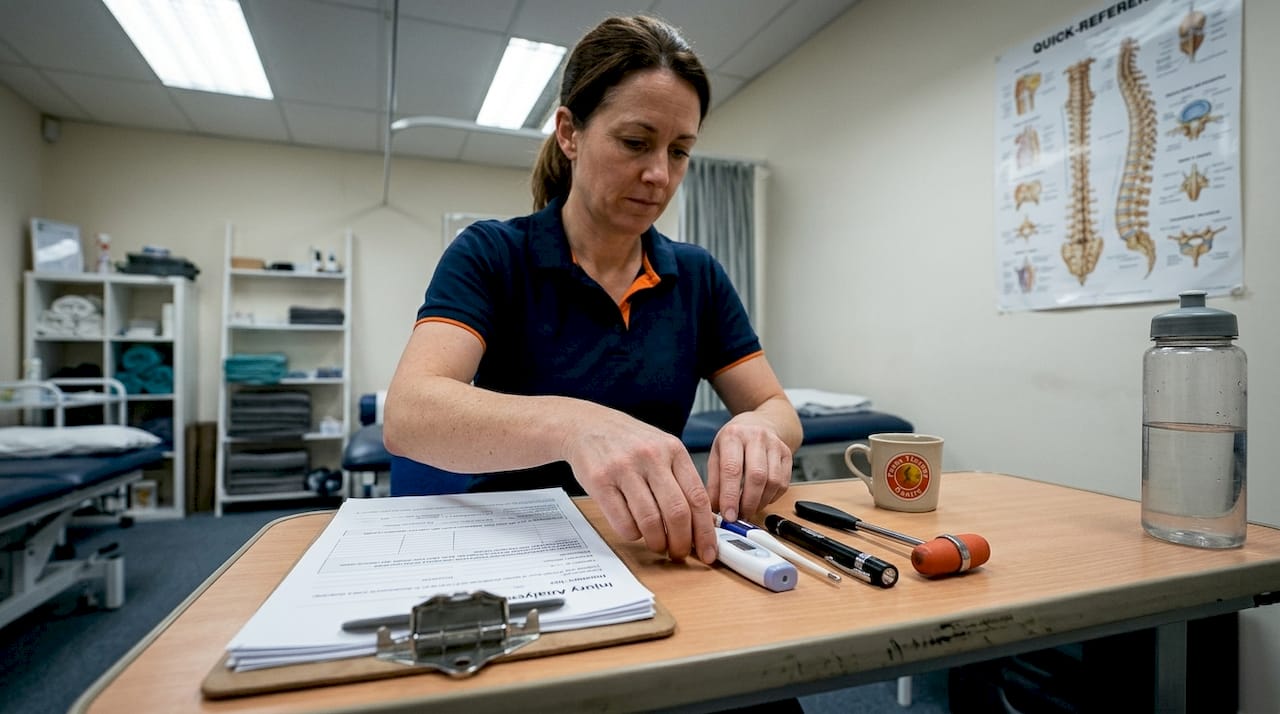
A notebook or phone to record symptoms, timing, and mechanism of injury
A basic first-aid kit
Standard initial assessment of sports injuries involves taking a detailed history and conducting a physical examination, so being prepared to document what happened is genuinely useful.
Environment | Key preparation steps |
Home | Clear space, good lighting, first-aid kit nearby |
Sports field | Remove from play area, use team first-aid kit |
Gym | Alert staff, use available equipment, call for help if needed |
Pro Tip: Keep the injured person as still and calm as possible before you begin. Anxiety increases perceived pain and can make assessment harder. A quiet, reassuring voice goes a long way.
Following injury prevention steps before training can reduce the likelihood of reaching this point in the first place.
Step by step: how to assess a sports injury
With your kit ready, work through these steps methodically. Rushing leads to missed findings.
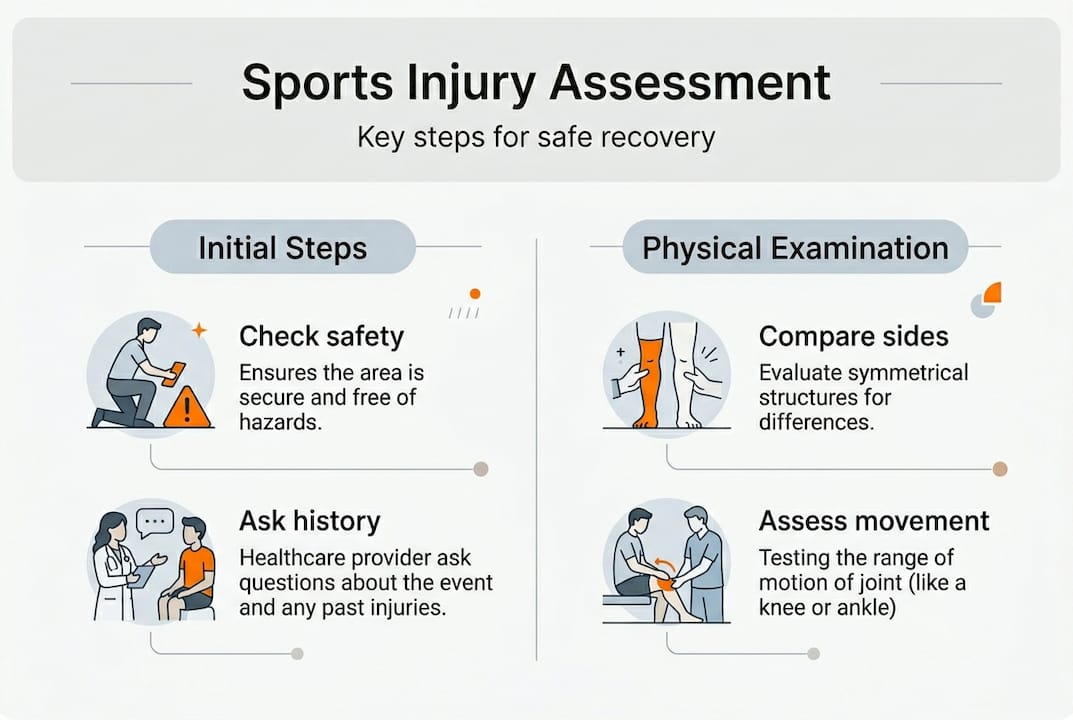
Ensure safety (ABCDE approach): Check airway, breathing, circulation, disability (level of consciousness), and exposure of the injury site. For acute assessment, the ABCDE framework followed by a secondary survey is the recommended starting point.
Gather history: Ask what happened, when, and how. Note the mechanism (twist, impact, overuse), any sounds heard (a pop or crack), and whether pain was immediate or developed gradually. Standard history includes mechanism, timing, symptoms, activity level, and risk factors.
Observe: Look at the injured area without touching it first. Note swelling, bruising, skin colour changes, and any obvious deformity.
Palpate: Gently press along the bone and soft tissue to locate the point of maximum tenderness. Start away from the injury and work towards it.
Test movement: Ask the person to move the joint actively (on their own) before you apply any passive movement. Note what hurts and what range is available.
Neurovascular check: Confirm sensation, circulation, and movement below the injury site are intact.
Pro Tip: Always compare the injured side with the uninjured side. What looks like swelling on one ankle may simply be that person’s normal anatomy. The comparison gives you a reliable baseline.
Building good habits around post-injury prevention starts with understanding what went wrong in the first place. Once you have your findings, guided physiotherapy recovery can help you structure a safe return to full fitness.
Clinical decisions: when to image and when to wait
Following your assessment, you need to decide whether imaging is necessary or whether careful observation over a few days is appropriate.
The Ottawa Ankle Rules are the gold standard for this decision. They recommend X-ray if the person has bone tenderness at specific points on the ankle or foot, or if they cannot bear weight for four steps. Crucially, Ottawa Ankle Rules carry a sensitivity of 99.4%, meaning they are extremely reliable at ruling out fractures when the criteria are not met.
Scenario | Recommended action |
Bone tenderness, unable to bear weight | Seek X-ray using Ottawa criteria |
Soft tissue pain, can bear weight | Monitor and reassess after 4 to 5 days |
Improving with PEACE & LOVE management | Continue conservative care |
No improvement after 5 to 7 days | Seek professional physiotherapy review |
“Use clinical decision rules like Ottawa for X-ray if fracture is suspected.” — NICE Clinical Knowledge Summary
For ligament injuries specifically, a delayed examination at four to five days post-injury can actually give a more accurate picture of severity, once initial swelling has settled. Understanding effective sports injury management means knowing that patience in the assessment phase often leads to better treatment decisions.
Modern management principles: PRICE versus PEACE & LOVE
For years, PRICE (Protection, Rest, Ice, Compression, Elevation) was the default advice for acute soft tissue injuries. The evidence has moved on.
PEACE & LOVE is the updated framework now favoured by sports medicine clinicians. It stands for: Protection, Elevation, Avoid anti-inflammatory modalities, Compression, Education, followed by Load, Optimism, Vascularisation, and Exercise.
Principle | PRICE | PEACE & LOVE |
Ice use | Recommended | Questioned or avoided |
Rest | Emphasised | Short-term protection only |
Early loading | Not included | Central to recovery |
Psychological element | Absent | Optimism actively encouraged |
Anti-inflammatories | Often used | Avoided in early phase |
Recent evidence from randomised controlled trials shows comparable or better outcomes with PEACE & LOVE versus PRICE in ankle sprains, with early loading and a positive mindset benefiting long-term recovery.
Key do’s and don’ts in the first 48 hours:
Do protect the area from further harm
Do elevate the limb above heart level to reduce swelling
Do apply gentle compression
Do not apply ice directly to skin or for prolonged periods
Do not take anti-inflammatory medication routinely in the first 72 hours
Do not return to full training before pain-free movement is restored
“Early loading and optimism benefit long-term outcomes more than passive rest and ice.” — PEACE & LOVE framework
Understanding the role of physiotherapy in guiding this active recovery phase can make a significant difference to how quickly you return to sport.
Verifying progress: when to resume activity and seek further help
Knowing when you are ready to return to sport is just as important as the initial assessment. Going back too soon is one of the most common causes of re-injury.
The benchmark is clear: return to sport only when you have full, pain-free range of movement and restored strength in the affected area. If you are still compensating, limping, or avoiding certain movements, you are not ready.
Signs your injury needs further professional review:
Pain or swelling that has not improved after five to seven days
Persistent instability or giving way of the joint
Inability to bear weight or perform basic sport-specific movements
Recurring injury in the same area
Numbness or weakness that has not resolved
Statistic: Strength training can prevent more than 50% of sports injuries, underlining how structured rehabilitation is not just about recovery but about protecting your future performance.
For knee-specific concerns, reviewing knee injury prevention tips can help you build resilience once you are back on your feet.
Professional help for sports injuries in Bedfordshire and Buckinghamshire
Self-assessment is a valuable skill, but there are times when professional eyes make all the difference. If your assessment leaves you uncertain, or if your injury is not progressing as expected, expert support is close to hand.
At Parks Therapy Centre, our team of qualified physiotherapists and sports injury specialists has been supporting active people across Bedfordshire and Buckinghamshire since 1986. We offer thorough clinical assessments, hands-on treatment, and access to diagnostic imaging referrals when imaging is needed to confirm a diagnosis. Whether you are dealing with a fresh ankle sprain or a recurring problem that has never quite resolved, we can help you understand what is happening and build a clear path back to full activity. Book online or contact your nearest centre today.
Frequently asked questions
What should I do if I hear a pop during an injury?
Stop activity immediately, immobilise the area, and seek urgent medical assessment. A popping sound can indicate suspected structural injury such as ligament or tendon rupture, which is a clinical red flag requiring prompt review.
How soon can I apply ice after a sports injury?
Routine ice application is now questioned by current evidence. Modern PEACE & LOVE guidelines favour gentle protection and elevation in the first hours, as early ice may impair the natural healing response.
What is the most reliable clinical test for a broken ankle?
The Ottawa Ankle Rules are the most widely validated tool, with sensitivity of 99.4% for detecting fractures. They guide clinicians on whether X-ray is necessary based on specific tenderness and weight-bearing ability.
Can I return to sport if there is still some pain?
No. Return to sport should only happen when you have full, pain-free range of movement and normal strength, as returning early significantly increases the risk of re-injury.
Why is rest not always recommended immediately after an injury?
Prolonged rest can slow recovery. Early loading and movement are now supported by research as more effective for long-term outcomes than passive rest, provided the injury is not a red-flag case requiring immobilisation.
Recommended