
Hand pain prevention tips: 10 expert strategies
TL;DR:
Proper ergonomics, targeted exercises, and assistive devices can effectively prevent hand pain and maintain joint health.
Seeking professional guidance early enhances long-term outcomes by tailoring strategies to individual needs and conditions.
Hand pain can stop you mid-sentence, mid-task, or mid-meal. Whether you’re struggling to open a jar, grip a pen, or carry shopping bags, the impact on daily life is immediate and often underestimated. These hand pain prevention tips are grounded in clinical evidence and practical experience, giving you a clear path to protecting your hands before pain takes hold or worsens. From ergonomic adjustments to targeted exercises, what follows is exactly what works.
Table of Contents
Key takeaways
Point | Details |
Ergonomics matter daily | Adapting your tools and workspace reduces joint stress and prevents cumulative hand damage. |
Exercise keeps joints mobile | Regular finger and thumb exercises maintain flexibility and reduce the risk of stiffness and pain. |
Assistive devices protect joints | Jar openers, foam-grip handles, and splints allow daily tasks without overloading hand joints. |
Heat and cold serve different roles | Use heat for stiffness, cold for inflammation. Applying the wrong one can worsen symptoms. |
Professional input changes outcomes | Occupational therapy and physiotherapy provide personalised strategies that self-management alone rarely achieves. |
1. Apply ergonomic principles at home and at work
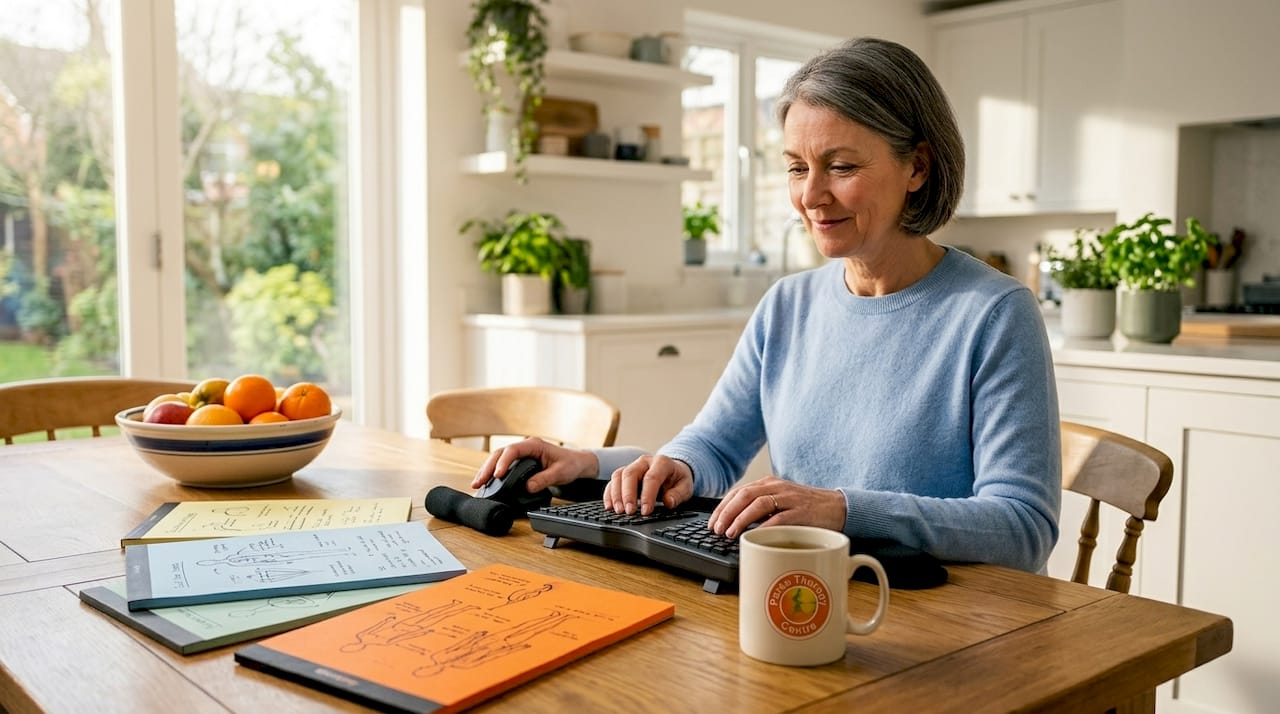
Ergonomics is the science of designing your environment to suit your body, not the other way around. For your hands, this means reducing the force, repetition, and awkward positions that lead to joint stress over time. Experts recommend avoiding repetitive gripping and using ergonomic tools as key strategies for managing hand arthritis and preventing its worsening.
Start with your workstation. If you type frequently, position your keyboard so your wrists remain neutral rather than bent upward. A mouse with a larger, contoured grip reduces the pinching motion that strains small finger joints. At home, switch standard cutlery and kitchen tools for wide-handled versions that require far less force to hold.
Replace thin-handled tools with wide-grip alternatives
Use pen grips or chunky pens for writing tasks
Position your screen at eye level to avoid compensatory arm tension
Use lever-style taps and door handles where possible
Spread tasks throughout the day rather than completing them all at once
Pro Tip: Wrap foam pipe insulation around tool handles at home. It costs very little, takes minutes, and immediately reduces the gripping force needed.
Understanding the relationship between ergonomics and injury prevention is one of the most underused tools for long-term hand health. Most people address pain only after it arrives. Ergonomics is how you stop it arriving in the first place.
2. Practise targeted hand exercises daily
Movement is medicine for your joints. Gentle, consistent exercise keeps hand tendons supple, maintains grip strength, and reduces the stiffness that often precedes pain. Therapy programmes covering finger bending, thumb stretches, tendon-gliding, and grip exercises all help improve mobility and hand strength over time.
Here is a simple daily routine to follow:
Finger bends: Slowly curl each finger toward your palm, hold for five seconds, then straighten. Repeat ten times per hand.
Thumb stretch: Extend your thumb outward as far as comfortable, hold for three seconds, then bring it across your palm toward your little finger. Repeat eight times.
Tendon glide: Start with fingers straight. Bend into a hook fist, then a full fist, then a straight fist. Return to start. Repeat ten times.
Soft ball squeeze: Use a soft foam ball or stress ball. Squeeze gently for five seconds, then release. Ten repetitions builds grip endurance without overloading joints.
Wrist circles: With your arm supported, rotate your wrist slowly in both directions. Five rotations each way reduces tension that travels into the hand.
A three-month occupational therapy course has been shown to relieve hand pain effectively and improve grip strength. You do not need to wait until pain is severe to benefit from structured exercises. Starting them early is far more effective.
Pro Tip: Do your hand exercises in the morning before getting out of bed. Joints are often at their stiffest first thing, and gentle movement at this point makes the rest of the day significantly easier.
3. Modify how you carry out daily activities
The way you perform ordinary tasks matters as much as the tools you use. Tight gripping, repetitive pinching, and prolonged holding in a single position are all patterns that overload the small joints of the hand and fingers.
One of the most practical shifts is redistributing load to larger, more stable joints. Carrying bags on your shoulder or in the crook of your elbow, rather than gripping handles with your fingers, significantly reduces stress on hand joints. It sounds minor. The difference over a full day of activity is substantial.
Use your forearm to carry plates rather than gripping the edge
Push doors open with your shoulder or palm rather than the fingertips
Carry shopping in a backpack or wheeled bag where possible
Screw lids with your palm flat against the top, using the heel of your hand
Delegate genuinely heavy or high-resistance tasks when your hands are already fatigued
Taking frequent breaks during tasks that strain the hands reduces cumulative joint stress and lowers pain risk considerably. Set a timer if you need a prompt. Five minutes of rest every thirty minutes of hand-intensive work adds up to real protection.
4. Use assistive devices and adaptive gadgets
Assistive devices do not represent defeat. They represent intelligence. The right gadget protects your joints while keeping you independent and active in the tasks you want to do.
Wider handles and adapted grips reduce the force needed to hold items, easing hand pain significantly during daily activities. Foam tubing wrapped around pen handles, cutlery, or garden tools achieves the same effect at minimal cost.
Device | Benefit | Best used for |
Jar opener | Removes twisting force from fingers | Cooking and food preparation |
Foam tube grips | Widens handle to reduce grip force | Writing, cutlery, tools |
Non-slip mats | Stabilises items without gripping | Chopping boards, bowls |
Thumb stabiliser splint | Protects the joint during activity | Flare-ups, heavy hand use |
Angled knife | Reduces wrist deviation needed | Cutting tasks in the kitchen |
Electric can opener | Eliminates repetitive turning motion | Food preparation tasks |
Splints and braces stabilise joints and reduce excessive movement that worsens inflammation, particularly during flare-ups. Your occupational therapist can advise on the correct type and fit for your specific situation.
Explore how physiotherapy aids support pain management and daily function if you are unsure where to begin with equipment choices.
5. Apply heat and cold therapy appropriately
Temperature therapy is one of the most accessible hand pain management tips available, and yet it is frequently misapplied. The key is knowing which to use and when.
Heat loosens stiff joints and improves flexibility. A warm compress, a bowl of warm water, or a paraffin wax bath applied for ten to fifteen minutes before activity can dramatically improve the range of motion in stiff hands. Cold therapy, on the other hand, reduces swelling and numbs acute pain during a flare-up. A cold pack wrapped in a cloth (never placed directly on skin) for ten minutes is usually sufficient.
The mistake most people make is reaching for heat during an active inflammatory episode because it feels comforting. Heat during active swelling increases blood flow and can worsen inflammation. If your hand is warm, red, or visibly swollen, cold is the correct choice. If your hand is stiff and aching without obvious swelling, warmth is what it needs.
Pro Tip: A paraffin wax bath is worth the investment if you deal with regular hand stiffness. Soaking hands in warm paraffin wax penetrates heat deeper than a surface compress and many people find it far more effective for morning stiffness.
6. Make smart kitchen modifications
The kitchen is where hand pain is most disruptive and where small changes make the biggest difference. Chopping, stirring, opening packaging, and lifting pots all demand grip strength and repetitive hand motion.
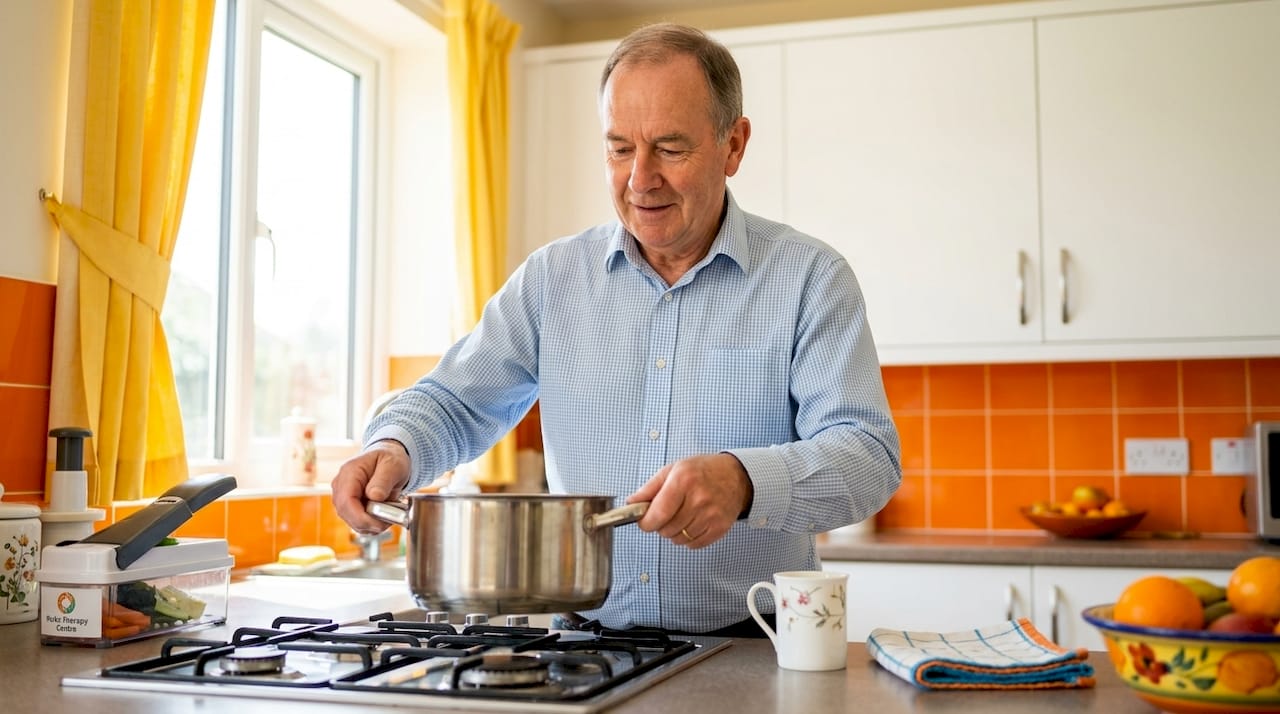
Using a food processor or push-button chopper shifts the workload from small hand joints to larger muscle groups, reducing pain during cooking tasks considerably. Similarly, electric tin openers, jar openers, and lever-style peelers remove the most punishing motions entirely.
Choose pots and pans with two handles rather than one long handle. Two-handed lifting distributes load across both arms and removes all stress from the fingers. Non-slip mats under chopping boards mean you do not need to grip or stabilise the board yourself. These adjustments are not dramatic. Cumulatively, they transform the kitchen from a source of hand pain into a manageable space.
7. Consult a professional for personalised guidance
Self-management is valuable. Professional assessment is where lasting change happens. Joint protection strategies taught by occupational therapists significantly improve both function and pain levels, going well beyond what generic advice alone achieves.
A physiotherapist will assess your specific pattern of pain, identify the movements and habits driving it, and design a programme around your daily life. Anti-inflammatory medication, when appropriate and taken under medical supervision, can support this process by reducing the baseline pain that makes exercise and activity difficult.
Do not wait until you can no longer grip a cup before seeking help. Early intervention consistently produces better long-term outcomes. The range of physiotherapy techniques now available means there is nearly always an approach suited to your situation and your stage of pain.
8. Summary comparison of hand pain prevention strategies
Strategy | Ease of use | Cost | Best for |
Ergonomic tools | High | Low to moderate | Daily work and kitchen tasks |
Hand exercises | High | Free | Maintaining mobility and strength |
Activity modification | High | Free | Reducing joint overload |
Assistive devices | Moderate | Low to moderate | Flare-ups and heavy tasks |
Heat therapy | High | Low | Morning stiffness and pre-activity |
Cold therapy | High | Low | Active inflammation and flare-ups |
Professional therapy | Moderate | Moderate | Personalised, lasting improvement |
My take on managing hand pain effectively
I have seen a consistent pattern over the years. People arrive at a clinic having tried one or two things, found partial relief, and concluded that nothing really works. What they have actually found is that no single strategy works alone.
The most effective hand pain prevention plans I have encountered combine at least three approaches: something environmental (ergonomics, assistive devices), something physical (exercises, therapy), and something habitual (activity modifications, breaks, temperature therapy). Each element compensates for the limitations of the others.
The other pitfall I see regularly is people following generic advice when their hands need a specific response. Arthritis-related hand pain behaves differently from tendon-related pain or nerve-related pain. What helps one can irritate another. This is where a qualified therapist becomes genuinely useful rather than optional.
My honest advice: start with ergonomics and exercises. Both are free, low-risk, and immediately practical. Then get assessed. Not because you cannot manage without it, but because a professional can see what you cannot and shortcut months of trial and error. Your hands do too much every day to treat their care as an afterthought.
— Ivan
How Parkstherapycentre can support your hand health
If hand pain is affecting your daily life, you do not have to manage it alone. Parkstherapycentre has provided physiotherapy and occupational therapy services across Bedfordshire and Buckinghamshire since 1986, with a team qualified to assess and treat hand pain at its source.

Whether you are dealing with early stiffness, persistent aching, or recurring flare-ups, a professional assessment from Parkstherapycentre gives you a personalised plan rather than guesswork. Their physiotherapy services cover everything from hands-on treatment to exercise prescription and assistive device advice. Book an appointment online, or call your nearest centre to speak with a specialist. Protecting your hands now is always easier than recovering from prolonged damage later.
FAQ
What are the best hand pain prevention tips for daily use?
The most effective daily strategies are ergonomic tool use, regular hand exercises, and frequent breaks during repetitive tasks. Combining these three reduces joint stress across the full range of activities most people perform each day.
When should I use heat versus cold for hand pain?
Use heat for stiffness and pre-activity warm-up, and cold for active swelling or inflammation during a flare-up. Applying heat to an inflamed joint can increase swelling, so match the treatment to the symptom you are actually experiencing.
Can hand exercises really prevent pain from worsening?
Yes. A structured programme of finger bends, tendon-gliding, and grip exercises improves both mobility and strength. Research supports that a three-month occupational therapy course produces measurable improvement in grip strength and pain levels.
Do assistive devices actually make a significant difference?
They do, particularly for reducing force on small joints during repetitive tasks. Foam-grip handles, jar openers, and lever tools remove the specific motions most likely to aggravate hand pain, letting you stay active without the cumulative damage.
When is it time to see a professional about hand pain?
If pain persists for more than a few weeks, limits daily tasks, or is accompanied by visible swelling or joint deformity, seek professional advice. Early physiotherapy or occupational therapy consistently produces better outcomes than waiting until pain becomes severe.
Recommended