
Role of physiotherapy in groin recovery: a guide
TL;DR:
Groin injuries are often underestimated, but physiotherapy plays a crucial role in accelerating targeted healing. Accurate assessment and personalized programs based on specific injury sources can significantly shorten recovery times, which typically range from 8 to 16 weeks with proper load progression. Combining structured, phased rehabilitation with multidisciplinary input ensures effective prevention and a safe return to sport or activity.
Groin injuries are consistently underestimated. Whether you are a footballer returning from a tournament or a recreational runner nursing a nagging ache in your inner thigh, the role of physiotherapy in groin recovery is far more significant than most people realise. The instinct to rest and wait it out is understandable, but it is often the wrong call. Groin pain stems from several distinct anatomical sources, and without targeted intervention, the underlying dysfunction persists. This article explains precisely how physiotherapy accelerates healing, what a structured recovery looks like in practice, and why a personalised approach is the difference between a four-week return and a four-month setback.
Table of Contents
Key Takeaways
Point | Details |
Groin pain varies in cause | Proper diagnosis narrows groin pain to specific anatomical drivers guiding rehab. |
Tailored rehab is effective | 80–90% of groin injuries improve with physiotherapy focused on strength and gradual loading. |
Phased recovery approach | Structured progression through pain control, strengthening, and functional phases maximises healing. |
Prevent recurrence holistically | Building capacity across hip, pelvis, and core coordination prevents future injuries. |
Professional guidance aids recovery | Expert physiotherapy plans and supervised progression ensure safer, quicker return to activity. |
Understanding groin injuries and physiotherapy’s role
Groin pain is not a diagnosis. It is a symptom. The discomfort you feel in the upper inner thigh or lower abdomen could originate from the adductor muscles, the hip joint, the pubic symphysis, the inguinal region, or even referred pain from the lower back. Each of these sources demands a different rehabilitation strategy. Treating them all the same way is how groin injuries become chronic.
That is why accurate assessment sits at the foundation of effective physiotherapy for groin injuries. The Doha Agreement classification system, developed by an international panel of sports medicine experts, groups groin pain into four clinical entities: adductor-related, inguinal-related, iliopsoas-related, and pubic-related. A physiotherapist who uses this framework from the outset is already working smarter than one who applies a generic hip strengthening protocol and hopes for the best.
Individualised management is crucial for outcomes and minimising time away from sport. This is not an opinion; it is the consistent finding across groin injury research. When the specific pain source is identified early, rehabilitation exercises can be matched directly to the tissue under stress.
Here is what a targeted assessment considers before building your rehab programme:
Which muscle groups reproduce the pain when loaded or stretched?
Is there any palpable tenderness along the adductor tendons, pubic tubercle, or inguinal canal?
Does hip range of motion testing reveal restrictions that suggest joint involvement?
Are there signs of referred pain from the lumbar spine or sacroiliac joint?
What movements or training loads were present in the weeks before onset?
Following this kind of structured assessment, a physiotherapist can build a programme that addresses the actual problem. You can also read our groin injury prevention tips to understand the risk factors that often precede these injuries in the first place.
Core physiotherapy practices and evidence for groin recovery
The evidence base for physiotherapy in groin injury management is strong and growing. Conservative physiotherapy is effective in 80 to 90 per cent of cases, with recovery commonly taking between 8 and 16 weeks. That timeline assumes a structured programme with proper load progression, not passive rest punctuated by occasional stretching.
One of the most important distinctions in groin strain recovery techniques is the difference between rest and activity modification. Complete rest weakens the tissues you need to retrain and allows compensatory movement patterns to set in. What the evidence actually supports is gradual progressive loading and activity modification, meaning you reduce what aggravates symptoms while maintaining conditioning through low-impact alternatives.
A well-structured physiotherapy programme typically follows this progression:
Early phase (weeks 1 to 4): Pain management through manual therapy, gentle range-of-motion work, isometric adductor exercises, and activity modification to offload irritated tissue without deconditioning.
Intermediate phase (weeks 5 to 8): Progressive strengthening of the adductors, hip abductors, hip flexors, and deep core muscles. Resistance is increased systematically as pain allows.
Advanced phase (weeks 9 to 12 and beyond): Sport-specific loading, proprioceptive training, change-of-direction drills, and return-to-training testing against objective benchmarks.
“The goal is not simply to reduce pain. It is to restore the capacity to perform the demands that caused the injury in the first place, with enough reserve to prevent it happening again.”
Pro Tip: Do not use pain as your only guide for progression. A physiotherapist will use strength symmetry tests, such as the adductor squeeze test at different hip angles, to determine safe loading increments even when you feel symptom-free.
Reviewing a post-injury training plan alongside your rehabilitation can help you understand how to maintain fitness while protecting healing tissue. For those new to structured rehabilitation, our essential physiotherapy tips provide a useful starting framework.
Expert nuances and multidisciplinary approaches in physiotherapy for groin pain
Groin pain management strategies become considerably more effective when specialists collaborate. A physiotherapist working alone can achieve excellent results, but complex presentations often benefit from input from sports medicine physicians, radiologists, and in some cases, surgeons who can confirm or rule out structural pathology before loading begins.
The importance of physiotherapy in recovery becomes especially clear when you consider how easy it is to mismanage groin pain. An athlete who self-diagnoses a mild adductor strain and returns to training too early may actually have a low-grade pubic bone stress response, which requires a very different loading timeline. Imaging and clinical expertise are sometimes necessary to get the classification right.
No single standardised treatment algorithm exists for groin pain; physiotherapy is exercise-led with progressive overload guided by the specific clinical entity. This means your programme should evolve as you respond. A plan locked in stone at week one is already outdated by week four.
Key principles that define effective, advanced physiotherapy for groin injuries include:
Progressively increasing adductor load through positions that reflect your sport or daily function
Incorporating hip and lumbopelvic stability exercises to support the groin under dynamic load
Identifying and correcting asymmetries in strength or movement that contributed to the original injury
Using sport-specific tasks, such as kicking, cutting, or lunging, as benchmarks for readiness, not just pain ratings
Regularly reassessing and adjusting the programme based on objective findings
“Classifying groin pain to its specific source is essential before choosing rehabilitation methods.”
Working with a centre that offers personalised physiotherapy plans rather than template protocols makes a significant difference, particularly for athletes with complex presentations or previous injury history.
Phased physiotherapy programmes and practical recovery planning
Structure matters enormously in groin injury rehabilitation. A structured, phased rehabilitation programme with defined progression criteria guides recovery effectively and reduces the risk of premature loading, which is one of the leading causes of re-injury.
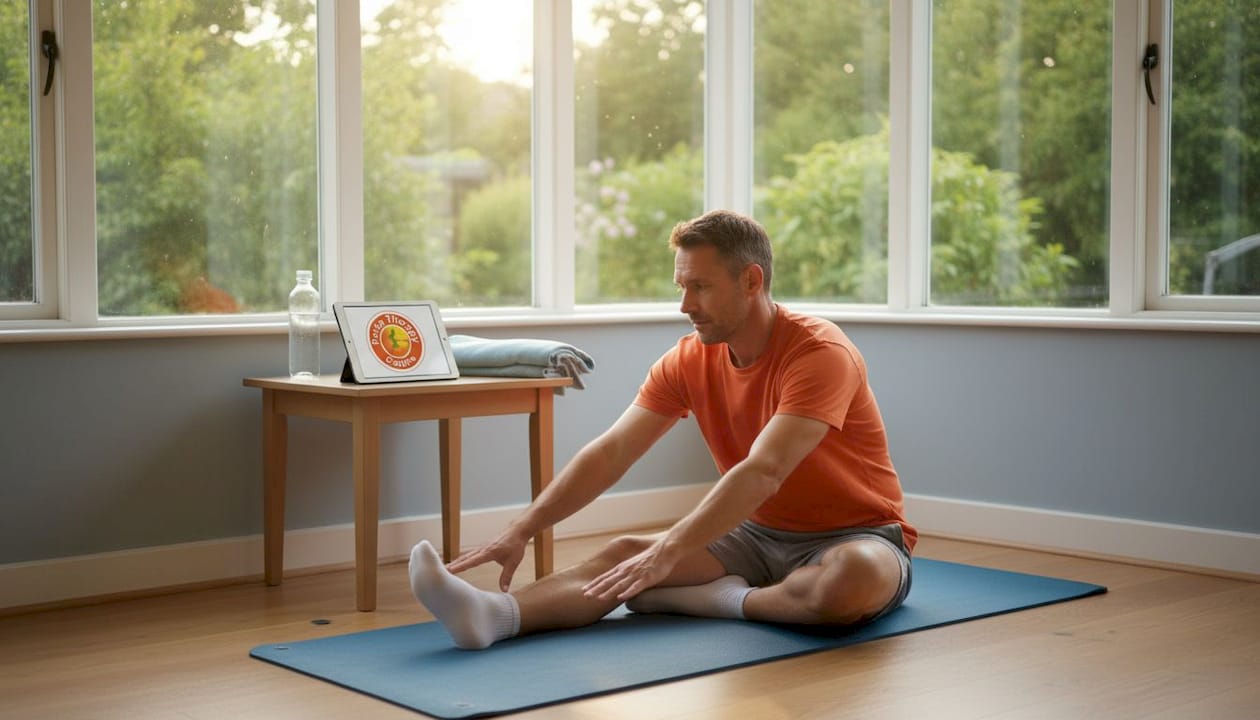
Here is how a 12-week phased programme typically maps out:
Phase | Timeframe | Focus areas | Progression marker |
Early | Weeks 1 to 4 | Pain control, isometric strength, mobility | Pain below 3/10 during all exercises |
Intermediate | Weeks 5 to 8 | Isotonic strengthening, core stability, flexibility | 70% symmetry on adductor squeeze test |
Advanced | Weeks 9 to 12 | Sport-specific loading, proprioception, return-to-play | 90% symmetry, full sport simulation |
The transition between phases is based on criteria, not calendar dates. If you are still experiencing significant pain at week five, you do not move to the intermediate phase simply because the date says so. This is a critical point that separates effective from ineffective groin injury management strategies.
Practical steps for ensuring a smooth phased recovery:
Keep a simple daily log of pain ratings, exercises completed, and any aggravating activities. This gives your physiotherapist real data to work with.
Do not skip the core and hip stability work in the early phases. It feels indirect, but it reduces the load going through the groin during later, heavier exercises.
When you start sport-specific drills, begin at 50 to 60 per cent of match intensity and progress over two weeks, not two days.
Pro Tip: The best predictor of safe return to sport is not how you feel during a warm-up. It is how you feel 24 to 48 hours after your hardest training session. Ask your physiotherapist to build that buffer into your progression criteria.
Combining your rehabilitation with a structured safe post-injury training plan and understanding the broader principles behind sports physiotherapy will give you a much clearer picture of where you are in your recovery and what comes next.
Rethinking groin recovery: what physiotherapy actually builds
Here is something most articles on this topic do not say clearly enough. The groin does not exist in isolation. When a footballer tears an adductor, the actual problem is rarely just that muscle. It is the entire lumbopelvic and hip system failing to share load appropriately, leaving the adductor to absorb forces it was not designed to handle alone.
Recurrence prevention relies on building capacity across the lumbopelvic, hip, and adductor chain rather than isolated strengthening alone. That framing should change how you think about rehabilitation exercises for groin recovery. Copenhagen adductor exercises are excellent, but they are not enough on their own. You also need lateral hip strength, rotational control, and the ability to stabilise your pelvis when one leg is on the ground and the other is driving forward.
We see this regularly in practice. A patient completes a textbook adductor strengthening programme, returns to sport, and re-injures within six weeks. Not because the programme was wrong, but because it stopped too soon and neglected the coordination and load-sharing patterns that protect the groin under real sporting conditions.
Passive treatments, including ultrasound, ice packs, and anti-inflammatory medication, have their place in early-stage symptom management. What they do not do is rebuild the neuromuscular control and tissue capacity that prevents the next injury. Relying on them beyond the early phase is one of the most common mistakes we see, and it almost always extends recovery unnecessarily.
The role of physical therapy in healing is to make you more capable than you were before the injury, not simply to return you to baseline. That distinction is worth sitting with, especially if you have had this injury before. Our prevention tips for groin injury take this capacity-building view and apply it to training habits that reduce risk over time.
How Parks Therapy Centre supports your groin recovery
Recovering from a groin injury is considerably more straightforward when you are working with people who understand both the anatomy and the practical demands of your sport or lifestyle.
At Parks Therapy Centre, our physiotherapists carry out thorough clinical assessments to identify the specific source of your groin pain before building a personalised, phased rehabilitation programme. We use current evidence-based approaches to guide you through each stage of recovery, from early pain management through to full return-to-sport testing. Whether you need support with your groin injury prevention guidance or a structured post-injury training support plan, our team across Bedfordshire and Buckinghamshire is ready to help. Book an appointment online today and take the first practical step towards a confident, lasting recovery.
Frequently asked questions
How long does physiotherapy-based groin recovery usually take?
Recovery typically takes 8 to 16 weeks with physiotherapy-centred conservative treatment, though timelines vary with injury severity and how consistently you follow a progressive rehabilitation programme.
Why is accurate classification of groin pain important for physiotherapy?
Accurate classification allows your physiotherapist to direct rehabilitation at the specific injured tissue, which produces better outcomes and reduces the time you spend away from sport or activity.
Can I continue training during groin physiotherapy?
Training should be guided by your physiotherapist; suspending aggravating activities while maintaining low-impact conditioning is the standard approach, balancing healing with fitness preservation.
Is rest alone enough to heal groin injuries?
No. Rehabilitation and load progression are central to recovery; rest without targeted physiotherapy typically leads to a longer recovery period and a higher chance of re-injury.
What makes physiotherapy different from passive treatments for groin pain?
Physiotherapy targets strength gaps and movement patterns, addressing the root cause of your symptoms rather than temporarily reducing discomfort without resolving the underlying dysfunction.
Recommended