
Your complete guide to physiotherapy for hip pain relief
- May 15
- 10 min read
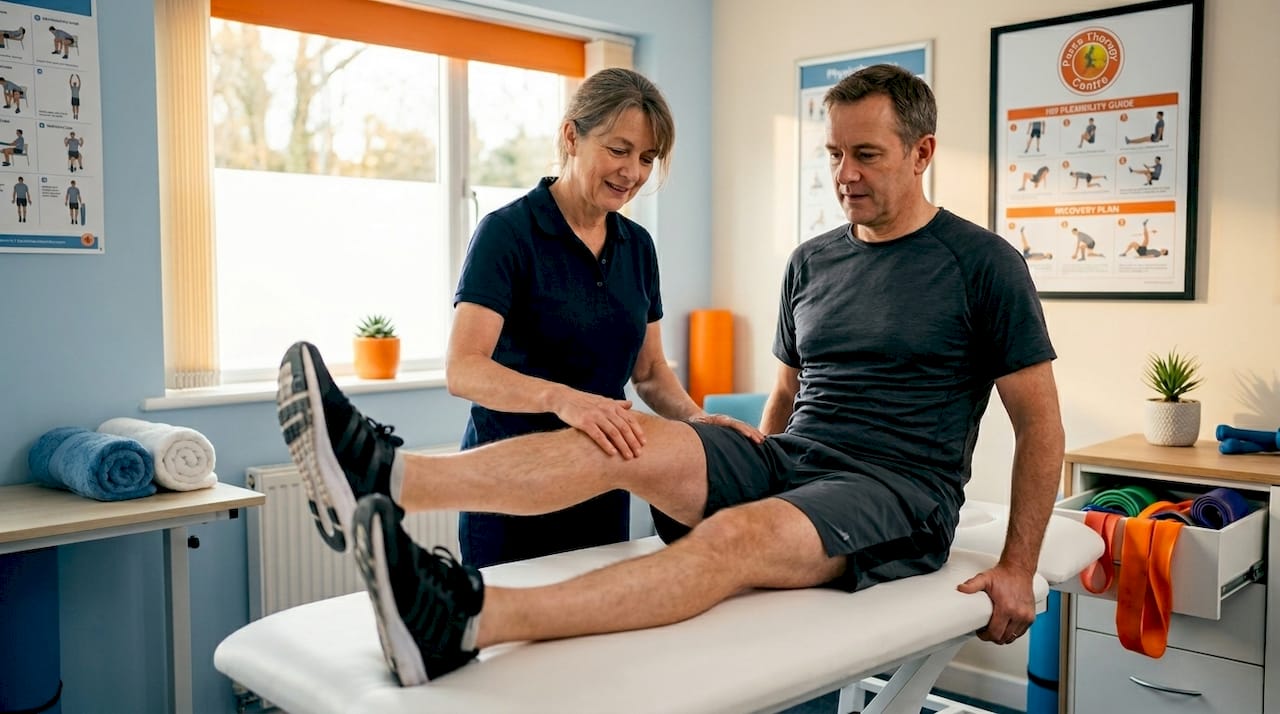
TL;DR:
Hip pain can significantly impact daily activities, often requiring early self-management and professional physiotherapy for optimal recovery. Causes vary from osteoarthritis to bursitis or muscle strains, with pain location guiding diagnosis, and red flags needing urgent medical attention. Early controlled exercises, gentle stretching, and tailored physiotherapy support promote healing within six to eight weeks, with individual treatment plans essential for effective rehabilitation.
Hip pain has a way of creeping into every part of your day. Getting out of a chair, climbing stairs, walking to the car, even sleeping comfortably can become a genuine struggle. If you’re living in Bedfordshire or Buckinghamshire and wondering whether what you’re feeling is normal, how long it should last, or whether physiotherapy could genuinely help, you’re in the right place. NHS guidance for hip pain in adults makes it clear: staying gently active, managing symptoms early, and seeking professional help when needed are the cornerstones of recovery. This guide walks you through all of it, step by step.
Table of Contents
Understanding hip pain: causes, symptoms and when to seek help
Preparing for recovery: symptom management and initial steps
Therapeutic exercises: building strength and regaining movement
Progress tracking and adjustments: when to escalate or modify
A practical reality check: what works, what ‘might’, and what to question
Key Takeaways
Point | Details |
Keep moving safely | Staying gently active and avoiding excess strain is vital for hip recovery. |
Home care is first-line | Simple self-management—ice, footwear, stretches—should begin early for best results. |
Individualised exercise matters | Tailored flexibility and strengthening exercises support long-term function and comfort. |
Know when to escalate | Seek physiotherapy if pain persists, worsens, or limits your daily activities. |
Realistic expectations | Expect recovery to take weeks—adapt your plan and ask for help if in doubt. |
Understanding hip pain: causes, symptoms and when to seek help
Hip pain is far more common than most people realise, and it rarely has a single, simple explanation. Before you can manage it effectively, it helps to understand what’s likely driving it in the first place.
Common causes of hip pain include:
Osteoarthritis (OA), which causes gradual cartilage wear and is the most frequent cause in adults over 45
Bursitis, an inflammation of the small fluid-filled sacs cushioning the joint
Muscle strains or tendinopathy, often linked to overuse or sudden increases in activity
Hip labral tears, where the cartilage ring around the socket is damaged
Referred pain from the lower back or sacroiliac joint, which can feel deceptively like hip pain
Less commonly, stress fractures, avascular necrosis, or inflammatory conditions such as rheumatoid arthritis
The location of your pain matters too. Pain felt deep in the groin tends to point towards the joint itself, while pain on the outer side of the hip often indicates bursitis or gluteal tendinopathy. Pain radiating down the leg may involve the lower back or sciatic nerve rather than the hip in isolation.
Most people with straightforward hip problems notice aching during or after activity, stiffness first thing in the morning, reduced range of movement, and a general sense that the joint just isn’t working as freely as it should. These are manageable and, in most cases, respond well to physiotherapy.
Red flags: seek urgent medical help if you experience any of the following:
Sudden, severe hip pain after a fall or impact (possible fracture)
Hip pain with fever, redness, or significant swelling (possible infection)
Complete inability to bear weight on the leg
Hip pain in a child, particularly if accompanied by a limp
Pain that wakes you from sleep regularly and is worsening rapidly
Understanding why physiotherapy matters for conditions like these is important because many people delay seeking help longer than necessary. The NHS hip pain advice is practical: use an ice pack for up to 20 minutes every two to three hours, consider paracetamol or ibuprofen gel for pain relief, wear comfortable shock-absorbing shoes, and keep gently moving rather than resting completely.
Crucially, hip pain usually improves in around six to eight weeks for straightforward cases. Physiotherapy becomes particularly valuable when pain is not improving after a few weeks despite self-help, when it is affecting your work or daily activities, or when it keeps coming back. Many people find reading physiotherapy tips for beginners helpful as an early orientation to what the process involves.
Preparing for recovery: symptom management and initial steps
Once you’ve recognised your symptoms and identified any red flags, the next logical step is taking deliberate control of your early recovery. What you do in the first days and weeks significantly shapes how quickly you get back to normal life.
Strategy | What to do | Why it helps |
Ice therapy | Apply for up to 20 minutes every 2 to 3 hours | Reduces local inflammation and numbs pain |
Pain relief | Paracetamol or ibuprofen gel as directed | Manages acute discomfort to allow gentle movement |
Footwear | Choose well-cushioned, supportive shoes | Reduces shock loading through the hip joint |
Activity modification | Avoid high-impact or aggravating tasks, but keep moving | Prevents deconditioning while protecting the joint |
Gentle stretching | Perform daily, within a comfortable range | Maintains mobility and reduces stiffness |
A stepwise approach for the first two weeks:
Days 1 to 3: Prioritise rest from aggravating activities only. Apply ice regularly. Begin very gentle range-of-movement exercises in lying or sitting, such as slow hip circles and gentle knee-to-chest pulls.
Days 4 to 7: Gradually resume light walking, aiming for short, frequent bouts rather than one long effort. Continue icing after activity. Introduce basic standing stretches for the hip flexors and glutes.
Week 2: If pain is settling, begin adding slightly more demanding movements such as supported squats or standing hip abduction. Aim to return to normal daily tasks progressively.
Week 3 onwards: If improvement is steady, progress to the therapeutic exercise plan below. If symptoms are static or worsening, book an appointment with a physiotherapist.
Your GP may give you simple exercises and refer for physiotherapy for more guided support with stretches and strengthening. In many areas, self-referral to NHS services is also an option, which removes the need for a GP appointment as a first step. A broader physiotherapy treatments guide can help you understand what to expect when you do access professional care.
Pro Tip: Keep a brief pain and activity diary from day one. Note your pain score out of ten each morning and evening, what you did that day, and any flare-ups. After two weeks, you’ll have a clear picture of your triggers and trends, which is invaluable when you speak to a physiotherapist.
Therapeutic exercises: building strength and regaining movement
With early symptoms under control, targeted exercise becomes the most powerful tool in your recovery. This is where lasting change happens, and where physiotherapy really earns its reputation.
Research is clear that hip exercises need to address three elements: flexibility, strength, and endurance. Focusing on only one of these tends to produce incomplete results. For example, stretching alone may relieve tightness temporarily but won’t address the muscle weakness that often underlies hip pain in the first place.
Exercise type | Examples | Primary benefit | Frequency |
Flexibility | Hip flexor stretch, figure-four stretch, pigeon pose | Improves range of movement, reduces stiffness | Daily |
Strengthening | Clamshells, bridges, side-lying leg raises | Builds glute and thigh muscle support | 3 times per week minimum |
Aerobic/low-impact | Swimming, cycling, walking | Improves joint nutrition, reduces pain | 3 to 5 times per week |
Manual therapy (adjunct) | Joint mobilisation, soft tissue work | Reduces pain, improves flexibility short-term | As prescribed |
Targeted exercises for hip OA should be completed every other day, at a minimum of three times per week. The muscle groups most important to focus on are the gluteals (your bottom muscles) and the quadriceps (front thigh). These are the primary stabilisers of the hip and knee and, when strong, they dramatically reduce the load placed on the joint itself.
It’s also worth understanding that manual therapy is recommended as a helpful adjunct for mild-to-moderate hip OA, particularly where flexibility and pain are the main issues. However, it works best alongside exercise, not instead of it.
A sample weekly exercise routine:
Warm-up (5 minutes): Slow walking or pedalling on a stationary bike. Gentle hip circles in standing.
Flexibility work (10 minutes): Hip flexor kneeling stretch, seated figure-four stretch, supine knee-to-chest hold. Each stretch held for 30 seconds, repeated twice.
Strengthening (15 minutes): Glute bridges (2 sets of 15), side-lying clamshells (2 sets of 15 each side), standing hip abduction with a resistance band (2 sets of 12 each side).
Functional movement (10 minutes): Mini squats to a chair, step-ups on a low step, tandem walking along a line to challenge balance.
Cool-down (5 minutes): Slow walking, gentle breathing, and a final quad stretch in standing.
For more ideas on what to do between clinic sessions, the physiotherapy home exercises resource offers practical guidance tailored to people working through musculoskeletal recovery.
Pro Tip: Never push through sharp or shooting pain during exercise. A mild ache that settles within 30 minutes of finishing is generally acceptable. Pain that spikes during a movement or lingers for hours afterwards is a signal to reduce the load or seek guidance.
Progress tracking and adjustments: when to escalate or modify
Recovery from hip pain is rarely a straight line. Understanding how to monitor your progress, handle setbacks sensibly, and recognise when professional review is needed can save you weeks of unnecessary suffering or, equally, unnecessary worry.
A practical way to track progress is to reassess three things each week: your pain levels during daily tasks, your range of movement (can you bend, rotate, or extend more freely than last week?), and your functional ability (can you walk further, climb stairs more easily, or return to activities you had to stop?). Improvement across all three, even if gradual, is a positive sign.
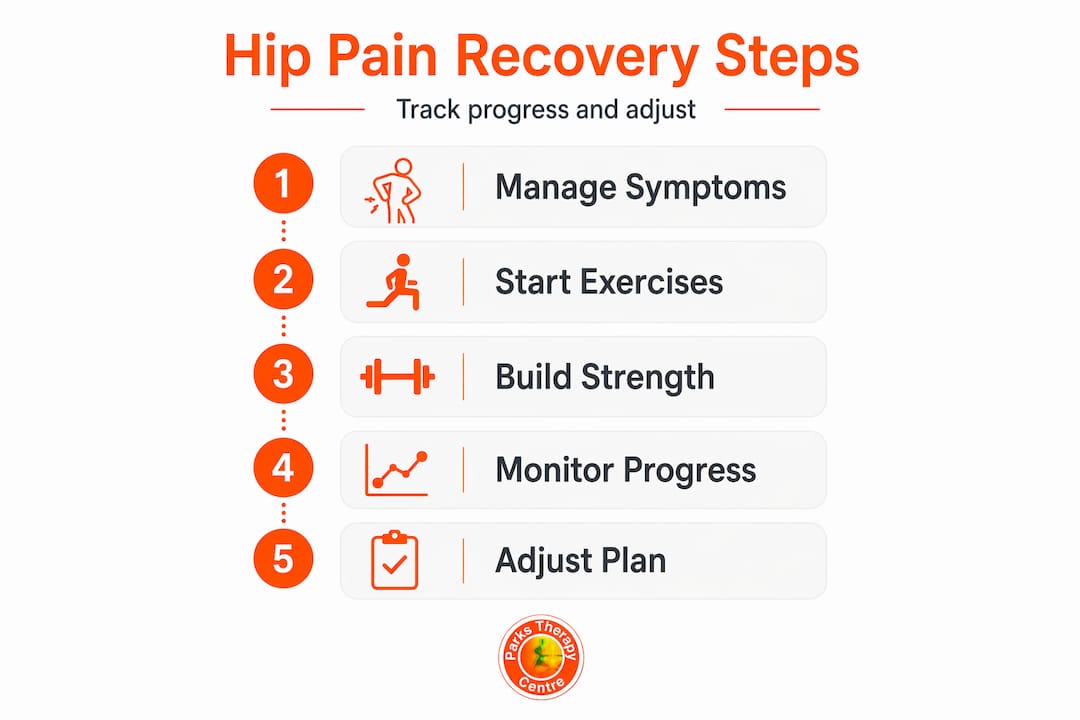
Flare-ups are a normal part of musculoskeletal recovery and don’t mean you’ve undone your progress. After a flare-up settles, gentle home exercises can typically resume within two to three days, supported by rest, ice, and careful load management. The key is not to panic and not to stop all activity entirely, which often prolongs recovery.
Signs you should modify or pause your programme:
Pain that has noticeably increased compared to your starting point
New or spreading swelling around the hip or thigh
Fever or general unwellness alongside hip pain
No measurable improvement after two to four weeks of consistent effort
A sudden new symptom, such as clicking with pain or giving way of the leg
It’s also worth acknowledging that the broad benefits of exercise prescription for hip and trunk problems can be overstated in generic guides. Clinical decision-making and careful progression matter enormously, and what works well for one person may stall another. A good injury prevention guide acknowledges this individual variability explicitly.
Escalation checklist: contact your GP or physiotherapist if:
Pain is severe, constant, or rapidly worsening
You notice unexplained weight loss alongside hip pain
The joint is hot, red, or markedly swollen
You are not improving after 4 to 6 weeks of consistent self-management
You had a fall or direct impact and pain came on immediately after
A practical reality check: what works, what ‘might’, and what to question
Here’s something most guides won’t tell you plainly: there is no single exercise routine that works equally well for every person with hip pain. We’ve been practising physiotherapy since 1986, and the most consistent lesson across decades of clinical work is that hip pain is deeply individual.
Online guides and social media content are filled with confident claims about “the five exercises that will fix your hip.” Some of those exercises are genuinely useful for many people. Some are not appropriate for specific conditions, particularly in the early phases or where structural issues are involved. The mechanisms and benefits of exercise prescription for hip and trunk conditions are sometimes overstated in popular media, requiring careful clinical decision-making to apply them well.
What experienced physiotherapists actually look for is different from what generic guides provide. In the early phase, we watch closely for how symptoms change in response to loading and movement, rather than applying a standard protocol. We ask: is this pain mechanical (does it change with position and movement) or inflammatory (constant, worse at rest)? Is there neural involvement that needs to be addressed? Are there contributing factors from posture, footwear, or lifestyle that a generic programme won’t touch?
The real power of physiotherapy is not in any single exercise. It’s in the clinical reasoning behind choosing, progressing, and modifying that exercise for you, at this stage of your recovery. Realistic timelines matter too. For hip OA, a meaningful improvement in pain and function may take three to four months of consistent work, not two weeks. Communicating this clearly from the outset prevents patients from abandoning their programme prematurely or, conversely, pushing too hard too soon.
Understanding how physiotherapy relieves pain through multiple mechanisms, including neurological desensitisation, improved circulation, and restored movement patterns, helps explain why it works so much better when it’s tailored and progressive rather than one-size-fits-all.
How Parks Therapy Centre supports your hip pain recovery
Hip pain responds best when you have expert eyes on it early. If you’ve been struggling beyond a few weeks, finding that your symptoms fluctuate without clear improvement, or simply want to start recovery on the right footing, professional assessment makes a real difference.

At Parks Therapy Centre, our physiotherapists have been helping people across Bedfordshire and Buckinghamshire recover from hip pain since 1986. Whether you’re managing hip osteoarthritis, recovering from a sports injury, dealing with a flare-up, or facing a longer-term issue that has resisted self-management, we offer bespoke, clinician-led physiotherapy assessment and treatment across multiple local sites. Every programme is built around your specific presentation, your goals, and your lifestyle. We accept most major insurance providers and offer online booking for your convenience. Book a consultation today and take the first step towards lasting relief.
Frequently asked questions
How long does hip pain usually take to recover with physiotherapy?
Mild hip pain often improves within six to eight weeks with consistent self-care, but physiotherapy can help you recover faster if symptoms are not shifting, affecting your work, or recurring.
What are the warning signs I should see a doctor for hip pain?
If your pain is severe, rapidly worsening, or associated with fever, redness, or significant swelling, contact your GP promptly rather than waiting to see whether it settles on its own.
Can I self-refer to physiotherapy for hip pain on the NHS?
Yes, in many areas including parts of Bedfordshire and Buckinghamshire, self-referral to NHS physiotherapy is available without needing to see your GP first.
Should I keep exercising if my hip hurts?
Gentle, low-impact activity and gentle stretching exercises are generally beneficial, but you should avoid anything that noticeably increases your pain and seek advice if you’re unsure what’s safe for your specific situation.
Are manual therapy treatments necessary for hip osteoarthritis?
Manual therapy is recommended as a supportive adjunct, particularly where flexibility and pain are prominent, but it should complement your exercise programme rather than replace it.
Recommended