
How physiotherapy helps with sciatica pain and recovery

TL;DR:
Early physiotherapy for sciatica is crucial because it addresses underlying issues and prevents symptom worsening.
Delaying treatment can lead to prolonged pain, muscle deconditioning, and increased nerve sensitivity, making recovery harder.
Sciatica stops people in their tracks. The sharp, burning pain that shoots from the lower back down through the leg can make sitting, standing, and sleeping feel impossible. Yet the role of physiotherapy in sciatica recovery is one of the most underappreciated truths in back pain management. Many adults in the UK assume rest will fix it, waiting weeks or even months before seeking proper help. That instinct is understandable but counterproductive. Early treatment improves outcomes in sciatica, and prolonged rest can actually worsen symptoms by weakening the muscles that support the spine.
Table of Contents
Key Takeaways
Point | Details |
Early physiotherapy benefits | Starting physiotherapy early can speed up sciatica pain relief and mobility recovery. |
Active recovery approach | Physiotherapy focuses on movement, strength, and nerve health rather than just rest. |
Effective exercise types | Specific stretches and nerve glides reduce irritation and strengthen supporting muscles. |
Recovery timeline | Most patients improve within 4 to 12 weeks of following a physiotherapy programme. |
Preventing recurrence | Maintaining exercise and posture helps stop sciatica from returning long term. |
Understanding sciatica and its symptoms
Sciatica is not a diagnosis in itself. It is a description of symptoms caused by something irritating or compressing the sciatic nerve, which is the longest nerve in the human body, running from the lower spine all the way to the foot. Sciatica is nerve pain caused by irritation of the sciatic nerve, most commonly due to a herniated disc pressing on a nerve root in the lumbar spine.
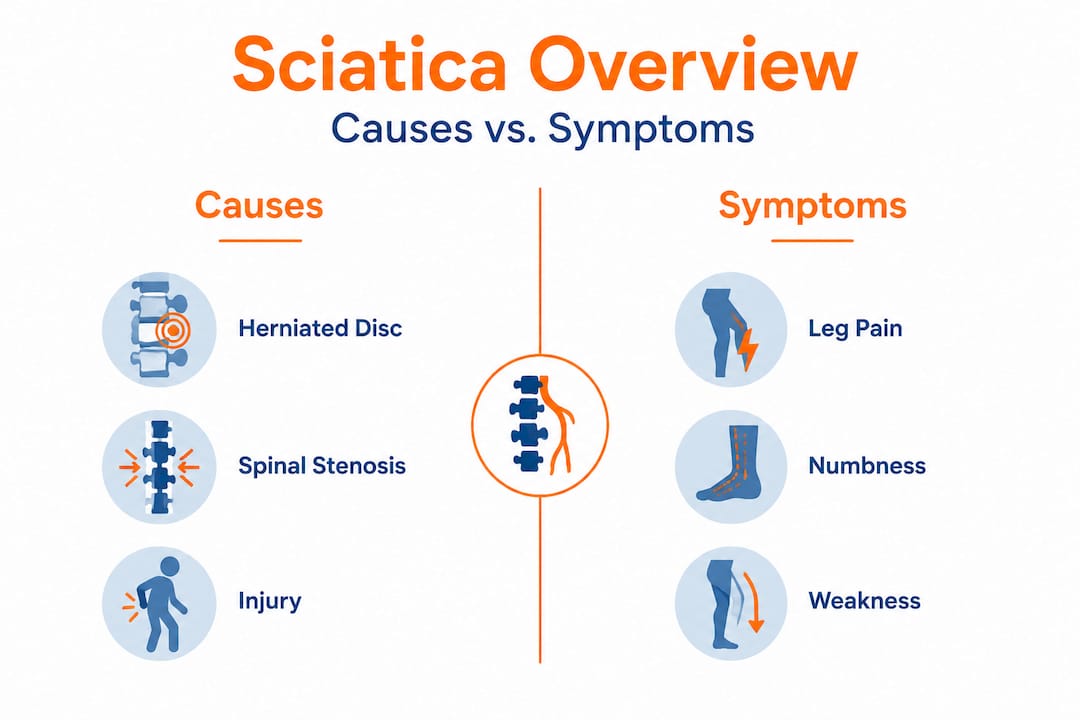
Understanding what is actually happening inside your body matters, because it shapes which physiotherapy terminology and treatment approaches your physiotherapist will use. Not all back pain is sciatica, and not all sciatica feels the same.
Common symptoms include:
A shooting or burning pain running from the lower back into the buttock, thigh, calf or foot
Tingling or pins and needles in the leg or foot
Numbness or weakness in the affected leg
Pain that worsens when sitting, coughing or sneezing
A dull ache in the lower back that accompanies the leg symptoms
The pattern of symptoms often tells a physiotherapist which nerve root is affected, which helps tailor treatment from the very first session. Sciatica caused by an L4 or L5 disc problem, for instance, tends to produce different patterns of weakness and numbness than an S1 compression. Recognising these distinctions is part of what makes physiotherapy such a precise tool for recovery.
How physiotherapy helps with sciatica pain and mobility
The role of physiotherapy in sciatica extends well beyond giving you a sheet of stretches to take home. Physiotherapy works by addressing the underlying physical factors that keep the sciatic nerve irritated: poor spinal stability, tight surrounding muscles, restricted nerve movement, and faulty posture habits. Physical therapy is one of the most effective evidence-based treatments for sciatica, improving strength, flexibility and reducing nerve irritation.
One of the key reasons physiotherapy outperforms passive treatments is that it encourages the body to become an active participant in its own recovery. Medication may dampen pain signals, but it does not rebuild the spinal support structures that allowed the problem to develop in the first place. Understanding physiotherapy methods and benefits helps explain why active treatment consistently produces better long-term results than rest alone.
Key benefits of physiotherapy for sciatica include:
Targeted strengthening of the core and gluteal muscles to reduce spinal loading
Restoring nerve mobility through specific nerve gliding techniques
Improving posture to reduce pressure on the lumbar discs
Educating patients on movements to avoid during the acute phase
Reducing fear-avoidance behaviour, which is the tendency to stop moving for fear of worsening pain
Physiotherapy is also valuable for understanding physiotherapy in musculoskeletal disorders more broadly, since sciatica is rarely an isolated problem. Poor hip mobility, weak glutes, and a history of low back pain all contribute to the picture.
Pro Tip: Tell your physiotherapist exactly where the pain travels to and what makes it better or worse. This detail is more useful than any scan for planning your treatment.
Common physiotherapy exercises and techniques for sciatica
Knowing which exercises form the core of sciatica treatment demystifies the process and helps you commit to them. Structured exercises and nerve glides reduce pain and improve mobility effectively in sciatica, and the following are among the most widely used by physiotherapists.
Sciatic nerve glides. These gentle movements encourage the sciatic nerve to slide freely through the surrounding tissues, reducing sensitivity. Sitting upright, you extend the knee while flexing the foot, then return to a relaxed position. Performed slowly and without forcing pain, they calm an irritated nerve over time.
Piriformis stretch. The piriformis muscle sits deep in the buttock, directly beside the sciatic nerve. When it tightens, it can compress the nerve. Lying on your back, crossing one ankle over the opposite knee and gently drawing the legs towards your chest releases this tension effectively.
Cat-cow spinal mobility. On all fours, alternating between arching and rounding the spine promotes movement in the lumbar vertebrae and reduces stiffness around the affected disc. It is often one of the first exercises introduced because it is low-load and immediately accessible.
Glute bridges. Lying on your back with knees bent, lifting the hips activates the gluteal muscles and builds the posterior chain strength that supports the lumbar spine. Weak glutes are a very common contributor to sciatica flare-ups.
Clamshells. Lying on your side with knees bent, lifting the top knee like a clamshell opening activates the hip abductors, which stabilise the pelvis and reduce asymmetric loading on the lumbar discs.
Reviewing essential physiotherapy tips before starting any home exercise programme helps you avoid the common mistakes that slow recovery, such as doing too much too soon or skipping exercises when pain temporarily improves.
Pro Tip: Consistency beats intensity with sciatica exercises. Ten minutes daily will outperform an hour of effort once a week every time.
Exercise | Primary benefit | When it is typically used |
Nerve glides | Reduces nerve sensitivity | Acute and sub-acute phases |
Piriformis stretch | Releases deep buttock tension | Acute through to maintenance |
Cat-cow | Improves lumbar mobility | Early and mid-phase recovery |
Glute bridge | Strengthens posterior chain | Mid to late recovery phase |
Clamshells | Stabilises the pelvis | Mid to late recovery phase |
Understanding manual therapy for sciatica is also worthwhile, as hands-on techniques such as soft tissue mobilisation and joint manipulation are often combined with these exercises to accelerate progress.
What to expect during your physiotherapy journey
One of the most useful things to understand about sciatica treatment options is that recovery follows a predictable arc, even though the timelines vary. Most people recover with physiotherapy within 4 to 12 weeks, improving pain, mobility, and quality of life. Knowing this in advance prevents the discouragement that leads many people to stop treatment too early.
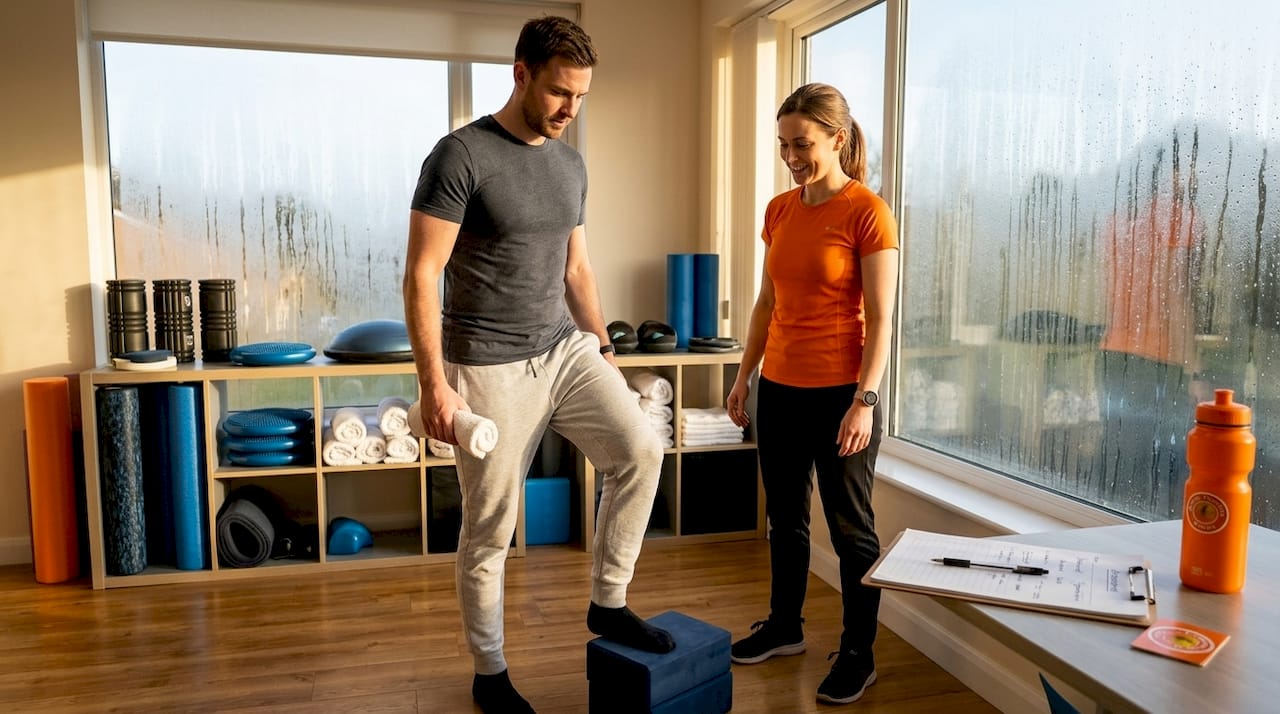
A typical physiotherapy journey for sciatica moves through three broad phases:
Early phase (weeks 1 to 3):
Pain reduction is the priority
Gentle nerve glides and mobility work begin
Education on posture, sleeping positions and daily habits that reduce nerve irritation
Avoiding prolonged sitting or positions that increase leg symptoms
Middle phase (weeks 3 to 8):
Core and gluteal strengthening exercises are introduced
Spinal stability work progresses in line with your tolerance
Walking distances gradually increase
Physiotherapist monitors nerve symptom behaviour closely to adjust intensity
Later phase (weeks 8 to 12 and beyond):
Focus shifts to functional movement and returning to activities you enjoy
Exercises become more dynamic and sport-specific if relevant
Long-term posture and lifestyle habits are reinforced
Reading about physiotherapy treatments and benefits gives additional context for what each phase involves and why the progression is structured as it is.
Preventing recurrence and maintaining back health
Recovery from sciatica is not the finish line. Without attention to the factors that caused the problem, a return of symptoms is entirely possible, and for some people, quite common. Consistent low-impact exercise and weight management reduce sciatica risk and help prevent recurrence over the long term.
Practical steps to maintain your progress after physiotherapy:
Keep moving. Daily walking remains one of the best things you can do for your lumbar spine and sciatic nerve health.
Continue your exercises. The exercises your physiotherapist prescribed do not need to stop when the pain does. They maintain the strength and mobility that protect against future flare-ups.
Try Pilates or yoga. Both are excellent for spinal stability and flexibility when taught by someone aware of your history.
Manage your weight. Even modest reductions in body weight reduce the compressive load on lumbar discs.
Review your workspace. A poorly set-up desk or car seat is a common source of sustained posture that reloads the sciatic nerve.
Book a check-in when things change. A new job, a long trip, or a change in activity level are all good reasons to revisit your physiotherapist.
“The goal is not just to fix today’s pain but to build a body that is resilient enough to handle tomorrow’s demands.”
The role of physiotherapy in injury prevention for active adults is directly relevant here. The same principles that apply to sports injuries apply to sciatica: proactive maintenance beats reactive treatment.
Why waiting to start physiotherapy can prolong sciatica pain
Here is the uncomfortable reality that too few people hear early enough. Most adults who develop sciatica spend the first two to four weeks lying down, taking painkillers, and hoping it resolves on its own. Some try heat pads. Others look up home remedies. A number book themselves in for massage from untrained practitioners. And all of this delays the one thing that actually works.
Delaying sciatica treatment often leads to worse symptoms and longer recovery times. This is not scaremongering. It is the clinical reality. When the sciatic nerve remains irritated and compressed without structured rehabilitation, the surrounding muscles tighten further, the patient’s movement habits worsen as they protect around the pain, and fear begins to take root.
Fear-avoidance behaviour is arguably the most underappreciated barrier to recovery. Patients stop bending, stop lifting, stop walking normally because every movement feels like a potential trigger. Over time, this deconditioning makes the spine more vulnerable, not less. Physiotherapy interrupts that cycle by giving patients a clear, graded pathway back to confident movement.
There is also a neurological argument for early intervention. The longer a nerve is sensitised, the more entrenched the pain signal becomes in the nervous system. This is called central sensitisation, and it makes treatment considerably harder. Evidence-based physiotherapy addresses this directly by combining physical rehabilitation with education that retrains the brain’s response to pain.
The message from 40 years of combined clinical experience at Parks Therapy Centre is consistent: the patients who book in early, commit to their exercises, and trust the process recover faster and more completely than those who wait. Sciatica is rarely a problem that rewards patience.
How Parks Therapy Centre can support your sciatica recovery
If you are living with sciatica, the right guidance makes all the difference between months of frustration and a clear path forward.

At Parks Therapy Centre, our experienced physiotherapists have been helping people across Bedfordshire and Buckinghamshire recover from sciatica since 1986. We assess the root cause of your symptoms, not just the pain itself, and build a personalised programme that covers hands-on treatment, targeted exercises and the education to manage your recovery confidently at home. Whether your sciatica is recent or has been troubling you for months, we can help you understand what is happening and put a plan in place. With multiple locations and online booking, starting your recovery has never been more straightforward.
Frequently asked questions
How soon should I start physiotherapy after sciatica symptoms begin?
You should begin physiotherapy as soon as possible after your symptoms appear, as early treatment improves outcomes and prolonged rest can worsen sciatica rather than resolve it.
What types of exercises will a physiotherapist recommend for sciatica?
Physiotherapists typically recommend nerve glides, piriformis stretches, cat-cow mobility work, glute bridges and clamshells, all of which have been shown to ease nerve irritation and strengthen supporting muscles. Structured exercises and nerve glides are particularly effective for reducing pain and improving mobility.
Can physiotherapy prevent sciatica from coming back?
Yes. Regular physiotherapy focused on strength, posture and ongoing activity significantly lowers recurrence risk, since consistent low-impact exercise and weight management are among the most reliable preventive strategies available.
Is surgery always necessary for sciatica?
No. Up to two-thirds of herniated discs shrink naturally without surgery as the body reabsorbs the tissue, and most people recover fully through active physiotherapy without any surgical intervention.
How long does a typical physiotherapy recovery for sciatica take?
With consistent physiotherapy, many people notice improvement within 4 to 6 weeks, and most recover within 12 weeks, though individual factors such as symptom severity and general health will influence the timeline.
Recommended