
How to select the right physiotherapy clinic for you

TL;DR:
Choosing a specialized, regulated physiotherapy clinic reduces recovery time and costs.
Verify credentials like HCPC registration and chartered status to ensure safe, quality care.
Build a strong relationship with a trusted therapist who listens and collaborates in your recovery.
Choosing the wrong physiotherapy clinic can cost you weeks of recovery time and real money. Whether you’ve twisted your knee playing football in Bedford, are managing chronic back pain in Aylesbury, or need pregnancy-related care in Buckinghamshire, the clinic you pick matters enormously. NHS waiting lists can stretch for months, and the private market offers dozens of options with varying levels of expertise. This guide cuts through the noise and walks you through every step, so you can make a confident, patient-centred decision without second-guessing yourself.
Table of Contents
Key Takeaways
Point | Details |
Prioritise essential qualifications | Only choose clinics with HCPC-registered and chartered physiotherapists for your safety. |
Match specialism to your needs | Select clinics with proven experience in your specific concern, like sports injuries or pregnancy care. |
Evaluate experience through reviews | High, recent patient ratings and positive outcomes indicate reliable, trusted care. |
Balance NHS and private pros/cons | Decide between free NHS care with longer waits or private clinics for faster, specialist support. |
Know your requirements before you start
Before you even search for a clinic, get clear on why you need physiotherapy. This sounds obvious, but many people book the nearest available appointment without considering whether that clinic actually specialises in their condition. That mismatch is one of the most common reasons people feel they haven’t made progress after several sessions.
Start by identifying your primary reason for seeking treatment. The three most common categories for residents in Bedfordshire and Buckinghamshire are:
Sports injuries: sprains, tendon issues, ligament damage, muscle tears, and post-surgical rehabilitation
Chronic pain: back and neck pain, arthritis, fibromyalgia, and long-term musculoskeletal conditions
Pregnancy and postnatal care: pelvic girdle pain, incontinence, diastasis recti, and postnatal recovery
Once you know your category, you can match it to the right specialism. Physiotherapy is essential for musculoskeletal disorders, but not every clinic offers the same depth of expertise across all areas. A clinic brilliant at sports rehabilitation may have limited experience with pelvic health.
It also helps to understand basic physiotherapy terminology before your first appointment, so you can describe your symptoms accurately and understand what your therapist recommends.
Condition type | Relevant therapy | What to look for |
Sports injury | Manual therapy, rehab plans | Sports physio specialism |
Chronic back pain | Spinal manipulation, exercise | MSK experience |
Pregnancy/postnatal | Pelvic floor, Mummy MOT | Women’s health qualification |
Arthritis | Joint mobilisation, hydrotherapy | Chronic condition experience |
For those expecting or recently postpartum, exploring physiotherapy for pregnancy in detail will help you understand which specific treatments apply to your situation. The NHS recommends prioritising clinics with expertise in sports injuries, chronic pain management, and pregnancy-related therapies such as pelvic pain and incontinence.
Pro Tip: Write down your top three priorities before searching. Is it speed of access, cost, or a specific specialism? Knowing this in advance will filter your options quickly and save you time.
Check professional qualifications and safety standards
With your needs mapped out, the next step is verifying that any clinic you consider is properly regulated. This is non-negotiable. In the UK, physiotherapists must meet specific professional standards to practise legally and safely.
Here is a step-by-step process to check credentials:
Confirm HCPC registration: The Health and Care Professions Council (HCPC) is the statutory regulator. Every practising physiotherapist must be registered. Search the HCPC register online using the therapist’s name.
Look for MCSP status: Chartered physiotherapists hold the MCSP designation (Member of the Chartered Society of Physiotherapy). This signals a higher standard of training and ongoing professional development.
Use the CSP directory: The CSP Physio2u directory lets you search for chartered physiotherapists by location, making it straightforward to find qualified practitioners in Bedfordshire and Buckinghamshire.
Check CQC ratings where relevant: The Care Quality Commission (CQC) regulates NHS and some hospital-based services. For private clinics, HCPC and CSP registration combined with patient reviews are your most reliable indicators of quality.
Ask the clinic directly: A reputable clinic will have no hesitation providing proof of registration. If they are evasive, walk away.
Understanding physiotherapy credentials in more detail will help you ask the right questions and interpret what you find. The NHS guidance on physiotherapy standards also outlines what patients should expect from regulated care.
‘You have the right to safe, regulated physiotherapy care. Do not compromise on credentials.’
Pro Tip: Screenshot or save the therapist’s HCPC registration number before your first appointment. It takes 30 seconds and gives you complete peace of mind.
Assess clinic expertise and case outcomes
Qualifications confirm that a physiotherapist can practise. What they don’t tell you is whether that therapist is especially good at treating your condition. That’s where assessing expertise and real-world outcomes becomes important.
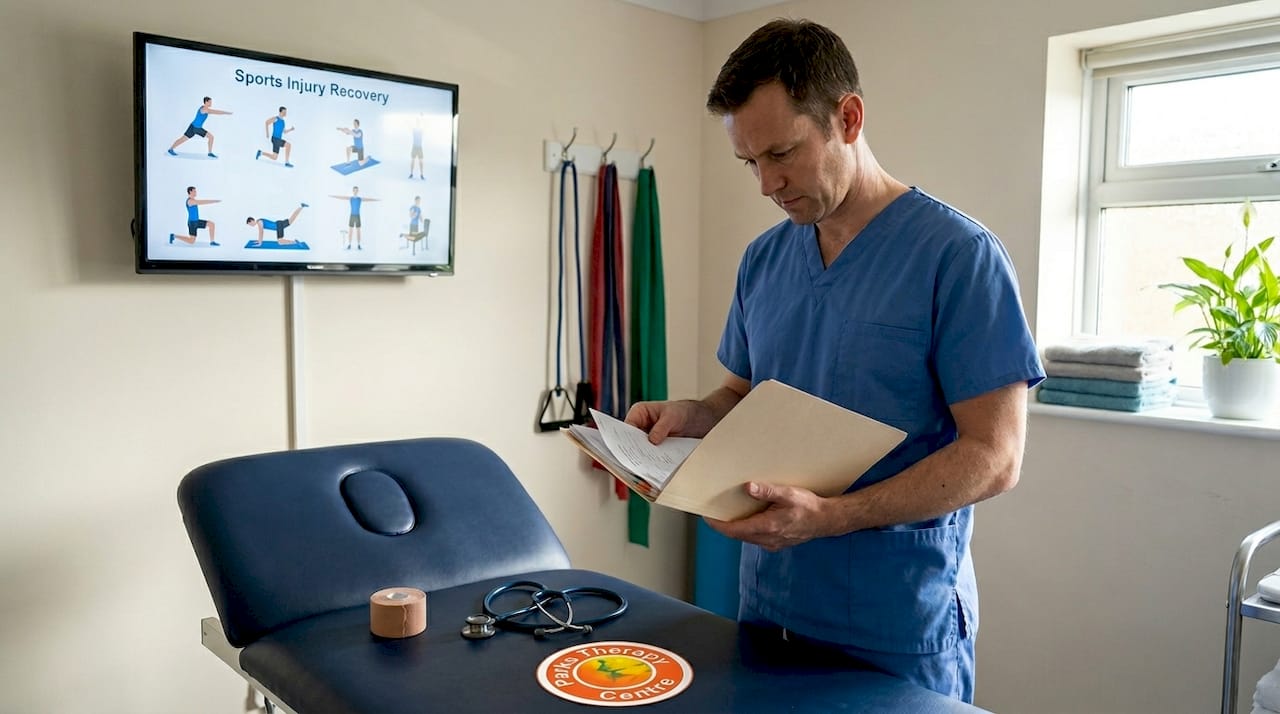
Start by looking at the clinic’s stated specialisms. A clinic that lists 15 different services without any clear depth in any of them is a red flag. Look instead for clinics that demonstrate genuine focus. For sports injuries, check whether they work with local sports teams or have therapists with athletic backgrounds. For chronic pain, look for evidence-based approaches combining manual therapy with structured rehabilitation plans. For pregnancy care, seek out women’s health specialists with specific qualifications in pelvic floor rehabilitation.
Key factors to evaluate:
Patient reviews: Look for consistent patterns, not just the star rating. Do reviewers mention feeling listened to? Do they report measurable improvement?
Clinical outcomes: Some clinics publish outcome data or case studies. This is a strong signal of confidence in their results.
Evidence-based methods: Clinics using pilates for back pain alongside manual therapy show a commitment to whole-body rehabilitation rather than one-size-fits-all treatment.
Pregnancy specialism: For women’s health, seek clinics offering Mummy MOT assessments or pelvic care. Specialists such as those offering pregnancy physiotherapy options provide targeted postnatal assessments that general physio clinics often cannot match.
Statistic callout: Top-rated Bedford clinics report 4.7/5 ratings across 36 or more verified reviews, reflecting consistent patient satisfaction.
The NHS highlights the importance of clinics with proven expertise in sports injuries, chronic pain, and pregnancy-related therapies. For women’s health specifically, women’s health specialists with five-star ratings and a focus on pelvic care represent the standard to look for. When assessing sports injuries, ask the clinic how they approach return-to-sport timelines and what their rehabilitation protocol looks like.
Compare NHS and private clinic options
One of the biggest decisions you’ll make is whether to go through the NHS or pay privately. Both routes have genuine merit depending on your situation.
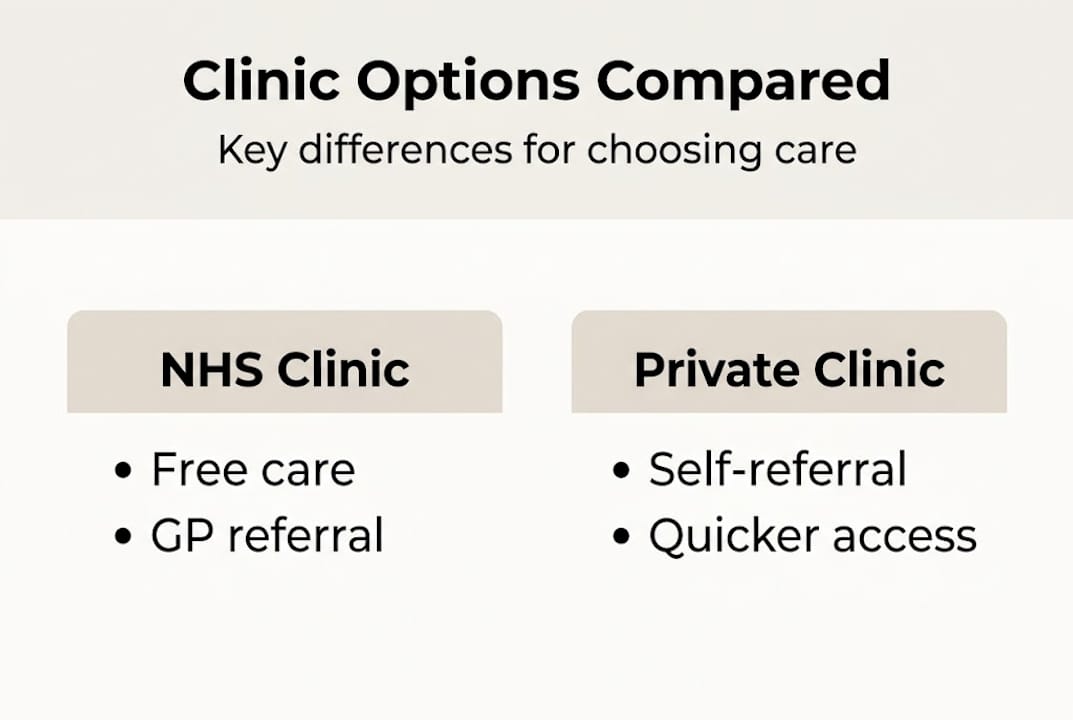
The NHS provides free physiotherapy but typically requires a GP referral and comes with waiting times that can stretch from several weeks to several months depending on your area. In Bedfordshire and Buckinghamshire, demand is high and waits can be significant. For acute injuries where early treatment makes a real difference to recovery, that delay can be costly.
Private clinics offer faster access, often within days. They also allow you to choose your therapist, book appointments at convenient times, and access specialisms that may not be available on the NHS locally. Some private clinics bring elite-level expertise, including therapists with professional sport backgrounds.
Key advantages and disadvantages at a glance:
NHS: Free at point of use, regulated, GP-coordinated care. Disadvantage: longer waits, less choice of therapist or timing.
Private: Fast access, specialist choice, flexible scheduling. Disadvantage: cost, which varies by clinic and location.
Self-referral is possible at many private clinics and even some NHS services in certain areas, meaning you don’t always need to wait for a GP appointment first. Check the CSP Physio2u directory for self-referral options near you.
If cost is a concern, it’s worth checking whether your employer provides health cover or whether your personal insurance policy includes physiotherapy. Many people are surprised to find they already have cover. Explore insurance cover for physiotherapy to understand what policies typically include in 2026. When you’re ready to move forward, booking a physiotherapy appointment online has become straightforward at most private clinics.
Finalise your choice and prepare for your first visit
You’ve done the research. Now it’s time to commit and prepare properly. A good first appointment sets the tone for your entire treatment journey, and a little preparation goes a long way.
Run through this checklist before you book:
Confirm the therapist’s HCPC registration and MCSP status using the steps outlined earlier.
Read recent patient reviews from the past six months. Clinics like Parks Therapy Centre Bedford hold 4.7/5 ratings across 33 or more verified reviews, which reflects consistent, reliable care over time.
Check the clinic’s specialism matches your condition rather than assuming any physiotherapy clinic can treat anything equally well.
Confirm appointment availability and cost upfront, including whether your insurance is accepted.
Book online if possible to secure your preferred time quickly. Many clinics offer same-week availability for private appointments.
Once booked, prepare for your first session by gathering your medical history, any relevant scans or letters from your GP, and a written summary of your current symptoms. Note when the pain started, what makes it worse, and what you’ve already tried.
Pro Tip: Write down three specific questions before your appointment. For example: What is your assessment of my condition? How many sessions do you expect I’ll need? What can I do at home between appointments? This keeps the consultation focused and ensures you leave with a clear plan.
When you’re ready, booking your physiotherapy appointment online is the fastest way to get started.
What most guides miss: Prioritise people, not just process
Most clinic selection guides focus entirely on credentials, cost, and convenience. Those things matter. But after nearly four decades of providing physiotherapy across Bedfordshire and Buckinghamshire, we’ve seen something that checklists can’t capture: the quality of the relationship between patient and therapist is often what determines whether someone actually recovers.
A therapist who listens carefully, adapts the treatment plan as you progress, and explains their reasoning builds trust. That trust makes patients more likely to follow through with exercises at home, attend follow-up sessions, and communicate honestly about setbacks. The real impact of physiotherapy is amplified when the patient feels like a partner in the process, not a passive recipient.
Local reviews often reveal clinic culture in ways that official directories cannot. When multiple reviewers mention that a therapist “really took the time to listen” or “explained everything clearly,” that’s meaningful data.
‘The best physiotherapist is one who treats you as a partner in recovery, not just a diagnosis.’
Don’t underestimate this. Credentials get you through the door. Connection is what gets you better.
Ready to book? Find trusted physiotherapy care near you
If you’re looking for physiotherapy in Bedfordshire or Buckinghamshire, you don’t need to search far. At Parks Therapy Centre, we’ve been helping patients recover from sports injuries, manage chronic pain, and navigate pregnancy-related conditions since 1986.
Our qualified team holds full HCPC registration and MCSP chartered status, and we accept a wide range of insurance policies. Whether you need a single assessment or an ongoing rehabilitation programme, our online booking system makes it simple to find an appointment that fits your schedule. We offer care across multiple locations, so expert physiotherapy is always within reach. Take the next step and book your first appointment today.
Frequently asked questions
Do I need a GP referral to book private physiotherapy?
No, you can self-refer directly to a private physiotherapist without a GP referral. This is widely available across Bedfordshire and Buckinghamshire and means you can often be seen within days.
How can I confirm a physiotherapist is fully qualified?
Check that they hold HCPC registration and MCSP chartered status using the CSP Physio2u directory or the NHS guidance pages. Both checks take only a few minutes.
What reviews or ratings should I trust most when picking a clinic?
Prioritise recent, verified patient reviews and look for clinics with consistent ratings of 4.5 stars or above. Bedford clinic ratings such as 4.7/5 across 36 or more reviews indicate reliably good patient experiences.
Is insurance accepted at private clinics?
Many private clinics do accept insurance cover, but terms vary by policy and provider. Check your policy details and confirm with the clinic before booking. More detail is available at insurance cover for physiotherapy.
What first appointment documents or details should I prepare?
Bring your medical history, a written summary of your current symptoms, and any relevant scans or GP letters if available. This helps your physiotherapist assess your condition accurately from the very first session.
Recommended