
What is sports physiotherapy? Injury recovery & prevention
TL;DR:
Sports physiotherapy is proactive, focusing on injury prevention and performance, not just post-injury care.
Evidence shows prevention programs can reduce injury risk by up to 35%, especially with structured exercises.
Emerging technologies like AI wearables and blood flow restriction training are transforming the field in 2026.
Evidence-based sports physiotherapy can reduce injury risk by up to 35%, yet most people still think of it as something you only need after something goes wrong. That narrow view sells the discipline well short. Sports physiotherapy is a proactive, performance-focused speciality that serves everyone from competitive footballers to weekend cyclists and older adults trying to stay active without pain. This guide explains exactly what sports physiotherapy is, who it helps, and how it works in practice, covering prevention, rehabilitation, and the emerging technologies reshaping the field in 2026.
Table of Contents
Key Takeaways
Point | Details |
Comprehensive approach | Sports physiotherapy addresses injury prevention, rehabilitation, and performance for athletes and active individuals. |
Proven injury reduction | Evidence-based programmes can reduce total and severe injuries by as much as 35%. |
Personalised rehabilitation | Individualised, athlete-centred care leads to optimal recovery and minimised downtime. |
Emerging technologies | Wearables, biomarker testing, and new therapies are shaping the future of sports physiotherapy. |
Defining sports physiotherapy: Core principles and scope
Sports physiotherapy is not simply regular physiotherapy with a sports kit on. It is a distinct, advanced discipline. Sports physiotherapy is a specialised field focused on safe physical activity, injury prevention, and performance enhancement, drawing on a depth of knowledge that goes well beyond standard musculoskeletal care.
The difference matters in practice. A general physiotherapist is trained to help patients recover function after illness, surgery, or injury across a broad population. A sports physiotherapist, by contrast, understands the specific demands of sport and exercise, the biomechanics of athletic movement, the psychological pressures of competition, and the need to return an athlete to full performance rather than simply to daily life. The IFSPT sports physiotherapy competencies define core areas including injury prevention, acute intervention, rehabilitation, performance support, anti-doping awareness, and a commitment to lifelong professional learning.
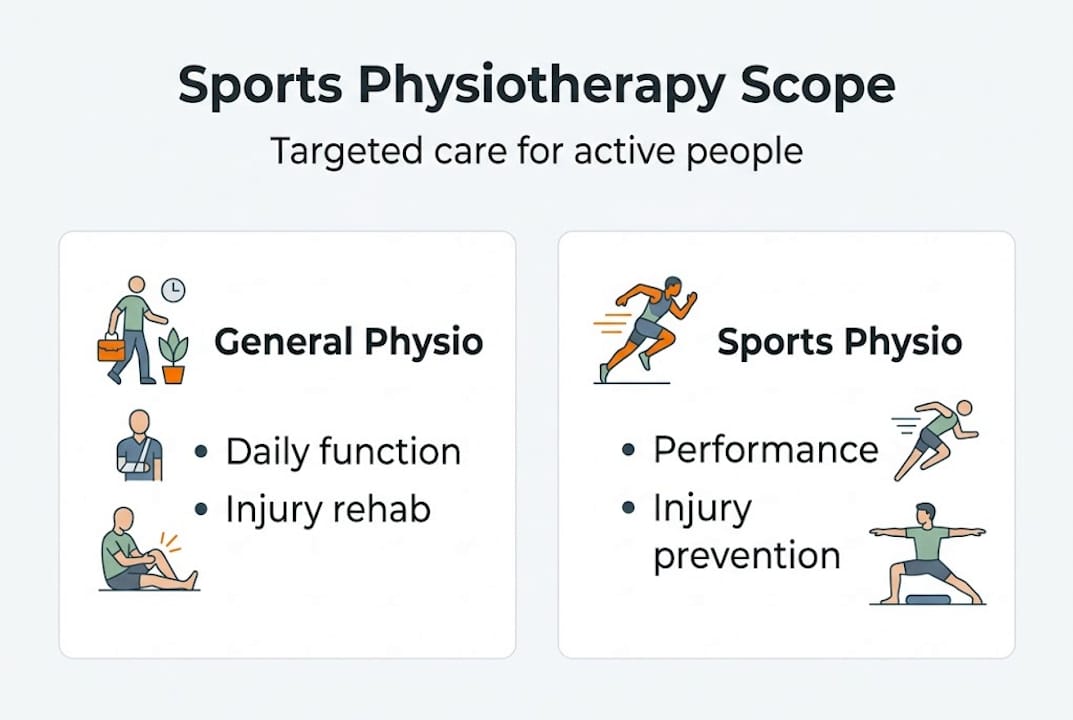
Sports physiotherapy vs general physiotherapy
Feature | General physiotherapy | Sports physiotherapy |
Primary focus | Restore daily function | Restore and optimise athletic performance |
Patient population | Broad, all ages and conditions | Active individuals, athletes, youth sport |
Injury context | Post-surgical, neurological, chronic | Acute sports trauma, overuse, prevention |
Return-to-sport planning | Rarely included | Central to the treatment pathway |
Performance enhancement | Not a primary goal | Integrated into rehabilitation |
Sports physiotherapists work across a wide range of settings, including professional clubs, community sports organisations, schools, and private clinics. They are just as relevant to a 16-year-old rugby player dealing with a growth-related knee complaint as they are to a 45-year-old recreational runner managing a persistent hamstring strain. Understanding sports therapy fundamentals helps clarify why this specialised input makes such a tangible difference.
Common scenarios where a sports physiotherapist intervenes include:
Acute muscle tears or ligament sprains sustained during training or competition
Overuse injuries such as shin splints, stress fractures, or tendinopathy
Post-surgical rehabilitation following ACL reconstruction or shoulder stabilisation
Biomechanical assessment to identify movement patterns that increase injury risk
Return-to-sport testing to confirm an athlete is genuinely ready to train fully
Screening programmes for youth athletes during growth spurts
The scope is broad, and the impact is measurable. Multicomponent prevention programmes guided by sports physiotherapists have been shown to cut total injury rates by 35%, which is a figure worth taking seriously if you are trying to stay fit and active.
How sports physiotherapists prevent injuries and enhance performance
Knowing what sports physiotherapy covers is one thing. Understanding how it actually reduces injuries and improves athletic capacity is where the real value becomes clear. The approach is structured, evidence-based, and far more nuanced than simply telling athletes to stretch more.
Research consistently supports multicomponent prevention programmes. Injury risk reductions of up to 35% have been recorded across sports, with ACL injury rates falling by as much as 58% in some football cohorts when structured warm-up and neuromuscular programmes are applied properly. These are not marginal gains. For a team or an individual athlete, that kind of reduction means fewer weeks on the sideline and a longer, healthier sporting career.
Evidence by intervention type
Intervention | Injury type targeted | Approximate risk reduction |
Neuromuscular warm-up (e.g., FIFA 11+) | ACL, ankle sprains | Up to 50% |
Hamstring eccentric loading | Hamstring strains | 51% |
Balance and proprioception training | Ankle injuries | 35-40% |
Plyometric and agility drills | Knee and lower limb | 30-45% |
The key prevention programme components that deliver results include short, focused sessions built around warm-up protocols, plyometrics, progressive strength work, agility drills, and balance challenges. These are not lengthy gym sessions. The most effective programmes are often 15 to 20 minutes, performed consistently before training.
A structured prevention approach typically follows this sequence:
Movement screening to identify individual risk factors such as poor hip control or limited ankle mobility
Neuromuscular training to improve how muscles activate and stabilise joints under load
Plyometric progressions to build explosive power and landing mechanics
Strength work targeting key injury-prone areas such as hamstrings, glutes, and rotator cuff
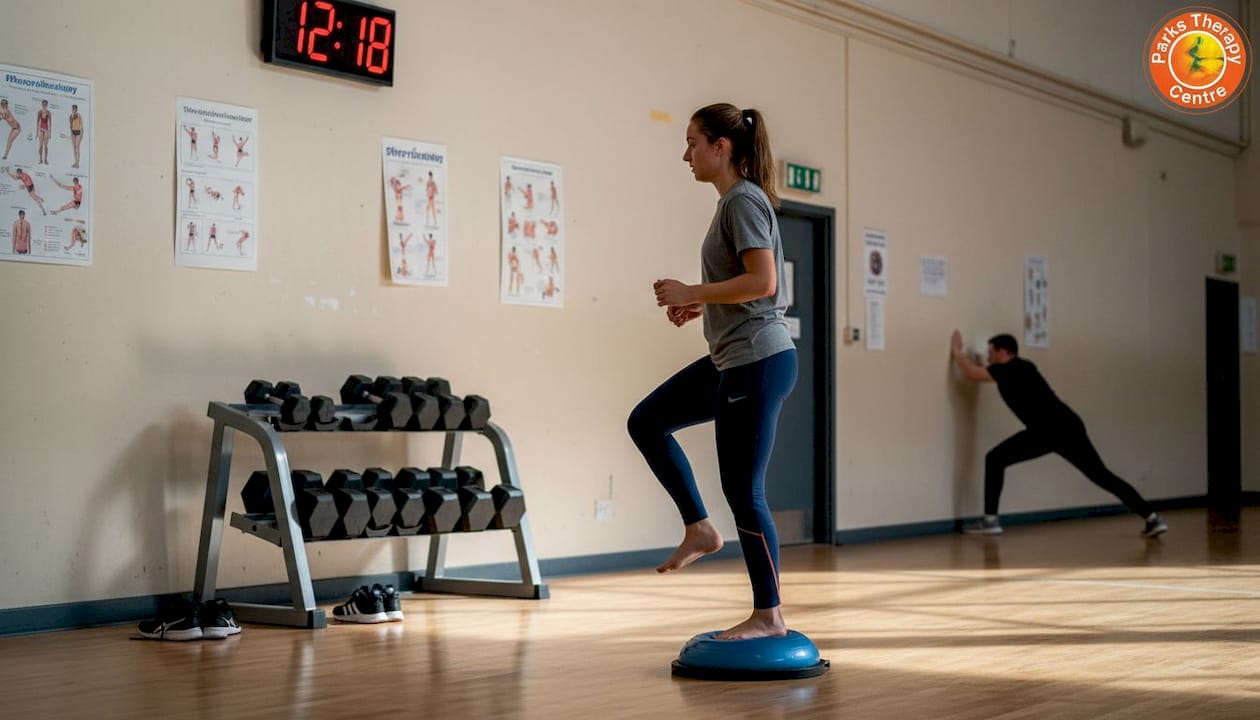
Balance and proprioception drills to sharpen the body’s ability to react to unexpected forces
Sport-specific agility to translate gym gains into real movement patterns
Technology is also changing how sports physiotherapists monitor athletes. Real-time athlete monitoring using wearables and movement analysis tools allows clinicians to track load, fatigue, and biomechanical changes that would otherwise go unnoticed until an injury occurs. This kind of data-driven oversight is increasingly accessible, even outside elite sport.
For a deeper look at how these methods apply to your own training, the sports injury prevention guide and the role of physiotherapy in keeping active adults healthy are worth exploring alongside the importance of injury prevention as a long-term strategy.
Pro Tip: Compliance matters more than duration or intensity. A 15-minute programme performed three times a week for six months will outperform a rigorous programme abandoned after three weeks. Consistency is the single biggest predictor of prevention success.
Evidence-based rehabilitation: Treatment pathways in sports physiotherapy
Prevention and performance are two pillars of sports physiotherapy. Rehabilitation is the third, and it is where most people first encounter the discipline. The rehabilitation process is not a simple sequence of exercises. It is a carefully structured journey that adapts to the individual, the sport, and the stage of recovery.
The pathway typically unfolds in stages:
Assessment and diagnosis including load testing, movement analysis, and understanding the athlete’s history, goals, and sport demands
Acute management to control pain and swelling, protect healing tissue, and maintain fitness where possible
Tissue rehabilitation using progressive loading, manual therapy, and evidence-based modalities to restore strength and flexibility
Functional rehabilitation where exercises become increasingly sport-specific and mimic real training demands
Return-to-sport testing using objective criteria such as strength symmetry, hop tests, and psychological readiness
Monitoring and follow-up to reduce re-injury risk in the weeks and months after return
Multifactorial, individualised programmes have been shown to reduce recovery days after injury, which is particularly well documented for hamstring strains in football. The key word is individualised. A 22-year-old sprinter and a 50-year-old club tennis player with the same hamstring injury need very different rehabilitation plans.
Adolescent athletes present a particular challenge. Growth-related conditions such as Osgood-Schlatter disease or Sever’s disease require careful load management during periods of rapid bone growth, where tendons and muscles are under unusual stress. Older athletes managing chronic pain alongside acute injury need a different balance of treatment and exercise progression.
“Sports physiotherapists follow an athlete-centred, multidisciplinary, evidence-based approach, working collaboratively with coaches, medical staff, and the athlete to achieve the best possible outcome.”
One of the most common mistakes athletes make is returning to sport too early, driven by impatience or external pressure. A sports physiotherapist acts as an objective gatekeeper, using testing criteria rather than time alone to determine readiness. For practical guidance on navigating this process, effective sports injury management and physiotherapy pain relief methods offer useful context, as do physiotherapy recovery tips for those just starting out.
Pro Tip: Ask your physiotherapist to communicate directly with your coach or training team. Shared understanding of your rehabilitation stage prevents mismatched training loads and significantly reduces re-injury risk.
Emerging trends and real-world application in sports physiotherapy
Sports physiotherapy in 2026 looks meaningfully different from even five years ago. New technologies and treatment approaches are expanding what is possible, though not all of them are yet supported by the depth of evidence that established methods carry.
Current emerging areas include:
AI-assisted wearables that track movement quality, muscle fatigue, and training load in real time, flagging risk before injury occurs
Blood flow restriction training, which allows athletes to build muscle strength using very light loads, making it ideal during early rehabilitation when heavy loading is not yet appropriate
Shockwave therapy for chronic tendinopathies, particularly in the Achilles and patellar tendons, where traditional approaches have limited effect
Telehealth and remote physiotherapy, which expands access for athletes in rural areas or those with demanding travel schedules
Biomechanical analysis software that uses video and force plate data to identify movement faults invisible to the naked eye
Emerging technologies including wearables, AI, and blood flow restriction show genuine promise, but they also face real barriers. Standardisation of protocols, cost of equipment, and the challenge of getting athletes and coaches to engage consistently with new systems all limit uptake. There is also a risk of over-relying on technology at the expense of clinical reasoning and the therapeutic relationship.
Biomarker testing for athletes is another frontier, offering insights into recovery status, inflammation, and readiness to train that go beyond what physical testing alone can reveal. This is currently more accessible at elite level, but costs are falling.
“The future of sports physiotherapy lies in combining data-driven insights with genuinely personalised, patient-centred care. Technology should inform clinical decisions, not replace them.”
For a grounded overview of common sports therapy techniques currently in use, it helps to distinguish between what is well-evidenced, what is emerging, and what remains experimental.
Our view: Why the most effective sports physiotherapy is always athlete-centred
Most injury prevention research is conducted on groups, which makes sense statistically but can obscure something important: the athlete in front of you is not an average. They have a specific injury history, a particular sport with its own demands, a psychological relationship with pain and performance, and a life outside sport that affects how they train and recover.
Group-based programmes deliver population-level results, and those results are real. But the athletes who benefit most are typically those whose physiotherapist adapts the programme to their individual profile. A young female footballer with previous ankle instability needs a different emphasis than a male rugby player with a history of hamstring issues, even if both are following the same broad protocol.
Edge cases highlight this most clearly. Youth athletes in growth phases, older adults managing osteoarthritis alongside sports injuries, and athletes with persistent pain that has not responded to standard care all require a level of nuance that generic programmes simply cannot provide. Managing sports injury patients well means treating the whole person, not just the injured tissue.
Pro Tip: When seeking sports physiotherapy, ask specifically how the programme will be tailored to your sport, your history, and your goals. A good clinician will have clear answers. If the response sounds generic, keep looking.
Take your next step with expert sports physiotherapy
If you have been managing a sports injury on your own, or you are keen to prevent one before it derails your training, professional assessment makes a real difference. Evidence-based sports physiotherapy can accelerate recovery, reduce re-injury risk, and help you perform at your best for longer.

At Parks Therapy Centre, our experienced team has been providing specialist physiotherapy and sports injury care since 1986. Whether you need hands-on rehabilitation, a structured prevention programme, or simply a clear diagnosis and plan, we are here to help. Explore our sports physiotherapy services or read more about sports therapy to understand what to expect. Book an initial assessment and take the first step towards confident, pain-free activity.
Frequently asked questions
What injuries do sports physiotherapists typically treat?
Sports physiotherapists commonly manage sprains, strains, ACL injuries, hamstring issues, and overuse conditions. Their core competencies include tailored rehabilitation for a broad range of sports injuries across all levels of activity.
How quickly can I return to sport after starting physiotherapy?
Return to sport depends on the injury type and how consistently you follow your programme. Individualised programmes have been shown to reduce time lost from hamstring injuries in footballers, and similar principles apply across injury types.
Is sports physiotherapy only for elite athletes?
Not at all. Sports physiotherapy promotes safe, active lifestyles for all ages and abilities, from recreational joggers and weekend cyclists to youth athletes and older adults staying active.
Do prevention programmes really work?
Yes. Multicomponent programmes reduce overall injury rates by around 35%, with even greater reductions for specific injuries like ACL tears when programmes are applied consistently.
What is new in sports physiotherapy in 2026?
The biggest advances involve AI wearables and blood flow restriction training, alongside a stronger focus on individualising care. These tools are promising, though implementation challenges remain across many clinical settings.
Recommended