
Hypnotherapy explained: benefits, practice and expert advice
TL;DR:
Hypnotherapy is a structured, evidence-based therapy that helps manage stress, pain, and personal development goals through focused attention techniques.
It is safe when delivered by qualified practitioners and most effective with motivated clients who practice self-hypnosis regularly.
Forget the swinging pocket watch and the theatrical commands to “sleep.” Hypnotherapy has moved well beyond the stage, and the science backing it up is genuinely compelling. Whether you’re managing persistent stress, dealing with chronic pain, or looking for a new avenue for personal development, hypnotherapy offers a structured, evidence-based approach that is increasingly recognised by mainstream healthcare. This guide cuts through the noise, explains how it actually works, and gives you practical advice for finding qualified practitioners right here in Bedfordshire and Buckinghamshire.
Table of Contents
Key Takeaways
Point | Details |
Science-backed benefits | Hypnotherapy reduces stress and pain based on clinical research and meta-analyses. |
Qualified practitioner vital | Safety and success depend on using registered professionals with relevant healthcare backgrounds. |
Know your suitability | Hypnotherapy is not advised for some conditions; always check with your GP if unsure. |
Local access options | Bedfordshire and Buckinghamshire offer experienced, solution-focused hypnotherapists. |
Integration enhances results | Combining hypnotherapy with mindfulness or CBT can improve outcomes for motivated individuals. |
What is hypnotherapy?
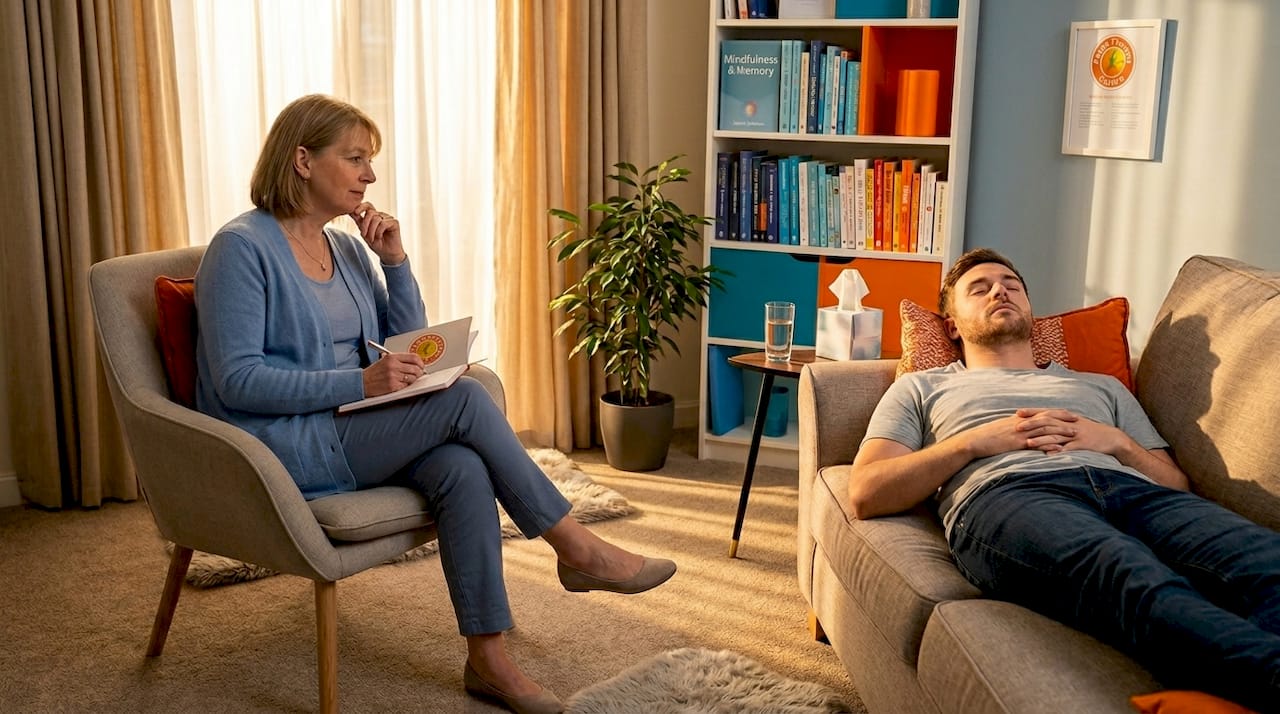
Hypnotherapy is a therapeutic technique that uses a guided state of focused attention to help you change thoughts, behaviours, and physical responses. It is not sleep, and it is not mind control. You remain aware throughout the process, and a skilled therapist cannot make you do anything against your will or values.
As the NHS explains, hypnotherapy involves inducing a hypnotic state of focused attention and heightened suggestibility to deliver therapeutic suggestions for behaviour change, stress reduction, pain management, and personal development. That definition alone tells you a great deal about its legitimate scope.
Common misconceptions worth addressing:
You will lose control. False. You remain conscious and can exit the state at any time.
Only certain people can be hypnotised. Partially true. Hypnotizability varies, but most people can achieve a useful therapeutic state with practice.
It works like magic. Not quite. Hypnotherapy is a skill-based intervention; results depend on the quality of the therapist, your motivation, and consistent practice.
It is only for trivial habits. Absolutely not. Evidence supports its use for pain, anxiety, IBS, phobias, and more.
“Hypnotherapy is not a mystical art. It is a clinical tool that works by narrowing your focus and increasing your receptivity to constructive suggestions, much like a deep state of absorbed concentration.”
The therapeutic indications are broad. Practitioners use hypnotherapy for stress reduction, pain management, smoking cessation, weight management, sleep difficulties, performance anxiety, and personal development goals. Understanding this scope is the first step towards deciding whether it might be right for you.
How does hypnotherapy work?
The process is more structured than most people realise. A qualified hypnotherapist follows a clear sequence, adapting each stage to your specific goals and responses. Here is a typical session broken down:
Initial consultation. The therapist takes a full history, clarifies your goals, and explains what to expect. This is also when contraindications are screened.
Induction. Using relaxation techniques such as controlled breathing, progressive muscle relaxation, or guided imagery, the therapist guides you into a focused, calm state.
Deepening. Once you are relaxed, the therapist deepens the trance using counting, visualisation, or metaphorical journeys to increase your receptivity.
Therapeutic suggestions. This is the core of the session. The therapist delivers carefully worded suggestions aligned with your goals, whether that is reducing pain perception, building confidence, or changing a habitual response.
Visualisation. Many therapists use detailed mental imagery here, asking you to picture yourself successfully managing a stressful situation or living free from a particular fear.
Self-hypnosis training. A good therapist teaches you techniques to replicate the relaxed state independently, giving you a tool you can use between sessions.
Reorientation. The session closes gently, bringing you back to full alertness with a sense of calm and clarity.
Common methodologies include hypnotic induction via relaxation techniques, deepening trance, direct suggestions, visualisation, and self-hypnosis training. Variants like mindful hypnotherapy integrate mindfulness principles, blending the focused attention of trance with present-moment awareness. If you already use mindfulness activities for stress, you may find this hybrid approach particularly accessible.
Pro Tip: Ask your therapist to include self-hypnosis training from the very first session. Clients who practise between appointments consistently report faster and more lasting results than those who attend sessions alone.
Evidence for hypnotherapy: what the research shows
This is where sceptics often become converts. The evidence base for hypnotherapy has grown substantially over the past two decades, and the numbers are worth knowing.
A major meta-analysis on outcomes found large effects on reducing psychological distress (Hedges’ g = 0.61) and stress (g = 0.75), and increasing mindfulness (g = 1.38). For procedural pain and anxiety, standardised mean differences were SMD -0.43 for anxiety and -0.35 for pain. In plain terms, these are clinically meaningful reductions, not statistical noise.
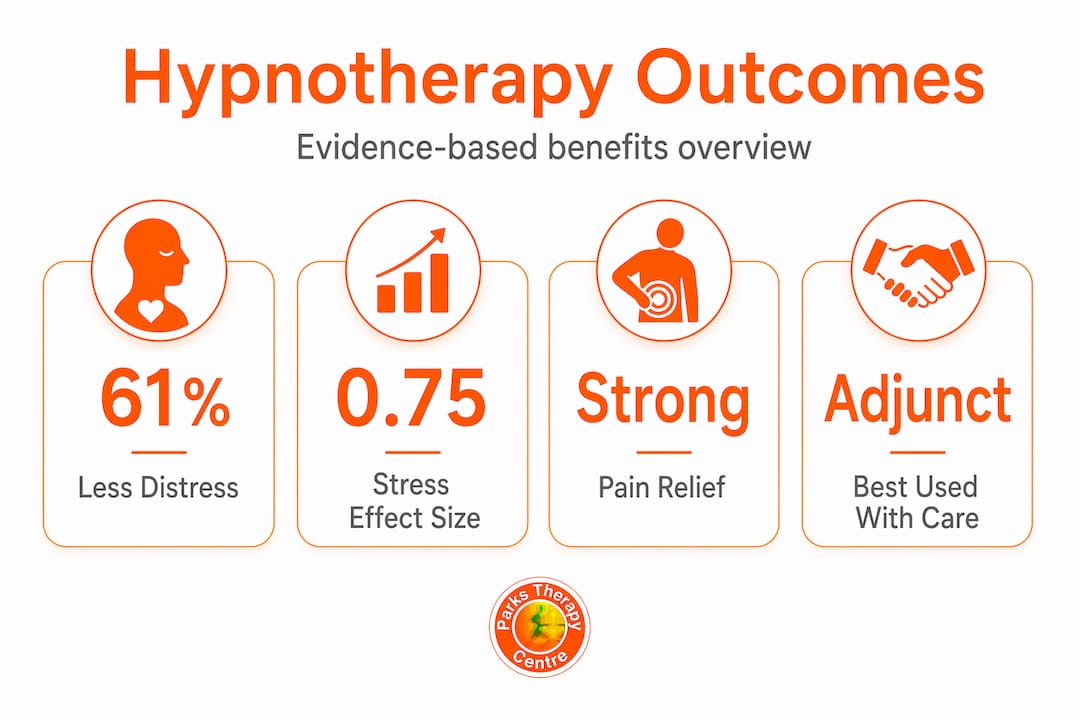
To put those figures into context, an effect size of 0.75 for stress reduction is considered a large effect in psychological research. That places hypnotherapy alongside established interventions like cognitive behavioural therapy (CBT) for stress outcomes. For mindfulness and stress specifically, the effect size of 1.38 is remarkable, suggesting hypnotherapy may actually enhance mindfulness capacity more effectively than many standalone mindfulness programmes.
Outcome | Effect size | Clinical significance |
Psychological distress | Hedges’ g = 0.61 | Moderate to large |
Stress reduction | Hedges’ g = 0.75 | Large |
Mindfulness increase | Hedges’ g = 1.38 | Very large |
Procedural anxiety | SMD = -0.43 | Moderate |
Procedural pain | SMD = -0.35 | Moderate |
For pain specifically, the evidence for pain recovery from multiple modalities consistently points to the value of combining approaches. Hypnotherapy fits naturally alongside treatments like physiotherapy and acupuncture for pain, particularly for patients whose pain has a significant psychological component. Understanding the full range of pain relief methods available to you locally is essential before committing to any single approach.

Key takeaway: Hypnotherapy is not a replacement for medical care. It is a powerful adjunct, meaning it works best alongside other treatments, not instead of them.
Who should (and shouldn’t) consider hypnotherapy?
Knowing the evidence is useful. Knowing whether it applies to you is more useful still. Hypnotherapy suits a wide range of people, but it is not appropriate for everyone.
People who tend to benefit most:
Those with stress-related conditions such as tension headaches, irritable bowel syndrome, or sleep difficulties
Individuals dealing with anxiety, phobias, or performance-related fears
People managing chronic pain who want to reduce reliance on medication
Anyone working on personal development goals such as confidence, focus, or habit change
Motivated individuals willing to practise self-hypnosis between sessions
Situations where caution or avoidance is warranted:
Active psychosis or certain personality disorders where the altered state could be destabilising
Dementia or significant cognitive impairment
Substance intoxication or active withdrawal
Unstable medical conditions that have not been assessed by a GP
As contraindication guidance makes clear, practitioners should screen for psychosis, certain personality disorders, dementia, substance intoxication or withdrawal, and unstable medical conditions before proceeding. A responsible therapist will always ask about your medical history and refer you back to your GP if there is any doubt.
Pro Tip: If you are unsure whether hypnotherapy is suitable for your specific situation, book a GP appointment first. Frame it as exploring a complementary therapy. Most GPs are supportive and can flag any contraindications before you invest time and money.
The process of choosing a practitioner follows similar principles to selecting any healthcare provider: check qualifications, ask about experience with your specific concern, and trust your instincts about the therapeutic relationship. You can also explore mindfulness practice tips to support your wellbeing while you research your options.
Finding trusted hypnotherapists in Bedfordshire and Buckinghamshire
Knowing hypnotherapy could help you is one thing. Finding a qualified, trustworthy practitioner locally is another. Fortunately, the region has a solid network of registered professionals.
Local practitioners include Gemma Stone in Bedford, who specialises in solution-focused hypnotherapy for stress and anxiety; Emily in Milton Keynes, who has been working with anxiety, stress, and phobias since 2007; and Danni Jones in High Wycombe, who brings over 21 years of experience to her practice. These practitioners are registered with bodies such as the Complementary and Natural Healthcare Council (CNHC) and the General Hypnotherapy Register (GHR), both of which maintain professional standards and complaint procedures.
Practitioner | Location | Speciality | Years of experience |
Gemma Stone | Bedford | Stress, anxiety, solution-focused | Established practice |
Emily | Milton Keynes | Anxiety, stress, phobias | Since 2007 |
Danni Jones | High Wycombe | General hypnotherapy | 21+ years |
When searching for a practitioner, look for the following:
Registration with CNHC or GHR. These are the most recognised UK bodies for hypnotherapy regulation.
A healthcare background. Therapists with nursing, counselling, or psychology training bring an additional layer of clinical judgement.
Transparent pricing and session structure. Reputable practitioners are clear about costs, number of sessions, and what to expect.
A free initial consultation. Most established therapists offer this, giving you a chance to assess fit before committing.
Specialisation in your concern. A therapist experienced in chronic pain management is a better fit than a generalist if pain is your primary issue.
If you are based in Bedfordshire and already exploring complementary approaches to wellbeing, it is worth knowing that Pilates in Bedfordshire offers a complementary route to stress reduction and physical resilience that pairs well with hypnotherapy for many clients.
Our expert perspective on hypnotherapy’s real impact
Here is what most guides on hypnotherapy quietly skip over: the results are real, but they are not uniform. Two people with identical stress symptoms can have completely different outcomes from the same therapist using the same techniques. That variability is not a reason to dismiss hypnotherapy. It is a reason to approach it thoughtfully.
The NHS position is measured but positive: hypnotherapy is safe when delivered by qualified professionals, ideally those with a healthcare background and registration on PSA-accredited registers. It is not a first-line treatment, but evidence supports its use as an adjunct for stress and pain. That framing matters. “Adjunct” means it works alongside other care, not as a standalone cure.
What most people overlook is the role of hypnotizability. Research from the Behavioural Sciences journal confirms that effectiveness varies by hypnotizability, technique (live sessions outperform audio recordings), and integration with CBT or mindfulness. The best outcomes go to motivated clients who practise self-hypnosis regularly. If you attend sessions passively and expect transformation without effort, you are likely to be disappointed.
This is not a criticism of hypnotherapy. It is a description of how all effective therapies work. Physiotherapy for pain requires you to do your exercises. CBT requires you to challenge your thoughts between sessions. Hypnotherapy requires you to practise the techniques you are taught. The evidence for physiotherapy for pain shows the same pattern: outcomes improve dramatically when patients are active participants rather than passive recipients.
Our honest view is this: hypnotherapy is underused, often misunderstood, and genuinely effective for the right person with the right practitioner. If you are in Bedfordshire or Buckinghamshire and dealing with stress, persistent pain, or a habit you cannot shift, it deserves serious consideration. But choose your practitioner carefully, commit to the process, and treat it as one part of a broader approach to your health rather than a single solution.
Explore alternatives and expert support
If hypnotherapy has sparked your interest in tackling stress or pain through evidence-based complementary therapies, you do not have to navigate the options alone. Parks Therapy Centre has served patients across Bedfordshire and Buckinghamshire since 1986, building a reputation for qualified, patient-centred care across physiotherapy, acupuncture, podiatry, and more.
Whether you are managing a sports injury, dealing with chronic pain, or simply looking for professional guidance on which therapies might suit your situation, the team at Parks Therapy Centre is well placed to help. With multiple locations across the region, online booking, and a multidisciplinary team that understands how complementary approaches fit together, it is a practical first port of call for anyone serious about their wellbeing.
Frequently asked questions
Is hypnotherapy safe for most people?
When performed by qualified professionals, hypnotherapy is generally safe and well-tolerated for most people, provided contraindications are properly screened beforehand.
What conditions is hypnotherapy most effective for?
Hypnotherapy shows strong evidence for stress, anxiety, and procedural pain, and is recommended for IBS when first-line treatments have not worked, making it one of the few complementary therapies with NICE-backed guidance.
How long do hypnotherapy effects last?
Duration varies considerably between individuals; long-term data remains limited, but improvements tend to persist longer when clients practise self-hypnosis regularly between and after formal sessions.
Can I use hypnotherapy alongside other therapies?
Yes, hypnotherapy is commonly combined with CBT, mindfulness, and physiotherapy; mindful hypnotherapy variants specifically integrate mindfulness principles and often produce stronger outcomes than either approach used in isolation.
How can I find a registered hypnotherapist locally?
Look for practitioners registered with the CNHC or GHR; in Bedfordshire and Buckinghamshire, established local therapists such as Gemma Stone in Bedford and Emily in Milton Keynes offer solution-focused approaches with verified professional credentials.
Recommended