
Musculoskeletal therapy explained: relief, prevention, recovery
TL;DR:
Many people in Bedfordshire and Buckinghamshire endure months of pain management with rest and medication, only to experience recurring discomfort. Musculoskeletal therapy (MSK therapy) is an evidence-based approach that identifies and addresses the root causes of pain, promoting lasting recovery. It involves assessment, personalized treatment plans, exercise, manual therapy, and long-term prevention strategies to empower patients and reduce recurring problems.
Many people in Bedfordshire and Buckinghamshire spend months managing pain with rest, painkillers, and hopeful waiting, only to find the same ache returning weeks later. This pattern is frustrating and, frankly, avoidable. Musculoskeletal therapy (often called MSK therapy) is an evidence-based approach that goes well beyond masking symptoms. It identifies the underlying causes of pain in muscles, joints, bones, tendons, and ligaments, then builds a structured path back to full function. This article explains what MSK therapy is, how it works in practice, what the evidence says, and how it can protect you from recurring problems in the future.
Table of Contents
How musculoskeletal therapy works: assessment and treatment explained
Manual therapy, exercise, and evidence: do combinations work?
Prevention and lifestyle: reducing MSK injury risk for lasting results
Why musculoskeletal therapy is about empowerment, not just symptom relief
Take the first step: personalised MSK therapy in Bedfordshire and Buckinghamshire
Key Takeaways
Point | Details |
Broader than symptom relief | Musculoskeletal therapy addresses root causes by improving movement, strength, and self-management. |
Combination therapies work | Pairing manual therapy with exercise often yields better short-term results for certain conditions. |
Prevention is possible | MSK therapy supports both recovery and the prevention of future injuries through education and tailored exercises. |
Empowerment is key | The goal is to provide you with skills and confidence to manage your own musculoskeletal health. |
What is musculoskeletal therapy?
With a shared understanding of the challenge, let’s clarify exactly what musculoskeletal therapy involves.
Musculoskeletal therapy is a treatment approach for conditions affecting muscles, joints, bones, tendons, ligaments, and related tissues. It sits within the broader field of physiotherapy but carries a more targeted focus on the mechanical systems of the body. Where general physiotherapy might address breathing difficulties after surgery or neurological recovery, MSK therapy concentrates on the physical structures that allow you to move, lift, sit, and stand without pain.
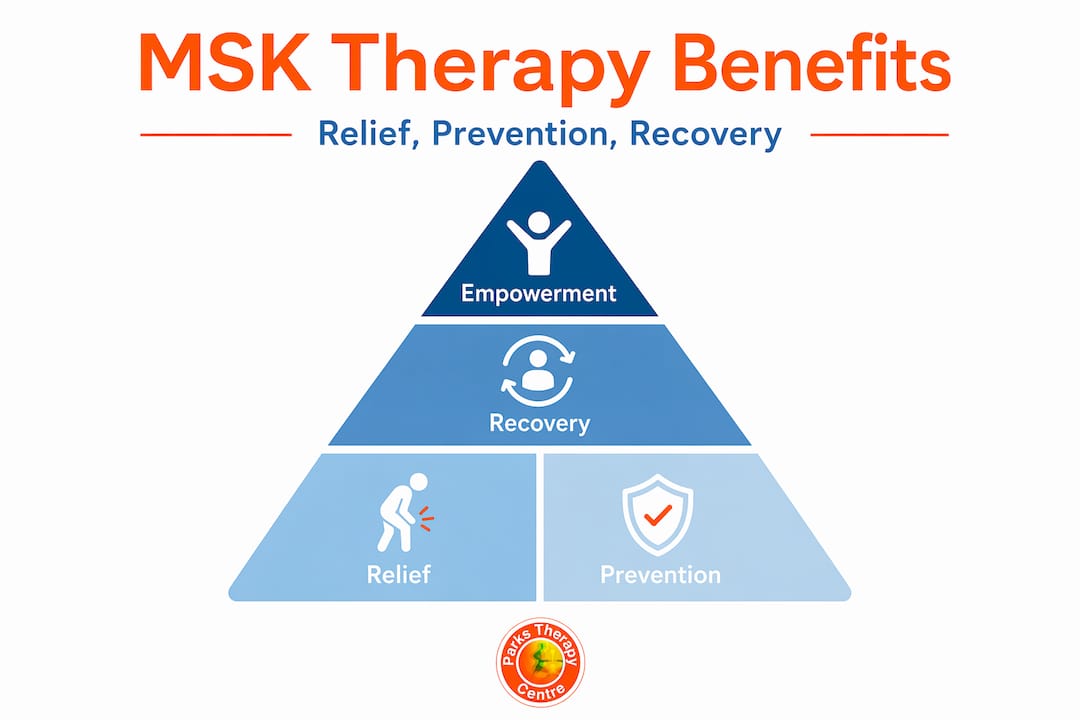
The scope is broader than most people realise. Physiotherapy for musculoskeletal disorders encompasses not only acute injuries such as ankle sprains or torn rotator cuffs but also long-standing conditions like osteoarthritis, repetitive strain injuries, and postural problems built up over years of desk-based work. It is as relevant to a runner in Milton Keynes nursing a knee complaint as it is to a warehouse worker in Bedford managing persistent lower back pain.
Conditions commonly treated by MSK therapy include:
Back and neck pain, including disc-related problems and whiplash
Joint pain from osteoarthritis or inflammatory conditions
Sports and activity injuries such as ligament sprains, muscle tears, and tendinopathies
Repetitive strain injuries including carpal tunnel syndrome and tennis elbow
Post-surgical rehabilitation following joint replacements or orthopaedic procedures
Postural dysfunction from prolonged sitting or occupational habits
A common misconception is that MSK therapy is a passive process where a therapist “fixes” you through hands-on techniques alone. In reality, the most effective approach is collaborative. The therapist guides, educates, and challenges, but the patient’s active involvement is what drives lasting improvement.
“The core objectives of MSK therapy are pain reduction, improved movement, and restored function. These are achieved not by treating the body as a broken machine but by helping people understand and work with it.”
How musculoskeletal therapy works: assessment and treatment explained
Now that the basics are defined, it helps to see what musculoskeletal therapy actually looks like in practice.
MSK physiotherapy includes clinical assessment, rehabilitation exercises, functional recovery, and patient education, and these elements follow a structured sequence that ensures treatment is both safe and effective. Here is what a typical episode of care looks like:
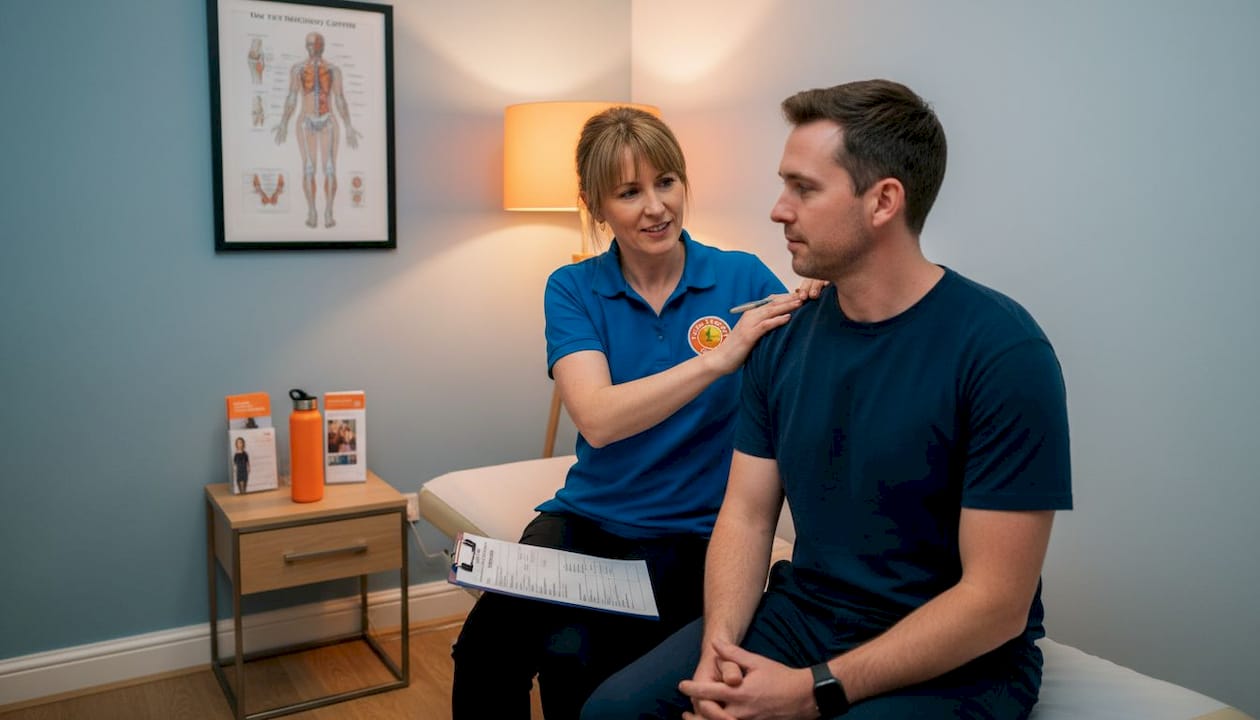
Initial history taking. Your therapist asks detailed questions about when symptoms began, what aggravates or relieves them, your occupation, activity levels, and any previous injuries. This is not small talk. It builds the clinical picture that shapes everything that follows.
Physical examination. The therapist assesses your posture, range of movement, muscle strength, joint stability, and neurological signs if relevant. They are looking for the root cause, not just the location of pain.
Working diagnosis and explanation. You receive a clear explanation of what is likely causing your symptoms and why. This is a critical step. Understanding your condition reduces fear, which is one of the most significant barriers to recovery.
Personalised treatment plan. Based on findings, your therapist designs a programme that might include therapeutic exercise, manual techniques, movement education, or a combination. No two plans are identical because no two bodies are the same.
Home exercise programme. Between sessions, you follow a tailored set of exercises. Consistency here is where real progress happens. The clinic is where you learn. Home is where you improve.
Reassessment and progression. At regular intervals, your therapist reviews your progress and adjusts the plan. This keeps treatment challenging and prevents you from plateauing.
Self-management guidance. Towards the end of your episode of care, the focus shifts to giving you the tools to maintain your gains and recognise early warning signs.
Pro Tip: Keep a simple pain diary during treatment. Note daily pain levels, activities, and how exercises feel. This information is invaluable for your therapist and helps you see genuine progress, which is highly motivating.
For those keen to understand the preventive side of this process, our guidance on step-by-step injury prevention offers a practical framework alongside clinical care. Understanding physiotherapy’s role in prevention is equally important for anyone who wants to stay active long-term.
Manual therapy, exercise, and evidence: do combinations work?
Beyond core exercises and education, many wonder if additional hands-on therapies offer measurable extra benefit.
Manual therapy refers to hands-on techniques applied directly by a therapist, including joint mobilisation, manipulation, soft tissue massage, and myofascial release. These techniques aim to reduce pain, improve joint mobility, and facilitate movement. They are not a replacement for exercise but are often used alongside it.
The evidence here is genuinely interesting. Studies examining the benefits of manual therapy show that it works best when integrated thoughtfully into a broader rehabilitation plan. A systematic review on combined approaches found that manual therapy in addition to exercise improves short-term pain and function in chronic low back pain compared to exercise alone in most studies. This is an important finding. It tells us that the combination can accelerate early progress, which matters for motivation and adherence.
However, the same research suggests that manual therapy does not always provide additional long-term benefit over exercise alone. This nuance is worth sitting with. It means that manual therapy is a valuable tool in certain contexts rather than a universal solution.
Approach | Short-term pain relief | Long-term function | Best suited to |
Exercise alone | Moderate | Strong | Most MSK conditions |
Manual therapy alone | Good | Limited | Acute pain, joint restriction |
Combined approach | Strong | Strong | Chronic pain, complex cases |
Education alone | Moderate | Moderate | Mild, self-limiting conditions |
Who tends to benefit most from combination approaches? People with chronic low back pain, stiff or restricted joints, post-surgical stiffness, or those who are struggling to engage fully with exercise due to pain. In these cases, manual therapy can lower the pain threshold enough to allow meaningful exercise to begin.
Pro Tip: If you are unsure whether manual therapy is right for your condition, ask your therapist to explain the rationale. A good clinician will be transparent about what they expect each technique to achieve and how it fits your overall plan.
The most honest picture is this: exercise-based rehabilitation is the backbone of effective MSK therapy. Manual techniques support it where appropriate. Neither works well in isolation for persistent conditions.
Prevention and lifestyle: reducing MSK injury risk for lasting results
Equipped with clinical insights, let’s shift attention to long-term strategies for staying pain-free.
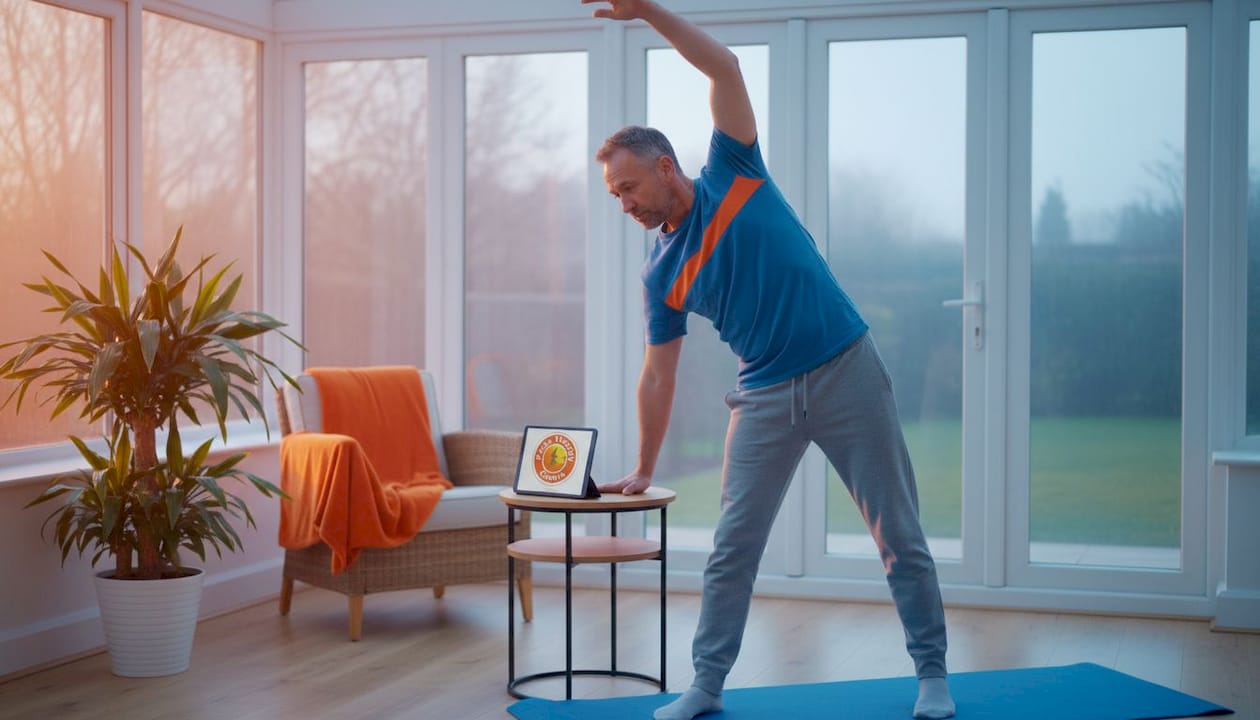
Teaching people how to manage symptoms and prevent recurrences is an essential part of modern MSK physiotherapy. This is not an afterthought. Prevention is woven into every stage of good clinical care. The goal is not just to get you pain-free by the end of your treatment episode. It is to equip you so that you are less likely to return with the same problem six months later.
Understanding ergonomics in injury prevention is a good starting point. Ergonomics is the science of fitting your work environment to your body, rather than forcing your body to adapt to a poorly designed space. A few adjustments to your chair height, screen position, or keyboard placement can meaningfully reduce daily loading on your spine, shoulders, and wrists.
Preventive strategy | How it helps | Who it’s relevant to |
Regular movement breaks | Reduces sustained muscle loading and joint stiffness | Office workers, drivers |
Strength training | Builds tissue resilience and supports joints | All active adults |
Sleep and recovery | Allows tissue repair and nervous system reset | Everyone |
Ergonomic workspace setup | Reduces cumulative daily strain | Desk workers, students |
Gradual load progression | Prevents overuse injuries during exercise | Runners, gym users |
Early intervention | Stops minor issues becoming chronic | Anyone with new symptoms |
For active adults in the region, knee injury prevention tips are particularly relevant, especially ahead of events like the MK Marathon, where joint stress is high and preparation is everything.
Practical prevention strategies worth building into daily life include:
Move every 30 to 45 minutes if you work at a desk or drive for long periods
Warm up and cool down properly around physical activity, even low-intensity exercise
Strengthen your posterior chain (glutes, hamstrings, and back extensors) which supports the spine and reduces lower limb injury risk
Sleep on a supportive surface and avoid positions that place sustained strain on your neck or hips
Address early discomfort promptly rather than dismissing it. A brief assessment early often prevents months of treatment later
Prevention is not about becoming obsessed with your body. It is about developing a few sustainable habits that keep your musculoskeletal system robust enough to do what you enjoy without interruption.
Why musculoskeletal therapy is about empowerment, not just symptom relief
Stepping back, it is worth asking: why does this approach matter to real people, beyond technical benefit?
We have worked with people across Bedfordshire and Buckinghamshire for decades, and the clearest pattern we see is this: those who recover best are not the ones who receive the most hands-on treatment. They are the ones who genuinely understand what is happening in their body and feel confident doing something about it. That shift, from passive recipient to active participant, is what we consider the most powerful outcome of good MSK therapy.
This is not always easy to achieve. There is a deeply ingrained cultural belief that pain requires a professional to physically intervene and resolve it. Many people arrive at clinic expecting to lie on a treatment table and leave fixed. When we explain that their role in recovery is central, it can feel unsatisfying at first. But those who embrace it recover faster, with fewer setbacks.
Active injury prevention is not a passive concept. It requires you to know how to load your body progressively, recognise signs of overuse before they become injuries, and maintain strength and mobility even when you feel well. These are learnable skills. Our role is to teach them clearly and honestly.
The obstacle we encounter most often is not lack of motivation but lack of confidence. People worry that exercising through discomfort will cause harm, or that they do not know how to progress safely without supervision. Addressing this concern through education is as therapeutic as any manual technique we apply.
The future of MSK therapy in our region is collaborative care. It is practitioners and patients working together, with shared understanding and realistic expectations, to achieve outcomes that are genuinely lasting rather than temporarily comfortable.
Take the first step: personalised MSK therapy in Bedfordshire and Buckinghamshire
For those ready to turn knowledge into action, help is available locally.
At The Parks Therapy Centre, we have been providing expert musculoskeletal therapy across Bedfordshire and Buckinghamshire since 1986. Our qualified team works across multiple locations, offering physiotherapy, sports injury treatment, manual therapy, acupuncture, podiatry, and more, all under one roof.
Whether you are dealing with a new injury, a long-standing ache, or simply want to move better and prevent future problems, we offer thorough initial assessments that give you clear answers and a practical plan. We accept most major insurance policies, and our online booking system makes it simple to get started. Do not wait for discomfort to become a crisis. Booking an assessment early is almost always the most effective decision you can make. Visit parkstherapycentre.co.uk to book your appointment today.
Frequently asked questions
What conditions can musculoskeletal therapy treat?
MSK therapy addresses bone, joint, and muscle issues including back pain, neck pain, arthritis, sprains, tendinopathies, and sports injuries, as well as post-surgical rehabilitation.
How long does it take to see improvements with MSK therapy?
Initial improvements often appear after a few sessions, with continuing progress depending on injury complexity and how consistently you follow your home exercise programme.
Is musculoskeletal therapy only for injuries or also for prevention?
MSK physiotherapy teaches symptom management and prevention, not only treating existing pain. It is highly effective for reducing the risk of recurring problems and maintaining long-term physical resilience.
Can I do musculoskeletal therapy exercises at home?
Yes. Most MSK therapy programmes include a home exercise component, and this is where a significant portion of recovery actually takes place between clinic sessions.
Are manual therapy techniques always necessary?
Manual therapy provides benefit as an adjunct to exercise in some cases but is not universally required. Your therapist will recommend it only when there is clear clinical rationale for doing so.
Recommended