
How to manage sports injury patients effectively in 2026
- 24 hours ago
- 8 min read
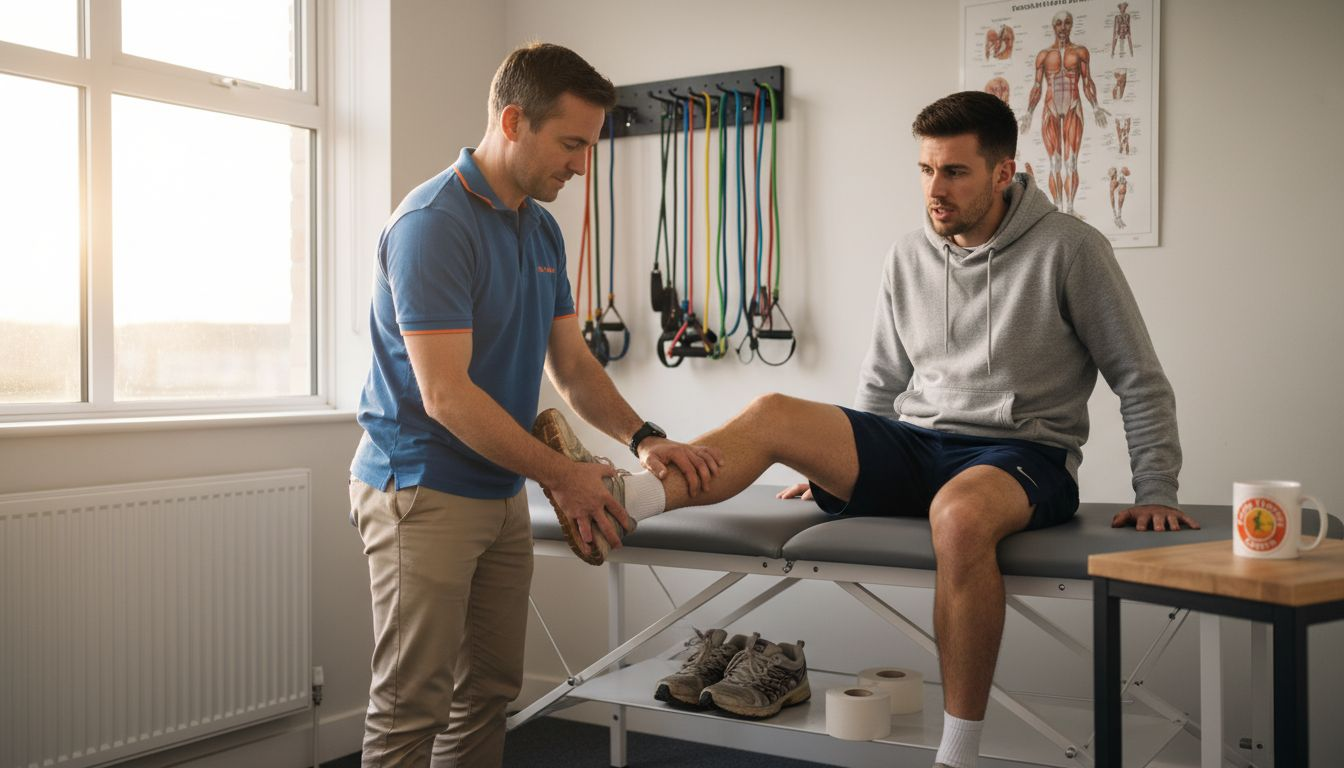
Managing sports injury patients requires precision, evidence, and a systematic approach. Research shows that reinjury rates reach 70% for ankle sprains when rehabilitation is incomplete or rushed. This guide provides healthcare professionals with a comprehensive framework for assessment, treatment protocols, and criterion-based progression strategies that minimise reinjury risk whilst accelerating safe return to sport.
Table of Contents
Understanding The Problem: Common Pitfalls In Sports Injury Management
Preparing For Patient Management: Assessment And Setting Expectations
Executing The Treatment: Protocols And Progressive Rehabilitation
Verifying Recovery: Monitoring Progress And Preventing Reinjury
Parks Therapy Centre: Expert Sports Injury Management In 2026
Frequently Asked Questions About Managing Sports Injury Patients
Key takeaways
Point | Details |
Active rehabilitation | Early movement and progressive loading outperform prolonged rest for most sports injuries. |
Comprehensive assessment | Evaluate pain severity, sensorimotor control, psychological readiness, and functional capacity before progressing. |
Criterion-based progression | Use objective measures rather than time alone to guide return to sport decisions. |
Proprioceptive restoration | Address balance and coordination deficits that persist 6-12 months post-injury. |
Multidisciplinary approach | Collaborate with sports medicine, performance coaches, and psychological support for optimal outcomes. |
Understanding the problem: common pitfalls in sports injury management
Poor sports injury management creates a cycle of reinjury and underperformance. Reinjury rates reach 70% for ankle sprains and 20-30% for ACL injuries when rehabilitation protocols are inadequate. These statistics reflect systemic issues in how we assess, treat, and progress injured athletes.
The primary cause of reinjury is premature return to sport without addressing underlying deficits. Athletes often regain basic strength and range of motion but lack the proprioceptive control, sport-specific capacity, and psychological confidence necessary for safe participation. This gap between clinical recovery and functional readiness creates vulnerability.
Persistent proprioceptive deficits represent a hidden danger. Even after pain resolves and strength returns, neuromuscular control remains impaired for months. Athletes compensate unconsciously, altering movement patterns and increasing stress on other structures. These adaptations set the stage for secondary injuries.
Mismanagement of the inflammatory phase undermines healing from the start. The outdated RICE protocol encouraged prolonged rest and aggressive ice application, potentially suppressing the beneficial inflammatory response necessary for tissue repair. Many practitioners still reflexively prescribe NSAIDs without considering their impact on collagen synthesis and bone healing.
“The shift from RICE to PEACE & LOVE protocols represents our evolving understanding that inflammation is not the enemy but a necessary biological process we must manage intelligently.”
Psychological readiness receives insufficient attention in traditional rehabilitation programmes. Fear of reinjury, anxiety about performance, and loss of confidence significantly predict poor outcomes. Athletes who return physically capable but psychologically unprepared often underperform or abandon sport entirely. Integrating sports injury prevention techniques addresses these multifaceted challenges.
Key pitfalls to avoid:
Progressing based solely on time rather than functional criteria
Neglecting sport-specific movement patterns in late-stage rehabilitation
Failing to address bilateral strength deficits and asymmetries
Overlooking psychological barriers to full participation
Inadequate patient education about reinjury risk factors
Preparing for patient management: assessment and setting expectations
Comprehensive initial assessment forms the foundation for effective management. Pain severity, sensorimotor control, and athlete readiness must all be evaluated to inform treatment planning and progression decisions. Rushed or incomplete assessment inevitably leads to inappropriate management.
Your assessment protocol should capture multiple dimensions of injury impact. Pain levels alone provide insufficient information. Evaluate range of motion, strength, proprioception, functional capacity, and psychological status. Use validated outcome measures such as the Lower Extremity Functional Scale, Fear-Avoidance Beliefs Questionnaire, or sport-specific performance tests.
Sensorimotor assessment reveals subtle deficits that predispose to reinjury. Single-leg balance tests, Y-balance protocols, and hop tests quantify neuromuscular control. Compare injured to uninjured side, documenting asymmetries that require specific intervention. These objective measures guide treatment priorities and track progress.
Psychological readiness assessment often reveals barriers invisible to physical testing. Use brief screening tools to identify kinesiophobia, catastrophising, or performance anxiety. Early identification allows timely referral to sports psychology support when needed.
Setting clear recovery expectations dramatically improves adherence and outcomes. Patients need realistic timelines, understanding of rehabilitation phases, and knowledge of what determines progression. This educational foundation reduces frustration and prevents premature self-advancement.
Pro Tip: Create a visual roadmap showing rehabilitation phases with specific milestones and criteria for advancement. Patients who understand the journey stay engaged and follow protocols more consistently.
Structure your initial consultation to:
Conduct comprehensive physical assessment documenting all relevant deficits
Administer validated outcome measures establishing baseline scores
Screen for psychological barriers requiring additional support
Educate patient on injury mechanism, healing timelines, and rehabilitation phases
Establish clear criteria for progression through each phase
Coordinate with relevant team members including sports medicine physicians, coaches, and performance specialists
Early multidisciplinary involvement prevents siloed care and communication gaps. Share assessment findings with the athlete’s coaching staff and medical team. Establish collaborative protocols for progression decisions. This integrated approach, similar to comprehensive physiotherapy recovery programmes, ensures everyone works towards aligned goals.
Executing the treatment: protocols and progressive rehabilitation
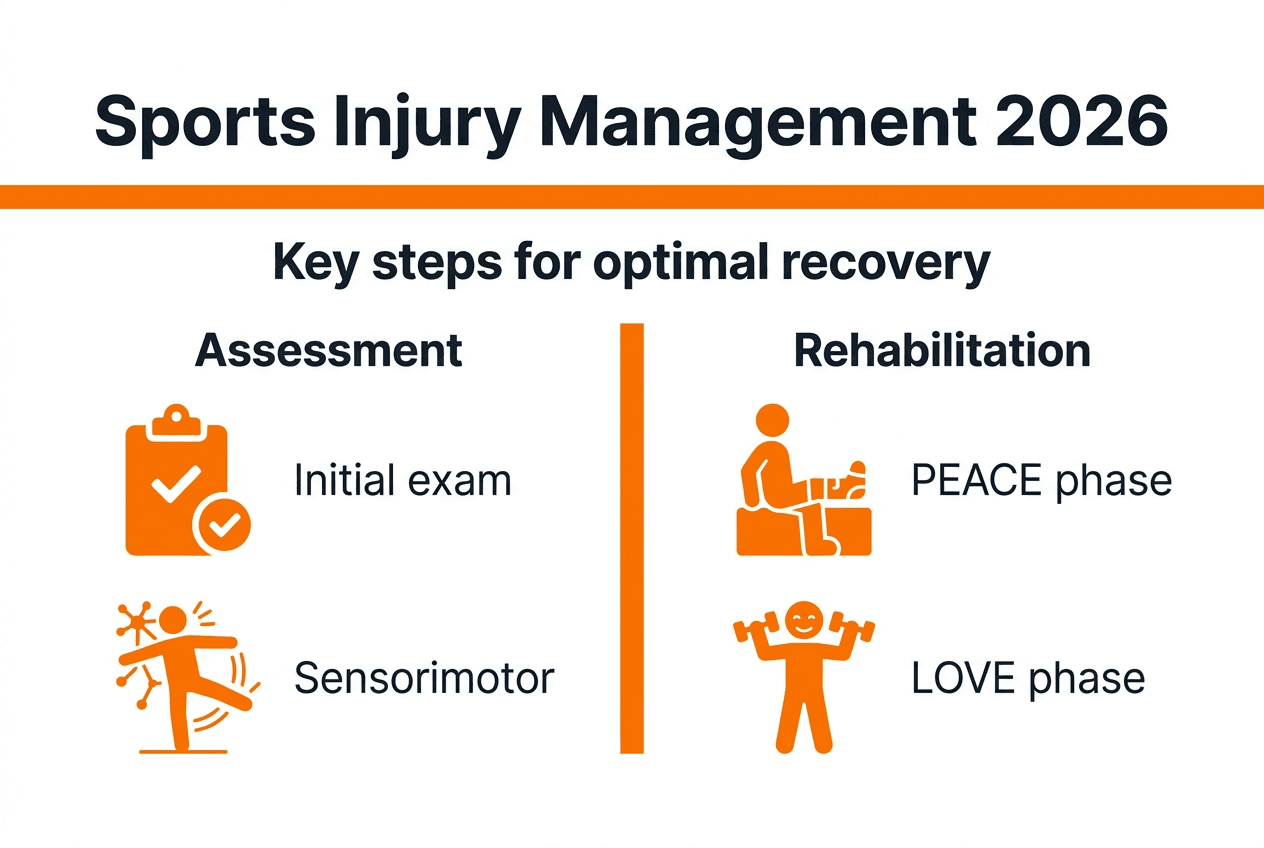
Modern injury management has shifted from passive rest to active rehabilitation. The PEACE & LOVE protocol represents current best practice, emphasising optimal loading and early movement over prolonged immobilisation. Understanding this framework transforms how you approach acute injury management.
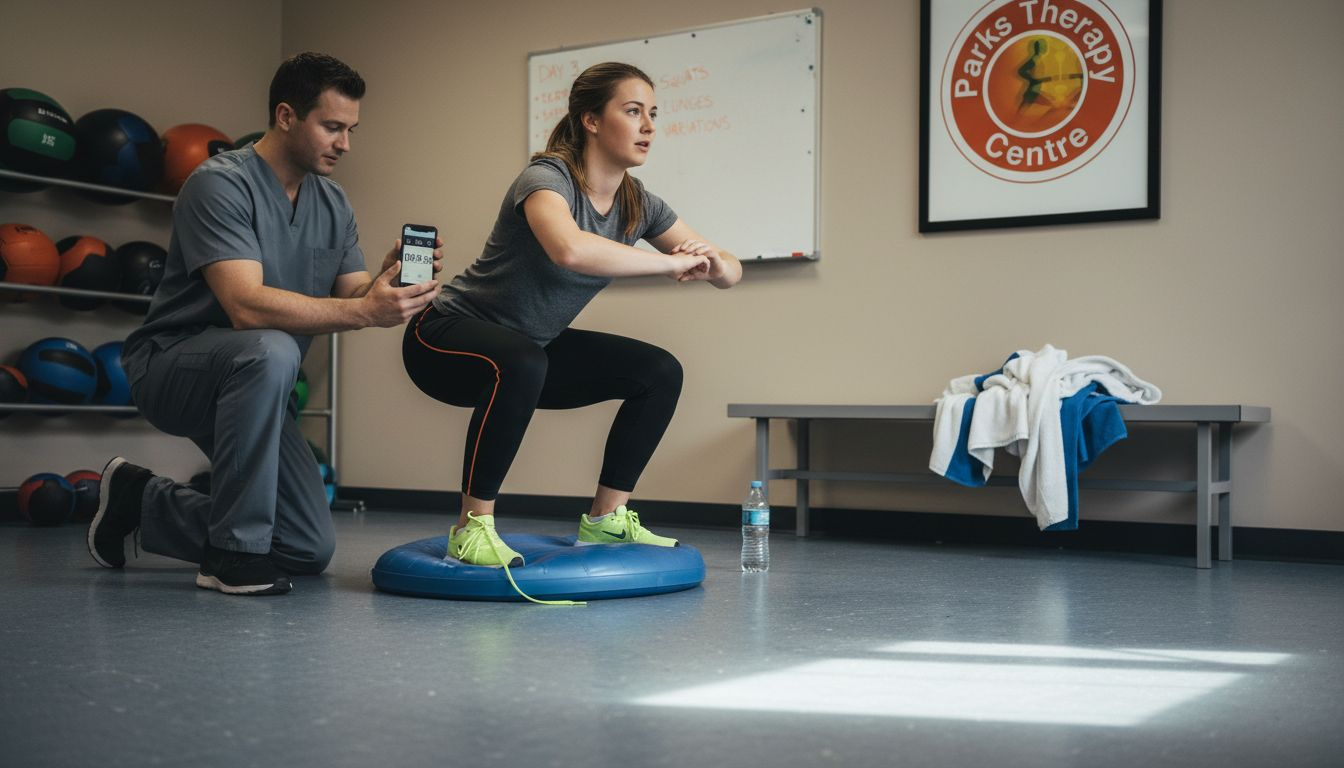
PEACE addresses the immediate phase. Protection involves relative rest, not complete cessation. Elevation and avoiding anti-inflammatories preserve the healing response. Compression provides support whilst allowing movement. Education empowers patients to participate actively in recovery.
LOVE guides the rehabilitation phase. Optimal loading means progressively challenging tissue without exceeding capacity. Optimism addresses psychological factors. Vascularisation through pain-free cardiovascular activity promotes healing. Exercise restores function systematically.
Approach | Focus | Key Principles | Outcomes |
RICE (outdated) | Passive rest | Rest, ice, compression, elevation | Prolonged recovery, tissue weakness |
PEACE & LOVE (current) | Active rehabilitation | Early movement, optimal loading, education | Faster return, reduced reinjury |
Early pain-limited movement accelerates healing and prevents deconditioning. Begin range-of-motion exercises within pain tolerance immediately. Progress to isometric strengthening, then dynamic exercises as tissue tolerance improves. This graduated approach maintains fitness whilst respecting biological healing constraints.
Avoid reflexive NSAID prescription during the acute inflammatory phase. These medications may impair collagen synthesis and bone healing, particularly problematic for stress fractures or surgically repaired tissues. Reserve anti-inflammatories for situations where pain significantly limits function or sleep.
Your progression framework should follow a logical sequence:
Phase one: pain management, gentle range of motion, isometric strengthening
Phase two: full range restoration, progressive resistance training, basic proprioception
Phase three: sport-specific movements, advanced neuromuscular training, graduated return to training
Phase four: full participation with performance optimisation
Pro Tip: Use the “24-hour rule” to validate progression decisions. If symptoms increase significantly within 24 hours of advancing exercise difficulty, you have exceeded current tissue capacity and should modify the programme.
Collaboration with sports medicine physicians and performance coaches optimises outcomes. Physicians provide diagnostic clarity and medical management. Performance coaches understand sport-specific demands and can modify training loads appropriately. Regular communication ensures coordinated progression.
Integrate various physiotherapy techniques based on individual presentation:
Manual therapy to restore joint mobility and reduce protective muscle guarding
Therapeutic exercise addressing strength, endurance, and neuromuscular control
Dry needling or acupuncture for persistent myofascial pain
Electrotherapy modalities when evidence supports their use for specific conditions
Movement retraining to correct compensatory patterns
Verifying recovery: monitoring progress and preventing reinjury
Objective monitoring prevents premature progression and identifies persistent deficits requiring intervention. Track functional capacity, strength symmetry, and psychological readiness using standardised measures. This data-driven approach removes guesswork from return to sport decisions.
Criterion-based progression combined with appropriate time frames minimises reinjury risk whilst optimising performance restoration. Time alone provides insufficient guidance. Athletes healing at different rates require individualised timelines based on objective criteria rather than arbitrary protocols.
Key metrics to monitor throughout rehabilitation:
Metric | Assessment Method | Target Benchmark |
Strength symmetry | Isokinetic testing or functional tests | >90% limb symmetry index |
Range of motion | Goniometry | Equal to uninjured side |
Proprioception | Single-leg balance, Y-balance | <4cm reach difference |
Functional capacity | Sport-specific hop tests | >90% performance vs baseline |
Psychological readiness | ACL-RSI or similar validated scale | >60 out of 100 |
Proprioceptive deficits persist 6-12 months post-injury even after other parameters normalise. Continue targeted balance and coordination training throughout rehabilitation and into the return to sport phase. Single-leg exercises, unstable surface training, and perturbation drills restore neuromuscular control.
Structure return to sport as a gradual progression:
Return to participation: athlete joins team activities with modifications and restrictions
Return to sport: athlete participates fully in training without restrictions
Return to performance: athlete demonstrates pre-injury performance levels in competition
Each stage requires meeting specific criteria before advancement. Return to participation might occur at 70% functional capacity with ongoing rehabilitation. Return to sport demands 90% or greater symmetry across all measures. Return to performance requires sustained high-level function without symptom recurrence.
Educate patients about reinjury risk factors they can control. Inadequate warm-up, fatigue, and poor biomechanics all increase vulnerability. Athletes who understand these factors make better decisions about training load and recovery.
Implement strategies proven to reduce reinjury:
Continued structured exercise programmes focusing on strength and neuromuscular control
Gradual increase in training volume and intensity over several months
Appropriate protective equipment or taping when indicated
Regular monitoring and reassessment throughout the first competitive season
Open communication channels for reporting concerns or symptoms
Integrating approaches like Pilates therapy during late-stage rehabilitation builds core stability and movement control that supports long-term injury prevention. These methods complement sport-specific training whilst addressing underlying movement quality.
Parks Therapy Centre: expert sports injury management in 2026
Managing sports injuries effectively requires expertise, experience, and evidence-based protocols. Since 1986, Parks Therapy Centre has provided comprehensive physiotherapy and sports injury treatment across Bedfordshire and Buckinghamshire, helping athletes return to peak performance safely.
Our multidisciplinary team combines physiotherapy, sports massage, acupuncture, and Pilates to address every aspect of sports injury recovery. We utilise criterion-based progression protocols, advanced functional testing, and diagnostic imaging referrals to ensure accurate diagnosis and optimal treatment planning. Whether you are managing acute injuries or persistent problems, our tailored rehabilitation programmes accelerate recovery whilst minimising reinjury risk. Book an appointment online to access expert care that gets athletes back to sport confidently and safely.
Frequently asked questions about managing sports injury patients
Should I prescribe NSAIDs during acute sports injury rehabilitation?
Limit NSAIDs during the inflammatory phase as they may impair collagen synthesis and tissue healing. Reserve them for situations where pain significantly limits function, sleep, or rehabilitation participation, using the lowest effective dose for the shortest duration.
What assessments determine if a patient is ready to return to sport?
Assess strength symmetry (>90% limb symmetry index), functional capacity through sport-specific hop tests, proprioceptive control via balance assessments, full pain-free range of motion, and psychological readiness using validated scales like the ACL-RSI before clearing return to sport.
How do I address psychological barriers to return to sport?
Screen early using brief questionnaires identifying fear-avoidance, catastrophising, or performance anxiety. Integrate graded exposure to feared movements, provide positive reinforcement for progress, educate about realistic reinjury risk, and refer to sports psychology when needed.
What signs indicate a patient is ready to progress rehabilitation phases?
Look for pain-free completion of current phase exercises, achievement of phase-specific strength and range targets, symmetrical movement patterns, absence of compensatory strategies, and compliance with home exercise programmes without symptom flares.
How can I reduce reinjury risk when patients return to sport?
Ensure >90% strength symmetry, restore proprioceptive control, implement gradual progression over several months, continue targeted exercise programmes during competitive season, maintain regular monitoring, and educate patients about fatigue and training load management.
Recommended