
Ossur bracing: your guide to better recovery
TL;DR:
Choosing the right brace depends on your specific injury, with off-the-shelf braces suitable for short-term support and custom-fit options recommended for long-term or complex cases. Proper fitting and integrated physiotherapy are essential for effective recovery and optimal brace performance, regardless of the device chosen. Insurance often covers Ossur braces, but clinical guidance ensures correct selection, fit, and use for lasting results.
Choosing the right brace when you’re dealing with a musculoskeletal injury is genuinely difficult. Ossur bracing has become one of the most recognised names in orthopedic support, yet most people searching for answers still feel overwhelmed by the product range, the terminology, and the question of whether they need a clinical fitting or can simply order online. This guide cuts through that confusion. You will learn what makes Ossur orthopedic braces different, how to match specific products to specific conditions, and why getting the clinical context right matters just as much as the device itself.
Table of Contents
Key takeaways
Point | Details |
Ossur bracing covers multiple joints | Products span knee, ankle, wrist, shoulder, and back, each engineered for distinct recovery demands. |
Off-the-shelf vs custom matters | General injuries suit off-the-shelf braces, while complex or long-term conditions benefit from custom-fitted solutions. |
Physiotherapy is non-negotiable | Bracing without guided exercise risks muscle atrophy; the two must work together for lasting recovery. |
Fit affects outcome directly | Poorly fitted braces reduce effectiveness and can worsen discomfort; professional assessment improves results. |
Insurance often covers costs | Many Ossur braces qualify for insurance reimbursement, making quality support more financially accessible. |
The Ossur bracing range explained
Ossur produces braces across every major joint group, and understanding what each product is designed to do saves you a great deal of confusion at the point of purchase.
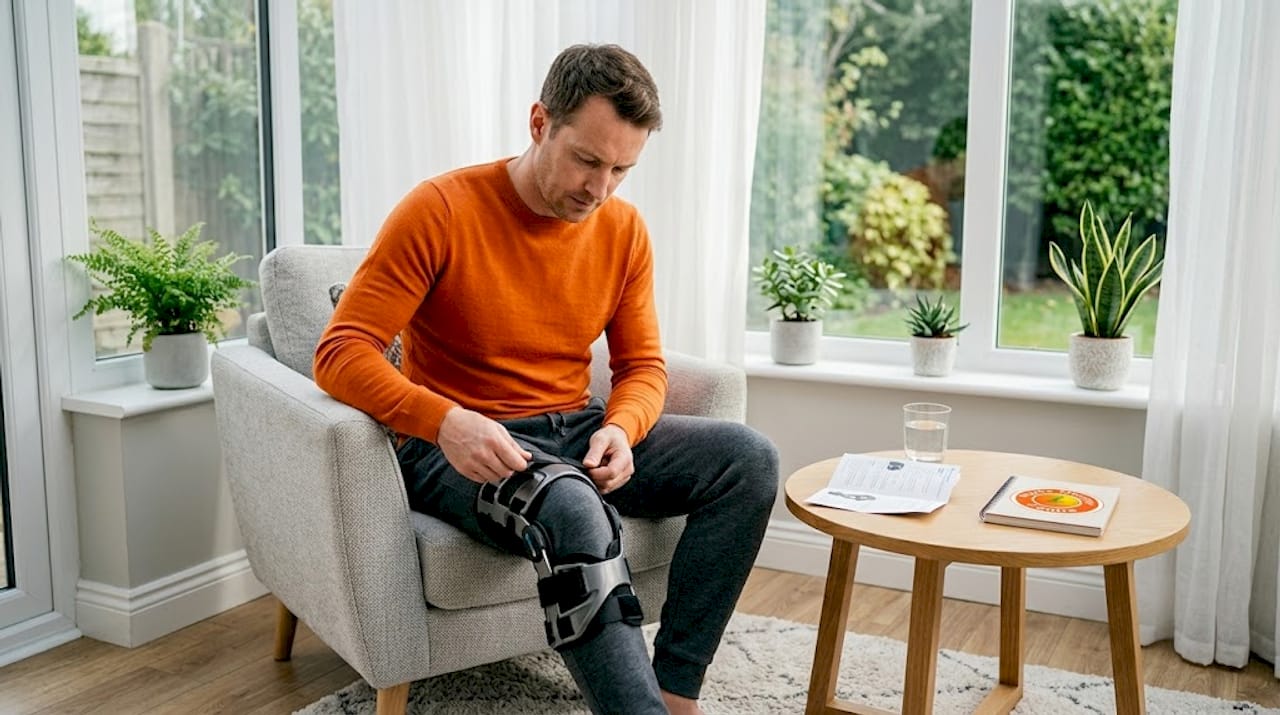
The knee range is where Ossur has arguably its strongest reputation. The Rebound DUAL features a polycentric hinge for mediolateral stability, adjustable sizing, and breathable liners for comfort during both low and high-impact activities. This makes it suitable across a broad activity spectrum, from post-operative recovery to sports return. The Unloader brace takes a different approach. Rather than stabilising the whole joint, it reduces joint load to improve pain and function specifically in osteoarthritis patients, shifting weight away from the damaged compartment.
Ankle stabilisation gear from Ossur addresses everything from mild sprains requiring compression and proprioceptive feedback to more serious instability needing rigid support with articulated hinges. The wrist and shoulder ranges follow similar logic. Shoulder support braces from Ossur typically address rotator cuff injuries and post-operative immobilisation, using adjustable slings and abduction pillows to hold the arm at prescribed angles during tissue healing.
What makes Ossur materials stand out:
Polycentric hinges that mirror the knee’s natural biomechanics rather than acting as a simple pivot
Aluminium and carbon fibre composite frames that reduce weight without sacrificing structural rigidity
Breathable, moisture-wicking liners, including Cool Liner technology, that reduce skin breakdown during extended wear
Modular strap systems allowing circumference adjustments as swelling changes during recovery
Pro Tip: When reading Ossur product descriptions, look for the hinge type. A polycentric hinge is significantly more protective than a simple mono-centric one for ligament injuries, because it follows the joint’s actual axis of rotation.
Pricing across the range reflects the complexity of the device. Ossur braces range from approximately £110 for ankle supports to over £500 for advanced knee braces, so knowing which category of brace you genuinely need prevents unnecessary expenditure at both ends of the scale.
Off-the-shelf vs custom bracing solutions
This distinction is one of the most misunderstood areas in rehabilitation bracing, and getting it wrong costs both time and money.
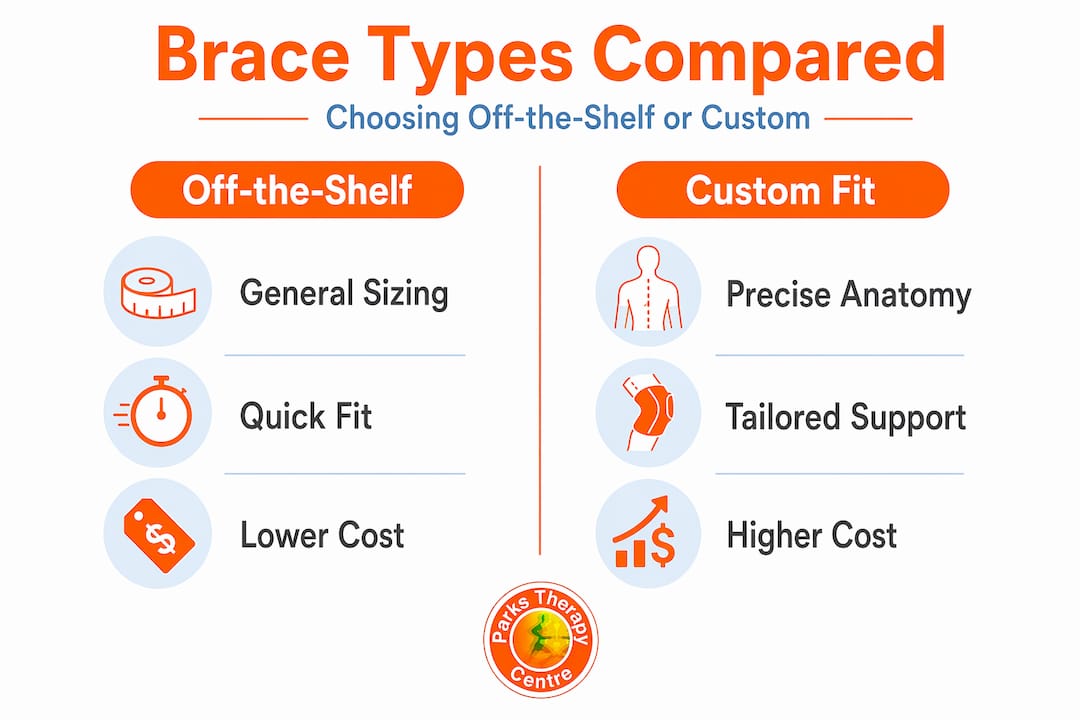
Off-the-shelf braces suit the majority of acute injuries and short-term recovery scenarios. They are sized by general measurements, available quickly, and significantly more affordable. For a first-time ankle sprain, a ligament strain requiring temporary joint protection, or a sports return scenario where confidence and proprioception matter more than mechanical correction, an off-the-shelf product is usually perfectly appropriate. Off-the-shelf braces provide general stability and affordability that makes them the practical first-line choice for most patients.
Custom braces are a different proposition. They are cast or scanned to match your specific anatomy, which matters considerably when the standard sizing leaves pressure points, gaps in coverage, or insufficient correction for an unusual joint shape. They are recommended for long-term conditions, post-surgical cases requiring precise alignment, and paediatric patients whose anatomy changes rapidly.
Feature | Off-the-shelf | Custom-fitted |
Fit accuracy | General sizing bands | Anatomically precise |
Delivery time | Immediate | Two to three weeks typically |
Cost | £110 to £500+ | £500 to several thousand |
Best use | Acute injury, short-term support | Complex anatomy, long-term use |
Insurance coverage | Often covered | Usually covered with clinical justification |
Adjustability | Straps and sizing | Built to prescription |
A third category has emerged in recent years that sits between these two options. Modular bracing systems with adjustable connectors and tension dials deliver patient-specific tuning without the delays inherent in fully custom fabrication. This matters practically because it means a clinician can fine-tune the brace at each appointment as your recovery progresses.
Many Ossur braces qualify for insurance reimbursement and FSA eligibility, which meaningfully reduces out-of-pocket costs. Always check with your insurer before assuming a brace is an unreimbursed expense, because clinical documentation from a physiotherapist or consultant often unlocks coverage.
Pro Tip: Before committing to a custom brace, ask your clinician whether a modular off-the-shelf option would achieve the same goal. For many post-operative knee patients, it will, and the cost difference is substantial.
Clinical best practice for using Ossur braces
Bracing does not operate in a vacuum. Orthopaedic surgeons stress that effective bracing is part of a full clinical pathway, from early support through to post-operative and non-operative care, to achieve the best outcomes.
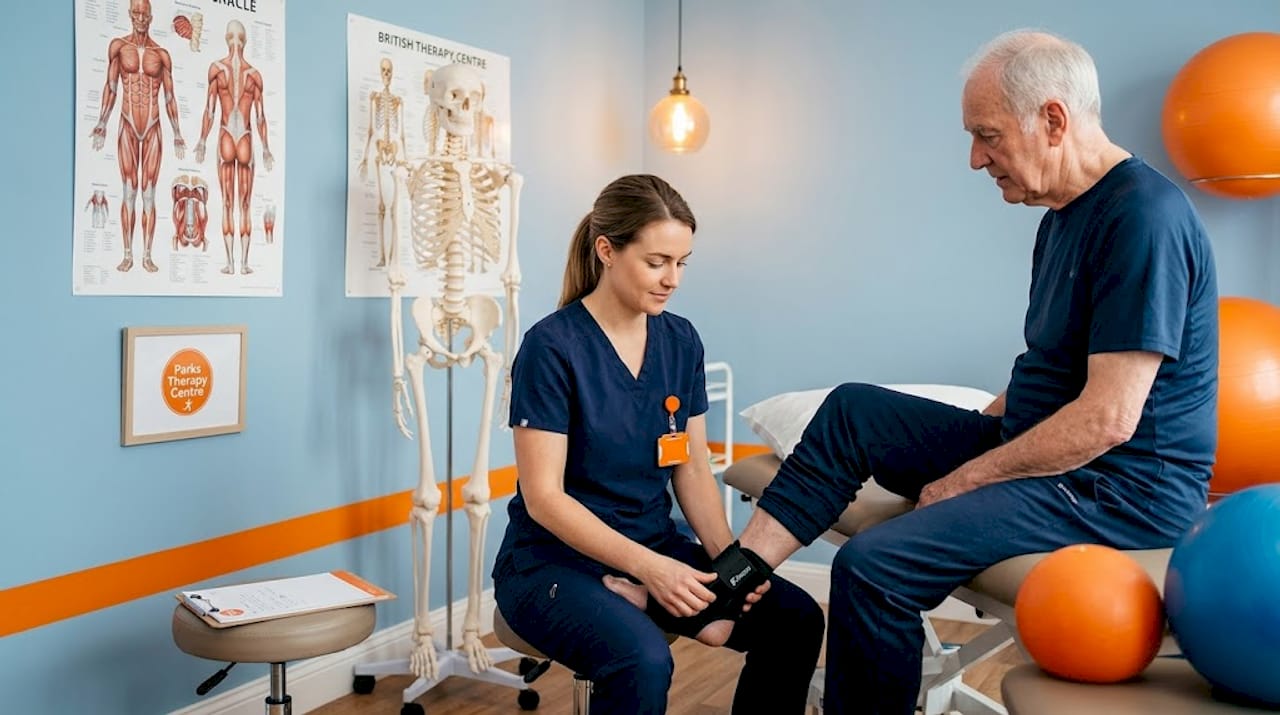
The fitting stage is where most patient problems begin. A brace worn too loosely provides no meaningful mechanical protection. Worn too tightly, it restricts circulation and causes skin breakdown. Both scenarios are common when patients self-fit without guidance. If you are using a product from the Ossur FormFit Post-Op range, note that adjustable hinge components allow clinicians to modify flexion and extension limits incrementally as healing progresses, preventing joint stiffness while protecting the surgical site.
Physiotherapy must run alongside bracing, not after it. Bracing without physiotherapy risks muscle atrophy, because the mechanical support reduces the load demand on surrounding muscles. This is precisely why evidence-based physiotherapy should form the backbone of any bracing protocol. The brace handles protection; the exercises handle strength.
Common clinical pitfalls and how to avoid them:
Wearing a brace for too long without weaning. Set a clinical schedule for progressive reduction in wear time.
Skipping adjustment appointments. Swelling changes week by week; the brace must change with it.
Using a knee brace for back pain or vice versa. Joint-specific design is not interchangeable.
Choosing maximum immobilisation when partial range of motion is clinically appropriate. Stiffness is a real complication of over-bracing.
Neglecting skin checks. Inspect the skin underneath the brace daily, particularly over bony prominences.
Pro Tip: Ask your physiotherapist to demonstrate brace donning and doffing at your first appointment and film it on your phone. Incorrect application technique is extraordinarily common and undermines the brace’s effectiveness entirely.
Choosing the right Ossur brace for your condition
Matching a specific device to your diagnosis is the most practically useful thing this guide can help you do. Here is how to approach it by condition category.
Knee ligament injuries (ACL, MCL, LCL). The Rebound DUAL and similar functional knee braces are designed for this group. They provide mediolateral and rotational control during sport or high-demand activity. For knee injury prevention and return-to-sport protocols, these braces also offer confidence support, which research suggests has genuine compliance value.
Osteoarthritis of the knee. The Ossur Unloader is the product most clinicians reach for here. It works by offloading the affected compartment of the joint, which reduces joint pain and improves mobility without surgical intervention. Activity level and body weight both influence which version of the Unloader is most appropriate.
Ankle instability and post-sprain recovery. Ossur ankle stabilisation gear ranges from neoprene sleeves offering compression and warmth to hinged ankle supports providing genuine mediolateral control. The choice depends on injury grade and activity demands. A footballer returning to training needs more rigid support than someone managing chronic mild instability during walking.
Foot drop. This neurological condition, where the foot cannot be lifted properly during the swing phase of walking, requires a specialised ankle-foot orthosis. Foot drop orthoses mechanically compensate for lost muscle function while promoting natural movement patterns to prevent secondary injuries such as tripping falls.
Post-operative shoulder immobilisation. Shoulder support braces from Ossur typically hold the arm at a prescribed abduction angle during rotator cuff or labrum repair recovery. The angle setting usually changes at each surgical review, and a modular product makes this adjustment straightforward.
Wrist and hand injuries. For fractures, carpal tunnel post-surgery, or tendon repairs, Ossur wrist braces offer neutral positioning or mild extension depending on clinical requirement.
Before purchasing any Ossur brace, a professional assessment should confirm the diagnosis, measure the relevant anatomy, and match the product specification to your recovery timeline. Many braces also benefit from a trial fitting before final selection. The physiotherapy aids used in clinical practice complement this process by giving clinicians hands-on experience with product performance across patient types.
My honest take on bracing effectiveness
I have worked with patients who arrive clutching a recently purchased brace and expecting it to solve their problem. The brace is often excellent. The expectation is the issue.
In my experience, the single biggest predictor of a good outcome with Ossur bracing is not the specific product chosen. It is whether the patient received proper fitting guidance and whether physiotherapy was integrated from day one. I have seen expensive custom solutions underperform because no one explained the wear schedule, and I have seen straightforward off-the-shelf ankle supports deliver outstanding results because a good clinician supervised the process.
The technology genuinely has improved. The modular fine-tunable systems now available mean that the old binary choice between a generic product that almost fits and a costly custom solution is largely obsolete. That is a real gain for patients.
My one genuine concern is the tendency to stay in a brace longer than necessary. Transitioning from bracing to unbraced function requires a gradual, supported process that prevents muscle atrophy and maintains joint health. Patients who self-manage without clinical supervision often skip this transition, which is where long-term problems develop. View the brace as a scaffold. The building it is supporting needs to be strengthened in parallel so the scaffold can eventually come down.
— Ivan
How Parkstherapycentre supports your recovery
Ossur bracing delivers real clinical value, but only when it is part of a properly guided rehabilitation plan. At Parkstherapycentre, established in 1986 and serving patients across Bedfordshire and Buckinghamshire, the clinical team works alongside patients to select, fit, and integrate bracing solutions into their full recovery pathway. Whether you need guidance on knee brace options following ligament damage or support managing a longer-term musculoskeletal condition, personalised assessments match the right device to your anatomy and your goals. Physiotherapy programmes running alongside your bracing protocol address strength, mobility, and the graduated return to activity that makes recovery stick. To explore how Parkstherapycentre can support your rehabilitation, visit parkstherapycentre.co.uk.
FAQ
What conditions are Ossur braces best suited for?
Ossur braces address a broad range of musculoskeletal conditions including knee ligament injuries, osteoarthritis, ankle instability, foot drop, and post-operative shoulder immobilisation. The appropriate product depends on joint, injury severity, and activity demands.
How do I know if I need an off-the-shelf or custom Ossur brace?
Off-the-shelf braces suit most acute injuries and short-term recovery, while custom bracing solutions are recommended for complex anatomy, long-term conditions, or cases where standard sizing consistently fails to provide adequate fit or correction.
Do Ossur braces require a prescription to purchase?
Most off-the-shelf Ossur products are available without a prescription, but clinical assessment before purchase significantly improves outcomes. Custom braces and insurance-funded devices typically require clinician documentation and a formal referral.
How long should I wear an Ossur brace each day?
Wear time depends entirely on your condition, the specific brace, and your recovery stage. Your physiotherapist or clinician should set a clear wear schedule, as both under-use and prolonged use without progressive weaning carry clinical risks.
Can Ossur bracing replace physiotherapy?
No. Bracing must accompany physiotherapy to prevent muscle atrophy and support active recovery. The brace provides mechanical protection while exercise maintains and rebuilds the strength the joint needs to function without support over time.
Recommended