
How podiatry helps with foot and lower-limb pain
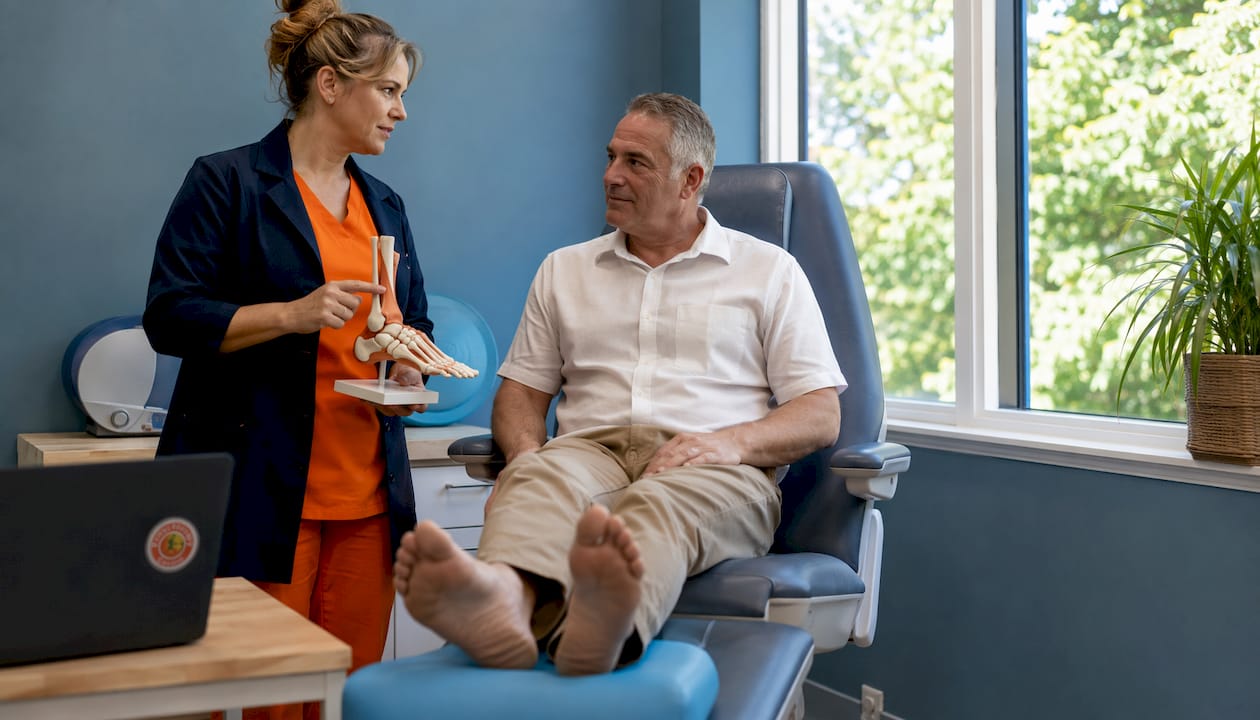
Podiatrists assess, diagnose, treat, and help prevent foot and lower-limb pain. They do this through clinical examination, gait and biomechanical analysis, targeted exercise therapy, footwear and orthotic provision, and referrals when needed. For most mechanical causes of pain, including plantar fasciitis, Achilles tendinopathy, and arthritic foot pain, conservative care led by a podiatrist provides effective, long-term relief without surgery. Foot pain affects around 20% of the population, with roughly 10% reporting pain disabling enough to affect daily life.
Here is what you need to know before booking an assessment:
A podiatrist is the right first clinician for most foot and lower-limb pain, whether mechanical, arthritic, or neuropathic.
Urgent care is needed for diabetic foot wounds, signs of infection, or sudden loss of circulation or sensation.
Bring your usual footwear, a brief symptom timeline, and details of your activity levels to your first appointment.
Parkstherapycentre offers podiatry as part of a multidisciplinary team across Bedfordshire and Buckinghamshire, with direct booking available.
Table of Contents
What does a podiatrist actually do at your first appointment?
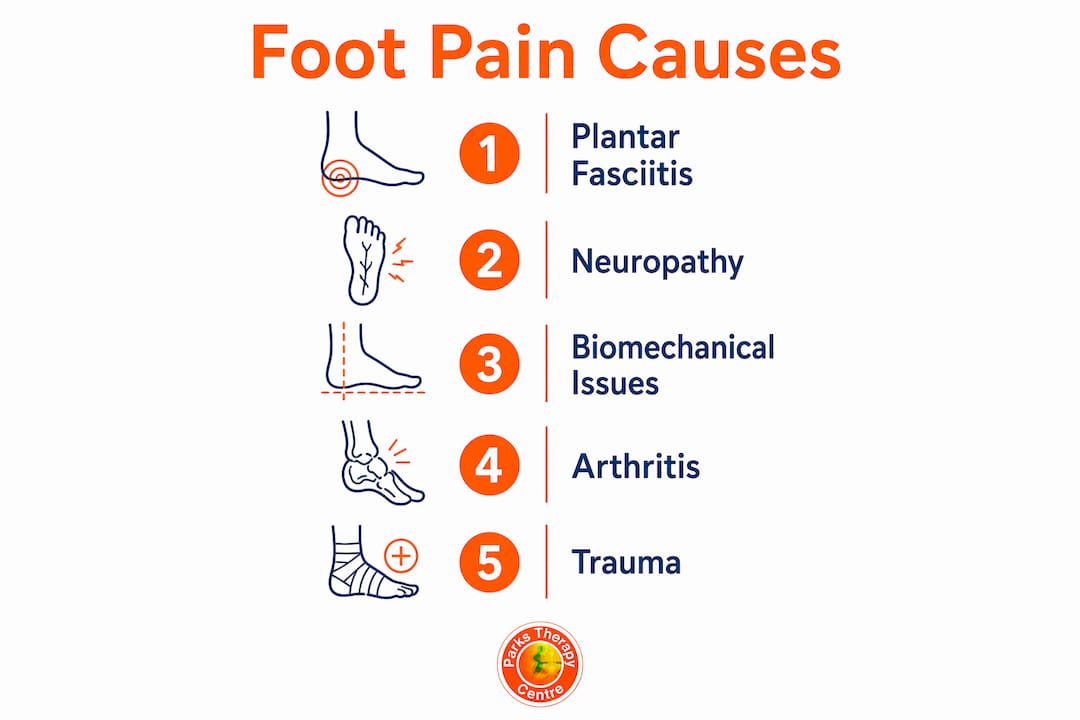
Common causes of foot and lower-limb pain you should know about
How podiatrists diagnose foot pain: tests, red flags, and when they refer
How podiatrists treat pain: from first-line care to specialist options
Why active rehabilitation produces better long-term outcomes
What does a podiatrist actually do at your first appointment?
A podiatry appointment follows a structured pathway. The clinician begins with a detailed history: when the pain started, what aggravates or relieves it, your occupation, activity levels, and any relevant medical conditions such as diabetes or inflammatory arthritis. A physical examination follows, covering joint range of motion, muscle strength, skin and nail condition, and neurovascular status.
Gait and biomechanical assessment is central to the podiatrist’s role in treatment. The clinician observes how you walk, checks foot posture in standing, and identifies compensatory patterns higher up the kinetic chain. Hip and knee mechanics often contribute to foot pain through compensatory patterns, so a thorough assessment rarely stops at the ankle.
From that assessment, the podiatrist builds a management plan. This typically includes one or more of the following:
Exercise prescription (strengthening, mobility, and loading programmes)
Footwear advice and optimisation
Prefabricated or custom foot orthoses
Taping and strapping
Night splints or braces
Manual therapy
Dry needling (where appropriate and within the clinician’s scope)
Referral for imaging or onward specialist care
In the UK, most podiatrists work within their scope of practice and refer to a GP or specialist for prescription medications or injections. However, podiatrists with an independent prescribing qualification can prescribe certain medications directly, and extended-scope podiatrists working in musculoskeletal clinics may administer local anaesthetic or corticosteroid injections. If imaging is needed, a podiatrist will arrange or request X-ray, ultrasound, or MRI depending on the suspected pathology.
Pro Tip: Bring two or three pairs of shoes you wear regularly, including work footwear and trainers. Worn soles and upper distortion give a podiatrist immediate evidence of your gait pattern before any formal assessment begins.
Common causes of foot and lower-limb pain you should know about
Foot pain rarely has a single cause, and the location, onset, and character of pain point the clinician towards the most likely diagnosis. Understanding the common patterns helps you describe your symptoms clearly at triage.
Plantar fasciitis (plantar heel pain): Sharp pain under the heel, worst with the first steps in the morning or after rest. Most common in adults aged 40–60 and in runners.
Achilles tendinopathy: Pain and stiffness at the back of the heel or mid-tendon, aggravated by activity. Often linked to a sudden increase in training load.
Morton’s neuroma: Burning or shooting pain between the third and fourth toes, sometimes with numbness. Worsened by narrow footwear.
Bunions (hallux valgus): Bony prominence at the base of the big toe, with pain on pressure or during push-off. Linked to footwear and foot structure.
Osteoarthritis of the foot or ankle: Deep, aching joint pain, worse with weight-bearing and at the end of the day. Often accompanied by stiffness after rest.
Peripheral neuropathy: Burning, tingling, or numbness, often bilateral and worse at night. Diabetes is the most common underlying cause in the UK.
Ankle sprain: Lateral ankle pain following an inversion injury, with swelling and bruising. Recurrent sprains suggest ligament laxity or poor proprioception.
Tibialis posterior tendinopathy: Medial ankle and arch pain, often with progressive flat foot deformity. More common in middle-aged women.
Inflammatory arthropathies (e.g. rheumatoid arthritis, gout): Warm, swollen joints, often affecting multiple sites. Gout typically presents as acute, severe pain in the first metatarsophalangeal joint.
Certain patient factors change the clinical picture significantly. Diabetes raises the risk of neuropathy, ulceration, and infection. Recent trauma warrants fracture exclusion. Sudden severe swelling with heat and redness, particularly in a single joint, may indicate infection or acute crystal arthropathy and needs prompt medical review.
Symptom cluster | Probable diagnosis |
First-step heel pain, worse after rest | Plantar fasciitis |
Mid-tendon or insertional posterior heel pain | Achilles tendinopathy |
Burning between toes, worse in narrow shoes | Morton’s neuroma |
Bilateral burning/tingling, worse at night | Peripheral neuropathy |
Acute hot swollen first MTP joint | Gout |
Progressive medial arch collapse with ankle pain | Tibialis posterior tendinopathy |
How podiatrists diagnose foot pain: tests, red flags, and when they refer
Diagnosis in podiatry follows a stepwise approach. After the history, the physical examination assesses skin integrity, joint mobility, muscle strength, and neurovascular status. Gait analysis, both static and dynamic, identifies biomechanical contributors. Functional tests such as the single-leg heel raise and the windlass test for plantar fascia integrity give objective data to guide treatment.
Point-of-care tools used in podiatry clinics include:
Monofilament testing for peripheral neuropathy (particularly for patients with diabetes)
Doppler assessment for peripheral arterial disease
Pressure plate or treadmill gait analysis in specialist settings
Digital photography of footwear wear patterns
Imaging is arranged when clinical findings suggest a need for it. X-ray is appropriate for suspected arthritis, fracture, or bony deformity. Ultrasound is useful for tendinopathy, plantar fascia assessment, and soft-tissue masses. MRI is reserved for complex soft-tissue pathology or where diagnosis remains unclear after initial investigations.
Red flags requiring urgent referral:
Diabetic foot ulcer, wound, or signs of infection (cellulitis, discharge, odour)
Acute neurovascular compromise: cold, pale, or pulseless foot
Suspected deep infection or septic arthritis
Progressive neurological deficit (rapidly worsening weakness or sensory loss)
Severe, unexplained swelling with systemic symptoms (fever, malaise)
Referral pathways in the UK are well established. Podiatrists refer to GPs for systemic conditions, prescriptions, or onward specialist letters. They refer directly to orthopaedics or podiatric surgery for structural deformity or failed conservative care. Physiotherapy, rheumatology, and diabetes services are all part of the standard referral network. Extended-scope podiatrists in NHS musculoskeletal clinics can triage and manage patients who would otherwise wait for an orthopaedic appointment, which is one reason podiatry-led pathways are increasingly valued within the NHS.
How podiatrists treat pain: from first-line care to specialist options
Treatment follows a logical progression. Conservative measures come first; adjunctive therapies are added when needed; and surgical or specialist referral is considered only when conservative care has been given a fair trial.
First-line conservative options:
Activity modification and pacing to reduce tissue load while maintaining function
Footwear optimisation: appropriate fit, heel height, and sole flexibility for the condition
Prefabricated orthoses for immediate offloading; custom orthoses when a specific biomechanical correction is needed
Progressive exercise therapy: strengthening and mobility work targeted at the affected structure and the wider kinetic chain
Taping and strapping for short-term load management
Night splints for plantar fasciitis or Achilles tendinopathy
Adjunctive and clinic-based therapies:
Manual therapy to improve joint mobility and reduce soft-tissue restriction
Dry needling to reduce muscle tension and create a window for progressive loading; not a stand-alone treatment
Shockwave therapy for chronic tendinopathy or plantar fasciitis where first-line measures have not resolved symptoms
Structured rehabilitation programmes with home exercise plans
Typical treatment progression:
Weeks 1–4: Activity modification, footwear advice, orthoses or taping, and a home exercise programme.
Weeks 4–8: Progress loading exercises, review orthotic response, add adjunctive therapy if needed.
Weeks 8–12: Functional rehabilitation, return-to-activity planning, and footwear review.
Beyond 12 weeks: If symptoms persist, consider imaging, injection therapy, or specialist referral.
Surgical referral: Reserved for structural deformity causing ongoing disability, or specific pathology requiring operative correction after conservative care has been exhausted.
Corticosteroid injections can provide short-term relief for conditions such as plantar fasciitis and Morton’s neuroma. In the UK, these are delivered by trained clinicians, which may include extended-scope podiatrists, GPs, or hospital specialists depending on the setting. For arthritis-related foot pain, the combination of orthoses, footwear advice, and joint protection strategies preserves mobility and reduces the need for more invasive intervention.
Pro Tip: The single strongest predictor of long-term improvement is adherence to the home exercise programme, not the number of clinic visits. A clinic that sends you away with a clear, written exercise plan and reviews your progress against it is one worth staying with.

When to see a podiatrist in the UK, and what to expect
Most foot and lower-limb pain does not need emergency care, but persistent pain after self-care warrants a clinical assessment. Self-care measures such as ice, elevation, and over-the-counter analgesics can help in the short term, but they do not address the underlying cause.
Book a podiatry assessment if:
Pain has persisted for more than two to three weeks despite rest and self-care
Swelling has not settled within a week of a minor injury
You have numbness, tingling, or burning in your feet
You have diabetes and any foot wound, blister, or change in skin colour
Pain is affecting your ability to walk, work, or exercise
Seek same-day or urgent care if:
You have a diabetic foot wound with signs of infection
Your foot is cold, pale, or you cannot feel a pulse
You have sudden severe joint swelling with fever
Accessing podiatry in the UK:
NHS podiatry is available via GP referral, though waiting times vary considerably by region. For musculoskeletal foot pain, direct private booking is often faster and allows more appointment time for a thorough biomechanical assessment. Many private clinics, including Parkstherapycentre, accept health insurance from major providers.
Private podiatry assessment costs in the UK typically range from around £50 to £90 for an initial appointment, with follow-ups and custom orthoses priced separately. Orthotic devices vary widely in cost depending on whether prefabricated or custom-made options are appropriate. The Royal College of Podiatry has published evidence that podiatry-led pathways can reduce orthopaedic referrals by up to 60% in some services, which reflects both clinical and cost efficiency.
For patients recovering from foot or ankle injury, preparing your home environment to support mobility during rehabilitation is worth considering early. Practical guidance on home recovery preparation can reduce the risk of further injury during the recovery period.
How podiatrists work within a multidisciplinary pain team
For persistent or complex foot and lower-limb pain, a single-clinician approach is rarely sufficient. Multidisciplinary teams that include podiatrists, physiotherapists, and musculoskeletal physicians achieve better outcomes by addressing both local tissue injury and the broader biomechanical contributors to pain.
A typical multidisciplinary team for chronic foot pain includes:
Podiatrist: Local biomechanical assessment, orthotic prescription, footwear advice, and exercise therapy for the foot and ankle
Physiotherapist: Broader kinetic-chain rehabilitation, hip and knee strengthening, and functional movement retraining
GP or rheumatologist: Systemic disease management, pharmacological options, and surgical referral decisions
Orthopaedic surgeon or podiatric surgeon: Structural correction when conservative care has been exhausted
Diabetes specialist nurse or diabetologist: Integrated foot care for patients with diabetes
Podiatry-led musculoskeletal community assessment and treatment services (MCATS) have demonstrated that 72–97% of patients referred into these pathways can be managed without secondary care, reducing pressure on orthopaedic waiting lists and improving patient experience.
A practical example: a patient with persistent plantar heel pain of six months’ duration is referred by their GP to a podiatry-led MCAT service. The podiatrist identifies reduced calf flexibility, overpronation, and inappropriate footwear as contributing factors. A programme of calf strengthening, prefabricated orthoses, and footwear advice is initiated. At eight weeks, the patient has returned to walking without pain. If improvement had stalled, the podiatrist would have coordinated with physiotherapy for kinetic-chain work or arranged imaging and onward referral.
Coordination works best when patients actively contribute. Keeping an activity log, photographing footwear wear, and reporting adherence to exercises gives the team the information needed to adjust the plan promptly. The benefits of physiotherapy for foot pain are amplified when podiatry and physiotherapy work from a shared assessment.
Why active rehabilitation produces better long-term outcomes
Passive treatments, including ice, medication, and manual therapy, provide temporary symptom relief. They do not change the biomechanical loading patterns or muscle function that caused the problem. Royal College of Podiatry guidance is clear: the goal of podiatric care is to restore mobility and prevent progression to musculoskeletal disability, not simply to manage symptoms.
The evidence for active rehabilitation is consistent across the most common presentations:
Eccentric calf loading is the best-evidenced exercise for Achilles tendinopathy
Progressive strengthening alongside orthoses is more effective for tibialis posterior tendinopathy than orthoses alone
Foot and ankle strengthening reduces recurrence risk across multiple mechanical conditions
Activity pacing, not rest, is the recommended approach for most chronic foot pain
Passive modalities such as dry needling, shockwave therapy, and manual therapy are useful adjuncts. Their role is to reduce pain enough to allow progressive loading to begin, not to replace it. Sustained improvement depends on active strengthening and flexibility work, not on the number of clinic-based treatments received.
At Parkstherapycentre, integrated assessments covering gait, footwear, and kinetic-chain function routinely change management plans. Patients who present with what appears to be an isolated heel pain problem often have contributing hip weakness or calf tightness that, once addressed, resolves the foot symptoms more durably than local treatment alone. This is why the chronic pain management approach at the centre combines podiatric and physiotherapy input from the outset for complex presentations.
Key takeaways
Podiatry addresses the root cause of foot and lower-limb pain through biomechanical assessment and active rehabilitation, not symptom management alone.
Point | Details |
Prevalence and impact | Foot pain affects around 20% of the population; roughly 10% experience disabling pain. |
When to seek care | Book an assessment if pain persists beyond two to three weeks, or immediately for diabetic foot wounds or neurovascular symptoms. |
Active rehab is central | Exercise adherence, not passive treatment, is the strongest predictor of long-term improvement. |
Pathway efficiency | Podiatry-led services can reduce orthopaedic referrals by up to 60%, keeping most patients out of secondary care. |
Parkstherapycentre | Offers podiatry within a multidisciplinary team across Bedfordshire and Buckinghamshire, with direct booking and insurance acceptance. |
A clinician’s perspective on foot pain assessment
Most patients arrive having already tried rest, ice, and a new pair of trainers. By the time they book an assessment, the pain has usually been present for weeks or months. The first question worth asking is not “where does it hurt?” but “what does your day look like?” Occupation, activity levels, and footwear choices often explain more about why the pain developed than the physical examination alone.
A thorough gait and biomechanical assessment frequently reveals that the foot is not the primary problem. Reduced hip strength, limited calf flexibility, or a sudden increase in training load are common drivers. The foot is where the pain is felt; the cause is often higher up the chain. A tailored plan that addresses both the local tissue and the contributing factors tends to produce durable results, whereas treating the foot in isolation often leads to recurrence.

What patients consistently underestimate is how much their adherence to a home exercise programme matters. Clinic-based treatments create the conditions for recovery. The exercises consolidate it. A realistic, written plan with clear progressions and a scheduled review is more valuable than any single in-clinic modality.
Parkstherapycentre podiatry services: book your assessment
Parkstherapycentre has been delivering specialist podiatry and multidisciplinary therapy since 1986, across clinics in Bedfordshire and Buckinghamshire. For adults with persistent foot or lower-limb pain, the podiatry service offers a full biomechanical assessment, custom and prefabricated orthotic provision, progressive rehabilitation programmes, and coordinated care with the in-house physiotherapy team.

Appointments are available on a private basis, and the centre accepts health insurance from major providers. NHS referrals are also accommodated where applicable. At your first visit, you will receive a structured assessment covering your history, gait, footwear, and functional movement, with a clear management plan before you leave.
To arrange your podiatry assessment or to ask about a specific condition, book online at Parkstherapycentre today.
Useful sources and further reading
The following sources provide authoritative guidance on foot pain, podiatric care, and musculoskeletal health in the UK:
Royal College of Podiatry: The role of podiatry in tackling musculoskeletal disorders — The primary UK professional body’s evidence summary on podiatry’s role in conservative management, pathway efficiency, and prevention of surgical escalation.
PMC: Mechanical foot pain — current and future advances in practice — A peer-reviewed clinical review covering prevalence, treatment evidence, and the role of orthoses, exercise, and footwear for common mechanical foot conditions.
NHS: Foot pain information — NHS guidance on common foot conditions, self-care, and when to seek clinical assessment.
Mayo Clinic: Foot pain — when to see a doctor — Practical guidance on red flags and triggers for seeking professional assessment.
Harvard Health: 7 ways to fix foot pain — Outlines the limits of self-care and when clinical assessment is warranted.
Parkstherapycentre.co.uk — Local podiatry and multidisciplinary therapy services across Bedfordshire and Buckinghamshire, with online booking.
Recommended