
Types of surgery rehabilitation exercises: a recovery guide
TL;DR:
Procedure-specific, staged rehabilitation exercises are essential for optimal recovery after surgery, aligning with healing stages and surgeon guidance. Consistent daily engagement of 20 to 30 minutes far outweighs intensity, and respecting safe zones prevents tissue damage. Professional physiotherapy oversight optimizes outcomes by tailoring exercise progression and safeguarding tissue integrity throughout recovery.
Surgery rehabilitation exercises are specific, staged movements prescribed to restore strength, mobility, and function to the body following a surgical procedure. Whether you are recovering from a knee replacement, a rotator cuff repair, or a hip replacement, the types of surgery rehabilitation exercises you follow must match your procedure, your healing stage, and your surgeon’s guidance. Generic exercise programmes simply do not work here. The American Academy of Orthopaedic Surgeons (AAOS), the NHS, and Yale Medicine all emphasise that procedure-specific exercise is the single most reliable driver of a successful surgical outcome.
1. Types of surgery rehabilitation exercises for knee replacement
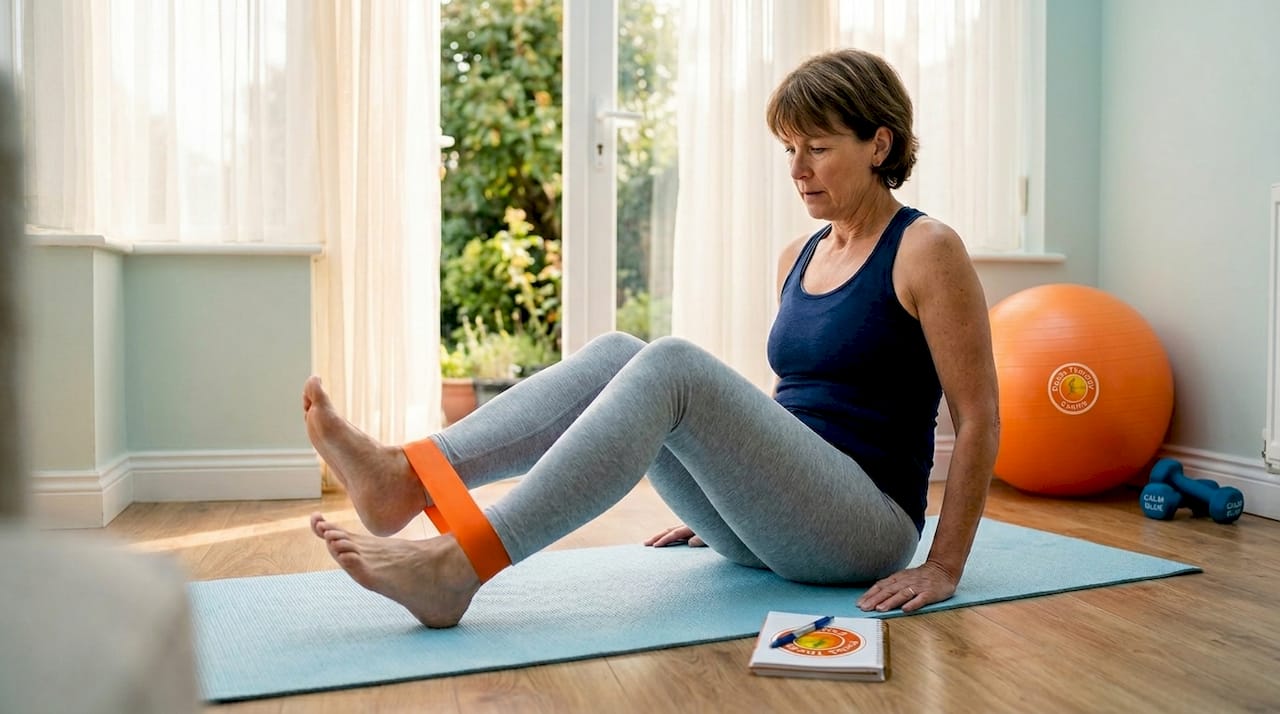
Knee replacement rehabilitation follows a clear sequence of exercise types, each serving a distinct purpose at a specific stage of healing. The AAOS recommends daily exercise sessions of 20 to 30 minutes, sometimes split across two or three sessions, combining walking with range of motion and strengthening work. This frequency matters more than intensity, particularly in the first six weeks.
Early post-operative exercises for knee replacement include:
Quadriceps sets: Tighten the thigh muscle while the leg is flat, hold for five seconds, release. This reactivates the quad without stressing the joint.
Ankle pumps: Flex and point the foot repeatedly to maintain circulation and reduce swelling.
Heel slides: Slide the heel towards the buttock while lying down to gently increase knee bend.
Short arc quads: Place a rolled towel under the knee and straighten the leg, building early quad strength.
As swelling reduces and confidence grows, resistance exercises and longer walking distances are introduced. Stair climbing, stationary cycling, and leg press work typically begin between weeks four and eight, guided by your physiotherapist.
Pro Tip: Monitor your knee for increased warmth or swelling after each session. A small amount of post-exercise puffiness is normal, but persistent swelling that does not settle within an hour is a signal to reduce load and contact your physiotherapist.
2. Rehabilitation exercises after rotator cuff and shoulder surgery
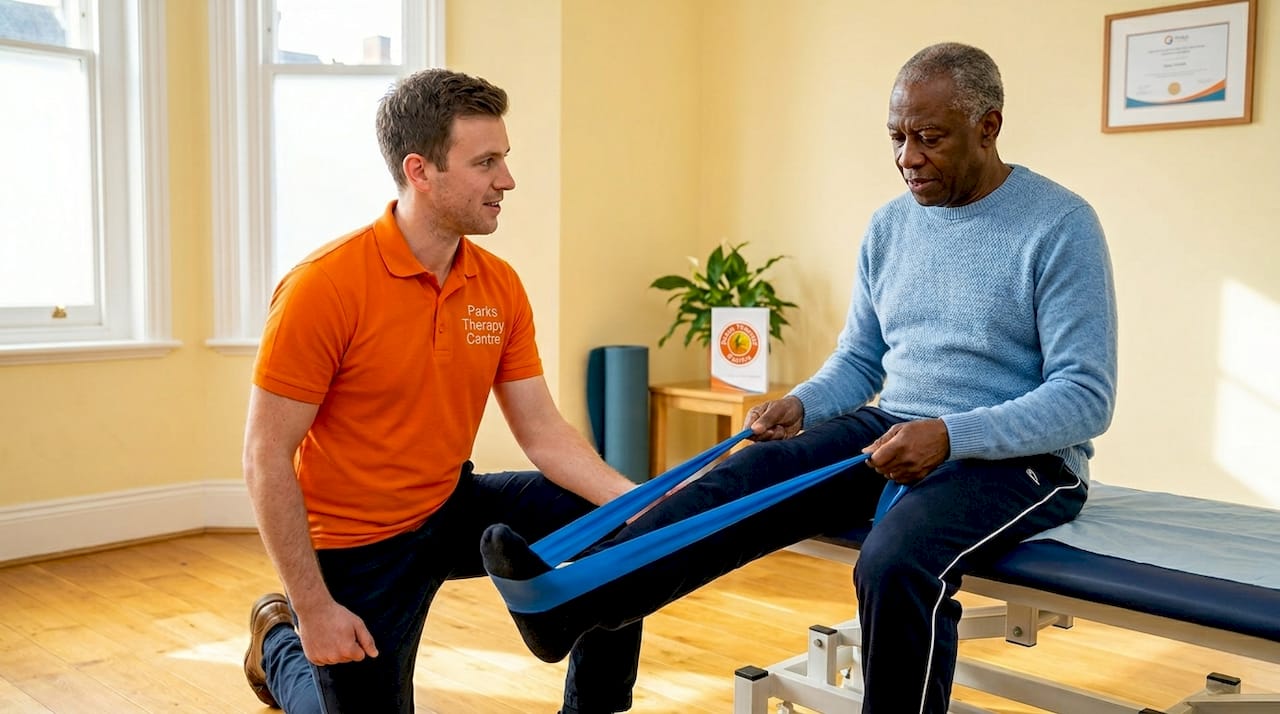
Rotator cuff repair demands a more cautious approach than knee surgery because the repaired tendon is under direct tension from the moment you move your arm. North Tees NHS advises patients to begin home exercises 12 to 48 hours after the nerve block wears off, performing three sessions daily with 10 repetitions per set. Starting too early or moving beyond the prescribed range risks tearing the repair.
The concept of a “safe zone” is central to shoulder rehabilitation. Your surgeon defines the specific angles within which your arm may move during the early weeks, and every exercise must stay within those limits. This is not a guideline to approximate. It is a boundary to respect precisely.
Typical early shoulder rehabilitation exercises include:
Seated table slides: Rest the forearm on a table and slide it forward to gently increase forward flexion within the safe zone.
Active-assisted flexion: Use the unaffected arm or a pulley to guide the operated arm through a controlled arc of movement.
External rotation with a stick: Hold a stick with both hands and use the unaffected arm to rotate the operated arm outward, staying within the surgeon-defined limit.
Pendulum exercises: Lean forward and let the arm hang, using gentle body sway to create small circular movements without active muscle contraction.
Pro Tip: If your arm feels heavy or you notice a pulling sensation at the repair site during any exercise, stop immediately. Procedure-specific timing and motion limits post-rotator cuff surgery are critical. Moving beyond safe zones risks repair damage, according to NHS guidance.
3. Post-operative exercises following hip replacement surgery
Hip replacement rehabilitation prioritises three goals: restoring balance, strengthening the muscles that stabilise the hip, and gradually recovering range of motion without triggering dislocation. Yale Medicine describes a progression from basic balance work through to strengthening and functional tasks as healing advances. The dislocation risk in the early weeks is real, which is why movement limits (often no bending beyond 90 degrees, no crossing the legs) are non-negotiable.
Core exercise categories for hip replacement recovery include:
Ankle pumps and heel slides: Identical to knee rehab in purpose. They maintain circulation and begin gentle joint movement from day one.
Gluteal squeezes: Tighten the buttock muscles and hold for five seconds. This activates the hip extensors without any joint loading.
Hip abductor strengthening: Lying on your back, slide the leg out to the side and back. This targets the muscles most responsible for walking stability.
Standing hip extensions: Holding a support, gently push the operated leg backwards. This rebuilds the hip extensors needed for stair climbing and walking uphill.
One-leg balance work: Progress to standing on the operated leg for short periods as strength returns, building the proprioception needed for safe daily movement.
Functional activities such as sit-to-stand practice, walking on uneven surfaces, and low-resistance cycling are introduced progressively, always within the movement restrictions your surgeon has set.
4. Rehabilitation exercises for ACL reconstruction
ACL reconstruction rehabilitation is one of the longest and most structured recovery programmes in orthopaedic surgery, often spanning nine to twelve months. The NHS recommends several daily exercise sessions in the early weeks, with careful pain monitoring throughout. Mild discomfort during exercise is acceptable. Sharp or sudden pain is a clear signal to stop.
Research published in Scientific Reports describes how early quad activation in the first weeks gives way to progressive loading, balance training, and eventually jumping and rotational work in the later stages. This staged approach reflects how the graft matures biologically. Loading it too aggressively before the tissue has integrated increases re-rupture risk significantly.
Early ACL rehab focuses on reducing swelling, restoring full knee extension, and reactivating the quadriceps. Mid-stage work introduces single-leg squats, leg press, and step-ups. Late-stage rehabilitation includes plyometric drills, lateral movements, and sport-specific training, all timed to graft maturation rather than simply how the knee feels.
5. Common progression principles across all surgery types
Regardless of the procedure, post-surgery rehab exercises follow the same underlying logic: protect the healing tissue first, then rebuild capacity. The AAOS and Yale Medicine both describe a phased rehabilitation approach that moves from early mobility and range of motion work through to strength, balance, and functional training.
The table below summarises how exercise types and timing differ across common surgical procedures.
Surgery type | Early phase (weeks 1 to 4) | Mid phase (weeks 4 to 12) | Late phase (3 months onwards) |
Knee replacement | Quad sets, ankle pumps, heel slides | Stationary cycling, leg press, stair work | Walking distances, functional tasks |
Rotator cuff repair | Pendulums, table slides, assisted flexion | Active range of motion, light resistance | Strengthening, overhead work |
Hip replacement | Gluteal squeezes, abductor slides, balance | Sit-to-stand, walking on varied surfaces | Cycling, functional strengthening |
ACL reconstruction | Quad activation, extension work, swelling control | Single-leg squats, step-ups, proprioception | Plyometrics, sport-specific drills |
Exercise adherence and dosing frequency are more predictive of recovery success than any single exercise choice. Doing the right exercises inconsistently produces far worse outcomes than doing simpler exercises reliably every day.
Pro Tip: Keep a simple exercise diary during your recovery. Note the date, exercises completed, and any pain or swelling you noticed. This gives your physiotherapist accurate data to adjust your programme and helps you see genuine progress over weeks.
6. How to choose the right rehabilitation exercises for your surgery
Selecting the correct post-surgery rehab exercises is not something to do by searching online and picking movements that feel manageable. The Cleveland Clinic emphasises that customised pre-op and post-op exercise plans improve outcomes precisely because they account for the individual’s fitness baseline, the specific surgical technique used, and any co-existing conditions.
When choosing or adapting your exercise programme, consider the following:
Work within your surgeon’s movement restrictions. These are not conservative suggestions. They reflect the mechanical limits of your repair or implant at a specific point in healing.
Distinguish safe discomfort from harmful pain. Muscle fatigue and mild joint aching during exercise are normal. Sharp, stabbing, or worsening pain after exercise is not. The NHS guidance on ACL rehab pain monitoring applies broadly across surgery types.
Adjust frequency before intensity. If you are struggling, reduce how often you exercise before reducing how hard you work. Frequency drives tissue adaptation more reliably than load in early recovery.
Use a qualified physiotherapist. A physiotherapist will assess your movement quality, identify compensations, and progress your programme at the right pace. Self-directed recovery without professional input frequently leads to plateau or re-injury.
Resources such as physiotherapy home exercise guides can supplement your prescribed programme, but they should never replace it.
Key takeaways
Targeted, procedure-specific rehabilitation exercises are the most reliable path to restoring strength, mobility, and function after surgery, provided they follow a phased progression within surgeon-defined movement limits.
Point | Details |
Procedure-specific exercises matter | Generic programmes do not account for surgical technique, tissue healing, or movement restrictions. |
Frequency outweighs intensity | Daily sessions of 20 to 30 minutes produce better outcomes than occasional high-effort workouts. |
Safe zones protect repairs | Surgeon-defined movement limits must be respected precisely, especially after rotator cuff and hip surgery. |
Phased progression is universal | All surgery types follow the same logic: early mobility, then strength, then functional training. |
Professional guidance is non-negotiable | A physiotherapist adjusts your programme based on real progress, not a fixed calendar. |
What I have learned from years of post-surgical rehab
The most common mistake I see in post-surgical recovery is not doing too little. It is doing the wrong exercises at the wrong time with complete confidence. Patients arrive having found a knee strengthening video online, performed it diligently for three weeks, and then wonder why their swelling has not settled. The exercises were fine. The timing was not.
What the research and clinical experience both confirm is that the tissue does not care how motivated you are. A rotator cuff repair at week two has a specific mechanical tolerance, and exceeding it causes damage regardless of pain levels. The absence of pain is not permission to progress. This is why the safe zone concept from North Tees NHS guidance is so important. It removes the guesswork.
I also think prehabilitation is still dramatically underused. The Cleveland Clinic’s work on pre-operative conditioning shows that patients who arrive at surgery stronger and better conditioned recover faster and with fewer complications. If you know surgery is coming, starting a supervised exercise programme beforehand is one of the highest-return decisions you can make.
The patients who recover best are not necessarily the fittest or the most disciplined. They are the ones who understand why each exercise exists, what it is protecting, and what it is building. That understanding changes how they exercise. It makes them precise rather than just effortful.
— Ivan
Start your recovery with expert support from Parkstherapycentre
Recovering from surgery is not a process you should navigate alone, particularly when the difference between the right exercise and the wrong one can affect your long-term outcome.
Parkstherapycentre has been delivering specialist physiotherapy across Bedfordshire and Buckinghamshire since 1986. The team provides personalised post-surgical rehabilitation programmes that are built around your specific procedure, your surgeon’s guidance, and your recovery goals. From initial assessment through to functional discharge, every session is supervised by qualified physiotherapists who adjust your programme as you progress. If you are ready to build a recovery plan that is tailored to your surgery and your body, contact Parkstherapycentre to book your assessment today.
FAQ
What are the main types of surgery rehabilitation exercises?
The main types are range of motion exercises, muscle activation and strengthening exercises, balance and proprioception training, and functional movement work. Each type is introduced at a specific stage of recovery based on tissue healing and surgical procedure.
When should I start exercises after surgery?
Timing depends on the procedure. After rotator cuff repair, the NHS recommends starting exercises 12 to 48 hours after the nerve block wears off. Knee and hip replacement patients typically begin gentle exercises on the day of or the day after surgery.
How often should I do post-surgery rehab exercises?
The AAOS recommends daily sessions of 20 to 30 minutes, sometimes split across two or three sessions per day. Frequency is more important than session length in the early weeks of recovery.
How do I know if I am doing too much during rehab?
Sharp or worsening pain during exercise, swelling that does not settle within an hour, and increased joint warmth after a session are all signs to reduce load. Mild muscle fatigue and minor joint aching are normal and expected.
Do I need a physiotherapist for post-surgical exercises?
A physiotherapist is the most reliable way to progress safely. They assess movement quality, identify compensations, and adjust your programme based on your actual healing rather than a generic timeline. Self-directed recovery without professional input frequently leads to plateau or re-injury.
Recommended