
Why choose acupuncture therapy? Benefits for pain and injury
TL;DR:
Acupuncture activates sensory nerves, releases endorphins, and improves circulation for pain relief.
Large-scale studies show significant benefits for chronic musculoskeletal pain and sports injury recovery.
Choose qualified, experienced practitioners working within evidence-based frameworks for safe, effective treatment.
Many people in Bedfordshire and Buckinghamshire turn to acupuncture only after exhausting other options, which is a shame, because the evidence has been building for years. Acupuncture stimulates the nervous system, releases endorphins, and can genuinely reduce pain across a wide range of conditions. It is not a mystical practice reserved for the open-minded. It is a clinically studied therapy with measurable results for chronic pain, sports injuries, and general wellness. This article walks you through how it works, what the research actually shows, how it compares to other therapies, and how to find a qualified practitioner you can trust locally.
Table of Contents
What does the evidence say for pain relief and sports injuries?
Comparing acupuncture with other pain and recovery therapies
How to choose a safe, effective acupuncture provider in Bedfordshire or Bucks
Our perspective: What most guides miss about acupuncture therapy
Discover effective acupuncture and holistic care in Bedfordshire and Bucks
Key Takeaways
Point | Details |
Backed by science | Major studies show real benefits for pain, sports recovery, and overall well-being. |
Safe and adaptable | Acupuncture offers a safe solution with very low risks when delivered by professionals. |
Best as part of a plan | Combining acupuncture with physiotherapy and exercise gives the best results for long-term recovery. |
Choose qualified providers | Pick reputable and qualified practitioners for the safest and most effective experience. |
What is acupuncture therapy and how does it work?
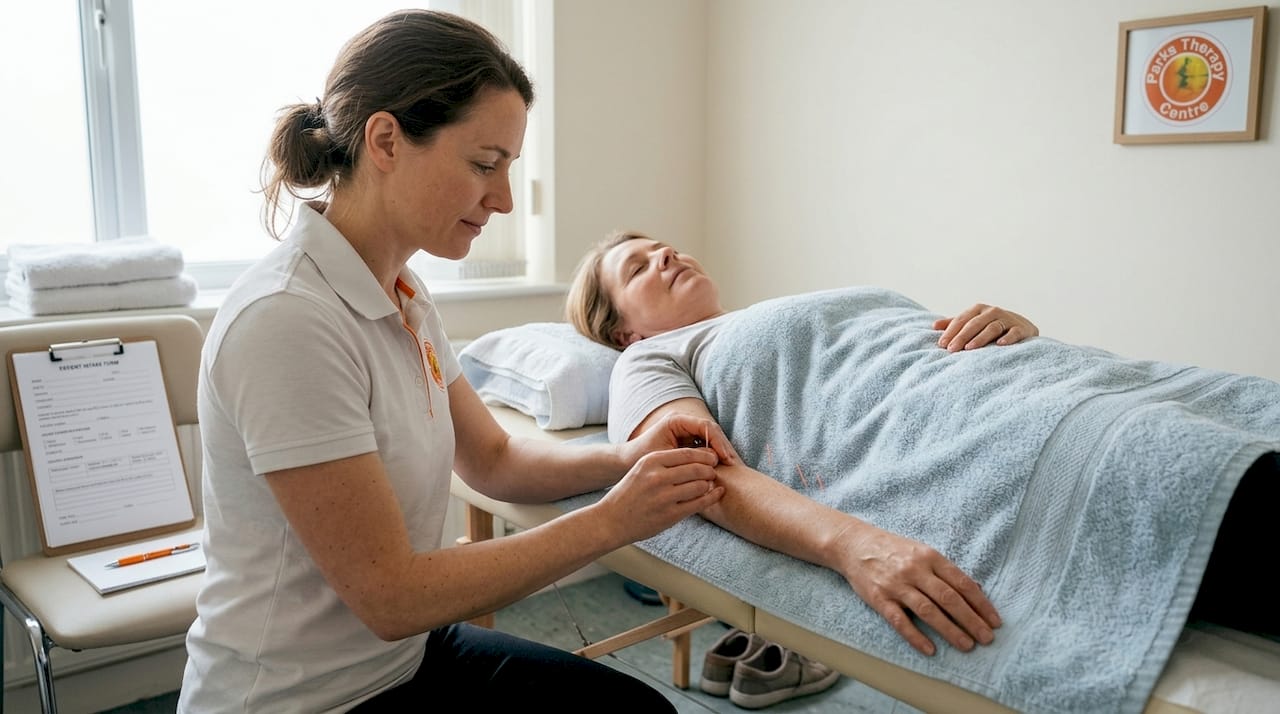
Acupuncture involves inserting very fine, sterile needles into specific points on the body. Traditional explanations spoke of energy channels, but modern science tells a more precise story. When a needle is inserted, it activates sensory nerve fibres beneath the skin. This triggers a cascade of biological responses that go far beyond simple relaxation.
The key mechanisms include:
Endorphin release: The nervous system responds by releasing the body’s natural painkillers, including endorphins and enkephalins.
Neuro-modulation: Acupuncture modulates pain pathways in the spinal cord and brain, effectively turning down the volume on pain signals.
Improved circulation: Needle insertion increases local blood flow, which supports tissue healing and reduces inflammation.
Connective tissue stimulation: The needle creates a micro-mechanical effect on fascia, the connective tissue that surrounds muscles and organs.
Two terms worth knowing: deqi refers to the sensation of heaviness, tingling, or warmth that experienced practitioners aim to elicit at the needle site. It is considered a marker of effective stimulation. Sham acupuncture refers to a control method used in research, where needles are placed at non-therapeutic points or retract without penetrating. Interestingly, even sham procedures show some effect, which tells us the body’s response to needling is complex and not fully understood yet.
A typical session lasts 30 to 60 minutes. Your practitioner will take a full history, identify the most relevant points for your condition, and insert between 6 and 20 needles. You will usually lie still for 20 to 30 minutes while the needles do their work. Most people find it deeply relaxing.
Understanding these mechanisms matters because it helps you engage with your treatment rather than just endure it. For a broader grounding in how body-based therapies work, the physiotherapy terms guide on our site is a useful starting point. If you are dealing with a musculoskeletal issue specifically, musculoskeletal care essentials gives helpful context on why these conditions respond well to hands-on and needling approaches.
Pro Tip: Ask your practitioner whether they aim to elicit deqi during your session. Research suggests this sensation is associated with stronger therapeutic outcomes, so it is a good sign when a practitioner actively seeks it.
What does the evidence say for pain relief and sports injuries?
The research on acupuncture has matured considerably. We are no longer relying on small, poorly designed trials. Large-scale meta-analyses now give us a clearer picture of where acupuncture genuinely helps.
A major updated meta-analysis found positive effects for chronic pain, including low-back pain, knee osteoarthritis, and neck pain, with standardised mean differences (SMDs) ranging from -0.73 to -1.13 compared to usual care. In plain terms, that is a meaningful reduction in pain, not a marginal one.
“Acupuncture produced clinically relevant pain reductions that persisted over time, particularly for musculoskeletal conditions, making it a viable option within a broader pain management plan.”
For sports injuries specifically, acupuncture and dry needling improve recovery times, reduce pain intensity, and enhance both strength and flexibility. Athletes and active individuals in Bedfordshire and Buckinghamshire are increasingly using it as part of structured rehabilitation programmes.
Condition | Evidence level | Typical benefit |
Chronic low-back pain | High | Significant pain reduction vs usual care |
Knee osteoarthritis | High | Reduced pain and improved function |
Neck pain | Moderate to high | Meaningful short and medium-term relief |
Sports muscle injuries | Moderate | Faster recovery, improved flexibility |
Shoulder pain | Moderate | Reduced stiffness and pain |
Conditions where acupuncture shows the strongest evidence:
Chronic musculoskeletal pain
Low-back pain (both acute and chronic)
Knee osteoarthritis
Neck and shoulder tension
Sports-related soft tissue injuries
For athletes, the acupuncture sports injury benefits are particularly well-documented for muscle recovery and reducing delayed onset muscle soreness. If you are returning from injury, acupuncture sports recovery outlines how needling fits into a structured return-to-sport plan. Practical guidance on managing sports injury effectively is also worth reading if you are currently in recovery.
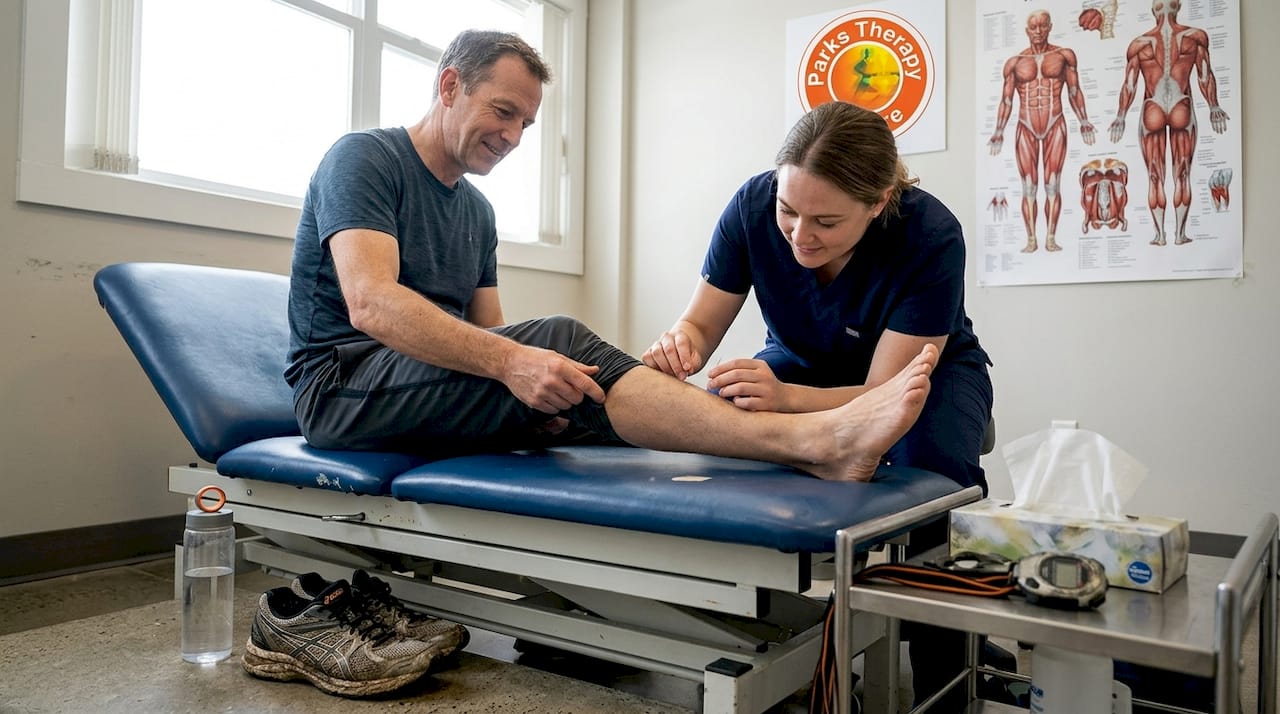
Acupuncture works best as an adjunct therapy, meaning it supports rather than replaces other treatments. Think of it as one powerful tool in a broader toolkit.
Comparing acupuncture with other pain and recovery therapies
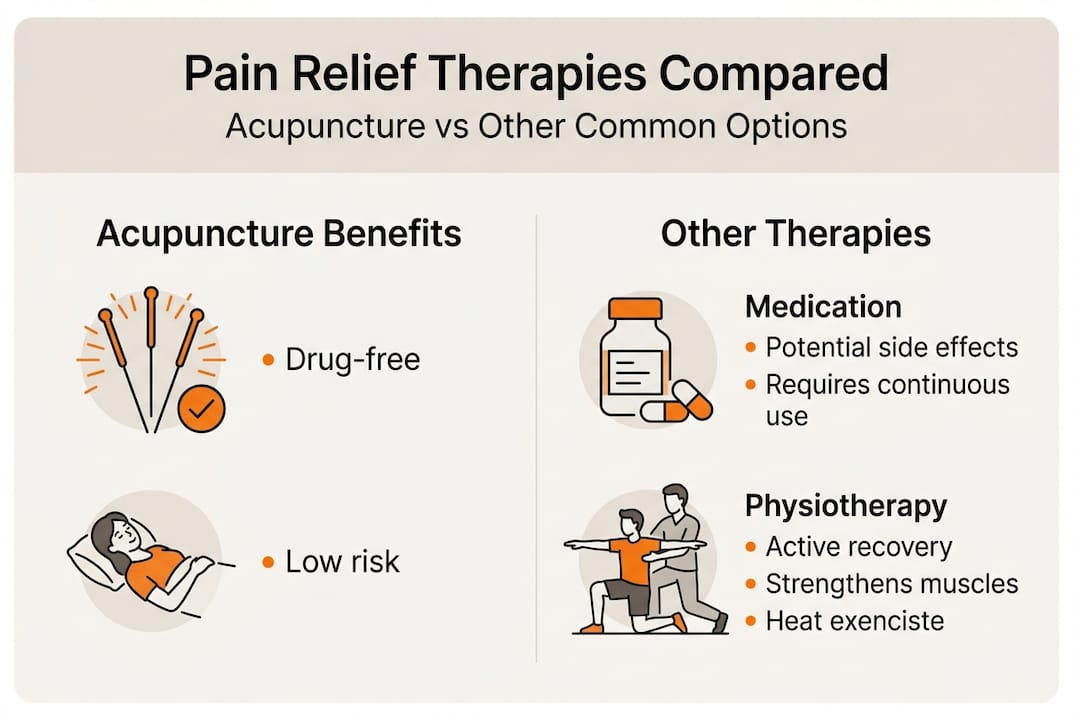
Choosing between therapies can feel overwhelming. Here is a direct comparison to help you think it through.
Therapy | Strengths | Limitations |
Acupuncture | Low risk, drug-free, good for chronic pain and sports recovery | Effects vary by practitioner; some conditions show limited benefit beyond sham |
Manual therapy (physiotherapy) | Strong evidence for musculoskeletal issues, active rehabilitation | Requires multiple sessions; less effective for purely neurological pain |
Pain medication | Fast-acting, accessible | Side effects with long-term use; does not address root cause |
Injection therapy | Targeted, rapid relief | Invasive; not suitable for all patients |
It is important to be honest about acupuncture’s limits. Evidence quality is often rated as low to moderate due to variability between studies, potential bias, and the difficulty of creating a true placebo. For some conditions, the benefit over sham acupuncture is small. This does not mean it does not work. It means the research is still catching up with clinical practice.
How to decide which therapy to try first:
Identify your primary complaint. Is it acute injury, chronic pain, or performance recovery? Each has different first-line options.
Check the evidence base. Chronic musculoskeletal pain and osteoarthritis have the strongest acupuncture evidence.
Consider your medical history. Certain conditions, blood thinners, or implanted devices may affect suitability.
Ask about combining therapies. A manual therapy approach alongside acupuncture often produces better results than either alone.
Review your goals. If you want to reduce reliance on medication, acupuncture is a strong candidate.
For a deeper look at how evidence shapes treatment choices, evidence-based physiotherapy explains how clinicians weigh options for pain and recovery.
Pro Tip: If you are unsure where to start, book a consultation rather than a treatment. A good practitioner will tell you honestly whether acupuncture is the right first step for your specific situation, or whether another therapy should come first.
How to choose a safe, effective acupuncture provider in Bedfordshire or Bucks
Not all acupuncture is created equal. The quality of your outcome depends heavily on who is holding the needles. Here is what to look for when choosing locally.
Checklist for finding a qualified practitioner:
Verified credentials: Look for membership of the British Acupuncture Council (BAcC) or equivalent healthcare registration. Physiotherapists with acupuncture training should be registered with the Health and Care Professions Council (HCPC).
Relevant clinical experience: Ask specifically about their experience treating your condition, not just acupuncture generally.
Integration with other care: A good practitioner will want to know about your GP’s involvement and existing treatments.
Clear communication: They should explain their reasoning, expected outcomes, and realistic timelines before starting.
Transparent pricing and consent: No pressure to commit to long packages upfront.
Questions worth asking before your first appointment:
What qualifications do you hold, and are you registered with a professional body?
How many sessions do you typically recommend for my condition?
Will you liaise with my GP or other treating clinicians if needed?
What should I expect in terms of side effects or post-treatment soreness?
Coordinating with your GP matters more than many people realise. Acupuncture should sit within your broader care plan, not operate in isolation. Clinics that prioritise evidence-based practice and work alongside conventional medicine tend to produce better, more sustained outcomes.
A team-based, multimodal clinic is worth seeking out. When your acupuncturist can speak directly with your physiotherapist or sports therapist, your treatment plan becomes cohesive rather than fragmented. Patient reviews and testimonials are also genuinely useful here. Look for specific mentions of your condition, not just general praise.
Pro Tip: Check whether the clinic offers a free or low-cost initial consultation. This is a good sign that the practitioner is confident in their approach and not relying on commitment before assessment.
Our perspective: What most guides miss about acupuncture therapy
Most articles on acupuncture either oversell it or dismiss it. Neither is helpful. What we have seen over decades of treating patients across Bedfordshire and Buckinghamshire is that outcomes are almost never about the therapy alone. They are about the fit between the therapy, the practitioner, and the individual patient.
The same needle technique applied by two different practitioners can produce very different results. Point selection, needle depth, the elicitation of deqi, and a practitioner’s understanding of pain science all shape what happens in the room. This is not a reason to avoid acupuncture. It is a reason to choose carefully.
We also see patients who have been told acupuncture will solve everything. It rarely does on its own. The context-dependent effects of acupuncture mean that combining it with evidence-based pain recovery strategies consistently outperforms either approach in isolation. Honest communication between you and your practitioner is not a nice-to-have. It is the foundation of a treatment that actually works.
Discover effective acupuncture and holistic care in Bedfordshire and Bucks
Understanding the evidence is one thing. Finding a team that applies it well is another. At Parks Therapy Centre, we have been supporting patients across Bedfordshire and Buckinghamshire since 1986, combining acupuncture with physiotherapy, sports injury rehabilitation, and a range of allied therapies under one roof.
Our practitioners hold recognised qualifications, work within evidence-based frameworks, and take the time to understand your individual needs before recommending any course of treatment. Whether you are managing chronic pain, recovering from a sports injury, or simply looking to improve your overall wellbeing, we are here to help. Visit Parks Therapy Centre to explore our services or book a consultation at a location convenient to you.
Frequently asked questions
Is acupuncture really effective for pain relief?
Large meta-analyses confirm acupuncture delivers real, measurable pain reductions for chronic musculoskeletal conditions, particularly when compared to usual care. The effects are clinically meaningful, not marginal.
Is acupuncture safe?
When performed by a qualified practitioner, acupuncture carries a very low rate of minor side effects such as brief soreness or light bruising. Serious adverse events are rare.
How do I find a reputable acupuncture provider near me?
Prioritise practitioners with verifiable healthcare credentials, such as BAcC membership or HCPC registration, and look for evidence-based practitioners with experience in your specific condition in Bedfordshire or Buckinghamshire.
Does acupuncture hurt?
Most people report minimal discomfort. The needles are far finer than those used for injections, and many patients describe the sensation as a mild heaviness or tingling rather than pain.
Can acupuncture be combined with other therapies?
Absolutely. Best results emerge when acupuncture is integrated into a multimodal plan that includes physiotherapy or manual therapy, particularly for sports injuries and chronic pain management.
Recommended