
Benefits of physiotherapy for elbow injuries explained
TL;DR:
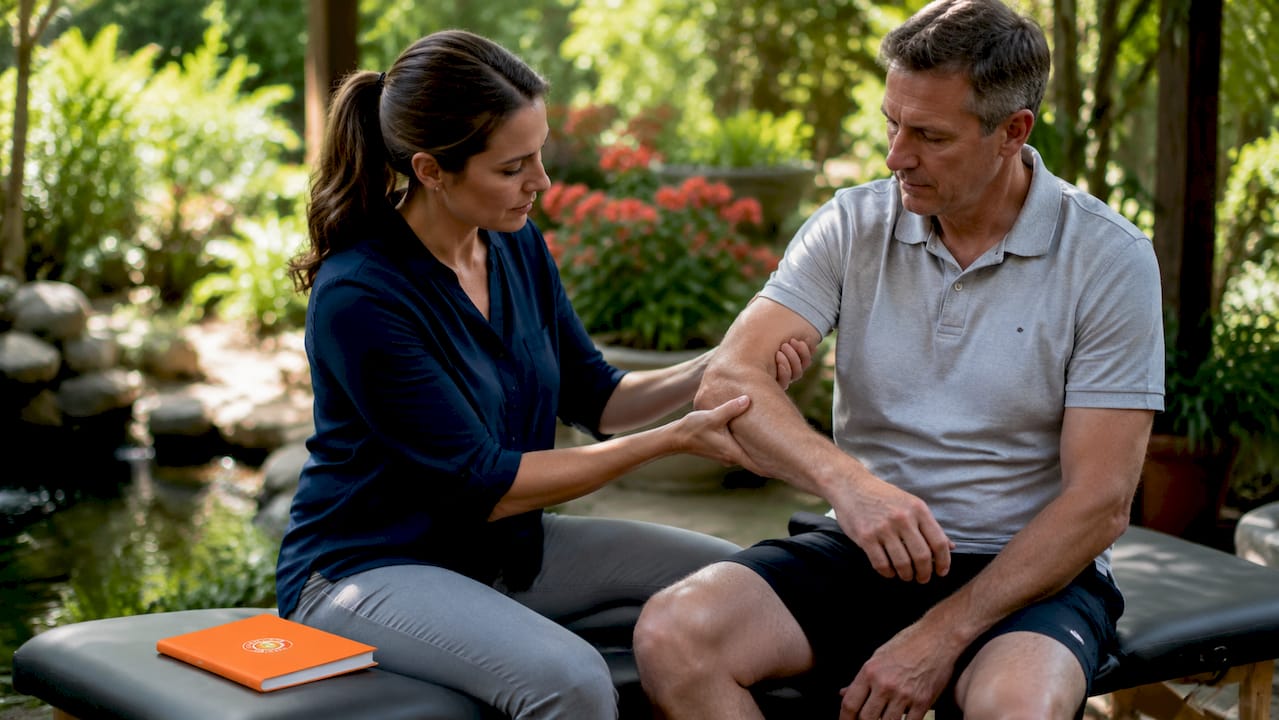
Physiotherapy effectively treats elbow injuries by restoring movement, reducing pain, and rebuilding strength through targeted exercises.
Starting early with guided, active rehabilitation speeds up recovery and prevents long-term damage.
Physiotherapy is the most effective treatment for elbow injuries because it restores movement, reduces pain, and rebuilds strength through targeted, evidence-based exercise. The benefits of physiotherapy for elbow injuries extend well beyond short-term relief. Clinical guidance from the Chartered Society of Physiotherapy (CSP) and the National Institute for Health and Care Excellence (NICE) consistently supports active rehabilitation over passive rest. Most elbow conditions improve within 6–8 weeks with guided care, and lateral elbow tendinopathy often reaches full recovery within 3–6 months. Physiotherapy achieves this by combining manual therapy, progressive loading, and patient education into a personalised plan.
1. How physiotherapy reduces pain and restores elbow mobility
Pain relief is the first goal of physiotherapy for elbow pain, and it is achieved through controlled movement rather than prolonged rest. Early mobilisation prevents the joint stiffness and muscle weakness that set in when an injured elbow is immobilised for too long. Physiotherapists use range-of-motion (ROM) exercises from the outset to maintain joint health and reduce swelling.

The evidence for early movement is striking. Early ROM exercises after elbow fractures reduce therapy duration to 6.5 days compared to 17 days when mobilisation is delayed. That difference represents weeks of unnecessary pain and functional loss for patients who wait.
Physiotherapists also use adjunct modalities to manage pain during the early stages:
Shockwave therapy: delivers acoustic pulses to stimulate blood flow and reduce localised pain
Electrical stimulation (e-stim): reduces acute pain signals and supports muscle activation
Manual therapy: joint mobilisation and soft tissue techniques to restore movement and ease discomfort
Ice and heat protocols: used to manage inflammation and promote tissue relaxation between sessions
Pro Tip: Avoid the “rest trap.” Complete rest feels logical after an elbow injury, but it accelerates stiffness and weakens the surrounding muscles. Guided movement, even gentle ROM exercises, produces better outcomes than immobilisation.
2. Strengthening and functional restoration for elbow recovery
Strength is the foundation of a lasting recovery. Physiotherapy for elbow recovery uses staged loading programmes that progressively challenge the tendon and surrounding musculature without provoking a flare-up. This approach is known as Optimal Loading, and it is the modern standard for managing tendon-related elbow conditions.
Optimal Loading balances sufficient stimulus for tendon repair with adequate recovery time. Too little load and the tendon fails to adapt. Too much and inflammation spikes. A physiotherapist calibrates this balance based on your pain response and functional goals.
A typical staged loading programme for elbow rehabilitation includes:
Isometric exercises: static muscle contractions that load the tendon without movement, used in the early pain-sensitive phase
Isotonic concentric exercises: muscle shortening under load, rebuilding basic strength and coordination
Isotonic eccentric exercises: controlled lengthening under load, shown to be particularly effective for tendon remodelling
Functional loading: sport or task-specific movements that mirror the demands of daily life or athletic performance
Return-to-activity drills: progressive reintroduction of full-load activities, reducing the risk of re-injury
Physiotherapy also addresses the areas connected to the elbow. Forearm rotation, grip strength, shoulder stability, and neck mobility all influence elbow function. A physiotherapist assesses the full kinetic chain to identify contributing weaknesses.
Exercise-based rehabilitation produces better long-term outcomes than passive treatments like corticosteroid injections, which offer short-term relief but carry higher recurrence rates. Structured exercise builds durable tissue resilience. Injections do not.
Pro Tip: Consistency with your home exercise programme matters more than session frequency. Three focused sets of the prescribed exercises daily will outperform sporadic effort every time.
3. Additional physiotherapy techniques that aid elbow rehabilitation
Exercise is the core of elbow injury physiotherapy, but several complementary techniques accelerate recovery when used alongside loading programmes. These are not replacements for exercise. They create a window of reduced pain that makes loading more tolerable and effective.
Dry needling
Dry needling resets overactive muscles, providing immediate improvements in pain and range of motion. A physiotherapist inserts fine needles into trigger points within the forearm and surrounding musculature. The result is a localised twitch response that releases tension and reduces referred pain patterns.
Shockwave therapy
Shockwave therapy triggers a controlled inflammatory response to restart tissue repair in chronic elbow pain cases where the body’s natural healing process has stalled. It is particularly useful for lateral epicondylitis (tennis elbow) and medial epicondylitis (golfer’s elbow) that have not responded to exercise alone.
Bracing, taping, and load management education
Counterforce braces and kinesiology taping reduce the mechanical load on the injured tendon during daily tasks. Physiotherapists also educate patients on which activities aggravate the injury and how to modify them. This education component is often undervalued but directly reduces the risk of setbacks.
Assessment of referred pain from the shoulder and neck
Physiotherapy assessment must consider nerve involvement and referred pain from the shoulder or cervical spine. Pain felt at the elbow does not always originate there. Thoracic outlet syndrome, cervical radiculopathy, and rotator cuff dysfunction can all produce elbow symptoms. A thorough physiotherapist will screen for these before committing to a treatment plan.
Technique | Primary role | Best used for |
Range-of-motion exercises | Restore joint mobility | Acute and post-fracture recovery |
Staged loading programme | Rebuild tendon and muscle strength | Tendinopathy and chronic pain |
Dry needling | Immediate pain and tension relief | Muscle trigger points and referred pain |
Shockwave therapy | Restart stalled tissue healing | Chronic tendinopathy |
Bracing and taping | Reduce load on injured structures | Active daily life and sport |
Shoulder and neck assessment | Identify referred pain sources | Persistent or complex elbow pain |
4. When to see a physiotherapist for elbow pain
Knowing when to seek professional care is as important as knowing what treatment involves. Self-management works for minor strains, but several signs indicate that a physiotherapy assessment is needed without delay.
Seek professional physiotherapy assessment if you experience:
Pain that persists beyond two weeks without clear improvement
Significant loss of elbow range of motion or grip strength
Pain that wakes you at night or disrupts sleep
Numbness, tingling, or weakness in the forearm or hand
A previous elbow injury that has returned or worsened
Pain that limits your ability to work, exercise, or carry out daily tasks
Early diagnosis that identifies whether pain originates from a tendon, nerve, or referred source is the foundation of successful physiotherapy intervention. Without this, treatment targets the wrong structure and recovery stalls.
The CSP advises that prolonged rest worsens outcomes for most elbow conditions. Patients who wait months before seeking care often present with greater muscle atrophy, more severe tendon degeneration, and longer overall recovery times. Acting early shortens the rehabilitation process and reduces the risk of the condition becoming chronic.
Lateral elbow tendinopathy typically improves within 6–12 weeks of consistent exercise and load management. Full recovery can take 3–6 months. These timelines shorten considerably when treatment begins promptly and the patient engages actively with their programme.
Pro Tip: If you are unsure whether your elbow pain warrants a physiotherapy appointment, book an assessment anyway. A single session can confirm the diagnosis, rule out serious pathology, and give you a clear self-management plan.
Key takeaways
Physiotherapy for elbow injuries works because it combines early mobilisation, progressive loading, and targeted techniques to restore function and prevent recurrence.
Point | Details |
Early mobilisation is critical | Starting ROM exercises early reduces therapy duration and prevents stiffness. |
Optimal Loading drives recovery | Staged loading programmes rebuild tendon strength without provoking flare-ups. |
Exercise beats passive treatment | Structured exercise produces more durable outcomes than injections or rest alone. |
Assess the full kinetic chain | Shoulder and neck dysfunction frequently contributes to persistent elbow pain. |
Act early for faster recovery | Most elbow conditions improve within 6–12 weeks when treatment begins promptly. |
Why I think most people misunderstand elbow injury recovery
The most common mistake I see is patients treating physiotherapy as something that happens to them rather than something they do. They attend sessions, receive manual therapy, and feel better for a day or two. Then they return the following week expecting the same. The pain never fully resolves because the underlying tendon has not been loaded and trained to handle demand.
Hands-on treatment creates a comfort window. It does not repair tissue. The repair happens during the loading programme, which requires the patient to do the work consistently between sessions. Physiotherapy is not passive care with active branding.
The second mistake is treating the elbow in isolation. I have seen patients complete months of elbow-focused treatment with minimal progress, only to recover quickly once their shoulder and neck were properly assessed and addressed. The elbow is the end point of a kinetic chain. If the links above it are weak or restricted, the elbow absorbs forces it was never designed to handle.
If you are working through elbow rehabilitation, commit to the full programme. The patients who recover fastest are not the ones with the mildest injuries. They are the ones who show up consistently and do the exercises.
— Ivan
Physiotherapy for elbow injuries at Parkstherapycentre
Parkstherapycentre has been delivering evidence-based physiotherapy across Bedfordshire and Buckinghamshire since 1986. The team specialises in musculoskeletal assessment and rehabilitation, including the full range of elbow conditions from acute fractures to chronic tendinopathy.
Every patient receives a personalised assessment that identifies the true source of their pain, whether that is the tendon, a nerve, or a referred pattern from the shoulder or neck. Treatment plans are built around staged loading, manual therapy, and the complementary techniques most appropriate for your presentation. Parkstherapycentre accepts most major insurance providers and offers online booking across all locations. If your elbow pain is limiting your daily life, book a physiotherapy assessment with the team and get a clear plan for recovery.
FAQ
How long does physiotherapy for elbow injuries take?
Most elbow conditions show meaningful improvement within 6–12 weeks of consistent physiotherapy. Full recovery from conditions like lateral epicondylitis can take 3–6 months depending on severity and how early treatment begins.
Is physiotherapy better than rest for elbow pain?
Physiotherapy produces better outcomes than rest for the majority of elbow injuries. Prolonged rest leads to muscle weakness and joint stiffness, which prolongs recovery. Guided movement and progressive loading restore function more effectively.
What does a physiotherapy session for elbow pain involve?
A session typically includes a physical assessment, manual therapy, and a prescribed exercise programme. Depending on your condition, the physiotherapist may also use dry needling, shockwave therapy, or taping to support recovery.
When should I see a physiotherapist for elbow pain?
Seek assessment if pain persists beyond two weeks, limits your daily activities, or is accompanied by numbness or weakness in the hand or forearm. Early assessment leads to faster and more complete recovery.
Can physiotherapy prevent elbow injuries from recurring?
Structured physiotherapy for musculoskeletal conditions addresses the underlying weaknesses and movement patterns that cause injury. Completing a full loading programme significantly reduces the risk of recurrence compared to stopping treatment once pain subsides.
Recommended