
Cervicogenic Headache Treatment: What Works and What to Expect
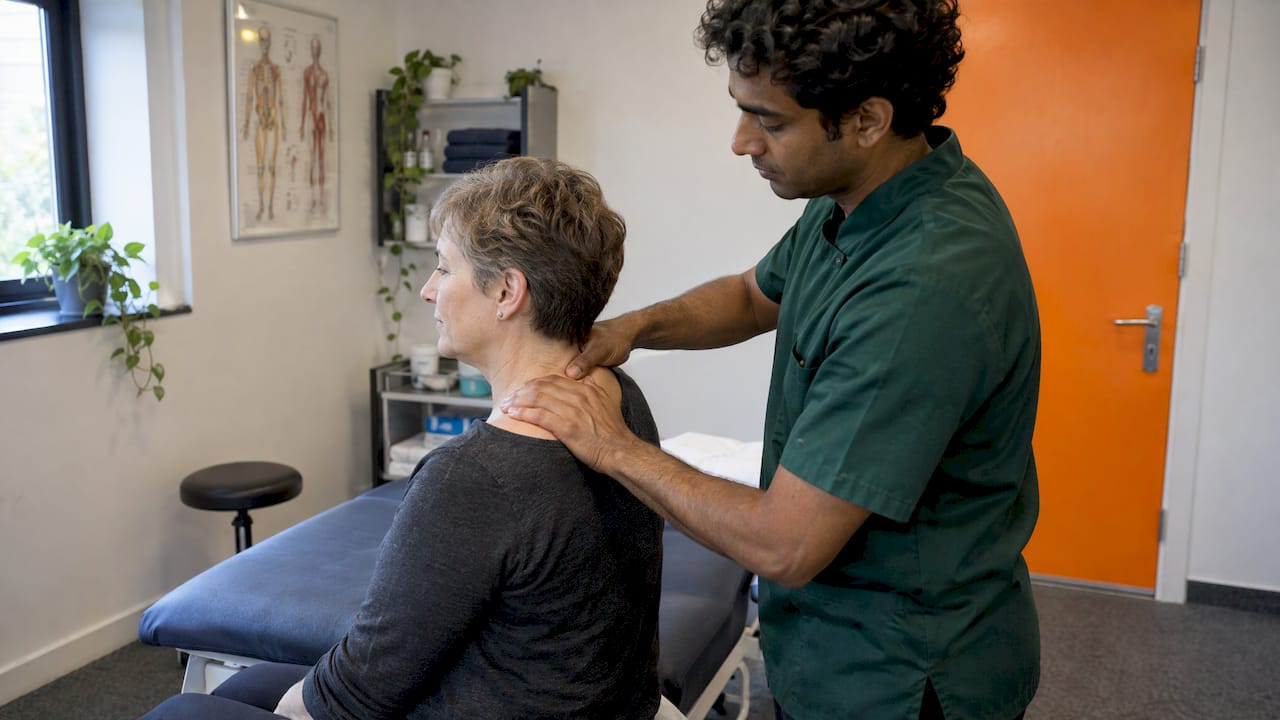
A cervicogenic headache is a headache that comes from the neck, so the most effective treatment targets the neck. Physiotherapy does this with manual therapy, specific neck exercise and posture and workload changes, and it is a drug-free option. At Parks Therapy Centre, a physiotherapy assessment costs £76 and follows-up treatment sessions cost £67, so you can start with a clear plan and a known cost.
TL;DR
A cervicogenic headache is caused by a problem in the neck joints, discs or muscles. It usually comes with neck pain and is often one-sided.
Diagnosis is clinical: a physiotherapist or doctor examines how your neck moves and which movements bring on the headache.
A 2022 review found manual therapy reduced headache frequency in the short term, and neck exercise gave longer-lasting benefit.
Gentle home exercise, heat and desk adjustments can ease symptoms between sessions.
See a GP promptly for sudden severe headache, head injury, vision changes, numbness or difficulty speaking.
Table of Contents
What a cervicogenic headache is
The International Classification of Headache Disorders defines it as headache caused by a disorder of the cervical spine, meaning the joints, discs or soft tissues of the neck, and usually accompanied by neck pain. An NHS physiotherapy service describes the pain as often starting on one side of the neck and moving into the head. The same page says roughly 15 to 20% of headaches are cervicogenic.
Typical features include:
pain that stays on the same side of the head
pain that begins at the base of the skull and spreads forward towards the forehead, temple or behind the eye
a headache brought on by neck movement, or by pressing on tight neck muscles
a stiff neck with reduced movement
Some people also have mild nausea or sensitivity to light and noise, which is why the condition is often mistaken for migraine.
How it is diagnosed
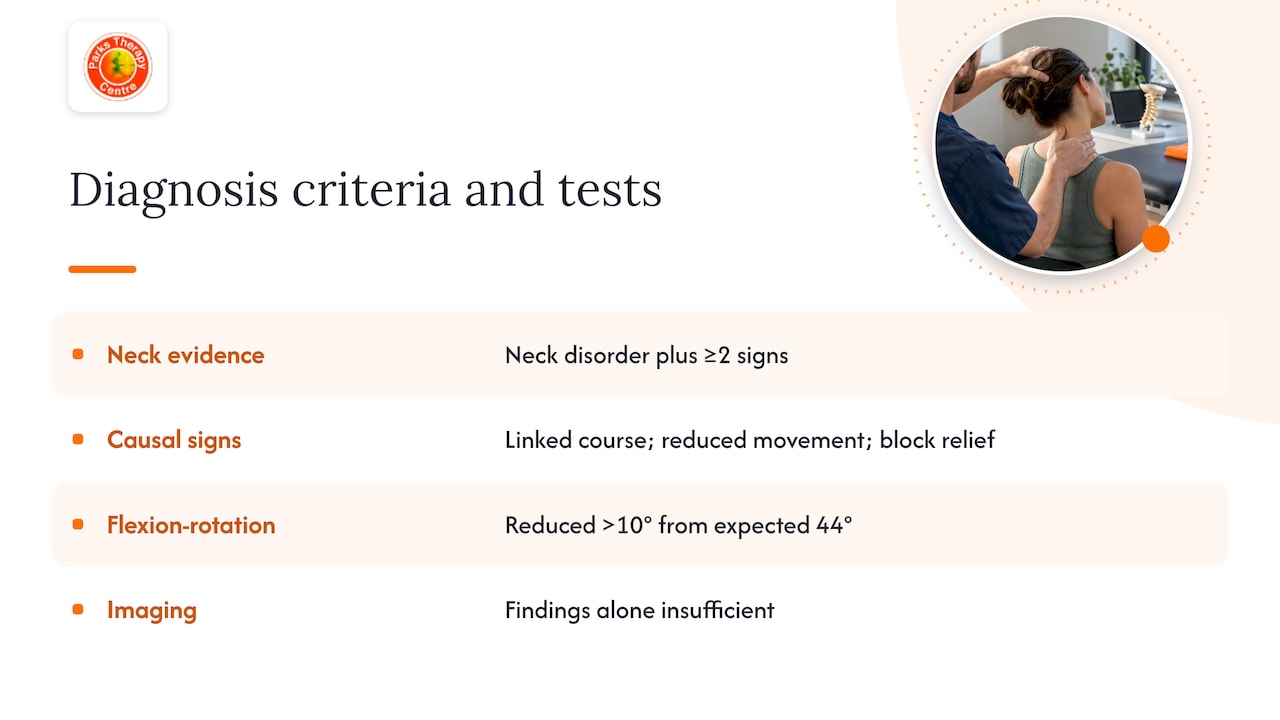
There is no single scan or blood test. The ICHD-3 criteria require evidence of a neck disorder known to cause headache plus at least two signs that the neck is causing the headache. These include the headache appearing and improving in step with the neck problem, reduced neck movement that worsens the headache, or relief from a diagnostic nerve block.
In practice, a physiotherapist checks how far your neck turns and which positions or pressure reproduce your headache. One commonly used check is the flexion-rotation test. A systematic review of manual examination found this test has high sensitivity and specificity, with a positive result being movement reduced by more than 10 degrees from the expected 44 degrees.
The same review argues that people with headache should be screened for a neck cause, because neck symptoms can be overshadowed by migraine or tension-type features and the right treatment is then missed. Imaging alone does not settle the question: the Canadian Chiropractic Guidelines state that imaging findings on their own are not sufficient for a diagnosis.
Which treatments have evidence behind them
The evidence supports a combination of hands-on treatment and exercise.
Manual therapy
A 2022 meta-analysis of 14 trials found moderate-certainty evidence that manual therapy reduced short-term headache frequency compared with sham treatment, and reduced both frequency and intensity compared with no treatment. Manual therapy means hands-on techniques such as joint mobilisation and soft tissue work. A 2026 review of 29 trials also found short-term reductions in headache intensity.
A 2025 analysis of 14 studies found that SNAG mobilisation, a technique where the therapist guides a joint while you move actively, improved pain, neck disability and headache disability, with benefits maintained over time. Its authors note that clinician expertise appears to be an important factor in results.
Neck exercise
In the 2022 meta-analysis, neck exercise reduced long-term headache intensity compared with no treatment and with aerobic exercise. The 2026 review also found exercise therapy produced a statistically significant reduction in headache at 12 months compared with usual care. This is why a good programme does not stop at hands-on treatment: the exercises are what keep the gains.
Combined approaches
A European Journal of Pain network meta-analysis of 41 trials concluded that multimodal, non-drug approaches were superior to single treatments in the short term. A 2023 network meta-analysis ranked manipulation with dry needling highest for short-term intensity and frequency, with manual techniques combined with exercise also ranked high. The certainty of that evidence was low, so it points to direction rather than a guarantee.
A Chinese expert panel guideline recommends physical therapy as the preferred first treatment, citing a 200-patient trial in which six weeks of manipulative therapy, low-load endurance exercise or both significantly reduced headache frequency at 12 months.
What a physiotherapy course looks like
A sensible course has three parts.
Assessment. Your history, neck movement tests and a check for anything that needs a doctor first.
Hands-on treatment. Joint and soft tissue techniques to ease stiffness and bring down the headache in the short term.
Exercise and habit change. Targeted neck and shoulder strengthening, mobility work, and changes to your desk, sleep position and activity pacing.
NICE guidance on neck pain describes physiotherapy for a multimodal strategy of stretching and strengthening exercise plus some form of manual therapy.
If you work at a desk, our guide to desk neck pain covers the set-up changes that take load off the neck. If tight muscles are part of your picture, massage for neck pain explains where it fits alongside exercise. Our physiotherapists can also refer for imaging when it is clinically appropriate: we offer an image assessment at £76, an image referral letter at £10 and an image results review at £67.
What you can do at home
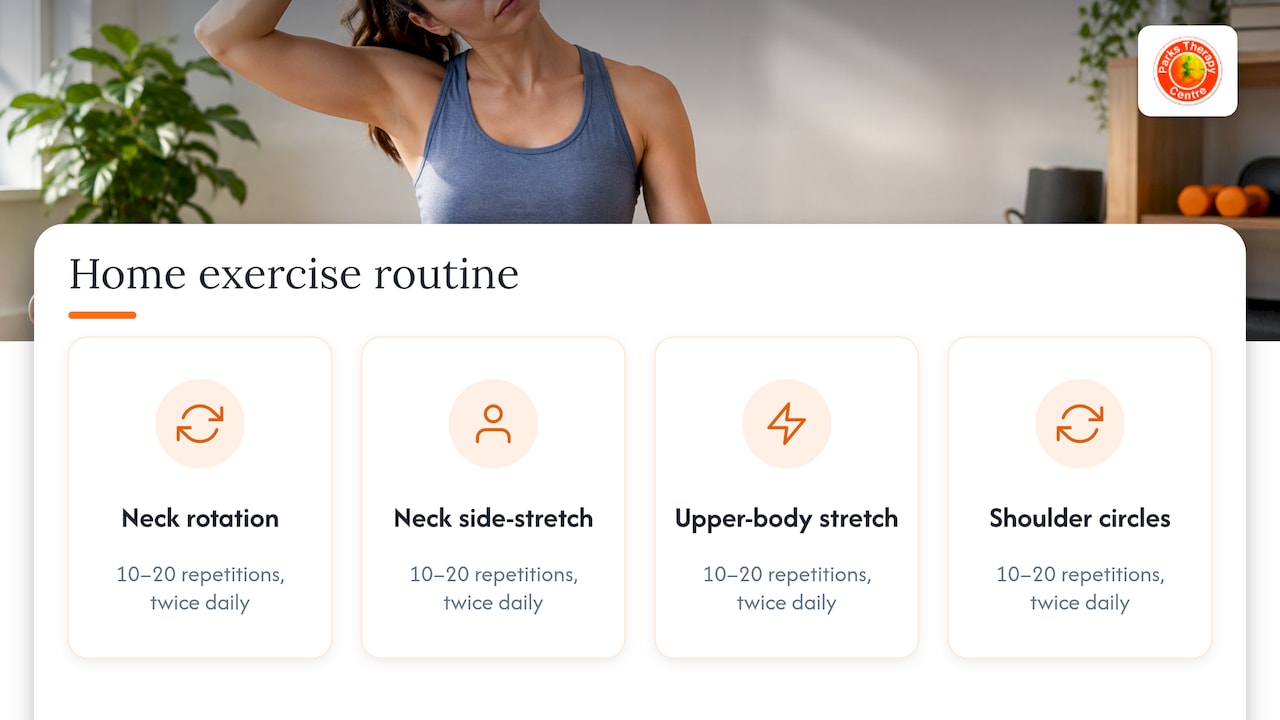
Home care supports treatment. An NHS trust’s advice suggests four gentle exercises: neck rotation, side neck stretch, upper body stretch and shoulder circles. It recommends 10 to 20 repetitions, twice a day, without significantly increasing symptoms. The same page suggests regular movement and breaks, a check of your desk set-up, heat packs, stress management and an eye test.
The NHS neck pain page adds a low, firm pillow and heat or cold packs: a hot water bottle for 20 minutes two or three times a day, or frozen peas wrapped in a tea towel for 5 minutes three times a day. It says not to wear a neck collar unless a doctor advises it. Paracetamol or ibuprofen can be used short term following label or GP advice. NICE guidance on headaches warns that painkillers taken on 15 or more days a month for three months or longer can themselves cause headache, so keep a headache diary and talk to your GP if you are reaching for tablets that often.
If an exercise makes symptoms worse, stop, rest and speak to a GP.
When to see a doctor first
Contact your GP promptly, or use urgent services, if you have:
a recent head injury followed by headaches
light-headedness or dizziness, or difficulty talking or swallowing
headaches that worsen despite painkillers
sudden fainting, nausea or vomiting
facial numbness or tingling
double vision or a sudden change in vision
These come from the NHS trust’s advice. NICE also lists red flags that need evaluation, including a headache reaching maximum intensity within five minutes, a new neurological deficit, head trauma within the last three months, or a headache triggered by cough or exercise. The NHS also advises seeing a GP if neck pain does not go away after a few weeks or you have pins and needles or a cold arm.
Why a physiotherapist is the right first call
The evidence points the same way: the headache comes from the neck, short-term relief comes from skilled hands-on treatment, and lasting relief comes from exercise you keep doing. That needs one person who can examine your neck, treat it and progress your exercises. Our team has worked across Bedfordshire and Buckinghamshire since 1986, and we accept all major health insurance plans.
Cervicogenic headache is often missed because it looks like migraine or tension headache. We start by testing how the neck moves and whether those movements reproduce your headache. Treatment then combines hands-on work with exercise you can do between visits. Our physiotherapy assessment lets us build that plan, and our multidisciplinary team means related needs, such as acupuncture, sports massage or Pilates for postural strength, can sit alongside it. Ivan
Booking at Parks Therapy Centre
A physiotherapy assessment is £76 and a treatment session is £67. Double-length appointments are £102 for an assessment and £77 for treatment. Acupuncture assessment is £60 with treatment at £50, and sports massage is £60 per hour. Pilates is £9 per group class or £50 one-to-one, once your neck is settled and you want to build strength. See all prices and book on our prices page, or find out about Pilates classes in Biggleswade, St Neots, Bedford and Milton Keynes.

FAQ
How long does a cervicogenic headache last?
It varies. Episodes can last hours to days and recur while the neck problem persists. Short-term relief from manual therapy is well supported, and exercise is linked with longer-term improvement, so completing a programme matters.
Can physiotherapy cure a cervicogenic headache?
Physiotherapy treats the neck cause, and trials show reductions in headache frequency and intensity, especially when manual therapy and exercise are combined. Results differ between people, and your physiotherapist will set out what to expect after assessing you.
Is a cervicogenic headache the same as a migraine?
No. A cervicogenic headache is typically one-sided, linked to neck movement or pressure on neck muscles and accompanied by neck pain. Migraine features such as nausea or light sensitivity can be present to a lesser degree, which is why examination matters.
Do I need a scan?
Usually not. Diagnosis rests on examination, and imaging alone cannot confirm it. Your physiotherapist or GP will advise if imaging is needed for red flag symptoms.
Sources
Physiotherapy advice for cervicogenic headaches, Berkshire Healthcare NHS Foundation Trust
Manual examination in the diagnosis of cervicogenic headache, systematic review
Cervicogenic and Tension-Type Headaches, Canadian Chiropractic Guidelines
Efficacy of physiotherapy interventions for the management of cervicogenic headache, 2022
Efficacy of nonsurgical interventions for cervicogenic headache, 2026
The Comparative Efficacy of Treatments for Cervicogenic Headache, European Journal of Pain
Physical Therapist Interventions to Reduce Headache, Physical Therapy
Recommended