
Evidence-based physiotherapy: better results for pain and recovery

TL;DR:
Evidence-based physiotherapy combines research, patient preferences, and clinical expertise for optimal results.
Active treatments like exercise and manual therapy outperform passive approaches for pain and injury recovery.
Early, personalized physiotherapy during pregnancy effectively reduces pain and improves function.
Not all physiotherapy is created equal. While the term gets used broadly, a meaningful gap exists between care that draws on current research, your personal goals, and clinical skill, and care that relies on habit or tradition. If you have struggled with persistent pain, a recurring sports injury, or discomfort during pregnancy, the approach your therapist takes matters enormously. This guide explains what evidence-based physiotherapy really is, how it works in practice across Bedfordshire and Buckinghamshire, and how understanding it will help you ask better questions, choose more wisely, and get lasting results.
Table of Contents
Key Takeaways
Point | Details |
Combines research with care | Evidence-based physiotherapy integrates the latest research, clinician expertise, and your personal preferences for better results. |
Proven for pain and injury | Musculoskeletal and sports injuries respond best to exercise-led, evidence-based interventions—often outperforming medication. |
Active treatments work best | For chronic pain and pregnancy-related discomfort, supervised exercise and patient education are safest and most effective. |
Ask the right questions | Choosing a truly evidence-based physiotherapist means seeking out professionals who put research and your outcomes first. |
What is evidence-based physiotherapy?
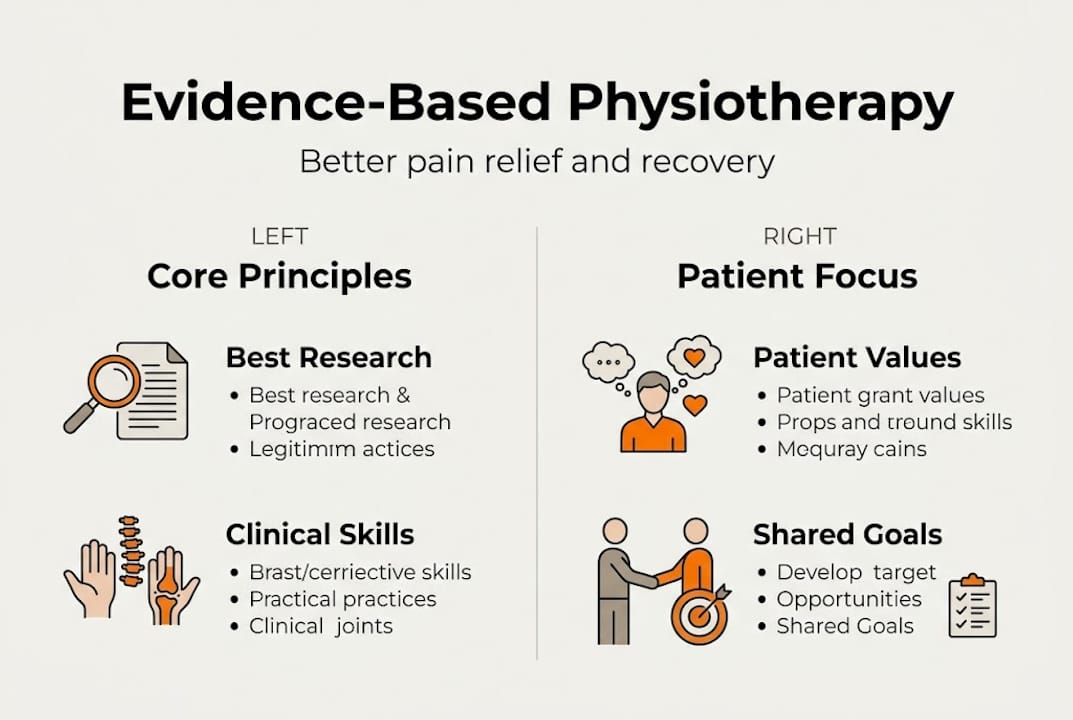
Evidence-based physiotherapy, often abbreviated to EBPT, is not simply physiotherapy that sounds scientific. EBPT integrates clinical research, your preferences as a patient, and the clinical expertise of your physiotherapist into every decision made about your care. Remove any one of those three pillars and the approach becomes incomplete.
Think of it this way. A therapist who only follows research without listening to what you value may prescribe exercises you will never stick to. One who relies purely on experience without checking current evidence may continue using techniques that newer trials have shown to be ineffective. Genuine EBPT holds all three elements in balance.
The myth worth challenging is that all physiotherapy delivered in a clinic is automatically evidence-based. It is not. Some practitioners still use passive treatments, such as ultrasound or certain electrotherapy devices, for conditions where the evidence no longer supports their use. NHS services in Bedfordshire and Buckinghamshire are required to align with NICE guidelines, which are built on systematic reviews of the best available evidence. Private clinics vary considerably, which is why knowing what to look for matters.
In practical terms, personalised, evidence-informed care means your therapist should be able to explain why they are recommending a specific intervention, what the research says about it, and how it fits your situation and goals. Here is what that looks like for you:
Your goals and preferences are discussed and documented at the first appointment
Treatment choices are explained with reference to clinical guidelines or research
Progress is measured at regular intervals using validated outcome tools
Passive treatments are used only where evidence supports them, not as a default
You are actively involved in decisions, not just told what to do
“The best physiotherapy is not the most expensive or the most high-tech. It is the kind that combines what research shows works, what you need as an individual, and what your therapist knows from experience.”
This distinction matters because it directly affects whether you recover fully, how quickly you return to the activities you enjoy, and whether your pain comes back.
The five steps of evidence-based physiotherapy in action
Understanding the framework behind EBPT makes it easier to recognise good practice when you see it. The process follows five steps: assess the patient and form a clinical question, acquire the relevant evidence, appraise that evidence for quality, apply it to practice, and evaluate the outcomes.
Here is how those steps look in a real scenario, say a runner from Milton Keynes presenting with low back pain after increasing their weekly mileage:
Assess and ask. The physiotherapist takes a detailed history, identifies aggravating and relieving factors, and forms a structured clinical question: in active adults with non-specific low back pain, does exercise-based rehabilitation outperform passive treatment for reducing pain and returning to running?
Acquire evidence. The therapist draws on NICE guidelines, Cochrane reviews, and recent systematic reviews relevant to low back pain in active populations.
Appraise evidence. Not all studies are equal. The therapist considers the quality of the evidence, the size of the trials, and how closely the study populations match the patient in front of them.
Apply to practice. The treatment plan is built around active rehabilitation, including progressive loading, running gait analysis, and patient education, rather than rest or passive modalities.
Evaluate outcomes. At each session, pain scores and functional measures are reviewed. If progress stalls, the plan is adjusted.
| Step | Action taken | Example in low back pain || |—|—|—| | Assess | Clinical history and examination | Identify movement limitations and pain triggers | | Acquire | Search NICE, Cochrane, PubMed | Find evidence for exercise vs passive care | | Appraise | Judge study quality and relevance | Prioritise RCTs in active adults | | Apply | Design individualised programme | Progressive loading, education, gait work | | Evaluate | Reassess with outcome measures | Adjust plan if pain scores plateau |
Pro Tip: Ask your physiotherapist directly: “What does the research say about this treatment for my condition?” A confident, specific answer is a good sign. Vagueness or defensiveness is worth noting.
This structured process, when followed consistently, transforms physiotherapy from a series of appointments into a purposeful, evidence-integrated treatment pathway with clear milestones.
Evidence-based physiotherapy for pain and sports injuries
The real-world impact of EBPT becomes most visible when you look at outcomes for musculoskeletal and sports injuries. For these conditions, exercise and manual therapy led to 86% pain reduction and a 92% return-to-sport rate, outperforming medication-only approaches by a significant margin.
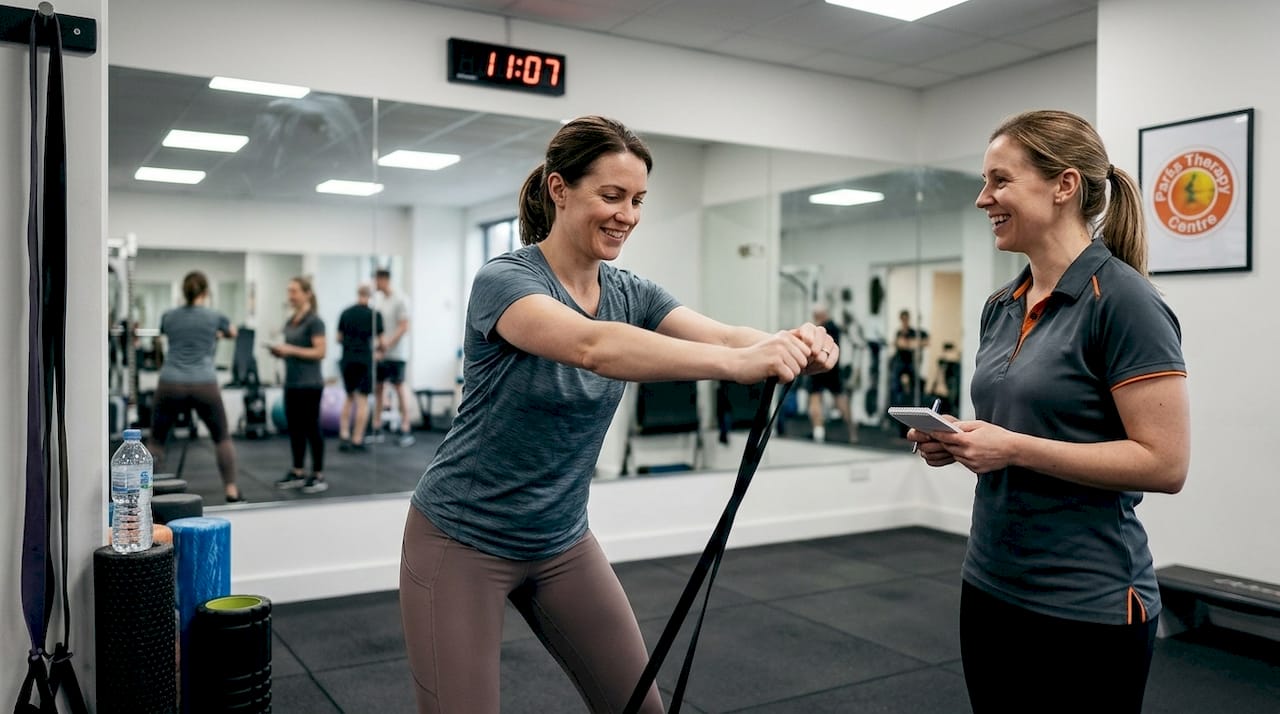
Those numbers are not accidental. They reflect what happens when treatment is matched to the mechanism of injury, the patient’s activity level, and the current best evidence rather than a one-size-fits-all protocol.
For chronic pain, the picture is equally clear. Active physiotherapy outperforms passive or manual-only approaches, and NICE recommends group-based exercise programmes as a first-line intervention. Supervised exercise for chronic pain, when delivered by a skilled physiotherapist, produces sustained improvements that medication alone rarely achieves.
Approach | Pain reduction | Return to sport | Long-term benefit |
EBPT (exercise and manual) | 86% | 92% | High |
Passive treatment only | Moderate | Low | Low |
Medication only | Variable | Low | Low |
GP referral without physio | Low | Variable | Low |
The interventions with the strongest evidence base for MSK and sports injuries include:
Exercise therapy: progressive loading, strength training, and functional movement
Manual therapy: joint mobilisation and soft tissue work, used alongside active rehabilitation
Patient education: understanding pain science reduces fear-avoidance and improves adherence
Cognitive approaches: CBT and ACT (Acceptance and Commitment Therapy) for pain-related distress
Graded return to sport: structured, phased protocols rather than arbitrary rest periods
What the evidence does not support, and what you should be cautious of, includes prolonged passive treatment, opioid prescriptions as a first response to MSK pain, and rest as the primary management strategy for most injuries. Sports injury recovery strategies built on active rehabilitation consistently outperform passive approaches in both the short and long term.
Tailoring physiotherapy for pregnancy-related pain
Pregnancy changes everything, including the way physiotherapy needs to be applied. Back and pelvic pain affects between 40 and 70% of pregnancies, making it one of the most common and most undertreated conditions in maternity care. Land-based exercise reduces pain and sick leave, with a relative risk of 0.66 for sick leave compared to no treatment. That is a meaningful reduction, and it is achievable with appropriately supervised physiotherapy.
The evidence for pregnancy physiotherapy is shaped by NICE guidance and POGP (Pelvic, Obstetric and Gynaecological Physiotherapy) recommendations, both of which prioritise safety, function, and the mother’s quality of life. The good news is that well-designed physiotherapy is not only safe during pregnancy, it is actively beneficial.
Intervention | Pain reduction | Functional improvement | Sick leave reduction |
Land-based exercise | High | High | Yes (RR 0.66) |
Manual therapy | Moderate | Moderate | Partial |
Education and self-management | Moderate | High | Yes |
Multi-modal (combined) | High | High | Yes |
For expecting mothers in Bedfordshire and Buckinghamshire, pregnancy physiotherapy options include pelvic girdle pain management, safe exercise prescription, posture and movement education, and manual therapy where appropriate. The key is starting early rather than waiting until pain becomes severe.
Effective pregnancy physiotherapy should include:
A thorough assessment of pelvic and spinal function
Safe, progressive exercise tailored to each trimester
Education on posture, load management, and daily activity modification
Manual therapy for pelvic girdle or lumbar pain where evidence supports it
Clear guidance on red flags and when to seek urgent review
Pro Tip: If you are experiencing back or pelvic pain during pregnancy, do not wait for your midwife to raise it. Ask directly for a physiotherapy referral before 20 weeks. Early intervention produces better outcomes than late-stage management.
Limitations, barriers, and choosing the right physiotherapist
EBPT is powerful, but it is not without limits. Barriers include limited access, inconsistent training, and gaps in the evidence base itself. For some conditions, particularly rarer musculoskeletal presentations, high-quality trials simply do not exist. In those situations, experienced clinical judgement, peer consensus, and patient education become the guiding tools.
In the local NHS context, waiting times can delay access to physiotherapy, which means some patients arrive with more entrenched pain or deconditioning than they would have had with earlier intervention. Private physiotherapy in Bedfordshire and Buckinghamshire can bridge that gap, but only if the clinician is genuinely committed to evidence-based principles rather than simply offering more appointments.
Not every therapist who calls their practice evidence-based actually follows the full EBPT process. Some use the language without the substance. Here is how to tell the difference:
Ask: “How do you keep your clinical knowledge up to date?”
Ask: “What outcome measures do you use to track my progress?”
Ask: “Is this treatment supported by current NICE guidelines?”
Look for therapists who involve you in decisions rather than directing you passively
Be cautious of anyone who promises a fixed number of sessions without assessing you first
Shared decision-making is a hallmark of genuine EBPT. Your physiotherapist should be explaining options, not issuing instructions. Patient education and active involvement in the treatment process are not optional extras; they are core components of what makes evidence-based care effective.
Pro Tip: A good physiotherapist will set measurable goals with you at the start and revisit them regularly. If your therapist cannot tell you what success looks like, that is a red flag.
“When evidence is incomplete, the best clinicians do not guess. They communicate honestly, draw on peer consensus, and keep the patient fully informed.”
Our perspective: why the evidence matters and the hidden pitfalls most miss
After nearly four decades of working with patients across Bedfordshire and Buckinghamshire, we have seen what happens when physiotherapy drifts away from evidence. Patients spend months on passive treatments that feel therapeutic in the moment but do not produce lasting change. They leave appointments feeling cared for but no stronger, no more resilient, and no closer to the activities they love.
The subtler risk is protocol-driven care, where every patient with a given diagnosis receives the same programme regardless of their goals, fitness level, or lifestyle. Evidence-based practice is not a checklist. It is a dialogue. The Pilates and evidence-based strategies we integrate into rehabilitation, for example, are chosen because they match both the research and the individual, not because they are fashionable.
The patients who recover best are those who ask questions, understand their treatment rationale, and work with therapists who update their practice as the evidence evolves. That combination is rarer than it should be, and it is worth seeking out.
Find evidence-based physio care in Bedfordshire and Buckinghamshire
If this guide has clarified what good physiotherapy should look like, the next step is finding it locally. At Parks Therapy Centre, our physiotherapists work within evidence-based frameworks for musculoskeletal conditions, sports injuries, chronic pain, and pregnancy-related therapy. We have been providing patient-centred care since 1986 and accept most major insurance providers.
Whether you are managing a long-standing injury, returning to sport, or navigating pregnancy discomfort, our team at Parks Therapy Centre is ready to build a treatment plan grounded in current evidence and your personal goals. Book online or contact your nearest Bedfordshire or Buckinghamshire clinic today to get started.
Frequently asked questions
How do I know if my physiotherapist uses evidence-based practice?
Look for therapists who explain treatment choices by referencing clinical research, UK guidelines such as NICE, and your own goals and preferences. EBPT integrates clinical research, patient preferences, and physiotherapists’ expertise into every clinical decision.
What conditions benefit most from evidence-based physiotherapy?
Musculoskeletal injuries, sports injuries, chronic pain, and pregnancy-related pain show the most consistent benefit. NICE guidelines recommend exercise, manual therapy, and education as first-line interventions for these conditions.
Can evidence-based physiotherapy help with chronic pain long-term?
Yes; active PT outperforms passive or manual-only approaches for long-term pain management, and NICE recommends group-based exercise as a core strategy.
Is physiotherapy for pregnancy pain safe and effective?
Supervised exercise and multi-modal approaches combining manual therapy and education are shown to be safe and effective. Land-based exercise reduces pain, disability, and sick leave during pregnancy with a relative risk reduction of 0.66.
Recommended