
Foot Arch Pain: Causes, Relief and When to See a Physio
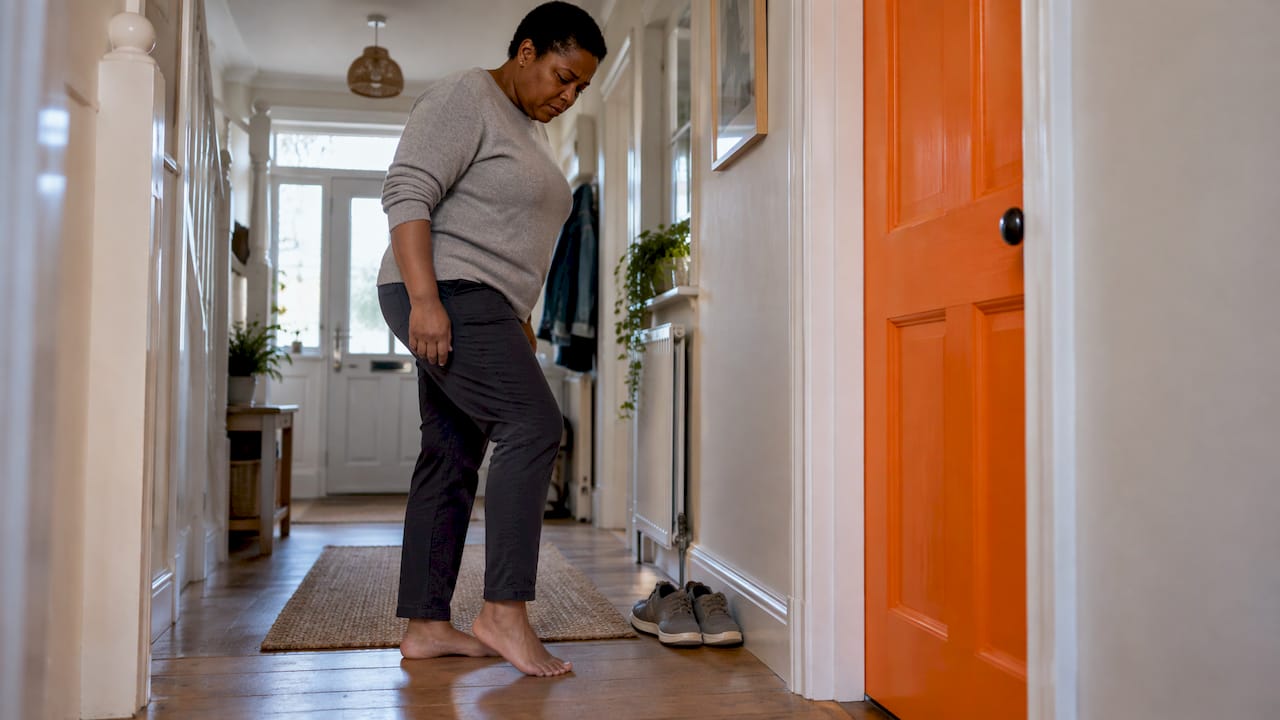
Pain in the arch of the foot is usually a load problem: the tissues that hold the arch up are being asked to do more than they can currently tolerate. The most common cause is plantar fasciitis, and most cases settle with the right combination of footwear, stretching and strengthening. A physiotherapy assessment shows which structure is irritated, so that you load it correctly instead of guessing. At Parks Therapy Centre, a physiotherapy assessment costs £76 and follow-up treatment £67.
TL;DR
The most common cause of arch pain is plantar fasciitis, irritation of the band of tissue that supports the arch. Flat or high arches, tendon overload, nerve problems and footwear can also play a part.
Supportive shoes, calf and foot stretches, rolling the foot and gradual strengthening are the usual first steps. Give them several weeks.
See a GP if the pain stops normal activity, has not improved after two weeks of home treatment, or you have diabetes, tingling, numbness or weakness.
Call NHS 111 for severe pain, an inability to walk, a change in the shape of the foot or a snap or pop at the time of injury.
If the pain keeps returning, a physiotherapist can assess how you stand, walk and load the foot and build a programme around it.
Table of Contents
What causes pain in the arch of the foot?
The arch is the curve along the inside of your foot. It spreads your body weight as you walk and run. Anything that overloads the structures supporting it can hurt.
The NHS lists several possible causes of pain in the bottom of the foot: a sprained foot, Morton’s neuroma, corns or calluses, a verruca, plantar fasciitis and flat feet. The usual suspects for arch pain are these:
Plantar fasciitis. The plantar fascia is a thick band running from the heel to the toes that supports the arch. The Royal National Orthopaedic Hospital says it is the most common cause of pain under the heel, and that the pain can also sit under the arch.
Tibialis posterior tendinopathy. This tendon runs along the inside of the ankle and helps hold the arch up. Sherwood Forest Hospitals NHS describes pain and swelling inside the ankle, sometimes with a dropping arch, often after an increase in walking or running.
Flat or high arches. Arthritis UK explains that arches that fall strain the feet, ankles, knees, hips and back, while high arches push load towards the outer foot, ankle and ball of the foot and raise the risk of plantar fasciitis.
Plantar fibroma. This is a firm lump in the arch, often painless unless pressed. Devon NHS guidance says it may be offloaded with foot orthoses.
Common risk factors
The RNOH lists standing for long periods, weight gain, tight calf or Achilles muscles, a sudden change in activity, unsuitable footwear, rheumatic conditions, and high or flat arches. Most people have more than one of these at once, which is why a single change such as new insoles rarely fixes the problem alone.
How to tell what your arch pain might be
You cannot reliably diagnose yourself, and the NHS advises against self-diagnosing flat feet. The pattern of pain still gives useful clues to share with a clinician.
Pattern | Possible explanation |
Sharp pain between arch and heel, worst with the first steps in the morning or after sitting | Plantar fasciitis |
Pain and swelling inside the ankle, arch flattening, heel tilting outwards, worse with activity | Tibialis posterior tendinopathy |
Sharp, burning pain near the toes | Morton’s neuroma |
Burning or tingling with some loss of feeling | A nerve problem such as tarsal tunnel syndrome |
Firm, fixed lump in the arch | Plantar fibroma |
The RNOH notes that plantar fasciitis pain is typically worse on the first steps after rest and after prolonged standing or walking. Royal Berkshire NHS Foundation Trust says it affects up to 10 to 15% of people and is most common over the age of 40.
Arthritis UK says a healthcare professional will normally examine your feet and watch you walk. Scans are usually unnecessary unless a condition such as arthritis is suspected. If a scan is needed, our centre offers an image assessment at £76, an image referral letter at £10 and an image results review at £67.
Foot arch pain relief at home
For the first couple of weeks, the NHS-backed advice is consistent and simple.
Reduce the load. Cut back on the activity that set it off, without stopping all movement. Cycling and swimming are low-impact options suggested by Royal Berkshire.
Change your footwear. The NHS recommends roomy shoes with a low heel and soft sole, and soft insoles. Arthritis UK suggests a supportive sole, a cushioned insole, lace or strap fastening and a heel raised about 2 to 3 cm. Avoid bare feet on hard floors, flip-flops, backless slippers and flat shoes.
Roll the arch. Roll your foot over a tennis ball, a small hard ball or a frozen 500 ml bottle with a towel between. The Beds, Luton and Milton Keynes pathway suggests ideally twice daily.
Use ice carefully. Royal Berkshire advises ice wrapped in a damp cloth for 10 to 15 minutes once or twice a day. Do not use it if you have circulation problems or poor skin sensation.
Pain relief. The NHS mentions paracetamol or ibuprofen. Check with a pharmacist first if you are unsure whether they suit you.
Manage weight if it applies. Both the NHS and Arthritis UK list weight loss as part of reducing load on the arch.
Be patient. Royal Berkshire explains that micro-tears heal with less flexible scar tissue, so first-line measures need 6 to 12 weeks before you judge them. The local pathway describes three months of focused self-management as the best opportunity for a good outcome, and says recurrence is likely, so the habits are worth keeping.
Exercises that help the arch
Exercises should feel like a gentle stretch, not pain. The RNOH advises stopping any exercise that makes symptoms worse.
For plantar fasciitis
Royal Berkshire prescribes these two to three times a day:
Calf stretches, one with the back leg straight and one with the knees bent: 30 seconds, six times each.
Plantar fascia step stretch with the heel hanging off a step: 30 seconds, six times.
Toe-pull stretch for the small muscles of the foot: 30 seconds, six times.
Towel toe curls, bunching a towel with your toes: 10 repeats.
Arthritis UK adds a towel stretch (toes pulled towards you, knee straight, 30 seconds, three times) and rolling the arch on a tin of beans for a few minutes twice a day.
We have a full walkthrough in our guide to plantar fasciitis exercises.
For a dropping arch
Sherwood Forest Hospitals sets out three levels, each 10 repetitions for three sets:
Short-foot arch lifts. Lift the arch without curling the toes and hold for 10 seconds.
Small squats. Keep the arch from collapsing as you bend, and increase depth gradually.
Heel raises. Hold for 10 seconds at the top, progressing by squeezing a tennis ball between the inner heels.
Reduce the repetitions if it hurts. For a longer structured programme, see our flat feet exercises plan.
When to see someone about arch pain
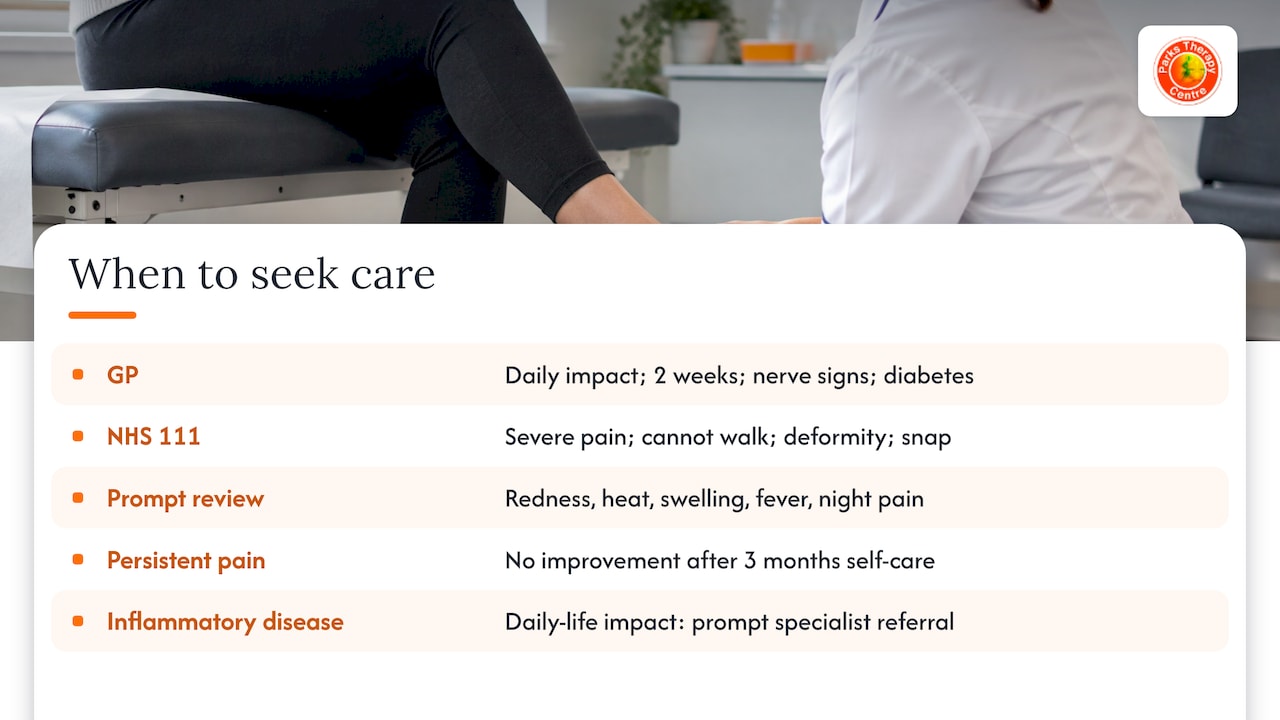
Some situations should not wait. The NHS says to see a GP if the pain stops normal activities, is getting worse or keeps coming back, has not improved after two weeks of home treatment, comes with tingling, loss of feeling or weakness, or you have diabetes and foot pain.
Contact NHS 111 for severe pain, if you cannot walk, if the foot has changed shape or sits at an odd angle, after a snap, grinding or popping noise at the time of injury, or if the pain makes you feel faint, dizzy or sick. Redness, heat and swelling, fever, or night pain with unexplained weight loss also need prompt medical review.
For persistent but non-urgent pain, NHS pathways point to the 12-week mark. Devon NHS guidance recommends podiatry referral if there is no improvement after three months of self-care, and says the diagnosis is mainly clinical, with imaging secondary. If you have an inflammatory condition such as rheumatoid arthritis, the British Society for Rheumatology guideline recommends prompt referral to specialist foot services when foot problems affect daily living.
What a physiotherapy assessment adds
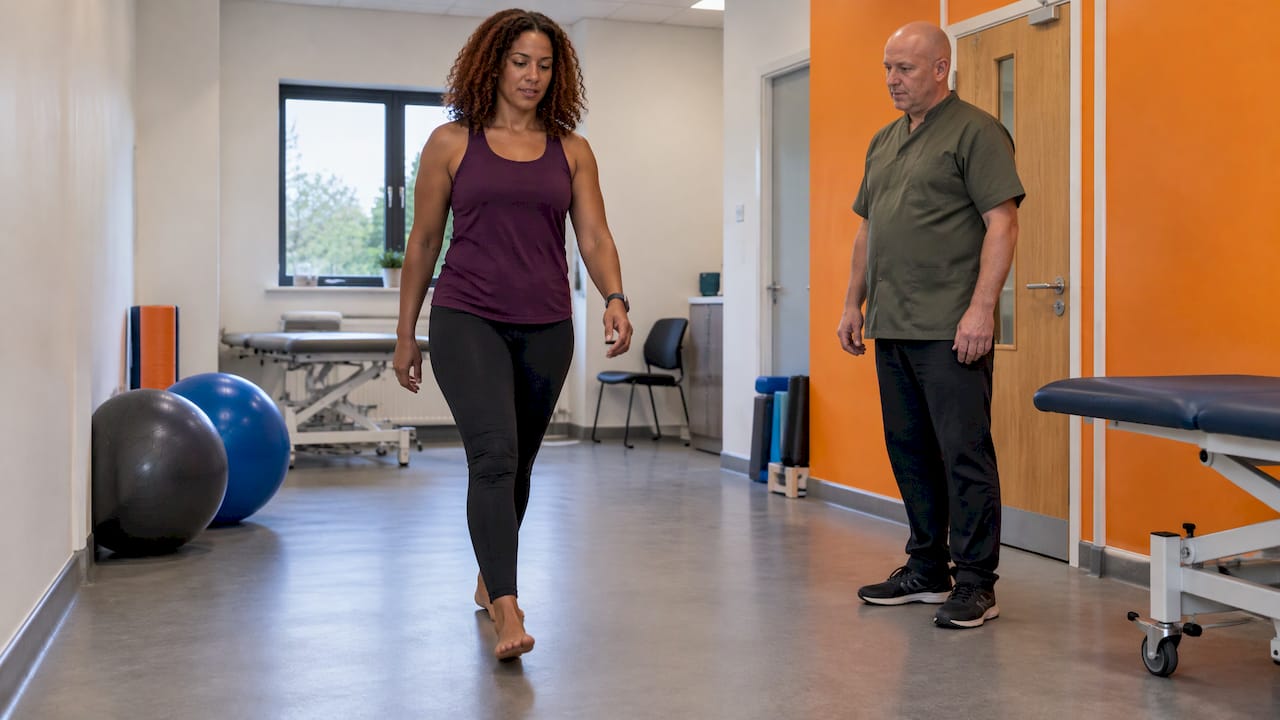
The self-help steps above work for many people. Where they stall, the question becomes why your arch is overloaded. A physiotherapist looks at how you stand, walk and load the foot, along with calf flexibility, strength and your training or work pattern, then sets exercises at a level your tissues can tolerate and progresses them. That matters because Sherwood Forest Hospitals describes tibialis posterior problems as a load-tolerance issue, where physiotherapy-led progressive strengthening is first-line rather than rest alone.
Our article on the benefits of physiotherapy for foot pain goes through what treatment can achieve. Where footwear or insoles are part of the picture, podiatry can help with foot and lower-limb pain, and our team works across both. If the pain is mainly near the toes, our guide to Morton’s neuroma symptoms is a good place to start.
The RNOH notes that shockwave therapy is sometimes considered when conservative management has not worked. We offer shockwave therapy, with an assessment at £60 and treatment at £70 for 30 minutes or £60 for 20 minutes.
Book a foot assessment with us
We have treated patients across Bedfordshire and Buckinghamshire since 1986. Our physiotherapy assessment is £76, with treatment sessions at £67, and we accept all major health insurance plans. Pilates, from £9 for a group class, is also available for people who want to build strength and control after the pain settles. You can see every published fee on our prices page, or find our Pilates classes.
If you would like to start with an assessment, book online through Parks Therapy Centre.
Our view on arch pain
Most arch pain we hear about has a long history. It started with a new pair of shoes, a jump in running, a job on hard floors or a few extra kilos, and it lingered because nobody changed the load. Our approach is to find which tissue is irritated, then build a programme the foot can cope with: stretching, strengthening, footwear advice and a clear plan for progression. Because we are a multidisciplinary team, physiotherapy, podiatry, sports massage, shockwave therapy and Pilates sit under one roof, so the next step is not a new search for a new clinic. Recovery takes weeks, sometimes months, and the patients who do best are the ones who stay with the plan. We would rather see you early with a clear picture than late after months of guessing. Ivan
FAQ
How long does foot arch pain take to go away?
It depends on the cause. Royal Berkshire NHS says plantar fasciitis can take up to 18 months to resolve, though about 90% of cases are treated successfully with conservative treatment. Tibialis posterior tendinopathy typically settles within 3 to 12 months, according to Sherwood Forest Hospitals. Steady, progressive exercise and suitable footwear give you the best chance of a quicker recovery.
Are flat feet the cause of my arch pain?
Possibly, but not always. The NHS describes flat feet as having no gap under the arch when standing. Arthritis UK says naturally flat feet that the body has adapted to are different from arches that have fallen, which make overuse injuries more likely. An assessment shows which applies to you.
Should I stretch or rest a painful arch?
Both have a place. Reduce the activity that aggravates it, and add gentle calf and plantar fascia stretches. The RNOH says stretches should feel gentle, not painful, and that you should stop any exercise that makes symptoms worse.
Do I need a scan for arch pain?
Usually not. Arthritis UK says scans are normally unnecessary unless a condition such as arthritis is suspected, and Devon NHS guidance describes diagnosis as primarily clinical. If your clinician feels imaging would help, they can refer you.
Sources
Recommended