
How to book a physiotherapy appointment online in 2026
- 11 hours ago
- 8 min read

TL;DR:
NHS physiotherapy in Bedfordshire and Buckinghamshire relies on self-referral forms, not instant booking.
Private clinics offer quick, online booking with same-week appointments but at a cost.
Urgent or severe symptoms require emergency care, not routine physiotherapy referral.
When pain or injury strikes, the last thing you want is to spend weeks waiting for help. Whether you’re dealing with a nagging knee, a sports injury, or pregnancy-related back pain, getting physiotherapy quickly can make a real difference to your recovery. This guide walks you through every step of booking physiotherapy in Bedfordshire and Buckinghamshire, covering both NHS and private routes. You’ll learn what to prepare beforehand, how each booking pathway works, what to expect after you’ve secured your slot, and how to avoid the most common delays.
Table of Contents
Key Takeaways
Point | Details |
NHS vs private access | NHS requires a self-referral form and triage, while private clinics offer direct online appointment booking. |
Be prepared | Have your details, NHS number, and symptom notes ready to speed up the booking process. |
Act quickly for urgent cases | Go straight to A&E or call 999 for severe symptoms, not through regular booking forms. |
Maximise your recovery | Use digital tools and self-management advice while waiting for your appointment. |
What you need before booking physiotherapy
Before you pick up the phone or open a browser, it pays to understand what each pathway actually requires. Getting this wrong is one of the most common reasons people experience unnecessary delays.
For NHS physiotherapy, most adults with musculoskeletal (MSK) concerns in Bedfordshire and Buckinghamshire use a self-referral form rather than direct online booking. Completed forms are reviewed by a clinician before an appointment is allocated. This triage process means you won’t be choosing a time slot yourself. If you are under 16, or if you’re experiencing urgent or severe symptoms, you must go through your GP or attend A&E instead.
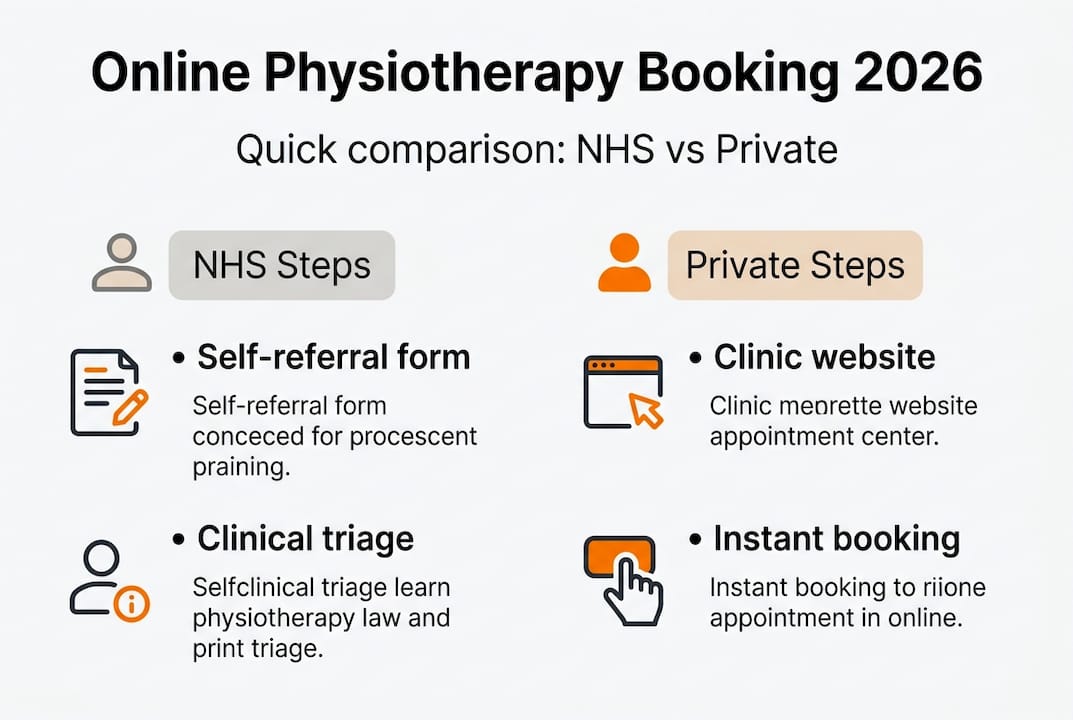
Private clinics work very differently. You can usually book directly online with minimal paperwork, choosing your preferred date, time, and clinician from the outset. Understanding physiotherapy terminology before your first session can also help you communicate your symptoms more clearly.
What to have ready before booking:
Full name, date of birth, and contact details
Your NHS number (for NHS referrals)
A brief description of your symptoms and how long you’ve had them
Details of any previous treatment or investigations
Your GP’s name and surgery (for NHS forms)
Insurance policy details (for private sessions using cover)
The most common qualifying conditions for self-referral include joint and muscle pain, sports injuries, and pregnancy or post-operative discomfort. If you’re unsure whether your issue qualifies, reading about physiotherapy for musculoskeletal disorders can help you decide.
Condition type | NHS self-referral eligible? | Private booking eligible? |
Joint or muscle pain | Yes (over 16s) | Yes |
Sports injuries | Yes (over 16s) | Yes |
Pregnancy-related discomfort | Yes (over 16s) | Yes |
Post-operative recovery | Often, check with provider | Yes |
Urgent/red flag symptoms | No, go to A&E | No, go to A&E |
Pro Tip: Before submitting any referral form, double-check whether your symptoms qualify for self-referral or need urgent clinical assessment. Red flag symptoms such as sudden numbness, loss of bladder control, or severe unexplained pain always require emergency care.
Step-by-step: Booking your NHS physiotherapy appointment
Once you’re prepared, it’s time to start the NHS booking process using the correct route for your area. The key thing to understand is that NHS self-referral works via online forms rather than a live booking portal, which helps reduce pressure on GPs but does mean you won’t get an instant confirmation.
The provider you contact depends on where you live. Buckinghamshire residents typically use Practice Plus Group, while those in Bedfordshire are usually served by Circle Integrated Care. As noted by local NHS services, no unified booking portal exists for these regions; forms are submitted online, by post, or in person, and appointments are allocated after clinical triage.
How to complete your NHS physiotherapy referral:
Identify your local NHS MSK physiotherapy provider (Practice Plus Group for Buckinghamshire, Circle Integrated Care for Bedfordshire).
Visit the provider’s website and locate the self-referral form.
Complete the form with your personal details, NHS number, and a clear description of your symptoms.
Submit the form online, by post, or hand it in at your GP surgery if that option is available.
Wait for the provider to contact you. Clinical staff will review your form and allocate an appointment based on clinical need.
Attend your appointment or follow any digital self-management guidance sent to you in the meantime.
Provider | Area covered | How to submit form | Appointment allocation |
Practice Plus Group | Buckinghamshire | Online or post | After clinical triage |
Circle Integrated Care | Bedfordshire | Online or post | After clinical triage |
Important: A&E and the 999 service are for red flag or severe symptoms only. Do not use the self-referral route if you have sudden weakness, numbness, loss of bladder or bowel control, or severe unexplained pain. These require emergency assessment.
For a broader view of what to expect throughout your treatment, the full recovery guide is worth reading before your first session. If you plan to use health insurance, understanding insurance cover for physiotherapy can also save you time and money.
Booking a private physiotherapy appointment: Online options
If you need a quicker appointment or more flexibility, private booking could be the solution. Private physiotherapy clinics typically offer user-friendly online portals where you can see real-time availability and confirm your slot within minutes.
The process is straightforward. You visit the clinic’s website, choose your appointment type, pick a date and time that suits you, enter your personal and health details, then confirm and pay. Private clinics offer faster access with same-week slots often available, though this comes at a cost. The trade-off is speed and choice versus the free but slower NHS pathway.
Research shows that making access easier through digital booking tools significantly improves the likelihood that people actually attend their appointments and follow through with treatment. That’s a practical reason why private clinics invest heavily in their online systems.
Benefits of private online booking:
Instant confirmation with no waiting for triage
Choice of clinician, location, and appointment time
Same-week or even next-day availability in many cases
Flexibility to reschedule online without calling
Access to specialists such as sports physiotherapists or women’s health practitioners
Feature | NHS physiotherapy | Private physiotherapy |
Online booking portal | No, form-based referral | Yes, real-time slot selection |
Speed of access | Weeks (after triage) | Often same week |
Cost | Free at point of use | Fee per session |
Choice of clinician | Limited | Yes |
Insurance accepted | N/A | Often yes |
For a smooth private physio online booking experience, it helps to have your symptoms written down and your insurance details to hand before you start.
Pro Tip: Always check your insurance policy before booking a private session. Many policies cover physiotherapy, but some require pre-authorisation from your insurer before your first appointment.
After booking: What to expect and how to prepare
Once you’ve secured a slot, it’s important to be prepared and make the most out of your session. What happens next depends on whether you’ve booked through the NHS or a private clinic.

With the NHS, confirmation may take several days as your form is reviewed and an appointment allocated. With private booking, you’ll usually receive an instant email confirmation with all the details you need. Either way, arriving prepared makes a significant difference to the quality of care you receive.
The NHS actively encourages the use of digital self-management tools before and after referral to help you start recovering sooner. Apps such as Prehab4Cancer and the NHS MSK self-management resources can give you practical exercises and guidance while you wait.
What to bring and do before your appointment:
Photo ID and your NHS number (for NHS appointments)
Insurance documents if you’re using cover
A written summary of your symptoms: when they started, what makes them better or worse, and any previous treatment
A list of any medications you’re currently taking
Comfortable clothing that allows access to the affected area
Questions you want to ask your physiotherapist
Understanding injury prevention with physiotherapy can help you set realistic goals for your sessions. If your issue is work-related, reading about ergonomics in injury prevention before your appointment gives your physiotherapist useful context.
Pro Tip: Keep a simple symptoms diary for the week before your appointment. Note pain levels, triggers, and any activities that help or worsen your condition. This speeds up diagnosis and allows your clinician to tailor your treatment plan from the very first session.
Why online booking for physiotherapy is still evolving
Many patients arrive expecting a GP-style booking portal for NHS physiotherapy, only to find a form-based referral system instead. This gap between expectation and reality is worth understanding, because it affects how you plan your care.
The honest reason is that no unified NHS booking system like the electronic Referral Service exists for direct physiotherapy booking in Bedfordshire or Buckinghamshire. Unlike outpatient hospital appointments, MSK physiotherapy still relies on clinical triage forms. This isn’t simply a technology problem. Cost, workforce capacity, and the complexity of integrating multiple providers into a single platform all play a role.
The triage process, frustrating as it feels, does serve a purpose. It ensures that people with the greatest clinical need are seen first, rather than those who happen to be quickest at clicking a booking button. That said, it does leave patients in genuine pain waiting longer than feels acceptable.
Private clinics, including how private booking compares to NHS routes, fill this gap effectively. For anyone who can access private care, whether through insurance or self-funding, the difference in speed is substantial. NHS digitalisation is improving, but it does not yet guarantee instant access. Knowing this upfront means you can make a genuinely informed choice rather than feeling let down by a system that was never designed to work the way you might expect.
Fast-track your recovery with Parks Therapy Centre
If you’re ready for personal, rapid access to expert care, here’s how Parks Therapy Centre can help. Navigating the NHS pathway takes patience, but you don’t have to wait weeks to start feeling better.
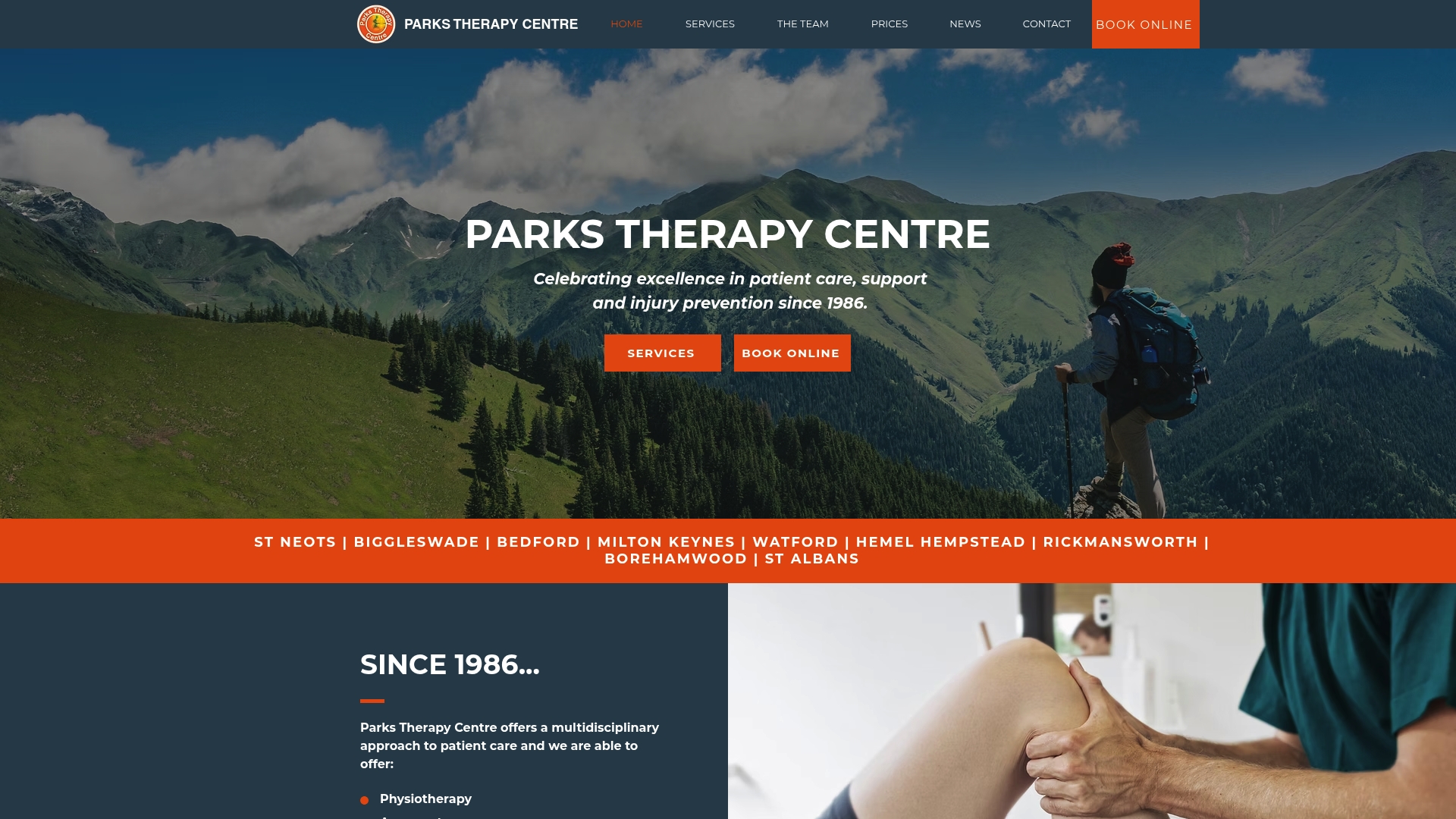
At Parks Therapy Centre, established in 1986 and serving patients across Bedfordshire and Buckinghamshire, you can book your physiotherapy appointment online in minutes. Choose your preferred location, clinician, and time, then confirm instantly. We also offer diagnostic imaging referrals to support accurate diagnosis from the outset. Our team accepts many insurance policies, so check your cover before booking. Whether you’re managing a sports injury, musculoskeletal pain, or pregnancy-related discomfort, we make access straightforward and fast.
Frequently asked questions
Can I book a physiotherapy appointment online directly with the NHS in Bedfordshire or Buckinghamshire?
No, you must complete a self-referral form and wait for clinical triage before an appointment is allocated. Direct slot selection is not available on the NHS in these areas.
How fast can I get a physiotherapy appointment using private clinics online?
Private clinics offer direct online booking with same-week availability in many cases, so you can often secure a slot within days rather than weeks.
Which conditions qualify for physiotherapy self-referral?
Most musculoskeletal issues, sports injuries, and pregnancy-related discomfort are eligible for self-referral if you are over 16 and your symptoms are not urgent or severe.
What should I do if my symptoms are severe or sudden, such as numbness or bladder changes?
Seek urgent care through A&E or dial 999 immediately. These symptoms require emergency assessment and should never wait for a routine physiotherapy referral.
Can I use insurance to cover private physiotherapy bookings?
Many policies do cover private physiotherapy sessions; review your insurance cover options and confirm with both your insurer and the clinic before you book.
Recommended