
Top sports injury prevention tips for safer performance
- 4 hours ago
- 7 min read
TL;DR:
Personalized, biomechanically-assessed programs reduce injuries by up to 73 percent.
Multicomponent training combining strength, balance, plyometrics, and agility cuts injury risk significantly.
Early recognition of warning signs and professional support are vital for effective injury prevention.
Staying competitive while avoiding injury is one of the most persistent challenges facing athletes and active individuals across Bedfordshire and Buckinghamshire. Whether you train for weekend football, club running, or competitive cycling, the gap between peak performance and a frustrating layoff often comes down to prevention. Generic warm-up routines and rest days alone are no longer enough. Evidence-backed strategies, tailored to your body and sport, are what separate athletes who stay on the pitch from those who spend weeks on the sidelines. This guide walks you through the most effective prevention tips available in 2026, grounded in research and practical experience.
Table of Contents
Key Takeaways
Point | Details |
Personalisation is key | Customised prevention plans based on biomechanical assessment greatly lower injury risk. |
Combine training types | Strength, plyometrics, balance, and agility should be integrated for best results. |
Sport-specific focus | Targeted neuromuscular exercises significantly reduce issues like ACL tears and sprains. |
Prioritise recovery | Noticing and acting on early pain signs ensures quicker, safer recovery. |
Key principles of sports injury prevention
Before diving into specific tips, it helps to understand what makes any prevention strategy actually work. Not all approaches are equal, and knowing the core principles helps you judge whether what you are doing is genuinely protective or just going through the motions.
The three main pillars of effective injury prevention are:
Personalised approaches based on your movement patterns, sport, and history
Multicomponent activities that combine strength, balance, agility, and flexibility
Regular, consistent practice rather than occasional effort
Generic programmes often miss the mark because they treat all athletes the same. A biomechanical assessment (a structured analysis of how your body moves during sport-specific tasks) allows a physiotherapist to identify your specific vulnerabilities before they become injuries. This is the foundation of the injury prevention principles that consistently produce results.
The research is clear on one point: multicomponent programmes reduce injuries by 35% in adolescent athletes, and similar benefits are seen across adult populations. Combining strength work with balance and agility drills creates overlapping layers of protection that no single modality can match.
“The most effective prevention is not the most complicated. It is the most consistent.”
Pro Tip: If you are unsure where to start, ask a physiotherapist about the role of physiotherapy in building a prevention framework tailored to your training load.
Tip 1: Personalise your prevention programme
Building on those pillars, the next step is ensuring your approach is made for you, not just the average athlete. This is where many well-intentioned training plans fall short. A programme designed for a 25-year-old sprinter will not serve a 40-year-old recreational footballer in the same way.
Here is a practical step-by-step approach to building a personalised programme:
Book a biomechanical assessment with a qualified physiotherapist who can analyse your movement under load
Identify your risk factors, including muscle imbalances, previous injuries, and sport-specific demands
Set measurable goals tied to your sport, such as reducing ankle rolls or improving landing mechanics
Build a phased plan that progresses in intensity over 6 to 12 weeks
Review and adjust every four weeks based on how your body is responding
The evidence behind personalisation is compelling. Personalised biomechanical assessments reduce injuries by up to 73%, which is a dramatic improvement over generic recommendations. That figure reflects how much individual variation matters in sport.
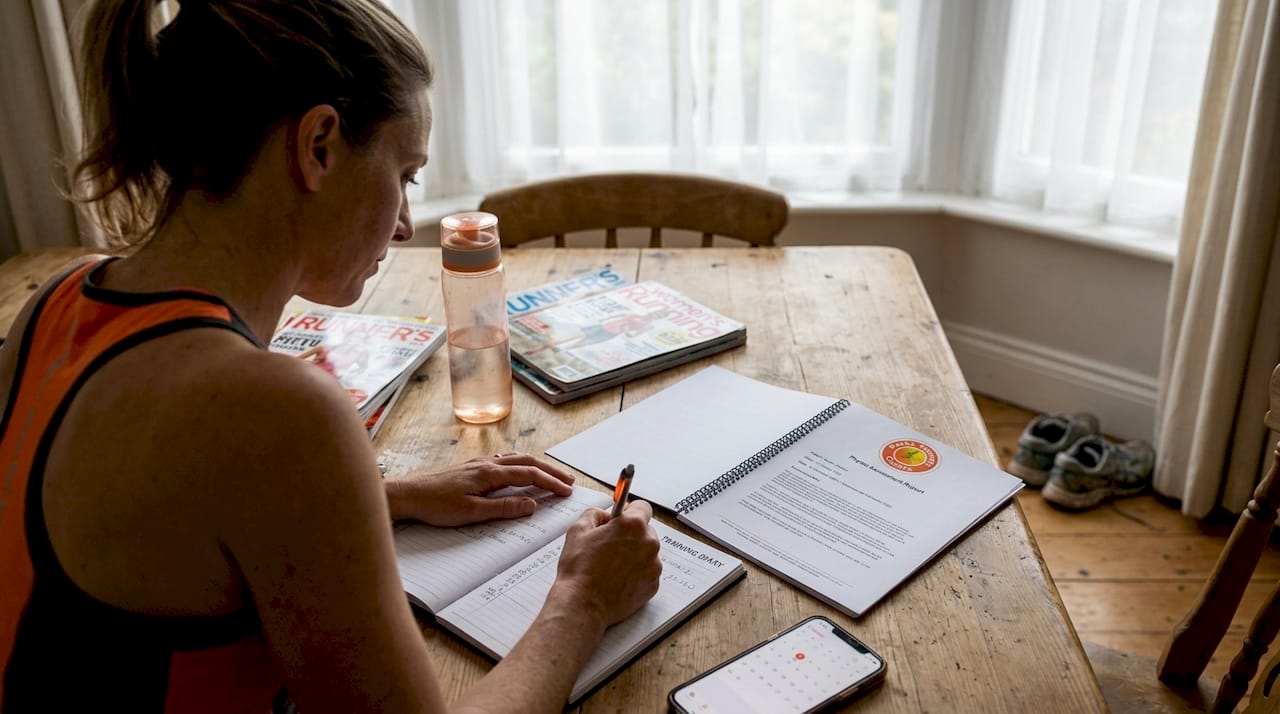
Pro Tip: Keep a simple training diary noting any discomfort, fatigue levels, and movement quality. This gives your physiotherapist far better data when managing sports injuries and adjusting your plan over time.
If you want a structured starting point, the personalised injury guide offers a clear framework for active adults at any level.
Tip 2: Include multicomponent training — strength, plyometrics, balance, agility
Once your plan is tailored, the next focus should be on the training formats proven to offer significant protection. A multicomponent programme is not about doing more. It is about combining the right elements in the right sequence.
Here is what each modality contributes:
Training type | Primary benefit | Example exercise |
Strength | Supports joints and reduces overload | Single-leg squats |
Plyometrics | Improves explosive power and landing control | Box jumps, bounding |
Balance | Enhances proprioception and joint stability | Single-leg stance drills |
Agility | Trains rapid direction change safely | Ladder drills, cone runs |
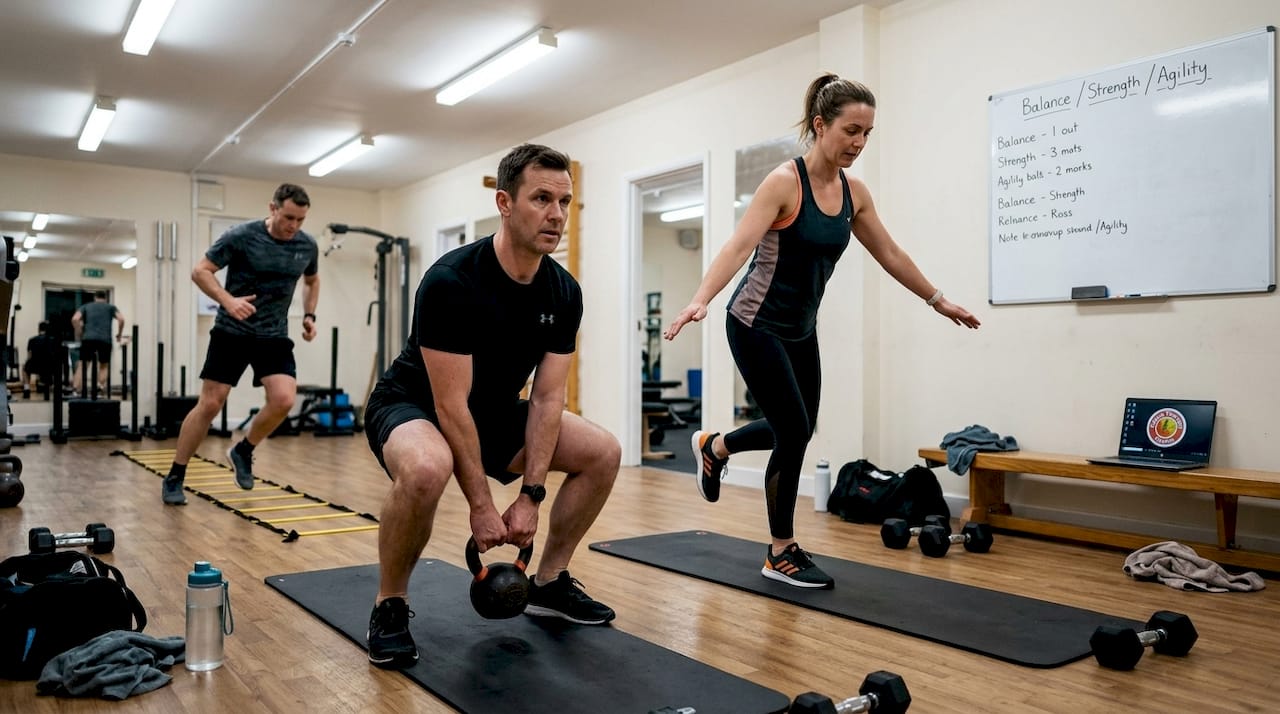
The good news is that you do not need a long session to see results. Programmes under 20 minutes can cut injury rates by 35%, making this accessible even during a busy training week.
A sample 20-minute session might look like this:
5 minutes of dynamic warm-up (leg swings, hip circles, arm rotations)
5 minutes of strength work (split squats, glute bridges)
5 minutes of plyometrics and agility (lateral bounds, ladder drills)
5 minutes of balance and cool-down (single-leg holds, static stretches)
When these elements are combined rather than used in isolation, they address the types of sports injuries that most commonly sideline athletes, from muscle strains to ligament sprains. Integration is the key word here. Each component reinforces the others.
Tip 3: Focus on sport-specific and neuromuscular training
To maximise your programme’s impact, focusing on the demands of your specific sport sharpens your results considerably. Neuromuscular training (NMT) refers to exercises that improve the communication between your nervous system and muscles, particularly around joint stability and reaction time.
Programmes like FIFA 11+ were developed specifically for football players and have been widely studied. The principle behind them applies across sports: train the movement patterns your sport demands, under controlled fatigue, to build resilience where it matters most.
Here is how NMT benefits different sports:
Sport | Target injury | Reduction with NMT |
Football | ACL tears | Up to 50% |
Basketball | Ankle sprains | Up to 60% |
Netball | Knee ligament injuries | Up to 45% |
Running | Hamstring strains | Up to 40% |
Sport-specific NMT can lower ACL and ankle injuries by up to 70% when applied consistently. That is a remarkable figure for something that requires no equipment and minimal time.
Proprioception (your body’s ability to sense its own position and movement) is central to NMT. Poor proprioception is one of the leading contributors to re-injury, particularly in the ankle and knee. Improving it through targeted drills is one of the smartest investments you can make in your long-term performance.
“Athletes who train their nervous system, not just their muscles, stay injury-free far longer.”
For more targeted guidance, explore knee injury prevention strategies and understand the broader importance for athletes of making NMT a regular habit.
Tip 4: Don’t overlook recovery, early warning signs, and professional input
Programme design is the foundation, but recognising and addressing early symptoms ensures the largest benefit from those efforts. Many athletes train through discomfort that is actually a warning signal, and that habit is one of the most common routes to a serious injury.
Warning signs you should never ignore:
Persistent joint pain that does not resolve within 48 hours of rest
Swelling or warmth around a joint after training
Altered movement patterns, such as limping or favouring one side
Sharp or shooting pain during a specific movement
Recurring tightness in the same muscle group across multiple sessions
For minor discomfort, basic self-management such as rest, ice, compression, and elevation (RICE) is appropriate in the short term. However, if symptoms persist beyond two to three days, professional input is essential. Delaying assessment often turns a manageable issue into a prolonged recovery.
Pro Tip: Use the physiotherapy recovery tips resource to understand what early-stage recovery should look like before you book an appointment.
Athletes in Bedfordshire and Buckinghamshire have strong access to specialist support locally. Personalised and multicomponent strategies, supported by professional input, greatly reduce injuries compared to self-managed approaches alone. Do not wait for a full breakdown before seeking help.
Why Bedfordshire and Buckinghamshire athletes need a prevention-first mindset
Here is something we see repeatedly at Parks Therapy Centre: athletes who come to us after their third or fourth recurrence of the same injury. Each time, the injury was slightly different. Each time, it could have been prevented. The pattern is almost always the same. A small sign was ignored, a recovery was rushed, or a prevention programme was abandoned once things felt better.
Most recurring injuries do not stem from a single catastrophic event. They build quietly from neglected movement habits and undervalued daily prevention work. The athletes who stay active longest are not necessarily the most talented. They are the most consistent in how they look after themselves between sessions.
A prevention-first mindset means treating your body’s warning signals as data, not inconvenience. It means valuing a 15-minute stability session as much as a hard interval run. This approach improves long-term performance and, perhaps more importantly, confidence. You move better when you trust your body.
For specific groups, such as pregnant athletes, the same principles apply with appropriate modifications, as explored in our guide to injury prevention for specific groups. Prevention is not one-size-fits-all, and local expertise makes that personalisation possible.
Access expert support for injury prevention
Ready to put these prevention strategies into practice? Local expertise makes the biggest difference when translating research into a programme that actually works for your body and your sport.
At Parks Therapy Centre, our team of qualified physiotherapists offers biomechanical assessments, sport-specific programme design, and access to diagnostic imaging referrals when needed. Established since 1986 and serving athletes across Bedfordshire and Buckinghamshire, we combine clinical expertise with a genuine understanding of what active individuals need. Whether you are managing a niggle, rebuilding after injury, or simply want to stay ahead of risk, booking an assessment is the most direct step towards lasting, confident performance.
Frequently asked questions
Which type of training best prevents sports injuries?
Multicomponent programmes combining strength, plyometrics, balance, and agility lead to the greatest reduction in injury risk, lowering total injuries by around 35%.
Are personalised injury prevention plans more effective than generic ones?
Yes, plans tailored through biomechanical assessment can lower injuries by 35 to 73% compared to generic recommendations, making personalisation one of the highest-value investments an athlete can make.
How long should an effective injury prevention session take?
Sessions under 20 minutes are proven to significantly lower overall injury rates for team athletes, making consistent short sessions more practical and effective than occasional long ones.
What should I do if I notice pain during training?
Stop the activity immediately, monitor symptoms over 48 hours, and seek professional advice if pain persists, worsens, or is accompanied by swelling or altered movement.
Recommended